Competitive Advantage Under Pressure: What Really Protects Deal Value

Originally recorded on October 7, 2026
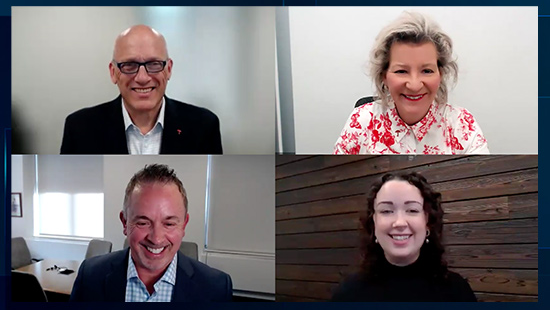
What does it take to protect deal value before you get to the deal table? The 2026-2027 Travelers Special Report, developed with Morningstar, surveyed 700 CFOs and risk managers across manufacturing, technology, life sciences and construction. Across every industry, the answer was the same: the workforce. In this episode of Wednesdays with Woodward, we unpack what the data reveals about competitive durability, with a special focus on the construction industry, and what it means for your organization.
This program is presented as part of the Travelers Institute’s Forces at Work® initiative, an educational platform to help today’s leaders navigate the shifting dynamics of the modern workplace and prioritize employees and their well-being.
Read the summary
Key takeaways
- When it comes to positioning a company for sale, an organization with an “economic moat” – a structural competitive advantage that keeps competition at bay – holds higher value, Morningstar’s Dan Rohr explained.
- Investors look for companies with durable moats because those organizations sustain high returns on invested capital through the cycle and weather economic or industry downturns better, said Rohr.
- According to the 2026-2027 Travelers Special Report, companies view their workforce as their top competitive advantage, but only 34% believe that edge will last 20 years, said Travelers’ Charlie Tice.
- Succession planning tends to be the biggest pre-exit blind spot for companies preparing to sell, Tice said.
- Strong safety performance makes a company more attractive to buyers, Tice noted, and even in construction, where safety discipline is strong, the gap between the office and the field remains a workforce challenge, said Travelers’ Marshall Minoux.



Speaker
Marshall Minoux
Vice President, Construction Risk Mitigation Services, Travelers;
President, Performance Construction Advisors
Travelers works to make its content accessible to all, including those with disabilities. A transcript of this program will be posted here shortly. If you have questions, please call or email us at 1.866.336.2077 or [email protected].
Please note: Due to the nature of the replays, survey and chat features mentioned in webinar recordings are no longer active.
Summary
What did we learn? Here are the top takeaways from Competitive Advantage Under Pressure: What Really Protects Deal Value:
A company with an economic moat – a structural competitive advantage that keeps competition at bay – holds far more value, said Rohr.
The “structural” aspect is key, he explained. That means a quality inherent to the business that doesn’t rely on managerial skill. An economic moat allows management to reinvest in the business at elevated rates of return for an extended time. According to Morningstar, economic moats originate from five sources:
- Switching costs: obstacles that keep customers from changing to a competitor’s product.
- Network effects: a product or service becomes more valuable to new and existing users as more people use it.
- Intangible assets: patents, government licenses and brand identity that keep competitors at bay.
- Cost advantage: the ability to produce goods or services at a lower cost, which allows a company to undercut rivals or earn higher profits.
- Efficient scale: a market that supports only one or a few competitors, which limits rivalry.
People often assume a company has a moat because it’s big, but Rohr said that gets the causal mechanism backward: “It’s the moat that leads to size.” The framework applies to companies of any size. Minoux advised leaders to take a simple overall approach: “Run your company like it’s for sale.” Watch at 4:56
A company’s workforce is key but isn’t one of the drivers of an economic moat, explained Rohr.
Workforce capabilities are too hard to sustain and too easy to replicate, he explained. Business leaders tend to agree: Companies view their workforce as their top competitive advantage, but only 34% believe that edge will last 20 years, the report found. And the departure of a key person can “quietly undermine the whole operation,” Tice said. Companies heading toward a sale can take steps to address workforce issues in advance. Prepare to hand the buyer “a workforce story and not just an organization chart,” including documented programs with real, tangible, measured outcomes, he recommended. Watch at 13:39
Succession planning is critical. However, for companies positioning themselves for sale, succession planning tends to be the biggest pre-exit blind spot, said Tice.
Succession planning and knowledge transfer rank at the top of workforce risk for construction firms, at 20%, as the workforce ages and apprenticeship pipelines stay stretched. Tice advised companies to start by mapping who holds the institutional knowledge and what would happen if those people left. In the 18 months before an exit, he said, sellers should be able to hand a buyer a workforce story backed by documented programs and measured outcomes. Minoux also advised writing down how key decisions are made and what makes a good project so that the next person has guardrails and decisions don’t rest on one person’s gut. Watch at 15:05
High performance in safety practices can make a company attractive to buyers, said Tice.
The single greatest workforce-related threat to competitive advantage across every industry was difficulty maintaining consistent safety practices and reducing injuries, the report found. “Safety shouldn’t be just a compliance checkbox,” Tice said, adding that it ultimately offers a view into how a company runs. For example, a safety-conscious culture tends to prevent quality issues like supply chain failures and employee turnover. Travelers is seeing that private equity firms now hire risk managers because they want to optimize safety across their entire suite of portfolio companies. Tice stressed that Travelers’ more than 200 million data points on safety performance show that companies scoring high on safety metrics look better to buyers. “Regardless of ownership, companies that come to the table with a clean safety record and a documented return-to-work program definitely negotiate from a stronger position,” he said. Watch at 16:22
Construction leads other industries on safety discipline but has room to improve on workforce strategy, particularly the disconnect between the office and the field, Minoux said.
A full 62% of construction leaders surveyed have specific metrics to measure safety program effectiveness, 10 points above the cross-industry average. Firms with a truly effective safety strategy prefer high near-miss numbers, meaning that employees feel comfortable flagging hazards before they happen. These companies also act swiftly to address hazards and tie safety metrics to bonuses and promotions, Minoux said. “That’s going to really matter and drive behaviors,” he explained, adding that safety should be competing with the pressure to get jobs done quickly. The office-field disconnect is one example: Leaders may not notice that field crews have lower morale and feel disconnected from the company’s direction until it shows up in turnover, he explained. One simple fix: Spend time on jobs talking to field crews. “This costs almost nothing and it pays back probably more than anything else your construction company can do,” he said. Watch at 25:19

Wednesdays with Woodward® webinar series
Wednesdays with Woodward is a webinar series hosted by Joan Woodward featuring candid talks with industry and government thought leaders on today’s top challenges.
Workforce initiative
This program is presented as part of the Travelers Institute’s Forces at Work initiative.
Webinar presented by



Related content
America’s Shrinking Workforce: How Demographic Trends Are Reshaping the U.S. Economy
For the first time, the U.S. is facing a future where each generation is smaller than the last, even as people live longer than ever. Luke Pardue, co-editor of a landmark report by the Aspen Economic Strategy Group, joined us to explore what this means for labor markets, public finances and businesses.
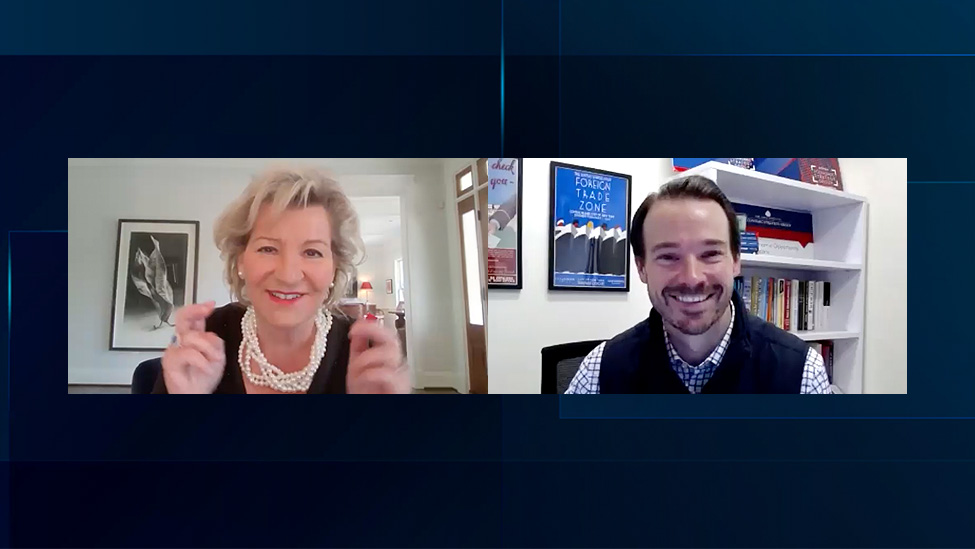
Mastering M&A: Strategies for Risk Management
Successful mergers and acquisitions require strategic risk management at every stage. Join us to hear key findings from our latest report, the 2025 M&A Study: A Travelers Special Report, so you can help clients manage uncertainty, mitigate risks and position their organizations for long-term success.
Forces at WorkSM Symposium at the New York Stock Exchange
From labor market fluctuations to shifting employee expectations, today’s workforce is evolving at an unprecedented pace. In this special extended episode of Wednesdays with Woodward®, the Travelers Institute broadcast live from the Board Room of the New York Stock Exchange to explore the challenges and opportunities brought on by these changes.