Competitive Advantage Under Pressure: What Really Protects Deal Value

Originally recorded on October 7, 2026
What does it take to protect deal value before you get to the deal table? The 2026-2027 Travelers Special Report, developed with Morningstar, surveyed 700 CFOs and risk managers across manufacturing, technology, life sciences and construction. Across every industry, the answer was the same: the workforce. In this episode of Wednesdays with Woodward, we unpack what the data reveals about competitive durability, with a special focus on the construction industry, and what it means for your organization.
This program is presented as part of the Travelers Institute’s Forces at Work® initiative, an educational platform to help today’s leaders navigate the shifting dynamics of the modern workplace and prioritize employees and their well-being.
Read the summary
Key takeaways
- When it comes to positioning a company for sale, an organization with an “economic moat” – a structural competitive advantage that keeps competition at bay – holds higher value, Morningstar’s Dan Rohr explained.
- Investors look for companies with durable moats because those organizations sustain high returns on invested capital through the cycle and weather economic or industry downturns better, said Rohr.
- According to the 2026-2027 Travelers Special Report, companies view their workforce as their top competitive advantage, but only 34% believe that edge will last 20 years, said Travelers’ Charlie Tice.
- Succession planning tends to be the biggest pre-exit blind spot for companies preparing to sell, Tice said.
- Strong safety performance makes a company more attractive to buyers, Tice noted, and even in construction, where safety discipline is strong, the gap between the office and the field remains a workforce challenge, said Travelers’ Marshall Minoux.
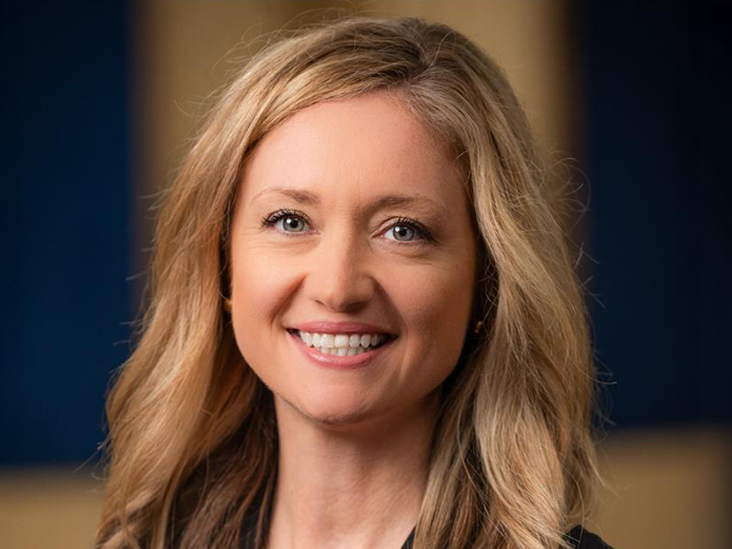


Speaker
Marshall Minoux
Vice President, Construction Risk Mitigation Services, Travelers;
President, Performance Construction Advisors
(SPEECH)
[MUSIC PLAYING]
(DESCRIPTION)
Text: Wednesdays with Woodward (registered trademark) Webinar Series.
(SPEECH)
JESSICA KEARNEY:
(DESCRIPTION)
Jessica Kearney, Vice President, Public Policy, Travelers Institute.
(SPEECH)
Hello, and thank you for joining us. I'm Jessica Kearney, Vice President here at the Travelers Institute, sitting in for our host today, Joan Woodward. Welcome to our session.
(DESCRIPTION)
About Travelers Institute (registered trademark) Webinars. The Wednesdays with Woodward (registered trademark) educational webinar series is presented by the Travelers Institute, the public policy division of Travelers. This program is offered for informational and educational purposes only. You should consult with your financial, legal, insurance or other advisors about any practices suggested by this program. Please note that this session is being recorded and may be used as Travelers deems appropriate. A red umbrella logo: Travelers Institute (registered trademark). Travelers.
(SPEECH)
We have a great program that includes a new, hot-off-the-press Travelers report exploring what drives competitive advantage in today's business landscape. So I'm sure you all have your hunches about that. So I'll let you think about that for a moment while I do just a few quick housekeeping items.
As always, our disclaimer about today's program.
(DESCRIPTION)
Competitive Advantage Under Pressure: What Really Protects Deal Value. Logos: Travelers Institute (registered trademark). Insurance Association of Connecticut (IAC). The University of South Carolina’s Darla Moore School of Business. Connecticut Business & Industry Association (CBIA). Global & Experiential Education Office at the University of Connecticut School of Business. American Property Casualty Insurance Association (APCIA). MetroHartford Alliance. The Big I (Independent Insurance Agents & Brokers of America)
(SPEECH)
And again, as always, we'd like to extend a huge thank you to our program partners today and a special welcome to all the members joining in our audience-- the Risk and Uncertainty Management Center at the University of South Carolina, the Insurance Association of Connecticut, CBIA, the MetroHartford Alliance, the Global and Experiential Education Office of the University of Connecticut School of Business, the American Property and Casualty Insurance Association, and the Independent Insurance Agents and Brokers of America. So thank you again to all of our partners.
And with that, let's jump right in. So at Travelers, we are always working to understand what's shaping how businesses manage risk and, importantly, build resilience. So today, alongside our amazing partners and Travelers’ Business Insurance team, we're thrilled to release a first-of-its-kind study on competitive advantage, designed to help midsized and large business leaders better understand the role risk management plays in enterprise resilience.
This is a story that's been building through a body of research over the last few years, and if you've been with us over the last few years, you've seen our programs on this as well. And today is our very first look at the latest data.
So let's go back in over the last few years. Our first Travelers Special Report in 2024 surveyed 700 CFOs and found that 70% had been affected by a merger or acquisition, M&A, meaning their company had either obviously been bought by another company, was bought itself or came close to one of those deals happening.
(DESCRIPTION)
A red cover appears: 2026-2027 Competitive Advantage Study: A Travelers Special Report. How workforce strength and operational discipline reinforce and sustain enterprise resilience. Text: New Competitive Advantage Research.
(SPEECH)
What really stood out that year, they cited M&A activity as the leading stressor on their teams, whether or not the deal actually closed. So either way, 38% in that study were scrambling to react to risks instead of proactively planning ahead for them. So that was a really critical finding.
Then you jump ahead to the next year, in 2025. The second Travelers study surveyed 800 risk professionals who had recently been through M&A, and our teams wanted to know what helped them succeed, where did they struggle-- really getting their view on what they'd just been through. We learned quite a bit in that report, especially about the role of private equity firms, which were involved in more than 90% of the deals that were discussed.
And now, today, in 2026, our third study asked-- can business leaders increase their company's value simply by managing risk more strategically?
So to answer this, our colleagues in Business Insurance partnered with Morningstar, of course, a well-known investment research company, and surveyed 700 CFOs and risk managers, specifically in manufacturing, construction, life sciences and technology. They wanted to know where these CFOs and risk managers agreed, and also where they might disagree, on what makes a business competitive and where the durable competitive advantages might exist that keep competitors at bay.
So while the report covers all the four industries that I just mentioned, today we're actually going to dig deeper into construction, an industry spending $2.1 trillion a year, according to the U.S. Census Bureau, driven, of course, in large part by the boom in AI infrastructure.
So a little quick tour of history, going back the first few years, and we're really excited to get into this latest study.
(DESCRIPTION)
Photos of the speakers appear as their video screens open under Jessica Kearney's.
(SPEECH)
So to help us do that, we've got three amazing speakers. We have Dan Rohr, who is the head of Morningstar's Institutional Equity Research team and will really help ground us in the research. Charlie Tice is Travelers Business Insurance Private Equity Practice Leader and will help really bring to life how we're seeing this unfold here at Travelers. And then Marshall Minoux is Travelers' Vice President for Construction Risk Management Services and President for Performance Construction Advisors. And Marshall is going to help us with a deep dive on that construction industry that I promised.
So with all that setting the stage, let's get into it. And Dan, at Morningstar, I'm going to start with you, and we're going to ground us in-- why should executives care about this right now? And I know that, really, for over 20 years, your teams at Morningstar have really evolved a Warren Buffett observation, if you will, on economic moats and particularly on competitive advantages, and really evolve that into an internationally respected economic framework. So I'm hoping you can give us and the audience a quick overview of what your team does and why it matters to investors, boards and C-suite execs who are evaluating businesses.
(DESCRIPTION)
Dan Rohr, Head of Global Equity Research, Morningstar.
(SPEECH)
DAN ROHR: Sure. Well, first of all, thank you for having me, Jessica. So the Berkshire investment philosophy, everyone's pretty familiar with it-- purchase great businesses at reasonable prices and hold for a long time. So, for Buffett, a great business is one that possesses an economic moat, so a structural competitive advantage that keeps competition at bay, affording management the opportunity to reinvest in the business at elevated rates of return for a very long time. And you let compounding work its magic.
So I guess the key word in that definition, from my perspective, is structural. So something inherent to the business, not something that depends on managerial brilliance or something that must be renewed year after year after year. So what we've tried to do at Morningstar with the past few decades is to systemize that definition and then apply it to every stock that we cover, so to identify which companies possess a moat and which don't. Moats are in turn integral to how we value companies at Morningstar. So a company with a moat, we'd say, is a lot more valuable than one without.
The trick, of course, is discerning which companies genuinely possess a moat. And it is not easy. So it's fundamentally an exercise in predicting the far-off future. And that really dictates how we spend our time. So our analysts spend a lot more time thinking about competitive dynamics over the next 10 years than we do, say, whether a company will beat consensus EPS expectations in the quarter to come. So we don't play that particular game.
(SPEECH)
JESSICA KEARNEY: Got it, got it. No, that's helpful. And I know we're going to spend a little bit of time digging further into this idea of the economic moat. But can you tell us what's the single biggest misconception that business leaders have about what actually constitutes a durable competitive advantage? I'm sure you've seen all different colors of what people have in terms of their notions about this concept.
(DESCRIPTION)
Text: Why do economic moats matter? A graph titled: Economic Moat: Duration of Excess Returns, with an X axis Weighted Average Cost Capital (W.A.C.C.) and Y axis Return on Invested Capital (R.O.I.C.), showing periods of no moat, narrow moat and wide moat for different years invested. Source: Morningstar.
(SPEECH)
DAN ROHR: Yeah, so good question, Jessica. So I've noticed over the past 12 months, really, that the concept of a moat has really started to become part of the investing vernacular. So I see it increasingly mentioned by corporate leadership on earnings calls, by writers at The Wall Street Journal or the FT.
Google Trends suggests interest in the term is roughly double what it was a year ago. And I think that's wonderful to see because I think it's an important concept. But I have noticed-- what I have noticed is the term moat gets tossed around rather freely. So to describe companies we wouldn't regard as possessing a moat. So, for example, several weeks ago, I think it was The Journal mentioning Macy's store experience as its ultimate moat. So not a company we would say actually possesses a moat.
I also see that the term used to describe attributes we wouldn't consider to be a source of moat. So a single great product, efficient operations, a talented management team, wonderful customer service. So all of these things are super important. But all of these attributes are pretty hard to sustain and, more importantly, attributes that a competitor can ultimately replicate with enough time and enough resources. So those are not structural attributes and don't, in our view, afford a company an economic moat.
(SPEECH)
JESSICA KEARNEY: And I will just mention for our audience, since I know we really have a broad audience joining, including business and insurance and risk management students, we have links in our resources in this webinar. And I believe one of the links we have is just something for Morningstar, giving a little bit on an economic moat. So if you want to read up on that quickly while we're talking.
But I want to continue on this thought, Dan. How does an economic moat framework apply to a middle-market company? Is it the same as the larger national companies that we might think of?
(SPEECH)
DAN ROHR: So your prior question was asking about the biggest misconception, and this is actually one that came to mind before I answered in the way I did. So another big misconception about moats is, I think the relationship between a company's size and its competitive advantage. So I'll often hear folks say, well, this company has a moat because it's really big, or, this company has a moat because it has a leading market share.
And I think in nearly every case, that's wrong because I think it gets the causal mechanism backwards. So more often than not, it's not size that creates the moat. It's the moat that leads to size. So the moat keeps competition at bay, allows the firm to generate excess profits that can be reinvested back into the business at compounding rates of return.
So, moats enable sustained profitability, sustained growth. You combine those two things for a very long period of time, and you're generally left with a pretty big company. So, moats make a company big, not the other way around. And that's why I'd argue that the moat framework applies equally to all companies, regardless of size.
(SPEECH)
JESSICA KEARNEY: That's helpful. And I think that's something very intuitive that I think, as you think about growing and scaling, using that framework in the process.
So, Charlie, I want to bring you in here as well. When you're working with PE firms and their portfolio companies, how often do you see leadership teams confuse that temporary margin performance with the durable competitive advantage that Dan's talking about with these economic moats? And what does that gap look like from a risk perspective?
(DESCRIPTION)
Charlie Tice, Business Insurance Private Equity Practice Leader, Travelers.
(SPEECH)
CHARLIE TICE: Yeah, thank you, Jessica, and excited to be here today and spend the time with Dan and Marshall, for sure. But to answer your question, it's probably more common than people would admit.
I mean, finding ways to cut costs can definitely boost margins for PE companies during a hold period, for sure, but they probably wouldn't last. So if you think about things like deferred CapEx costs or tighter headcount, will that ultimately cut dollars? Yeah, but if a competitor is able to copy those moves, the advantage is probably gone. And Dan just talked about how competitors can replicate that.
So I think that's really, though, what the real question Morningstar's framework pushes us to think about or ask. And the risk really becomes clear during the diligence process. So let's use an example. If a key person walks out the door, whether it's a sales leader, an engineer or a superintendent, it can really expose how fragile a business is.
And I really think that the Travelers Special Report spotlights that gap, because it says that companies really view their people as their No. 1 competitive advantage. But only 34% believe that advantage is going to last over the next 20 years. So if you can't sustain or replace that talent, it can be a real problem now and certainly into the future.
(SPEECH)
JESSICA KEARNEY: I should mention the link to the full Travelers Special Report is also in our resources. So please check that out.
Dan, back to you, and continuing on the study. So the study that you and your team collaborated on, as I mentioned, looked at manufacturing, construction, life sciences and technology, and where the five potential economic moat drivers show up in distinct patterns. Can you give us some of the high-level differences as we're thinking about those different industries?
(DESCRIPTION)
Text: 5 Sources of Economic Moat. Intangible assets like brands, patents, or regulatory licenses. Switching costs that make it painful for customers to leave. Network effects where your value grows as more people use you. Cost advantages from scale or proprietary processes. Efficient scale, where a niche market is best served by a small number of players. An illustration depicts each of these as an island around a factory, with competitors represented as men standing with briefcases looking at the islands.
(SPEECH)
DAN ROHR: Sure. So moats are not equitably distributed across the economy. So some industries, fair or not, are simply more amenable to moat formation than others. It's a function of industry structure, microeconomics.
So for example, we tend to find moats to be more common in technology than in manufacturing. You look at the Travelers survey, and participants largely agreed. I think we saw a larger share of technology leaders than manufacturing leaders say that they believe their firms possessed a durable competitive advantage.
At the same time, the economic logic underpinning moats really spans all industries. So you take, switching costs for example. So switching costs arise when the cost of changing a provider in terms of time, money, risk, hassle or operational disruption exceeds the anticipated benefit. So that has the effect of keeping your customers locked in, even if the alternative is cheaper and downright better.
So we see it in tech, we see it in manufacturing, we see it in healthcare, we see it in companies of all sizes. So in fact, it's not altogether unusual to see middle-market companies carve out a switching-cost-based moat when they're really focused on a particular niche, and they really become deeply intertwined with customer workflows.
(SPEECH)
JESSICA KEARNEY: And so it's interesting because your framework doesn't actually classify workforce management as a moat driver because it's difficult to sustain and can be replicated by competitors. That said, I'd love to hear a little bit more about what you learned through the collaboration with Travelers that may have surprised you and could be a lesson for our audience.
(SPEECH)
DAN ROHR: Yeah, so I think one thing that was striking to me about the survey was the tension between how important workforce capabilities are and how difficult they are to sustain.
So CFOs, risk managers that participate in the survey regarded workforce capabilities as absolutely essential to success. Yet, when they were asked how confident they were, as you were saying, that any advantage related to workforce could endure over time, generally, not so confident, which I think really aligns with our view of the world.
We don't count workforce capabilities as a moat. Simply too hard to sustain, yet simultaneously too easy to replicate.
So I guess how I might characterize the relationship between a company's workforce and its moat would be this. So people build the moat. People are needed to maintain the moat. People can erode the moat with poor decisions or risky behavior. But people, in and of themselves, are really not the moat.
(SPEECH)
JESSICA KEARNEY: That's a great way of thinking about it because you do see that thread show up time and time again in this report, which is very interesting. And I think something that a lot of leaders and managers can really relate to.
Charlie, I want to go back to you just keeping on this workforce piece. So can you help us really walk through a moment when a workforce disruption-- so think turnover, safety incident, key person departing the company, which has been mentioned a few times-- actually threatened a company's competitive position? What did that cost? And then, ultimately, what did it reveal?
(SPEECH)
CHARLIE TICE: Yeah, great question. I mean, I would say the most common version of this story-- I talked briefly about it before-- is when a key person leaves mid-hold period, which is exactly what you just mentioned. And they're going to take critical knowledge with them. And that single dependency can be really, really impactful. And it can also quietly undermine the whole operation.
So I've seen things like bad onboarding, whether it's an unprepared supervisor. You start to see quality slip. It may not look alarming from quarter to quarter, but it's exactly what a buyer may flag during the diligence process.
And for whatever reason, the financials seem to always tell the story a bit too late. So if you think about it, by the time turnover costs manifest or show up in the numbers, the real damage is already done. So keeping an eye on workforce stability and not just workforce costs is really, really important.
(SPEECH)
JESSICA KEARNEY: And let's take that just a little bit further. So one of the other really interesting findings to me from the study was that the single greatest workforce-related threat to competitive advantage, really across every industry, wasn't tech disruption, something that we all are thinking about, or even talent attraction. It was the ability to maintain consistent safety practices and reduce injuries.
And to me, that really stood out because I think here at Travelers, and certainly at the Travelers Institute, that is really a common thread in that risk management piece, obviously, that where we bring our expertise. Why is safety still so underappreciated as a strategic lever?
(DESCRIPTION)
A worker wears a safety harness. Text: Of the Top 5 perceived workforce risks to competitive advantage among C-Suite Execs and Risk Managers surveyed. Number one equals Ensuring consistent safety practices and reducing workforce injuries. Source: Travelers 2026 Special Report: Competitive Advantages.
(SPEECH)
CHARLIE TICE: Yeah, I mean, we pride ourselves in safety management, what our Risk Control organization can do here at Travelers. So I talk a lot about the fact that safety shouldn't be just a compliance checkbox and that it's really a view into how a company ultimately runs, because the culture that prevents injuries can also be the one that prevents quality problems like supply chain failures, employee turnover. So there's definitely a direct correlation there.
At Travelers, we have over 200 million data points on safety performance, so a lot, a lot of data across a variety of industries. And what we constantly see is that companies that score well on safety metrics are the same ones that look really, really attractive to buyers. So safety’s definitely become a competitive differentiator, for sure. And companies that invest in safety culture are protecting their talent, but they're also protecting their reputation and enterprise value, which is obviously really, really critical.
When we shift and we think about the insurance broker landscape, the ones that are the best out there are the ones that tell the story to their clients and really drive a partnership between the customer and the insurance company around managing risk over time.
We're seeing new developments, such as we're seeing private equity firms now hire risk managers because they want to optimize safety across their entire suite of their portfolio companies. So taking lessons learned that they may have had with one experience on a portfolio company and trying to translate that across their suite of portfolio companies. So that's a really attractive development for us here at the Travelers. So PE firms definitely taking it seriously. In our M&A study of over 800 risk professionals, 41% said they're actively seeing their risk management programs improve across their portfolio. So that's again a very encouraging stat.
But I'll end with this. Regardless of ownership, companies that come to the table with a clean safety record and a documented return-to-work program definitely negotiate from a stronger position. And that's because it affects their long-term insurance costs. So really what we look for each and every day as Travelers underwriters and what we look for when we're assessing risk and also our coverage offerings.
(SPEECH)
JESSICA KEARNEY: And I think that makes even common sense from a consumer perspective. I think we've probably all interacted with businesses where you see maybe something lacking in the safety department. It really does make you wonder what else might be under the hood. And so I think that all makes perfect sense.
I want to dig into-- so in the report, there is talk about-- we mentioned the study of the CFOs as well as the risk managers and the alignment. Where did they agree? Where might there have been some disagreement between those two groups?
So, Dan, I wanted to ask you on the research side-- really, from a valuation perspective, does leadership alignment on risk, or the lack of alignment, show up when you assess competitive durability? Or is misalignment itself an indicator of an eroding moat, potentially?
(SPEECH)
DAN ROHR: Leadership alignment on risk is absolutely important, but I'll be honest with you here, Jessica. From the outside looking in, as analysts trying to value a company, we don't have much visibility into whether CFOs and risk managers are aligned on risk.
So when it comes to the relationship, I guess, between management and valuation, we're looking for a few generic things, like a strategy that aligns with value creation prospects, a business-- a balance sheet that's well suited to the firm's risk profile, investments, whether organic or inorganic, that fortify the competitive advantage, fortify the moat, and then shareholder distributions, whether dividends or in the form of buybacks, that are mindful of alternative uses of capital. So those sort of things are observable in ways that alignment between a CFO and a risk manager, while very important, simply isn't.
(SPEECH)
JESSICA KEARNEY: And, Charlie, going back to you, when we see those-- the disconnect between CFOs and risk managers, specifically on these workforce priorities that we've been talking about, where do you see that disconnect creating the most value destruction, eroding the most value? And I want to get into some of the tangible things for people. What are the fastest ways to close those gaps, to identify them and then close them?
(SPEECH)
CHARLIE TICE: Yeah, so the study revealed that the CFO tends to focus more on the short term.
(DESCRIPTION)
A chart: Top 5 Strategic Priorities by Audience. CFOs. Workforce capabilities 33%. Financial strength & access to capital 31%. Brand reputation & market positioning 30%. Innovation capabilities & speed to market 28%. Superior customer relationships 28%. Risk Managers. Workforce capabilities 38%. Superior customer relationships 33%. Innovation capabilities and speed to market 32%. Operational efficiency and cost structure 31%. Brand reputation and market positioning 30%. Source: Travelers 2025-2027 Competitive Advantage Study.
(SPEECH)
So think about things like employee retention, financial measurement, budgets, while the risk manager may worry a little bit more about long-term things like workforce skills, safety over time, succession planning.
And both are certainly right. But when they're not aligned, these areas of focus might only be optimized for the short term, like a quarter or so, instead of the entirety of the whole period.
So boards can certainly uncover that disconnect, but they really don't have a way to fix it. And most of the time, it shows up in some element of a management presentation with a view on competing priorities rather than a true unified plan between the CFO and the risk manager.
So if you think about it, the fix really starts with the CFO and risk manager utilizing some element of a shared metrics view. So things like injury rate trends, voluntary turnover in key roles, succession plan completion.
And here's one data point-- large companies have roughly a 40% gap in measuring whether their safety strategy is actually working or not. And that's the highest of any segment we surveyed. So at the end of the day, the alignment, in my opinion, between the CFO and the risk manager is very, very crucial.
(SPEECH)
JESSICA KEARNEY: That's great. So shared metrics-- we're thinking practical-- shared metrics and have a way to measure if your safety strategy is actually working. Put some numbers around that and then build off that same play sheet-- playbook.
All right, great. And so I want to ask you, Charlie, one more question before we transition to deep dive into our construction spotlight. But as we're continuing on this workforce strategy piece, the report says that best-in-class organizations don't treat onboarding as a finish line. They build a full workforce strategy that spans hiring all the way through that longer-term retention.
So again, practically speaking, what does that look like for a company that's mid-hold period and trying to position for exit?
(SPEECH)
CHARLIE TICE: Yeah, great question. So if you were to think about in the 18 months before a seller exits, you want to be able to hand a buyer a workforce story and not just an organization chart. So that means documented programs with real, tangible, measured outcomes.
Succession planning tends to be the biggest pre-exit blind spot from what we found. And if you haven't mapped out who holds the institutional knowledge in your own organization and what happens if they were to leave, then I would say definitely think about starting there.
The other thing we found is that first-year employees are consistently the most injury prone. And the crazy part about that is that most of the time, it's preventable. So companies that have embedded safety into their onboarding from day one see benefit. And they're also building a documentation trail for buyers that they can hand over pre-exit. So that's really, really important.
I think also this is where Travelers Risk Control really shines and comes into play because we want to help companies think about safety across the full employment life cycle and not just a point in time. And we believe that managers should start to see less absenteeism, things like improved recovery times, better employee retention, and ultimately, it should manifest into lower claim activity.
(SPEECH)
JESSICA KEARNEY: That's great. And again, I always love the really practical parts of this.
So with that, let's transition over to our look into construction. So I'm going to bring Marshall into the conversation now. And Dan and Charlie, I'll be checking in with you for your perspective as well.
(DESCRIPTION)
Text: Construction Industry Spotlight. Key Data Points. Construction leaders are the most confident in their workforce strategy of any industry we surveyed but three pressure points could test that confidence. Top workforce risks: Consistent safety practices (29%). Preventing burnout and managing workloads (26%). Managing wage inflation and total labor costs (22%).
(SPEECH)
But as I mentioned, this was one of the four industries that was looked at quite comprehensively in the report. Our survey found that while construction leaders are the most confident in their workforce strategy of any of the industries that we surveyed, there are a few things that definitely test confidence, with consistent safety practices leading among the concerns.
So, Marshall, welcome to the program. I'm glad to have you with us for this deep dive. We mentioned construction leads every other industry on safety discipline in our survey. And in fact, 62% have specific metrics to measure the effectiveness of their safety programs, something that we were talking about earlier. The full 10 points above that really cross-industry average. So that's good stuff.
From your work on Performance Construction Advisors, what does a best-in-class safety measurement look like? So that practical angle. And then, what separates the companies genuinely doing this from checking the box just in terms of compliance?
(DESCRIPTION)
Marshall Minoux, Vice President, Construction Risk Mitigation Services, Travelers; President, Performance Construction Advisors
(SPEECH)
MARSHALL MINOUX: Yeah, Jessica, I think I would look at this under primarily four main areas.
So first, think about who owns that number. So the firm that just checks the box, that safety metric, is going to live with your safety officer, and it's going to stop there. But in a truly effective firm, that project manager, your superintendent, they carry that KPI the same way they're thinking about the budget, their schedule, and it's going to show up in their performance conversations.
Secondly, how are those near-miss numbers treated? Do you think of it as good news or is it bad news?
The compliance firms, they want those near-miss counts real low. Low looks clean on the report. But the mature firms, the best-in-class, they actually want them high because it means people are servicing some of those hazards instead of just burying them down deep.
And when you see that rising near-miss number, it should make leadership happy instead of nervous because you're looking at a real program that's working for the firm. And over time, that pattern is really going to show you how that firm approaches their behaviors.
I think the third way to look at it as well is, after you produce that number, what do you do with it? That box-checking firm, they're going to generate the report, and they're going to file it away. But that effective firm, they run that closed loop. It's a data that triggers an action. Someone's going to own that, and then there's a deadline. And it's that measurement added in that loop.
And then lastly, those metrics, it's really how they impact money and advancement because that's going to really matter and drive behaviors. So if your performance doesn't affect anybody's comp, it doesn't affect anybody's bonus or promotion, it's just decoration.
So, really, the effective firms, they put this in incentive cap calculation. So, really, it's competing with the project’s pressure to get the job done, get the job done fast.
(SPEECH)
JESSICA KEARNEY: I think so many things that you said just resonated there. One, who owns the number, right? It should be embedded in the business, not just a quote unquote, "safety team."
And I draw some parallel to creating, really, the ability to speak up when you've had a near miss or a near accident on a job site. I think we-- last week we had a webinar on cybersecurity. We had some former government leaders on talking about how businesses can be prepared for cybersecurity. And it was the same thing. It's like, how do you create a culture where people feel safe speaking up, and even if a mistake did happen, so that it's reported?
And so that's something that organizations really have to think about in terms of their safety culture.
So let's keep going with this because this is some good line of thinking. So, the majority of construction leaders see gaps in their workforce strategy and execution in construction, where the work happens on the job site and not back in a conference room. How does that manifest? What are the most effective interventions you've seen to close some of those gaps in workforce strategy?
(SPEECH)
MARSHALL MINOUX: Yeah, I think that tension that's always existed in construction, as long as there's been job trailers and conference rooms, and the numbers really don't surprise me. And I think if other industries took an honest look at themselves, they probably would be closer to what we see in construction.
At Performance Construction Advisors, we run CEO Performance Roundtables, and this is where peer groups get together. They look at, they deep dive each other's firms. And the first step every time is to do a survey of the entire employee base. So this is from top to bottom.
And almost every time, the leaders are surprised by the findings. And one in particular is that field-office divide. I think Charlie hit on it a little bit about the communication breakdown.
And we just see the field as more negative on morale, culture and inclusion. Field teams feel undervalued, they’re overlooked in decision-making, and they're disconnected from the company's direction. In the office, they don't see it until it shows up in turnover, and that's what impacts your execution.
So what are the few things that firms are really doing that I would say kind of change that, is they're communicating that strategy past your leadership team. So time and time again, you have the vision and strategy that's held at the top level, but it doesn't reach the field. They've spent, the leadership team, they're spending long hours. You're creating the plan. You're doing the offsites. That team, it makes total sense to them.
But you need to constantly communicate the why and put it into effect where there's accountability. You have scorecards, there's a cadence, whether a monthly or quarterly priorities, and that makes those goals real, I think, especially at a department or individual level. I think if you're a firm and you haven't measured your field separately, you should do it and identify the disconnect that's going to exist, and then get that feedback loop going in those areas of disconnect.
Especially in that middle layer, this is often-- we see that's often the missing piece. You think about it-- are they equipped to communicate the plan? Do they understand the why behind it? And have you prepared them in change management and what that entails and what that's going to look like at your firm?
And then lastly, this is maybe the biggest, but maybe the most impactful step. You've got to get on the jobs, spend time on the projects talking to your field crews and ask them what they're seeing. This costs almost nothing, and it pays back probably more than anything else that your construction company can do.
(SPEECH)
JESSICA KEARNEY: I love that. Spend time in the field. A very low-cost, common-sense thing to do, and invest in your middle layer and communicate the why. So those are great pieces of advice.
We've mentioned a few times now in this program, so far, succession planning and knowledge transfer. So we know that the population in the U.S. is aging. We know that the construction workforce is aging and apprenticeship pipelines are a bit stretched.
So we've seen that succession planning and knowledge transfer ranks really at the top of workforce risk, at 20%. So again, going to the practical, what does that knowledge transfer challenge look like in practice, and what are the companies that are doing it well getting right when we're thinking about the construction industry?
(SPEECH)
MARSHALL MINOUX: Yeah, last time I checked, I think age is undefeated. So I had a client tell me recently, construction is really unique. Just because you can have a senior superintendent or think of your senior project manager, when they retire, you instantly lose that 30 years of experience.
I think that's what people are really worried about with this aging workforce. When somebody retires, you lose that gut intuition they built up over countless jobs, countless projects, everything they ever did and they never wrote down. They take it with them.
And we see this a lot when we talk to companies about their progress. And you ask them, what's your go/no-go decision like? And they point to a person. They say, oh, that's Sam and that's Jane. And history shows that Sam or Jane, they've been very good at picking the right jobs, but when they leave, the next person steps into that role with far less experience.
So the fix really starts with documenting and formalizing your policies and your procedures. You take that go/no-go decision as an example, and you write down what actually makes a good project. That process takes intuition that your long-term person built up over the career, and that you create the guardrails then for whoever's going to come next. And they can still develop. You leave room for them to develop their own judgment over time. But now there's more rigor in that process. It's not just one person's gut feeling.
And I think alongside of that, we're just seeing a lot more focus on hiring, on the co-op programs and internships, plus the mentorships, including reverse mentoring.
You see a lot of large firms. They're invested in some formal leadership programs. They're bringing that training in-house, and they're spending time and money to getting the people up to speed. But plenty of firms out there, they just don't have the resources to build an in-house program.
That's why we offer leadership programs like our boot camps. Your companies can send over high-potential people, and they get them training for what will make them great at the next level, not just what makes them great at their current role.
(SPEECH)
JESSICA KEARNEY: Yeah, that's great. And some of the things you've described through the Performance Construction Advisors sound fascinating. Just an interesting study and a slice of all of this. So thanks for sharing that.
I want to bring Dan and Charlie back in. I'm going to start with you, Dan, as we're continuing on this construction thread. So Morningstar's framework says that engineering and construction firms, so large companies that design, plan, build large infrastructure, industrial facilities, big commercial projects, rarely earn economic moats.
But the construction leaders in this survey have built workforce-centric operations that look exactly like what the framework says would be required to say that you have one. So how do you reconcile that?
(SPEECH)
DAN ROHR: Good question. So yeah, we don't think moats are terribly common in the engineering and construction industry. It's a really tough market. There are an awful lot of players. Customers have ample bargaining power. Competition is intense. Talent is fungible. Cyclicality is high. Event risk, whether we're talking about legal disputes or cost overruns, is pretty significant.
So in that context, workforce-centric operations, as I think you put it, Jessica, are, I think, not only essential for success, but they're essential for survival. But they're also replicable by competitors and really tough to sustain when the Sam or Jane that Marshall was referencing walks out the door when they retire.
So we wouldn't regard these attributes as a source of a moat. I'd say one final point-- where we do see moats in engineering and construction is in niche end markets. So for example, nuclear power, where you do see E&C firms exhibit some pricing power, for example.
(SPEECH)
JESSICA KEARNEY: Great, great. Charlie, I want to jump over to you. So with significant PE activity in construction and 2026 shaping up as a more active deal environment, what are buyers now asking about construction workforce? We keep talking about workforce in general and safety. And when they're doing their due diligence on these companies, what might they be asking about now that maybe they weren't asking five years ago?
(SPEECH)
CHARLIE TICE: Yeah, great question. And we've definitely seen a shift, for sure. But I'll first say, to your point, in our organization, we're definitely seeing an uptick in the construction space around deal activity and deal flow. So that's grown over time. Call it the last year and a half to two years, for sure.
But if we were to go back five years ago, diligence on the construction workforce was a bit backward-looking. So think about the review of things like OSHA recordable experience, MOD rating reviews, workers comp loss run analysis.
And today, more sophisticated buyers are asking more forward-looking questions, so maybe more of a human-element spin to it. What is actually happening with your safety training program, and what does that look like for new hires? How is frontline management communicating across random and various job sites? What's the return-to-work protocols look like?
And then, if a construction company is making tuck-ins or add-ons throughout the course of a year, how are they managing the onboarding in the event there's a midterm acquisition? And that's really important for us to understand from an underwriting lens, for sure.
But I do think what Marshall described is that there can be a safety gap between leadership confidence and frontline execution, and we try to probe at that through our underwriting process and during the due diligence phase.
But in my opinion and my experience, a company that can show a documented safety program is a much different underwriting risk than a company that gives us generic safety documents that really aren't applicable to their own organization or aren't specific to the risks associated with that company.
So I'll leave you with just two data points, too. I mean, PitchBook would suggest that there's over $4 trillion of global PE dry powder. We're expected to see potentially an uptick in deal flow as we finish 2026 and we transition into 2027.
So with that, the conversation is only going to matter more for sponsors now and certainly into the future.
(SPEECH)
JESSICA KEARNEY: Can you tell me a little bit more on that? I'm just thinking, as you are advising these sponsors, how much of what you said Marshall just described, like the safety discipline, the frontline visibility question, how much of that is actually showing up in how you're advising them?
(SPEECH)
CHARLIE TICE: Yeah, I think we just think more about long-term safety discipline and behavior. So again, I'll use the example-- if we're working specifically on a construction account and they've got a safety program, we want to make sure that if they're onboarding or they're tucking in new additions or new transactions or new purchases along the way, that that safety culture and that there's a formal onboarding program right after that transaction happens, because otherwise it can get lost in translation and other things become more of a focal point in that transaction, like financial competencies and other kind of employee-related issues. So that safety culture and how they use that from an onboarding perspective is really, really critical.
(SPEECH)
JESSICA KEARNEY: Yeah, that's helpful. That's helpful. And Marshall, one more for you as we're talking about construction. So we've covered on this program some of the different lenses that CFOs versus risk managers have viewed some of these workforce risks. How does that dynamic play out in construction organizations where the CFOs might focus more on short-term operational readiness, while risk managers are looking at the longer lifecycle view? So how do you see that in construction organizations, and how do you help companies really reconcile that?
(SPEECH)
MARSHALL MINOUX: Yeah, Jessica, I think part of it comes down just to the nature of those two positions and some of the shortfalls that we see. So risk manager, they're thinking about what's possible, what's lurking around the corner. They're not just thinking about what's happening right now, but actually what could happen. And that means looking at trends over time and how they're developing, and then what could be really developing next.
CFO is maybe one of the hardest positions to fill in construction. And by that, I mean the true strategic CFO. Unfortunately, you'll see people who are CFOs in construction by title only. By most measures, they're just filling that controller role.
That controller role, I mean, financial management that's really recognizable. That is probably the most recognizable piece, overseeing some of those day-to-day accounting activities. It's really transactional. But the true CFO role goes beyond that.
There's your financial performance piece. They're helping put the story to your numbers. What's driving your revenue and your expenses? What does it mean for the company performing plan versus performance versus plan.
They also fill a little bit of a financial advisor and risk mitigator piece. So think of contract reviews and sub-prequalifications. They look at the owners and their ability to pay. But they're not just a gatekeeper. I just put it down as they're really helping the company identify, and most importantly, it’s how are they pricing that risk?
And then, on top of that, I think you look at the CFO, they're adding forecasting and modeling, which is where you probably sync right back up with the risk manager. So long-term play, long-range plans. How are we going to get there? What resources do we need? How would an event impact us?
Thinking about understanding cash flow, long-term cash forecasting and then helping that build that into everyday decisions and think about what's the impact could be on distributions or impact if you lose a job, or even knowing when you take a job, maybe that has different payment terms than what you've had. Really understanding what the impact can be on the company's performance.
I would say if your CFO isn't doing some of these higher-level tasks, before you point to that individual, I would make sure you are assessing actually whether you're investing enough to free them up from the day-to-day so that they can do those higher strategic-looking activities, which your company is going to need.
(SPEECH)
JESSICA KEARNEY: Yeah, that's great insight in terms of role development and how the role is functioning within your organization.
All right. So I want to just keep an eye on the clock. I want to zoom back out a little bit here, out of construction and just more broadly across the report and the survey and really look at protecting deal value.
Charlie, so the report makes the case that workforce risk practices make companies attractive to buyers. I think we've gone through that over the course of the hour. And those are the same ones that actually protect competitive positions in a downturn as well. So if we're looking here through an underwriter's lens, what would you say are the two or three most actionable things that they can do in the next 12 months to really pressure-test their moat, their economic moat, before a buyer comes in and does it for them?
(SPEECH)
CHARLIE TICE: Yeah, great question. So I guess the first thing would be audit workforce dependencies. So if you can't explain what happens when a key person leaves, buyers may price that uncertainty against you, which is something we talked about earlier in the session.
I'd also say get your safety story straight. We've been talking about that a lot over the last hour or so, and understanding injury trends, return-to-work performance. Those are becoming standard diligence requests, so having a strong return-to-work program can be perceived as a measurable advantage, especially in the underwriting review.
Having alignment at the CFO and risk manager desk is something we talked about that could expose a gap, alignment, certainly really, really important. And then operational resilience has become a new valuation lever. So companies want to see that you're making investments into risk infrastructure because it's not going to help you just pass the due diligence phase. It's probably going to help you command a much better valuation prior to that transaction.
(SPEECH)
JESSICA KEARNEY: That's great. That's great. And then from a research perspective, Dan, I'm going to turn to you. As we're thinking about these economic moats across industries, you and your team have watched moats that widen or narrow over your many years of studying this. What separates the companies that build durable competitive advantages from the ones that quietly erode? I think we heard earlier that your moat is weakening before the financials will actually show it. Or is there an indicator, other indicators that you could look at?
(SPEECH)
DAN ROHR: So one easy trick. That would be awesome if there was one.
JESSICA KEARNEY: Right.
DAN ROHR: Alas, no. So there are many things to keep an eye on when monitoring moats. And that's because the threat to the moat can come from really any direction-- your competitors with a novel product or service, your customers that opt to integrate upstream or to consolidate, your suppliers if they opt to integrate downstream, even from within your four walls with your employees. So some of the workforce stuff we've been talking about today, and then even outside your own industry, where developments in some otherwise totally unrelated sector can profoundly change the competitive landscape in your industry.
So all of that can threaten the moat. All of that can ultimately lead to deteriorating financials. Really, the trick for investors, I think, is distinguishing between situations where the difficulties are temporary and the moat will hold, and those in which the moat is genuinely imperiled.
So getting that right can be very profitable for an investor because the market will generally shoot first and ask questions later when a company hits a rough patch. So we love it when moat-y companies, firms that we believe have a durable, long-term competitive advantage, hit a temporary rough patch, and the market starts pricing those companies as if they've got no moat at all. So it affords a buying opportunity for our customers.
(SPEECH)
JESSICA KEARNEY: Interesting, interesting. And Marshall, I want to pivot that same question to you. So you shared just some really interesting work that you're doing at Performance Construction Advisors. So using that lens and thinking about construction companies, and thinking about the ones that have genuinely built and maintained their economic moat, what does that look like when you go in and evaluate them? And what would you tell construction leaders on the line today in this audience that they might want to start doing now?
(SPEECH)
MARSHALL MINOUX: Yeah, Jessica, I think a lot of work that I see us doing now and in the future is on succession planning. I think the real motivation behind the succession planning, though, is for the transfer of ownership of the firm.
So the quick answer is run your business like it's for sale. And for founder-run firms, that means succession requires developing operations just beyond that founder. Do you have the right framework in place? Do you have the right people at your firm? Do you have the right training experience in place? You don't have to answer yes to all three of those, but those are things we help people think through. Because when it comes time to transfer ownership, having those pieces in place, as has been shared by Charlie and Dan, that just makes your firm so much more valuable.
And I'll give you a good example of one due diligence effort we were working on with a buyer. We help them evaluate a company they're looking at. Very successful business. They had grown a lot, I'd say probably more than others in the industry, but it was highly dependent on those two owners at the top of the organization. They had people directly below them that they had assembled over, let's say, probably relatively short period of time. And those people were really good.
But the questions came up in the due diligence about whether they were really ready to step up and run that organization once the founders got paid and they walked away. So if you're buying a company, the people running it after the founders leave are what you're really buying. So firms with the right people in place to run things tend to be worth far, far more.
And I would apply that same logic as well to an internal sale. So the pieces that let the company keep running are what let it perpetuate on whatever is next. And right before an ownership transfer happens, we see that company grow up real fast, and doesn't matter whether it's an old co, new co, a private equity deal or even ESOPs.
But that's when those pieces finally get put into place. So if you don't do it prior, they're going to have some growing pains after. So my advice is to start the process now. Don't wait for the transfer to start forcing you to make these changes because it's not an overnight fix.
And then, taking that first step, it can feel very daunting, especially when it's your life's work. But once those pieces are in motion, everybody benefits from going back to what Dan started on. It's having that structure in place for the organization.
(SPEECH)
JESSICA KEARNEY: That's great. So succession planning, again, going back to the workforce issues and the people adding value to your organization, clearly. And as you mentioned, not something you can do overnight, for sure. Something that could take many months, if not years, to get into place. But there's no better time to start than today, right?
All right. So we have a bunch of audience questions coming in, and I want to get to some of those before we close off at the top of the hour here. So I'll just start. We have a question that's coming in from Brian. He wants to know-- how can organizations create a sustainable competitive advantage through client experience, especially when competitors offer similar products and services? So that client experience-- we touched a little bit on that, but I'm wondering, maybe, Dan, if you want to take this one.
(SPEECH)
DAN ROHR: Sure. Well, I think the short answer is it's pretty tough to do. Client experience is essential, but it's not sufficient in and of itself to create a long-term structural competitive advantage. I'd say perhaps the most promising path to a moat in that particular context would be through the switching-cost channel. So becoming so integral, so intertwined with a customer's workflows that the pain of switching to another provider-- one that very well might offer a comparable product or service at a lower price-- is so high that your customers end up sticking around. So possible in some industries due to the microeconomics, not so much in others.
(SPEECH)
JESSICA KEARNEY: Got it. Thank you. All right, another question coming in from Anna. She wants to know-- among all the continued M&A that we've been talking about, what differentiates companies from a talent perspective? So clearly, I think we've talked about this all throughout the webinar. But I'm wondering, maybe, Marshall, is there anything you can maybe dig a layer deeper when we're talking about talent?
(SPEECH)
MARSHALL MINOUX: Yeah, I can speak to it from construction. I think it does apply across industries as well.
It seems to be now retention, recruiting, culture, all table stakes right now. But every firm, they say they have them but separates the firms and makes them stand out as whether they can show a buyer, a lender or a surety, really, who sits in the seat in the next five years and what it's going to take to get them there. And that goes back to succession planning.
In construction, we see roles that are built around people instead of the responsibilities. So when you start seeing that structure get a little shaky right this moment that somebody leaves-- and you see them most in founder-led firms, you have that one person there, the head chef, the dishwasher and the server, and you can't replace that person one for one-- so you have to start by writing down what they actually do today and then decide how you're going to fill those jobs and who's going to do it in the future.
But it feeds the rest. So when your people are having career conversations and being developed for the next seat, they're going to stay. That's going to feed your retention. And for an acquirer, that's the difference between buying earnings that could potentially just walk out the door and buying earnings that keep performing long after that founder or that management team leaves.
(SPEECH)
JESSICA KEARNEY: That's a great perspective. All right, great. We have a question coming in from Christopher. This is an interesting question-- how has competitive advantage evolved with globalization? So think about improvements in transportation speed and the digital era where land borders matter less, to really taking that 30,000-foot perspective. Maybe Dan on that one.
(SPEECH)
DAN ROHR: Wow. So if we had another hour, maybe the four of us could start to unpack that one. It's a really fascinating question.
Globalization, digitization have absolutely reshuffled the competitive dynamics for a lot of industries, in a moat context, eroding some sources of moats and arguably strengthening some others. So like decades ago, distance had a way of strengthening the moat for local players. But cheap, fast transportation, far-flung and efficient supply chains, digital distribution eroded a lot of that.
I guess another example of how the digital era has disrupted moats-- we see in branded consumer goods. So social media makes it a heck of a lot easier for an upstart to launch a new brand or enter new markets. Once upon a time, you needed a national TV ad budget to do any of that. So only the incumbents really had that kind of dough, so they largely went unchallenged. Not anymore, as we've seen in a lot of cases.
They get the same time-- globalization and digitization arguably have strengthened the power of network effects as a moat source. So in a digital world, you can scale a network globally at almost no marginal cost.
You could also make the case that globalization and digitization have strengthened switching costs in some industries. So if a multinational buys enterprise software, deploys it across its employee base that is scattered across 80 jurisdictions, the level of integration means that software can be a lot harder to rip out than if we were talking about a physical supply relationship for a non-global company.
I think what's going to be interesting to see is whether AI will end up eroding those switching costs in the digital world. One common source of switching costs in software, folks get really used to working with a particular bit of software. They're trained on it. They've used it for many years. Your employees don't want to switch. Why bother?
So new software comes along. It might be cheaper, better, but it'd be a hassle to train your employee population on it, so you don't do it. But if the mode of interactions transitions from traditional software UI to natural-language interface, it's a lot easier to switch. The learning curve’s much, much shorter for your employees.
I think, more radically, if the task those humans were performing using the software can be conducted by agents that switching costs is eliminated entirely. So no need to train humans on the new software. The agent can learn it lickety-split. So really interesting question. Thanks, Christopher.
(SPEECH)
JESSICA KEARNEY: Yeah, no, and thank you for that. I think the whole dynamics of the learning curve’s changing potentially, now and into the future, is a really fascinating one.
All right. We have time for one more audience question, and then we'll have to wrap for the hour. This one is coming in from David, and I think it's a good one to end on given we're talking about our industry here.
So insurance products and pricing can often be replicated by competitors. How can an organization use the claim experience, particularly communication, advocacy and speed of resolution, to create a meaningful and sustainable competitive advantage? And I'm thinking maybe Charlie for that one, if you don't mind.
(SPEECH)
CHARLIE TICE: Yeah. Great question. And certainly, to some degree, insurance products can be replicated to some degree. But what you really want to do is partner with your broker and your insurance company to look at claim trends and then take those trends and find a way to use your safety management protocols and your culture to try to address that in real time.
I think also demonstrating an ability to lean in on claims and really move the claim process through the system as fast as possible demonstrates that you've got focus and commitment to your staff, which is really, really important because over time, the faster that you close claim costs or address claims, you're going to mitigate that cost as much as possible.
So at the end of the day, leaning in with your insurance carrier and your broker to partner and look at trends, and how you can address those over time in your own organization, I think is the best way to differentiate yourself.
(SPEECH)
JESSICA KEARNEY: That's terrific. And I think a great place to end it. Charlie and Marshall, thank you so much for your partnership. Dan, thank you for your collaboration and all the great work at Morningstar.
This has been a great hour. For all of you in the audience, please check out the full report, which is linked in the chat here. It will also be available on our web page for this program.
Thank you for all of your insights and your time. This has been really fascinating, and I think we were able to drill down to a number of really practical takeaways for our audience members. So thank you again, Dan, Marshall and Charlie, for joining us this week.
(SPEECH)
DAN ROHR: Thank you.
(SPEECH)
CHARLIE TICE: Thank you, Jessica.
MARSHALL MINOUX: Thank you.
(DESCRIPTION)
Text: Wednesdays with Woodward (registered trademark) Webinar Series. Take Our Survey. Link in chat.
(SPEECH)
JESSICA KEARNEY: All right, great. And with that, we will pivot to a few forward-looking things. To everyone joining us, again thank you so much for tuning in.
We have a link to our survey in the chat. We share this every week. We have a webinar program. We want to hear from you. We want to hear what you learned, how you might use it and what you want to hear about in the future. So please take a moment and send us some feedback in the chat.
We are going to turn now to what we have upcoming from the Travelers Institute.
(DESCRIPTION)
Five speakers sit on a panel before an audience. Text: Addressing the Availability and Affordability of P&C Insurance. Risk. Regulation. Resilience. Responsibility. Upcoming Symposia, October 21, Seattle, Washington. October 22, Phoenix, Arizona. October 28, Arlington, Virginia. October 29, Birmingham, Alabama. To register and for more information. travelersinstitute.org.
(SPEECH)
As many of you know, we have a national series dedicated to addressing the availability and affordability within the P&C insurance market.
In the last year, we've actually been on the road. We've been to 16 cities. We've met with more than 2,000 risk professionals and others to dig deeper into some of the complex causes of some of these challenges.
And you can see here on screen, we are about to head back out on the road. We have four cities coming up in the next few weeks. So if you are in any of these cities, please feel free to check out our website and join us for lunch.
We're going to be in the Seattle area, Phoenix, Arlington, Virginia and Birmingham, Alabama, so we hope you'll join us later this month. We have two weeks, one week on the West Coast and another East Coast leg as well. So institute.travelers.com. You can learn more and register for those programs.
And, as always, we have a great lineup of additional webinars coming in the weeks ahead.
(DESCRIPTION)
Upcoming Programs: October 14. When AI Joins the Team: Human Connection in the Intelligent Workplace. November 4. Tapping a High-Value Talent Pool: Veterans and Military Spouses. The Labor Market Now: Insights from LinkedIn (registered trademark) Economist Dr. Kory Kantenga. Register: travelersinstitute.org.
(SPEECH)
Next week, on October 14, we've got a very special program with John Burrows, who is co-author of the soon-to-be-released book Social Capital at Work. He returns to our series. He was on last year, very, very popular, with practical tips on building connection in this age of AI and how we can actually better use workplace technology as a force multiplier for collaboration, innovation and performance. So don't miss that one.
Then, on November 4, we have a special Veterans Day program focused on hiring veterans and military spouses. So you can join us to hear what these candidates bring to the workplace and actually start to get a practical roadmap for how you recruit, hire from this talent pool.
And then, on November 18, we're going to be joined by another repeat guest, Dr. Kory Kantenga, who's LinkedIn's Head of Economics, for a data-driven update on the labor market. So a labor market update straight from LinkedIn should be a fascinating hour as well.
(DESCRIPTION)
Logos: YouTube. Watch, travelersinstitute.org. LinkedIn. Connect. Joan Kois Woodward. Travelers Institute Risk and Resilience. Listen. Wherever you get your pods.
(SPEECH)
So as always, you can check out our webinar replays and more on our website, travelersinstitute.org. You can bring all these sessions on the go with our Travelers Institute Risk & Resilience podcast.
With that, thanks again to our speakers today, and thank you for joining us. I hope you have a great rest of the day.
[MUSIC PLAYING]
(DESCRIPTION)
A red umbrella logo. Travelers Institute (registered trademark). Travelers. travelersinstitute.org.
Please note: Due to the nature of the replays, survey and chat features mentioned in webinar recordings are no longer active.
Summary
What did we learn? Here are the top takeaways from Competitive Advantage Under Pressure: What Really Protects Deal Value:
A company with an economic moat – a structural competitive advantage that keeps competition at bay – holds far more value, said Rohr.
The “structural” aspect is key, he explained. That means a quality inherent to the business that doesn’t rely on managerial skill. An economic moat allows management to reinvest in the business at elevated rates of return for an extended time. According to Morningstar, economic moats originate from five sources:
- Switching costs: obstacles that keep customers from changing to a competitor’s product.
- Network effects: a product or service becomes more valuable to new and existing users as more people use it.
- Intangible assets: patents, government licenses and brand identity that keep competitors at bay.
- Cost advantage: the ability to produce goods or services at a lower cost, which allows a company to undercut rivals or earn higher profits.
- Efficient scale: a market that supports only one or a few competitors, which limits rivalry.
People often assume a company has a moat because it’s big, but Rohr said that gets the causal mechanism backward: “It’s the moat that leads to size.” The framework applies to companies of any size. Minoux advised leaders to take a simple overall approach: “Run your company like it’s for sale.” Watch at 4:56
A company’s workforce is key but isn’t one of the drivers of an economic moat, explained Rohr.
Workforce capabilities are too hard to sustain and too easy to replicate, he explained. Business leaders tend to agree: Companies view their workforce as their top competitive advantage, but only 34% believe that edge will last 20 years, the report found. And the departure of a key person can “quietly undermine the whole operation,” Tice said. Companies heading toward a sale can take steps to address workforce issues in advance. Prepare to hand the buyer “a workforce story and not just an organization chart,” including documented programs with real, tangible, measured outcomes, he recommended. Watch at 13:39
Succession planning is critical. However, for companies positioning themselves for sale, succession planning tends to be the biggest pre-exit blind spot, said Tice.
Succession planning and knowledge transfer rank at the top of workforce risk for construction firms, at 20%, as the workforce ages and apprenticeship pipelines stay stretched. Tice advised companies to start by mapping who holds the institutional knowledge and what would happen if those people left. In the 18 months before an exit, he said, sellers should be able to hand a buyer a workforce story backed by documented programs and measured outcomes. Minoux also advised writing down how key decisions are made and what makes a good project so that the next person has guardrails and decisions don’t rest on one person’s gut. Watch at 15:05
High performance in safety practices can make a company attractive to buyers, said Tice.
The single greatest workforce-related threat to competitive advantage across every industry was difficulty maintaining consistent safety practices and reducing injuries, the report found. “Safety shouldn’t be just a compliance checkbox,” Tice said, adding that it ultimately offers a view into how a company runs. For example, a safety-conscious culture tends to prevent quality issues like supply chain failures and employee turnover. Travelers is seeing that private equity firms now hire risk managers because they want to optimize safety across their entire suite of portfolio companies. Tice stressed that Travelers’ more than 200 million data points on safety performance show that companies scoring high on safety metrics look better to buyers. “Regardless of ownership, companies that come to the table with a clean safety record and a documented return-to-work program definitely negotiate from a stronger position,” he said. Watch at 16:22
Construction leads other industries on safety discipline but has room to improve on workforce strategy, particularly the disconnect between the office and the field, Minoux said.
A full 62% of construction leaders surveyed have specific metrics to measure safety program effectiveness, 10 points above the cross-industry average. Firms with a truly effective safety strategy prefer high near-miss numbers, meaning that employees feel comfortable flagging hazards before they happen. These companies also act swiftly to address hazards and tie safety metrics to bonuses and promotions, Minoux said. “That’s going to really matter and drive behaviors,” he explained, adding that safety should be competing with the pressure to get jobs done quickly. The office-field disconnect is one example: Leaders may not notice that field crews have lower morale and feel disconnected from the company’s direction until it shows up in turnover, he explained. One simple fix: Spend time on jobs talking to field crews. “This costs almost nothing and it pays back probably more than anything else your construction company can do,” he said. Watch at 25:19
Wednesdays with Woodward® webinar series
Wednesdays with Woodward is a webinar series hosted by Joan Woodward featuring candid talks with industry and government thought leaders on today’s top challenges.
Workforce initiative
This program is presented as part of the Travelers Institute’s Forces at Work initiative.
Webinar presented by



Related content
America’s Shrinking Workforce: How Demographic Trends Are Reshaping the U.S. Economy
For the first time, the U.S. is facing a future where each generation is smaller than the last, even as people live longer than ever. Luke Pardue, co-editor of a landmark report by the Aspen Economic Strategy Group, joined us to explore what this means for labor markets, public finances and businesses.
Mastering M&A: Strategies for Risk Management
Successful mergers and acquisitions require strategic risk management at every stage. Join us to hear key findings from our latest report, the 2025 M&A Study: A Travelers Special Report, so you can help clients manage uncertainty, mitigate risks and position their organizations for long-term success.
Forces at WorkSM Symposium at the New York Stock Exchange
From labor market fluctuations to shifting employee expectations, today’s workforce is evolving at an unprecedented pace. In this special extended episode of Wednesdays with Woodward®, the Travelers Institute broadcast live from the Board Room of the New York Stock Exchange to explore the challenges and opportunities brought on by these changes.