The Changing Liability Environment: What Leaders Need to Know

The Changing Liability Environment: What Leaders Need to Know
February 18, 2026
Wednesday 1:00 p.m.-2:00 p.m. ET
With over $2.5 billion spent on legal advertising in 2024 alone, the American legal landscape is transforming, with profound business implications. Rich Ives, Senior Vice President of Business Insurance Claim at Travelers, joined us to examine the forces behind today’s liability environment: evolving litigation tactics, changing social attitudes, technology’s role in claim acceleration and economic pressures inflating awards. Drawing from Travelers’ frontline experience, he discussed tort reform status and provided practical protection strategies to navigate these complex challenges.
This program is presented as part of the Travelers Institute’s Risk. Regulation. Resilience. Responsibility.SM initiative addressing the availability and affordability of P&C insurance.
(SPEECH)
[MUSIC PLAYING]
(DESCRIPTION)
SLIDE: Wednesdays with Woodward (registered trademark) Webinar series.
(SPEECH)
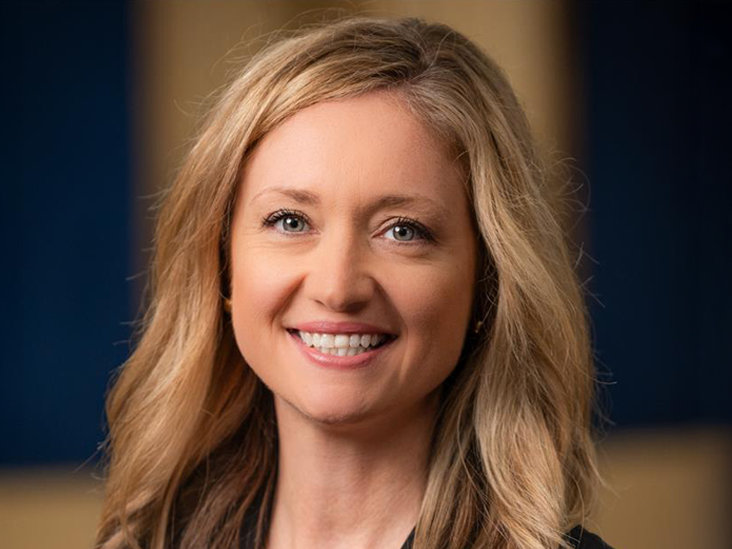
JESSICA KEARNEY: All right, welcome and thank you so much for joining us. My name is Jessica Kearney. I'm Vice President here at the Travelers Institute standing in for our host today, Joan Woodward. Before we get started, as always, a brief disclaimer about today's program.
(DESCRIPTION)
SLIDE: About Travelers Institute (registered trademark) Webinars. The Wednesdays with Woodward (registered trademark) educational webinar series is presented by the Travelers Institute, the public policy division of Travelers. This program is offered for informational and educational purposes only. You should consult with your financial, legal, insurance or other advisors about any practices suggested by this program. Please note that this session is being recorded and may be used as Travelers deems appropriate. Logos: Travelers Institute. Travelers. The Changing Liability Environment: What Leaders Need to Know. Logos: Travelers Institute (registered trademark). Travelers. MetroHartford Alliance. Insurance Association of Connecticut (IAC). University of South Carolina Darla Moore School of Business. Master’s in Financial Technology (FinTech) Program at the University of Connecticut School of Business. American Property Casualty Insurance Association (service mark) (APCIA).
(SPEECH)
I also want to give a huge thanks to our program partners, as always, the Insurance Association of Connecticut, the American Property Casualty Insurance Association, the Master's in FinTech Program at the University of Connecticut's School of Business, the MetroHartford Alliance, and the Risk and Uncertainty Management Center at the University of South Carolina's Darla Moore School of Business. Thank you to all of our partners. And a special welcome to all of you who are members, students and networks of our partners, and everyone else as well. Thank you so much for being here today.
So if you've joined us before, you know that each time we host one of these programs, we have a survey link that we drop in our chat, and we ask you for your feedback about today's session. In addition, on each of those surveys, we also ask what you'd like to hear about in future programs. So consistently, year after year, program after program, we see requests to help you all better understand tort reform, nuclear verdicts and other areas of concern in our legal system.
And as we know, independent insurance agents and brokers-- and we know there are many of you dialing in on the line today, we have quite the overwhelming audience for today's session, as a matter of fact-- and our business partners more broadly, you all see the impact of legal system abuse in your day-to-day business. And we hear that loud and clear.
(DESCRIPTION)
SLIDE: Risk. Regulation. Resilience. Responsibility. Travelers Institute (registered trademark). Travelers.
(SPEECH)
So today, we're going to give you a full update on what's happening and, importantly, what you can do about it at your own agency or your own office.
At the Travelers Institute, we recently rolled out a new educational platform addressing the availability and affordability of P&C insurance. And today's topic is one of the pillars that we examine through that series. So if you're interested in learning more about that, we're dropping a link in the chat, and you can check it out. So today, you have absolutely landed in the right spot if you're interested in this topic to help you better understand liability and legal system abuse. And joining us for a deep dive on this issue is my colleague Rich Ives.
(DESCRIPTION)
SLIDE: Wednesdays with Woodward (registered trademark) Webinar series. Today's speaker, Rich Ives. S.V.P., Business Insurance Claim, Travelers.
(SPEECH)
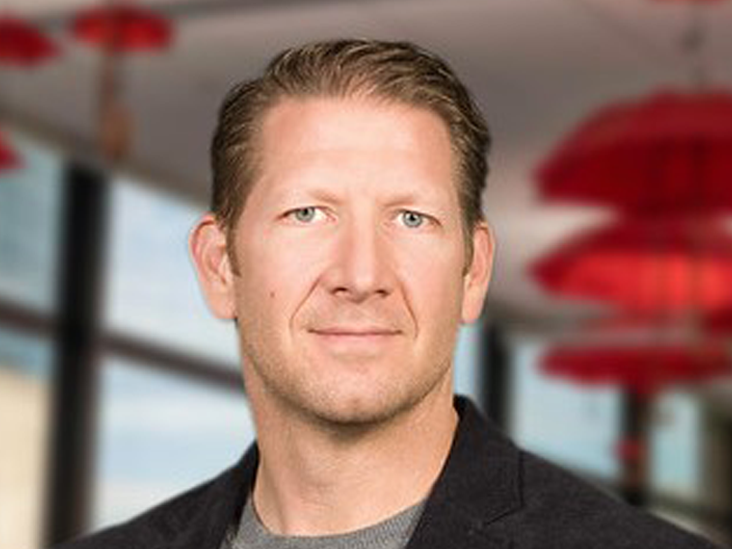
Rich is Senior Vice President of Business Insurance Claim here at Travelers. Throughout his tenure at our company, he has led corporate strategies in both the U.S. and Canada, including leading Auto Claim and Workers Compensation Claim. And I'm proud to share that he's also been a leader and frequent contributor to our Forces at Work initiative, which explores workforce well-being. You may have seen some of those programs in the past.
He's going to kick us off with an opening presentation. And then I'll rejoin him to keep the conversation going and importantly, to take your questions-- so feel free to drop those in the Q&A session below in your Zoom screen. And with that, Rich, thank you so much for your time. Thank you for being here. And the virtual floor is now yours.
RICH IVES: All right, thank you, Jessica. It's always a privilege to be a guest on Wednesdays with Woodward. And thank you for your partnership and all the terrific work that the Travelers Institute does.
(DESCRIPTION)
SLIDE: Today's Liability Environment and Impact on Business. Rich Ives, S.V.P., Claim Business Insurance. Travelers. Copyright 2025 The Travelers Indemnity Company. All rights reserved. No part of this document may be reproduced, published, or forwarded outside your organization without the express written permission of Travelers.
(SPEECH)
Next slide is, as we think about just the standard disclaimer before we jump in here that you see in front of you,
(DESCRIPTION)
SLIDE: Important Note. The information provided in this presentation is intended as informational and is not intended as, nor does it constitute, legal or professional advice or an endorsement or testimonial by Travelers for a particular product, service or company. Travelers does not warrant that adherence to, or compliance with, any recommendations, testimonials, best practices or guidelines will result in a particular outcome. In no event will Travelers, or any of its subsidiaries or affiliates, be liable in tort or in contract to anyone who has access to or uses this information for any purpose. This material does not amend, or otherwise affect, the provisions or coverages of any insurance policy or bond issued by Travelers. It is not a representation that coverage does or does not exist for any particular claim or loss under any such policy or bond. Coverage depends on the facts and circumstances involved in the claim or loss, all applicable policy or bond provisions, and any applicable law. Availability of coverage referenced in this document can depend on underwriting qualifications and state regulations.
(SPEECH)
just a little humor. This helps our lawyers sleep at night and from our underwriters. It is letting you know that I have no authority to change the terms of an insuring agreement based on anything that I might say here today.
So now, for the important stuff.
(DESCRIPTION)
SLIDE: Today's Liability Environment and Impact on Business. The Current Environment. Media, Societal Factors, Plaintiff Tactics. In 2024, it is estimated that more than $2.5 billion were spent on more than 26.9 million ads for legal services or soliciting legal claims across the United States. According to American Tort Reform Association. Driven by a generation-long decay in public trust of corporations, social inflation trends are challenging to predict, largely because they are driven by "soft" social constructions, such as public perception of corporate behavior and changing demographics, especially with the increasing influence of social media. According to PropertyCasualty360. Screenshots show a Wednesdays with Woodward Webinar titled The Exponential Rise of Nuclear Verdicts. An ad says, Injured in a slip or fall accident? It is about the money. A headline: Social inflation: How Today's Rising Claim Costs Affect Tomorrow's Insurance Premiums. An ad says: Lawyer Shop.com, Slip and fall accident and injury information. A photo shows a woman slipping next to a wet floor sign. Another ad shows a hand holding money next to text: Injured in a car accident?
(SPEECH)
The current environment-- let me share a number that should really concern every business leader. And that number is $2.5 billion. That's how much plaintiff attorneys spent in 2024 on advertising, targeting your customers, your employees and your community. And it's working. Today, we find 69% of small business liability cases already have attorney representation at first notice of an accident or a claim.
How many in our audience, I wonder, today have had a lawsuit against your company? Maybe that's why you're tuning in today. Or how many are concerned with maybe one currently or you've had a case that resulted in a settlement or a verdict in excess of $1 million, $5 million or $10 million? The question isn't whether your business will face litigation, it's whether you'll be prepared when it happens.
In the next 30 minutes, I'll show you how we got to this current state, provide some practical examples to help make the topic relevant for leaders, and give you a roadmap to protect your business starting today.
(DESCRIPTION)
SLIDE: Text: Agenda. How did we get here. Quantifying the impact. Reasons for hope: Learnings from Travelers. What you can do.
(SPEECH)
Even if you've had yet to experience an accident ending in litigation or a multimillion-dollar settlement, we are all surrounded with the symptoms and the outcome of that current situation. So we're going to describe and look at how we got here.
We're going to look a little bit at quantifying the impact of this situation. We're going to look at reasons for hope. We like positivity and optimism here at Travelers. And we've been investing heavily, and we've been learning. And you'll be able to see some examples of the ground game that we have been fighting on all of your behalf in regards to this issue. And then we'll look at, a little more practically, what you can do. So that's a little bit of our agenda.
At Travelers, we've been an industry thought leader in many areas. And the liability environment would be a good example. We were one of the first in the industry to recognize the elevated risk and increasing loss trend roughly eight years or so ago. And we began taking actions at that time.
And if you look back at earning trends-- earnings transcripts, you would find that we were one of the first to raise the issue of social inflation. And we actually received some criticism for it at that time from some analysts. Now, you can’t open a P&C earnings transcript and not find some mention of social inflation or litigation system abuse over the last few years and currently, the situation today. The impact has been significant. It goes beyond the rising cost and availability of insurance. And it's a complicated topic. So let's jump in.
(DESCRIPTION)
SLIDE: How Did We Get Here.
(SPEECH)
How did we get here?
(DESCRIPTION)
SLIDE: Legal System. Evolution of legal system erosion and new tactics increasing case values. Social Change. Erosion of trust and the expansion of perceived corporate responsibility. Technology. Accelerated information sharing, fueling polarization and easier solicitation. Economics. Inflation, money valuation, and the business of litigation influencing verdict values
(SPEECH)
We believe that the current liability environment has been decades in the making, with four primary factors contributing. You see those here listed on this slide. The first would be the legal system. Today's legal system and environment is the outcome of long-term erosion leading to broadened punitive and non-economic damage awards, along with other means that allow plaintiff attorneys to maximize case values.
Now, let me describe that a little bit because you may not be as close to this situation. So what do we mean when we talk about non-economic or punitive damages? So as part of a liability settlement, non-economic damages are part of a liability damage award that compensates a person for losses that don't have a direct dollar value, harder to quantify. They are things that are paid for, such as pain and suffering, emotional distress, loss of enjoyment of life and loss of companionship. In short, they cover the human aspect of an injury rather than the financial.
Punitive damages, I also mentioned. And that's the type of damage award that's really meant to punish a defendant for especially reckless or willful or malicious behavior in order to deter others from doing the same. Unlike compensatory damages, they are not meant to pay the injured party back for a loss they have experienced but instead to penalize the wrongdoer and send a broader message. So that would be the legal system.
Social change would be a second. Over time, we've seen the level of trust deteriorate in society. And we've seen a shift away from personal accountability to perceived increase in corporate responsibility. You'll see some examples of that. And then technology has certainly played a role as an accelerant, enabling instant sharing of information and opinion, leading to potentially polarizing sentiment and/or has created bad actor solicitation environments.
And then economics-- certainly, general inflation is part of the story, as everything costs more, along with changing perceptions regarding the value of money. And often, we see third parties interested in profiting from the situation, which we'll talk about. So going deeper inside of each of these-- and don't worry, I won't take you through each and every one-- but if we look at the legal system, you see a few things highlighted on this slide. And I'll highlight just a few.
(DESCRIPTION)
SLIDE: A timeline titled Key Events and Milestones. Legal System. 1970s. Consumer Product Safety Act of 1972. Strict Product Liability. First Amendment Protects Attorney Advertising. 1990s. Struck Punitive Damages Cap in Bad Faith (Ohio). Unlimited Non-Economic Damages (Illinois). 2000s. State Farm versus Campbell, 2003. 2010s. Damages cap Struck (Georgia). Damages Cap Struck (Kansas) Bad Faith slash time limit demand (North Carolina). Shifting Judicial landscape. 2020s. Illinois 6% pre-judgement interest. Attorney advanced punishment tactics.
(SPEECH)
In 1977, we had First Amendment protection that was given for attorneys that lifted the roof on advertising and plaintiff attorney propaganda that we are all experiencing these days, probably several times on the way to work through billboards. Illinois did pass tort reform in the 90s. But in 1997, that tort reform was ruled unconstitutional, lifting the caps on punitive damages and lifting the caps on non-economic awards. Later came other just like actions in Georgia in 2010 and in Kansas in 2019 to lift caps on non-economic damage awards.
And then you have attorney tactics. And this is plaintiff attorneys are allowed to use a practice known in their trial approach to influence jurors and judges through emotion. The strategy really seeks to trigger emotional instincts by reframing a case as a threat to community, as a threat to community safety, and by calling on the jury to render a verdict in a damage value in such a way as to punish the defendant and send a message so that the community will be safe.
A practical example of that, if you were in the court and you could hear a plaintiff attorney doing it, they would make a statement such as this: This case is about safety. The rule is simple. Companies must not put people in harm's way. And then they may pause for effect. Do you agree with that? If you don't hold this company responsible, someone else will get hurt. Your verdict can send a message and make our community safer.
You will see evidence that they knew of the danger and they did nothing. That's not acceptable and you must act. So you can see how that would attempt to reframe a case from the technical legal elements into a simple issue of safety and changes the question of what duty was owed to what could have been done, thus providing a new, higher and unfair bar, playing on emotion, manipulation and even fear.
(DESCRIPTION)
SLIDE: A new timeline appears. Social Change. 1980s. Lawyer population 574,000. 1990s. Tobacco master settlement. 2000s. Enron Scandal. Obesity and sleep declines. Rise of chronic pain. 2010s, Social inflation. Opioid epidemic. Political polarization. 2020s. Covid 19. Surgeon General advisories. Lawyer population 1,322,659.
(SPEECH)
Second, social change-- the number of attorneys in the U.S. has more than doubled from just prior to the ‘80s, up from half a million to the current 1.3 million. It's interesting to consider if the rise in litigation is driven by the increase in attorney supply, or if actually the supply of attorneys is driven by public demand and economics and maybe, potentially, a mix of the three. We've seen a decline in personal wellness also over time, brought on by things like substance abuse and dependence, lack of personal and community connection and family support. Certainly, the pandemic didn't help.
We've seen things like inflation and economic shock, lack of quality of medical care, nutrition and lifestyle factors, increases in comorbidities, such as diabetes and obesity. And we've seen attitudes toward businesses shift with, like we referenced before, less accountability personally and a little bit more toward a shift from rather than being made whole after an unfortunate accident to often the prevailing thought process today is, how can a person profit from a loss?
(DESCRIPTION)
SLIDE: Another timeline appears. Economics. 1980s. Liability insurance crisis. 2000s. Friends Cast 1 million dollars per episode. Attorney TV ad spending 6 times. 2008 financial crisis. 2010s. Rise of Nuclear Verdicts. Expansion of third-party litigation funding. Legalization of marijuana. 2020s. Post-pandemic inflation. Patrick Mahomes Contract 450 million dollars.
(SPEECH)
Third, economics-- the value of money has changed significantly over the last 20 years. And we've seen general inflation hit hard, especially to mid to lower income sectors. And a little bit of a fun to make that point clear-- in 2002, some of you may remember the “Friends” cast made history by being paid $1 million per episode, placing TV stars on the same level as that of a movie star.
If you fast forward 20 years, that shocking salary was multiplied into the hundreds of millions with large contracts, like, for example, Patrick Mahomes’ contract extension of $450 million. And when trying to identify the reasons for trends or changes, if you follow the money, you can often find strong causation or correlation. And litigation third-party funders are certainly making high rates of return by funding litigation expense and case buildup, such as paying for medical and plaintiff litigation expenses an exchange for a percentage of the case award winnings.
(DESCRIPTION)
SLIDE: Another timeline appears. Technology. 1990s. Google search launches. 2000s. Facebook expansion. iPhone launches. Algorithmic feeds emerge. 2010s. Rise of 24-hour news cycle. 2020s. TikTok's explosion. Rapid A.I. Advancement.
(SPEECH)
And then fourth, technology-- I mentioned that it's acted as an accelerant. The emergence of digital advertising has allowed for the rapid dissemination of information, making it easier to see false or misleading claims to reach very large audiences. Social media certainly plays a role, creating online outrage, where a viral accusations may happen or public scrutiny becomes the new risk vector. We see algorithmic feeds that really shape what a person might see or even potentially think.
And then rapid technology and advancements, incorporating things like AI in all aspects of the world and certainly in liability and legal proceedings is part of the story. Technology has really rewired how people communicate, form opinions, make decisions. There's a lot of good in it. But used for harm, there can be some unintended consequences as well.
Now, bringing it all together--
(DESCRIPTION)
SLIDE: 2.9 million dollars McDonald’s Coffee Verdict, 1994. 50 million dollars Starbucks Coffee Verdict, 2025.
(SPEECH)
and here's the click that you see in front of you-- many of you will remember the McDonald's coffee case in the ‘90s. We had a woman who was burned getting coffee out of a drive-thru window. There were no product warning labels really that existed at that time.
And there was actually-- I remember this. There was public outrage in response to that $2.5 million verdict that happened in regards to that case back in the ‘90s. Yet, in comparison, there has been almost silence in response to the recent $50 million Starbucks verdict that happened in 2025. Some of you may not have even heard of that, and that makes the point.
Now, if you think back, a cup of coffee from McDonald's would have cost about 25 cents in the '80s. Today, the average price of a Starbucks latte is what? You think about that, around $6. And some of us will readily pay that. And that's a 23% increase, that 25 cents to a $6 price for a cup of latte at Starbucks. That dramatic rise reflects, not only inflation, but it's also a social shift from valuing a cup of coffee as a cheap, everyday pick-me-up to embracing it as a customized premium experience.
Similarly, if I do the correlation to the verdict award, I find it notable to consider the McDonald's coffee burn case in '94 of 2.5 million and the recent Starbucks case of 50 million is a similar 2,000% increase. So 2,300% increase for the coffee that we talked about and the 2,000% increase in the verdict one to the other. Now, here's what we're not saying. I'm not saying it's just about inflation. But using that example, it's the combination of all three.
(DESCRIPTION)
SLIDE: Today's liability landscape is the product of decades of disruption - where these factors collectively operate in a high stakes feedback loop continuing to escalate the cost of risk for business
(SPEECH)
Moving forward, none of the things that I've called out are the cause. That's an important statement. None of the things I've called out are the cause in and of themselves. They are simply mile markers along the road to our current state. And by looking back, I hope it has helped us better understand that it took a long time to get here. And it will likely take time to affect change that we would love to see.
(DESCRIPTION)
SLIDE: Public Sentiment. Optimism and the Perception of Control are Declining... Placing a higher burden on companies according to Travelers data. Jury Pool Attitudes (Travelers Enterprise Market Research, 2019). Today's liability environment and impact on business. Percent of jurors who strongly or somewhat believe companies: 89% Should always have to do more than just meet government safety standards. 88% Should take any and all precautions, no matter how impractical or costly to ensure the safety of their products. 67% Knowingly cut corners when it comes to safety in order to make greater profits. 58% Always have some responsibility for the injury, even if the customer is injured while misusing a product.
(SPEECH)
Moving forward, I mentioned public-- I mentioned societal attitudes. I mentioned public attitudes, reason why that's important. Being judged by a pool of your peers is what makes up juries. So public sentiment and thought process is very much tied in here. According to a Travelers market research study, we find that optimism and the perception of control have been on the decline, placing a higher burden on companies.
And we see that in juror perceptions. You see that on the slide in front of you. According to Decision Quest, who did a comprehensive survey of jurors, 89% of them believe businesses should always have to do more than just meet government and safety standards; 88% believe businesses should take any and all precautions, no matter how impractical or costly, to ensure the safety of their products.
Sixty-seven percent believe businesses knowingly cut corners when it comes to safety in order to make greater profits. And 58% believe businesses always have some responsibility for the injury, even if the customer is injured while misusing the product.
(DESCRIPTION)
SLIDE: Percentage of Americans who believe there are too many lawsuits in the U.S. 2016, 90%. 2025, 56%. A sharp decline from 2016 to 2025. Swiss Re Verdicts on Trial: The behavioral science behind America's skyrocketing legal payouts 2025. Percent of jurors who strongly or somewhat believe. 80% Jurors now favoring the use of punitive damages. 72% Believe it is a juror's job to send a message to corporations to improve their behavior. Orrick - Jury Research Into the Minds of Americans, 2025 Result.
(SPEECH)
Now, that study was in 2019. We went back and looked, that study has not been duplicated because we were trying to understand, how has that really changed over the past handful of years?
But we did come across, there are two other studies that are available currently today that were done in 2025. And we know that public thought process in this regard around liability has not improved. Fifty-six percent of Americans now believe that there are too many lawsuits in the U.S. when compared to 90% who believe too many existed back in 2016. Eighty percent are in favor of using punitive damages; 72% believe it is the jurors' role to send message to corporations. So we don't feel like that one has improved over the past few years.
(DESCRIPTION)
SLIDE: Quantifying the Impact.
(SPEECH)
Moving forward, when we think about quantifying the impact on business, we can do it in a few different ways. Litigation
(DESCRIPTION)
SLIDE: Litigation Funding and Large Verdicts Pressure Businesses. A graph titled Litigation assets Under Management shows bars for 2021, 13.7 billion dollars. 2022, 15.1 billion dollars. 2023, 15.2 billion dollars. 2024, 16.1 billion dollars. 2025 predicted, 18 to 20 billion dollars. Westfleet Advisors 2024 Litigation Finance Market Report. A second graph is titled Sum of Corporate Nuclear Verdicts in Billions, showing a sharp incline from 2015 to 2025. Marathon Strategies —Corporate Verdicts Go Thermonuclear, 2025.
(SPEECH)
fund, assets under management continue to grow. So we know this is a continual concern. And no doubt, many of you have heard about this nuclear verdicts. And you've seen some large headlines in an industry media platform or in the paper. And this provides you a little bit of that understanding of that impact.
A nuclear verdict, if you're not as close to it, are those verdicts rendered by a court or a jury in excess of $10 million or higher. In 2024, there were 135 of those across the U.S. against a corporate defendant that resulted in a nuclear verdict. That was a 52% increase over just the year prior, 2023 to 2024.
The sum of those verdicts reached an eye-popping $31.3 billion or, in other words, 116% increase over 2023. We see both the numbers of them, as well as the total amount of them increasing. While the 2025 numbers are not yet available, estimates-- industry estimates believe that they will take another step up. And now, we have what has been defined as thermonuclear verdicts. And those would be verdicts that would be higher than $100 million. And that increased to a record high of 49 in ‘24 compared to 27 in ‘23.
(DESCRIPTION)
SLIDE: Nuclear Verdicts. Root Cause Example. Trucking Manufacturing. Strengths and Supporting Facts. Plaintiff's vehicle driving at highway speed struck the rear of the customer tractor trailer resulting in the fatality of the driver and a passenger. Customer manufactured the trailer 20-year prior meeting minimum standards. Rear end collision with plaintiff driver intoxicated and neither wearing a seatbelt. Challenges and Arguments. The jury was prevented from hearing key evidence, but did hear about the customer and other manufacturers lobbying efforts against tighter federal standard. Attorney argued that a stronger RIG could have saved their lives. Plaintiffs used the "reptile theory" accusing the customer of participating in an "unlawful conspiracy to knowingly produce dangerous products" when better safety technology existed. Jury verdict: $462 million ($450 million designated as punitive damages). Judge denied a new trial but reduced $450 million in punitive damages to $108 million
(SPEECH)
Now, let me show you a case example. It's all very interesting to hear in slides. It's another thing to get down to a case level example and understand exactly how these things play out. So the way the slide is designed, you have a little bit of left side, which is, these are the reasons why it should support strong facts on why a business shouldn't have been responsible for the loss. The right side are those challenges and arguments that proceeded in order to actually play out in favor of the plaintiff.
So I'll show you how a 20-year-old trailer that met every safety standard became a $462 million liability. Travelers did not handle this case. But I think it's a very helpful case example to see how the issues that we've mentioned so far play out in liability litigation. This case was against Wabash Trailers on an accident that happened in 2019. The verdict was rendered in 2024, and then it was reduced in punitive damages in 2025-- so more of a recent example, certainly, in that respect.
In 2019, an intoxicated driver without a seat belt rear-ended a Wabash national trailer at highway speeds, killing both occupants. Now, for those who are close to the business, you'd think, OK, rear-end accident, where does that liability reside? The trailer was 20 years old and met all safety standards when manufactured. And here's the game changer. The plaintiff attorney transformed this from, did the company follow the law to what could they have done to save lives, creating a new impossible standard based on hindsight and emotion.
But here's what makes the case a perfect storm was the evidence imbalance. What the jury wasn't allowed to hear was that the driver was intoxicated and neither victim wore their seat belts. What the jury was allowed to hear, they were allowed to hear about Wabash's lobbying efforts against tighter federal rear underride guard standards, creating a conspiracy theory of profits over the good of the community. And they created a narrative around a double standard.
The plaintiffs revealed that Wabash manufactured trailers in Canada with stronger materials but maintained weaker standards in the U.S. for trailers. The attorney argued that a stronger rear impact guard could have saved the lives, despite the plaintiff's intoxication and safety violation. So the plaintiff's approach, this case is about safety.
The rule is simple. Companies must put people not in harm's way. And they place profits over the good of the community, your verdict can send a message. You can feel how that played out. The verdict was 462 million; 450 million of that was for the punitive awards, later reduced to 108 million.
The message to every manufacturer, every perfect legal compliance 20 years ago can become half a billion liability today. This isn't about safety. It's about creating a new business model, where compliance is not enough and juries become the ultimate product safety regulators. And remember, this is just one verdict example. How many other companies settled similar cases for millions rather than take the risk at trial?
(DESCRIPTION)
SLIDE: Nuclear Verdicts, Root Cause Example: Corporate Structure. Strengths and Supporting Facts. Customer has two companies insured under the same insurance policy, Company A & B. Company A was working at a wellsite utilizing leased equipment. Employee of company A struck the well while using leased equipment resulting in his death. Plaintiff was prohibited from suing Company A due to W.C. exclusive remedy. Challenges and Arguments. Plaintiff sued Company B alleging they were responsible for training and safety of Company A based on the equipment lease agreement signed by Company B. The court ruled in favor of plaintiff that Company B had culpability based on the terms of the lease agreement. Case went to trial and plaintiff utilized anchoring and sought $240 million and defense suggested $6 million. Jury award: $71.9 million in general damages. Company B is responsible for the entire verdict based on joint and several liability.
(SPEECH)
Case example No. 2 is in regards to corporate structure. This is a case of how a hydraulic line ruptured and became a 72 million in corporate structure nightmare. The setup-- two related companies, we'll call them company A and company B, they operated under a single insurance policy.
Company A was contracted to work at a well site using leased equipment from an outside vendor. What happened in this accident, in this unfortunate accident, was during operations, a hydraulic line ruptured on the tractor on the leased equipment, causing a malfunction that resulted in company A's employee’s death-- so very unfortunate situation. Proximate cause was the hydraulic line blew, which shifted the lift and caused the following ensuing damages.
Now, this is the follow-the-money strategy. Here's where plaintiff attorneys navigated around the issues of fault to find the highest payment source. The real culprit was the equipment owner, who leased the equipment to our business and had malfunctioning equipment, meaning the hydraulic line that burst, causing the death.
The problem, though, if you're on the plaintiff's side, is there were limited insurance coverage available for that leasing company. And they had very limited assets to go after. So that was the problem. Additionally, they couldn't go after-- because the employee worked for company A, they were eligible for work comp benefits per state statute, but they couldn't sue their employer. So the solution, target company B, who leased the equipment and who was not protected by work comp exclusivity, given the employer-employee relationship was with company A.
And the verdict, 72 million in general damages. Company B was held responsible for the entire amount, despite having no direct fault in the unfortunate accident. And the brutal reality is, it didn't matter that company B wasn't operating the equipment. It didn't matter that the lessor's equipment actually caused the death. What mattered was, who had the insurance coverage and the business assets to pay? Now, that provides some interesting examples, some thoughtful things, I think, for you to think about.
(DESCRIPTION)
SLIDE: What would you do? A letter appears on a laptop. To: John Smith, CEO From: Law Offices. RE: Demand Letter. Given the indisputable liability and outrageous conduct of your client and the devastating and catastrophic injuries suffered any reasonable person must view your client as grossly underinsured and exposed to a verdict well in excess of its total in insurance coverage. Only a full and unequivocal tender of the policy limits will prevent the economic annihilation and extinction of your client which will inevitably result should this case go to trial. His manager will admit the work was dangerous and that this worker was in grave harm, but he did it anyway. His defense that management made him do it will enrage the jury and exponentially multiply the jury's gargantuan damages resulting in economically crippling punitive damages. The jury will hand down punitive damages that will condemn your client to economic extinction.
(SPEECH)
Now, moving forward, now, I want you to imagine for a second, let's imagine that you have a litigated liability case being made against you in your business. Let's say, for example, you have $1 million primary coverage, and you have a $10 million umbrella-- so $11 million in available coverage limits. You know, in this accident that just happened, you have some liability but it's a minority, maybe 25%.
And you know that the damages are being wildly exaggerated in the $20 million range. And the plaintiff is making a time limit demand for your full 11 million policy limits to settle the portion of this loss. A reasonable value is much closer to 5 million, well within your limits. But you recently saw a headline from a business that you know have a verdict against them for 40 million and you start to be a little bit concerned.
And then you receive this email that went to your insurer and copied you in on it as well, coming from the plaintiff attorney. You can feel the language in this one and how they use this type of a language to play on emotion and of fear-- things like, for example, annihilation of your business. You will be exposed to a verdict well in excess of your total insurance coverages. So it gets your attention.
Now, what do you do? Do you stand firm on what is reasonable and owed, or do you say, I want out, just pay the limits? Our collective response to that question-- what I mean by our collective response, I mean businesses, agents, insurance, carriers, TPAs, defense attorneys-- our collective response to that question either make us part of the problem or they make us part of the solution.
(DESCRIPTION)
SLIDE: A diagram shows an iceberg titled Nuclear Verdicts. Above the surface is labeled Trial verdicts. Below the surface are Attorney Litigation, Attorney Non-Lit, and Unrepresented. Shadow Effect of Litigation: Litigation outcomes shape the value of attorney represented claims - from minor injuries to major losses. Thoughtfully acting in this environment influences the entirety of liability cost.
(SPEECH)
And there is a shadow effect of litigation, as we move forward. The issue goes deeper than just court verdicts. Let me explain what we mean by the shadow effect of litigation. This is the disproportionate impact that the mere threat of litigation has on business costs and decisions. What's striking is that this picture actually is very close to reality.
So while actual verdicts-- so liability cases that have gone all the way to trial and a verdict-- liability verdicts are roughly 2% of liability costs. Attorney-represented cases, where the suit was filed but it didn't actually proceed all the way through to trial is roughly 60%. Attorney cases where no suit was filed is more of a third. This means that 90% of liability costs comes from the shadow or the threat, rather than actual trial outcomes.
We need to be very good at trial excellence because it influences case values. If we buy into the plaintiff narrative, if we fold and pay more than what is reasonable and owed, then we feed the beast per se. We need to address the whole to impact the issue of the rising cost of liability.
(DESCRIPTION)
SLIDE: Quantifying the impact. A graph titled Industry Liability Direct Losses Paid shows an increase in Direct losses paid increasing to over 50 billion dollars, 7% C.A.G.R., from 2015 to 2024. Cost to Business. Increase in Attorney Representation - Surge in Lawsuits. Higher Claim Frequency & Severity - Increased Loss Costs. Escalation of Claim Values Exceeding Policy Limits. Rising Insurance Premiums. Reduced Availability of Coverage and Limits. Reputational Harm. Strained Business Relationships. Loss of Productivity. Loss of Competitive Advantage. Excessive litigation and abuse of the U.S. legal system are effectively imposing a tax on the U.S. economy and causing a surge in liability insurance costs. Insurance Journal: Excessive Litigation Causes Surge in Liability Insurance Costs
(SPEECH)
Further, around quantifying the impact, industry liability losses. And this is industry liability loss trend. This is not Travelers particularly. But it's been reported that liability loss trends have been on a cumulative annual growth rate of 7% per year for over-- for a decade. And that's a cumulative increase of 70% over this decade period of time. And it's directly, certainly, influencing cost and availability.
But it's more than just insurance costs. It's evaluation of claim values, escalating claim values in excess of policy limits. Certainly, that's an impact on business. It's the reduced availability of coverages and limits. It's the reputational harm of businesses. It's operational costs to mitigate risks over and above required standards.
It creates strained business relationships. It's the loss of productivity to either go above and beyond in all aspects to mitigate or the distraction, certainly, when a lawsuit or a case is made. And ultimately, it's the loss of competitive advantage because all of those costs are then-- don't stay in the courtroom per se, but they ultimately end up showing up passed down through in the costs of goods and services.
(DESCRIPTION)
SLIDE: Reasons for Hope: Learnings from Travelers.
(SPEECH)
Now, there are reasons for hope. As we look forward to every action, there is a response. And our response and our investment to counter these issues have been significant for quite some time. And
(DESCRIPTION)
SLIDE: Leading Claim Capabilities. Advancing liability outcomes with expertise and technology investments to effectively resolve claims and enhance experience. From Low exposure to High exposure, Early Engagement, Supported Human Connection. Digital capabilities that strengthen transparency and collaboration throughout the claim lifecycle. Resolution Art and Science. Expertise & Technology. Capabilities that combine critical thinking with data-driven insight to deliver fair, well-informed outcomes. Litigation Strategy. Advanced jurisdictional intelligence, AI-powered defense preparation, mock-trial practice, and broad trial-ready attorney depth. Optimal Outcomes. Foundational. Expert Claim professionals with specialized forensic, investigative, and medical-evidence support. Advanced analytics and A.I.-driven insight that elevate clarity and decision-making.
(SPEECH)
if we look at this next slide across our claim portfolio, we can see a full spectrum of complexity around claims that may be minor to very complicated losses.
And while each capability that we have built and invested in over the past many years has its own sweet spot, none of them operate in isolation. They form a connected, reinforced ecosystem from early digital outreach to structured evaluation to litigation readiness. How we perform in stage one directly affects what happens in the next.
Strong early execution prevents unnecessary escalation. Strong mid-phase strategy positions cases for resolution. And when a case does progress toward litigation, our trial readiness capabilities are already informed by everything done upstream. And you see some of the specific capabilities and things that we have invested in.
And we are having some success.
(DESCRIPTION)
SLIDE: Successful result: Tractor Trailer Auto Accident. Strengths and Supporting Facts. Company was responsible for moving disabled tractor trailers from the highway. They moved the disabled tractor trailer to a "safe" place on an off-ramp and was there 8 hours before the accident happened. Extreme snowy weather conditions and motorist should use care while driving. Plaintiff rear ended disabled tractor at a speed that was too fast for conditions. Challenges and Arguments. Plaintiff was able to establish the tractor trailer was partly in the roadway. They also established the tractor trailer could have been exclusively on the shoulder of the off ramp. Very sympathetic case, deceased mother of 5 and surviving father with orthopedic injuries and a traumatic head injury. Case was tried for 2 weeks and plaintiff asked for over $100 million in his closing statement. The jury deliberated for 4 hours and returned a defense verdict.
(SPEECH)
Let me share you a good positive success example-- how strategic positioning and weather evidence delivered a defense verdict against a $100 million demand. The challenge in this case, our client, a towing company, moved a disabled tractor-trailer to what they determined was a safe location on an off-ramp to allow the road to be cleared in a blizzard situation. Eight hours later, because of the significant event in the extreme snowy conditions, the tractor-trailer was still parked there, and a motorist struck that tractor-trailer going down that exit ramp.
The case proceeded to trial. It was a two-week jury trial. The plaintiff's closing demand was over $100 million. It was a high-profile highway tragedy with significant media attention. It unfortunately resulted in a decreased mother and surviving father with multiple injury complications.
The plaintiff's approach was simply the towing company created a hazard by leaving the trailer in a dangerous location. Eight hours wasn't unreasonable. They should have moved it to a safer spot. The company prioritized convenience over public safety. And the tragedy was completely preventable.
Our trial excellence strategy was that weather and unsafe driving were the proximate cause, not the trailer placement. It focused on a reasonableness standard, established that the off-ramp location met industry safety standards, and driver responsibility was a factor. It emphasized that the motorist must exercise heightened care in severe weather conditions. This case result ended in a four-hour jury deliberation with a complete defense verdict, which meant no liability at all against the towing company.
Now, why this worked was that we shifted the focus from was the location perfect to did the driver exercise reasonable care in dangerous conditions by making the weather part of the critical issue and the driver responsibility. The message even against 100 million demand and tragic circumstances, strategic case positioning and trial excellence can deliver a compelling victory. And juries will follow the evidence when it's presented in a very clear and compelling manner.
(DESCRIPTION)
SLIDE: The Rest of the Story. A graph shows three bars: high Plaintiff Demand, low Claim Evaluation, and low Actual Resolution. An arrow moving downward over the graph is labeled, Grounded in thoughtful risk evaluation. Demands often far exceed final outcomes. Settlement positions reflect liability and risk, not demand size. Resolutions align with exposure evaluations. We approach liability with a trial-readiness mindset: Early identification and evaluation of claims where trial may be the best resolution. Disciplined approach grounded in thoughtful risk evaluation, enabling us to respond appropriately to inflated demands while paying what is owed and protecting our policyholders. Taking the right cases to trial, based on a deep knowledge and expertise of liability, damages and the litigation environment.
(SPEECH)
So now, the rest of the story. Some of you may be Paul Harvey fans; I happen to be. The rest of the story, I could share other case examples of success stories, but I'd rather tell you the whole. And this is how it all comes together for us. The attorney narrative is well told out there with outliers, examples and the headlines that say, get what you are owed. And awards could be millions and millions.
But what they're not telling you is the rest of the story. As they take the trial risk, in some instances, the attorney or the plaintiff walks away with nothing, a defense verdict. And in many instances, the settlement or the verdict ends up being what we offered to pay or less before trial began. But the attorneys’ share of the win is subtracted from the ultimate plaintiff's award. And in some cases, that can be up to 40% off the top.
Now, I'll ground that a little bit in some stats. We had 1,200 cases in our general liability line of business that we determined we could not settle for a fair and appropriate value. And we had to try those cases. And those cases came to resolution over the last 12 months. Of all those 1,200 cases that I mentioned, when we determined to litigate, the demand before trial started at 4x, 4 times what we deemed was reasonable.
Fast forward, the overall share of the cumulative of those 1,200 cases was closer to 1x or less from what we actually offered before trial. So we think that in whole when it comes together, we are really having some great success, and we believe it-- it's due to a lot of our investment, a lot of our expertise. There is an army of folks here at Travelers, who are very, very good at this. And you definitely would want them on your side if you have this type of a liability risk and this type of a loss situation.
By the way, we are also-- if I tell you our win rate, which means our share of the verdict or award was at or less than what we offered prior to trial, was 72% across all those 1,200 cases. Now, ultimately, even though we're playing the ground game, reform is needed. And it's an ever-evolving challenge, as you see a little bit on this next slide.
(DESCRIPTION)
SLIDE: Tort Reform Changing the Landscape. Caps on Non-Economic Damages. Litigation Funding Transparency and Tax. Controlling Damages. Punitive Damages. Limitations on Liability.
(SPEECH)
What we refer to when we talk about the need for tort reform are things like caps on non-economic damages, litigation funding transparency, controlling the damages, meaning that the damages that are owed are actually what were paid and not what was billed-- if you think about medical, that's just an example-- caps on punitive damages or some limits around liability. And we are seeing some success, as you can see on this next slide.
(DESCRIPTION)
SLIDE: We are Seeing Some Progress. Package Tort Reforms. Florida - House Bill 837 (2023). Transition to Modified Comparative Negligence. Two Year Negligence Statute of Limitations. Controlling Damages. Enhancing Transparency in Third-Party Litigation Funding. Limiting Liability for Negligent Security: Protections Against Bad Faith Claims. Changes to Attorney Fee Awards. Georgia - Senate Bill 68 & 69 (2025). Curbing Anchoring in Jury Awards. Controlling Damages. Limiting Liability for Negligent Security. Enhancing Transparency in Third-Party Litigation Funding. Allowing Seatbelt Evidence in Auto Cases. Streamlining Motion to Dismiss and Stopping Late Plaintiff Dismissals. Changes to Attorney Fee Awards. Other States Single Successes. State Tort Reform (2025). Arkansas: Phantom Damages Reform H.B. 1204. Kansas: Third Party Litigation Financing Reform S.B. 54. Louisiana: Comparative Fault Reform H.B. 431. Missouri: Class Action Reform S.B. 47. Montana: Third Party Litigation Financing Reform S.B.511. Oklahoma: Comprehensive Tort Reform S.B. 453. South Carolina: Joint and Several Liability Reform H. 3430. Seven states are still in session and will be until the end of the year: CA, MA, MI, NJ, OH, PA and WI.
(SPEECH)
We have seen some success in Florida and in Georgia. We've seen some very positive momentum in some other states, like Louisiana. But there are still challenges out there.
So Travelers is very active in this space. The call is, what can you do when these things come up in your state is actively get involved and be a proponent of reform efforts.
(DESCRIPTION)
SLIDE: What You Can Do.
(SPEECH)
Now, what can you do? Let's shift that a little bit and become really practical.
(DESCRIPTION)
SLIDE: Timely Actions and Reporting Manner. Delayed reporting increases the likelihood of attorney involvement. A graph is titled, Notice Timing to Legal Representation. It shows an increase in Attorney Representation rate per N.O.L. leg segment in days increasing from 39% at 0 to 9 days to 46% at 10 to 14 days to 51% at 15 to 19 days to 54% at 20 to 25 days to 73% at over 25 days. On average, an attorney is notified 60 to 90 days before Travelers has been notified. Unrepresented, 3 days Timely Freeze the Facts. Represented at first notice, 104 days delayed First notice by attorneys 35 times longer. Data represents median days notice of loss lag time. Evidence preservation to Reduce Claim Costs through Early Intervention through Mitigate Legal Risks. Data from 2022-2024 GL BI and Business Insurance Auto Inventory
(SPEECH)
What you do and how you act in the moment immediately following an accident will either set the stage for optimal resolution or an unfortunate outcome. We see that often.
First, empathize and help or encourage, rather than encourage anger or resentment that won't lead to an optimal resolution. Get the experts involved early. There is a correlation between the longer it takes you to report the claim or to get the experts involved, the greater the likelihood that an attorney will become involved and really unnecessarily. I mentioned that 69% stat, where 69% of our general liability bodily injury cases already have an attorney present at first notice of loss.
That's not just simply a small business concern. That number is 47% for mid-size businesses, 45% for large businesses. And auto would follow a very similar pattern. Meaning that other invested parties with a financial motivation to build the case against your business have an advantage when you don't get the experts involved early.
Second, on this next slide, it's really that call to action, to get personally involved.
(DESCRIPTION)
SLIDE: Get Involved, A Call to Action. A wheel-shaped diagram has sections labeled: Third party litigation funding, jury anchoring, phantom damages, attorney advertising, public nuisance, non-economic damages. Majority of Americans Want Reforms. 86% Agree that state and federal lawmakers should address abuses of the legal system suit. 88% Believe there should be full transparency and disclosure of all the parties who have a financial stake in a civil lawsuit. Source: APCIA Munich Re survey infographic legal system abuse. Most Americans Agree Certain Plaintiff Lawyer Tactics Increase the Cost of Insurance and Everyday Items 69% believe the practice of third-party litigation funding and jury anchoring will increase the overall cost of home, auto, and business insurance for all Americans. 68% agree that excessively high jury awards will increase the overall cost of home, auto and business insurance for all Americans. Source: APCIA Munich Re Legal Abuse Rising Coasts Survey.
(SPEECH)
These issues create an increased economic burden for businesses and consumers across the U.S. And based on some surveys and studies, we know that the larger portion of the community is actually very interested in these issues around reform. And certainly, businesses are as well.
Now, what can you do if you're a business? Last and not least, my last slide, as I've gone on way too long.
(DESCRIPTION)
SLIDE: Winning Game Plan. Thriving amidst Challenge. Prioritize Employee Well-being and Safety. Foster a Culture of Care and Accountability. Exceed Regulatory Standards. Prepare for Adversity. Respond Effectively to Incidents. Lead with Awareness. Engage Actively in Claims Management. Influence Regulatory Reform. Be Active in Your Community.
(SPEECH)
So what can be a winning game plan to actually thrive amidst these challenges? And I would put it to you in this way, I think there are the things that you can do immediately within the next 30 days. If you have an accident, freeze the facts after an incident. You're going to need them. Get the experts involved early, as we talked about. Empathize and help rather than encourage anger when an accident happens. Maintain open communication with your insurer or your agent and your broker.
Next is the short term. Think about this more over the next 12 months. Lead with awareness, acknowledging that your leadership influence on the workplace and culture can be significant. Participate actively in trials or depositions if you have a lawsuit that is mounting against you with a strategy to humanize your organization. We'll talk probably more about that in the Q&A. Build community goodwill as your defense strategy. And don't buy into the plaintiff narrative. Stand firm on what is actually owed and reasonable.
And then long term, advocate for regulatory reform, the things that we mentioned prior. Support industry-wide efforts to address litigation abuse. Counter the $2.5 billion of advertising with positive community presence when you are judged by a community of your peers one day in a lawsuit. Start with the immediate actions-- they cost you nothing but can save you millions. And the short- and long-term strategies will create and build defenses and change over time.
(DESCRIPTION)
Thank you.
(SPEECH)
That is our story, Jessica. I hope it was meaningful to folks.
JESSICA KEARNEY: Rich, that was fantastic. Thank you so much for taking the time and sharing that very thoughtful presentation. I think you mentioned off the top, obviously, a likelihood that the many folks in our audience today, many of them may have experienced a lawsuit. And even if you haven't, I think we've all seen, as you mentioned, billboards, attorney advertising on sides of buses. And so it's something that we're all familiar with in some aspect of our lives.
And I loved how you talked about the evolution, really, over decades and how this has come up through the ‘80s and ‘90s and into today, types of damages, attitudes towards businesses. I think that's all very, very helpful information. And I love that you ended on a note of optimism and some really practical things that people can do because I think that's so important to really ground this and put it into context.
So, thinking about where we go from that presentation, what struck me is, you talked a little bit about being made whole, being fairly made whole after an incident occurs versus looking to profit from a loss. So I'm wondering if you can talk a little bit more about that distinction. I think it was really woven all throughout your presentation. But can you talk about that a little bit more and maybe even share an example?
RICH IVES: Oh, I love that question. So let's think about liability. The early concept of liability was built around the idea that if you cause harm, then you are responsible to make it right. The traditional thought process was there was an unfortunate accident, make me whole. And while all claims are not the same, there are some claimants that unfortunately have more of a mindset of an accident happened, and I'm going to get everything that I can as a result-- so see how that has really shifted over time.
I think to me, it was made very practical. One of our folks here, as a matter of fact, actually, Keith Anderson, who leads our liability claim organization in GL, who's terrific, he brought this one to my attention. And it was an attorney advertisement over the holidays. And it was a plaintiff attorney advertisement that did a play on the holiday song, "Fa La La La La." And it was a picture of Santa slipping on milk. And the words were "Fall Law Law."
Now, a little play on the situation there. During the spirit of giving in the holiday, if Santa is in trouble in this situation, we've got issues that need to be dealt with. Now, the original purpose of the tort law was really indemnification. It was restoring somebody to the position that they were in before the harm.
Modern litigation culture, however, at times feels like it operates in a system where damages can exceed fair and reasonable compensation, where attorney fee structures incentivize litigation and where liability insurance really provides a payment source. And we know plaintiff attorneys can drive up the overall cost of the claim. And they have a motivational reason to do so because they're taking a cut off the top when the awards happen and, in some cases, up to 40%. For some, the accident is no longer solely an unfortunate accident to recover from. It can actually be viewed more as a potential financial windfall.
JESSICA KEARNEY: Thank you. That's helpful. And the other piece of it that I was thinking about, looking at it from a slightly different angle, is we mentioned inflation, economic inflation. We've talked about social inflation and how that manifests. So it can take years for inflation to fully impact in casualty loss costs. On top of that, as I just mentioned, you've made clear, social inflation remains persistent. So how are insurance carriers actually differentiating between the purely economic cost drivers, that economic inflation, versus the premium that's added as a result of this legal system abuse?
RICH IVES: Yeah, good question. We see a lot of value in being able to stay very close to that issue in our model, if you will. I'll call it model for Travelers. And that is really the model of collaboration. And when we think about collaboration, we think about claim and underwriting and actuarial having strong relationships and joined at the hip and really looking at issues and how those trends happen.
Because the challenge here, like you mentioned, in liability, you have both the quantifiable and then you have a little bit more of the subjective. And so it gets complicated. So we see in this context, social inflation really is-- and the context refers to the trend of rising insurance claim costs that exceed general economic inflation. That's what we're talking about.
And that's driven, not by medical costs or repair costs, but by shifting societal attitudes about the non-economic proportions that we talked about. And one component we can quantify and the other component we need to stay very close around what do we view as in our forecasting efforts around those components? And then how do we consider those in all of our actions?
Well, insurance can effectively quantify and forecast the economic components is what I'm trying to say. Evaluating the non-economic does provide greater challenges for the industry. I think our Travelers culture helps us and become invaluable in enabling us to stay very in tune to the near term and around pending case forecasts and the quantification of both favorable or unfavorable environmental changes so that we're considering those in our actions.
JESSICA KEARNEY: Yeah, so a lot certainly going on behind the scenes here. I mentioned at the top that you have been one of the leaders of the company that's been greatly involved in our Forces at Work initiative, looking at workforce well-being. And I'm curious if you see any connection between that platform and the issue that we've been discussing today.
RICH IVES: And if you haven't been involved closely with our Forces at Work initiative, just a two-second on what that is. So our Forces at Work initiative is about bringing thought leadership to important topics that promote the success of business through personal well-being of the workforce. And in our workers compensation data and experience, we do a lot of things firsthand, first party. So it's very easy for us to stay in tune to what's going on inside the workforce.
One of our forces at work that we talk about are the psychological and the social risk factors, which can influence both workplace accidents, as well as the recovery after an injury. And what we mean by psychological or social risk factors are these. They would be things like pain catastrophizing or unrealistic expectations, which could go both ways. I have an expectation that I'm going to get better a lot faster or that I'm never going to get back to the same spot that I was before the accident.
Perceived injustice is another or lack of positive coping skills. Now, we have a method in workers compensation for being able to identify if an injured employee in a workers compensation loss who's losing time from work has one of these flags. And we have seen that rising. And it's up to about 40% of those losing time from work due to a workplace accident exhibit one or more of those flags.
Now, here's the kicker. When they do, the duration of their time out of work goes up by 50%. So that certainly ties to the resiliency and ties to maybe, potentially, some of the costs. And it certainly would seem that a connection can be made between things like perceived injustice, someone else is responsible for my circumstances, a lack of personal accountability that does not necessarily help promote and encourage recovery post injury, and the lack of things like coping skills. Certainly, I think there can be a correlation made to what we see in this space in liability.
What we have learned, and I think in our workers compensation space, can help us understand ways that a plaintiff behaves or deals with issues in a liability case. And studies we know on the overall wellness in the United States have shown an increase in mental health challenges across population. So I think there's a link.
JESSICA KEARNEY: And we're going to actually have another program on that coming up on March 4. For those of you tuning in, digging down on some of those issues, a little bit more about mental well-being in the workplace, that's a good sidebar. I want to circle back, Rich, to the tort tax and maybe go a little deeper there. I know we've a lot of ground to cover still. But how can the insurance industry better communicate the link between legal system trends and the rising cost of everyday goods and services? So how can we communicate that better to the general public?
RICH IVES: One of the ways that we're trying to do that, along with all of our industry partners, is by saying, what portion of your household income is affected by it? So when we talk about the tort tax, what we're describing is the hidden economic cost of excess litigation. That's not a government tax, but it operates like one. According to the American Tort Reform Association, it exceeds $306 billion annually. That's a big, big number, about $6,600 per family a year for a family of four. So that tries to really make that point come home.
Claim costs today are rising faster than general inflation, driven by social inflation, nuclear verdicts, expanded liability theories, all the things that we mentioned. Those costs don't stay in the courtroom. That's a big part of what we tried to really get across today. They show up in higher auto and homeowners premiums and higher commercial insurance costs and ultimately higher prices for everyday goods and services, as they're passed down to goods and services. In some markets, coverages become less available altogether. So that's one of the ways that we're trying to make it relevant because there are certainly a consumer impact and there's certainly a competitive business impact.
JESSICA KEARNEY: That's helpful. And Rich, I've got two more quick questions before I'm going to pivot to some audience questions. These are some things that came to my mind as you were talking. So businesses want to do the right thing. So they want to show that they care and do the right thing for their community, while also not accepting fault for something they didn't cause. So if you're a business owner listening in to this program today, do you have any thoughts on striking that balance?
RICH IVES: Yeah, so when that happens, when something bad happens, act with empathy, make them feel heard, make them feel respected, not dismissed. You can validate an experience without validating allegations. You can tell them things like, situations like this are serious to us and we care.
You can align your internal messaging by ensuring that your frontline staff know what to do when a loss happens. Offer assistance-- that could mean helping them with medical coordination or contact support, providing claim information, ensuring respectful treatment. You can preserve evidence without conceding negligence or accepting fault, that's the big, big point, or assigning blame internally or externally in that moment that is very critical right there at the beginning.
Document the incident, very good. Because if this proceeds to litigation two years later and now you're responding to it in a court and you don't remember what's happened and somebody else is telling the story, you're going to want to be able to reenact exactly what did happen. Report losses as well, that's a big one.
And then the other one is, we think that's what's very important, too, when it comes time for litigation is to humanize the organization. We know back to what jurors think, they need to find someone who's representing your company or hear from somebody that's representing your company that they can relate to-- so being thoughtful in that regard as well.
JESSICA KEARNEY: That's great and all very practical. I'm wondering, what advice might you have to a business leader who is currently in the middle of a litigated case? What are some important things for them to do or not to do?
RICH IVES: Yeah, and so let me start with a little bit of-- I'll give you the stat. When asking jurors the question of, who do they trust least in a courtroom setting, 76% say it's corporate executive defendants. Now, while we don't agree that corporate executives can't be trusted, that picture is the one that's being painted. And you need to be aware and plan accordingly-- so be thoughtful of who represents. So that's pretty crucial. And then what was the other part of your question, Jessica?
JESSICA KEARNEY: What they should do or not to do?
RICH IVES: Yeah, so not to do, I think I'll go right back. The one I just want to continue to punctuate is, don't assume that it's going to go away. Treat every incident like it has the potential risk to impact your business and your reputation. That's on the don't do side. Because I gave you a lot of do's. The other one that you don't want to do is start being defensive right after that happened. That's not going to incite this situation to go in the right direction.
JESSICA KEARNEY: That's great. OK, I want to get to some audience questions. And this is actually a combination of several questions that have come in. So I'm going to paraphrase them together. On the topic of AI, so how does artificial intelligence and machine learning play into all of this? You mentioned some technology threads earlier. Does it account for changing societal feelings on claims and some of these verdicts that you've been discussing?
RICH IVES: Yeah, both at the claim level and systemically shaping societal attitudes and litigation behaviors. That's what we believe. Now, at the direct level, there's the potential for fraud. We haven't talked about that much today. So let me mention that. There's the potential for fraud-- meaning that bad actors can use advanced technology to make-- to do bad things more easily and at scale, which can lead to increases in fraud.
Additionally, litigation behaviors, we know that advances in data and analytics and emerging technologies influence litigation strategy across the legal industry. And some firms use litigation analytics to better understand things like jury demographics, evaluate the jury, as they're sorting through the jury before trial to assess historical verdict patterns, to inform case strategy, all of those things. Now, those would be the forces against. Let me give you the forces that are with.
So this means that we need to be one step ahead. And we believe that we are in using tools. Travelers has an industry proprietary organized fraud detector that is able to identify organized schemes that involve attorney-provider collusion, where networks of medical providers or attorneys and patient recruiters may work together to generate a fraudulent or inflated claim. So certainly, that's a favorable thing where we are working in that way.
And additionally, we have advanced predictive models that help us triage claims and generate resource assignments and generate the right workflow and strategy based on complexity, as well as summarization and insight tools that can help us in a very efficient manner, guide the claim in the litigation strategy. So we think there are pros and certainly cons. But we think that there's a lot of potential value for us in solving some of these issues or addressing some of these issues, I should say, with advanced technology.
JESSICA KEARNEY: Thanks for that, Rich. I'm sure it's clearly on a lot of folks' minds at this point. All right, a question that was submitted from Jordan. "What are the best ways to stay up-to-date on the changing liability environment? And how do you keep track of changing liability environments based in states like Florida, New York and California, for example?"
RICH IVES: So your insurance partner should be able to produce for you in your local jurisdiction those things that might be on the radar that are coming up. Your agent is also a great example of that as well. They're in the business of evaluating risk and understanding these factors driving risk. And they can be a wealth of information for you around those environments.
I would say, also, just be actively involved in your community. Be actively involved in the laws that are being proposed. Think about what those might mean to your business. Partner with industry trade associations who can pool resources to influence lawmakers. We certainly are big in that space, both in our involvement, as well as our leadership. We keep up to speed with the laws and regulatory requirements through dedicated compliance and legal teams and would love to be able to share our knowledge and experience there with you.
JESSICA KEARNEY: That's great. Thank you. And then one last question here from David that we have time to get to. "Which tort reforms best protect valid consumer claims, while reducing abusive litigation and escalating business costs? And what is being done now to move these reforms forward?" I know you touched on some of this a little bit in your presentation but wondering if you can go back to that.
RICH IVES: Yeah, and so in short, I would say-- I don't know if they're in priority order, but they certainly jumped to the top of mind-- caps on non-economic damages would be one. We're big proponents for that. Litigation funding transparency-- other folks who are motivationally interested in profiting from this current situation, offering transparency, as well as tax requirements around those issues. I think controlling damages, I mentioned this one also. We want to be in the space where we are paying what is fair and what is owed.
But take the situation of medicals, if medicals can be billed at exorbitant amounts but that's not what's really been paid, then what's been paid really should be the liability or the responsibility. So those would be a few of those things.
JESSICA KEARNEY: Fantastic. Rich, we are approaching the top of the hour here. I feel like we could keep going for another two hours probably or longer. But I want to thank you. I know-- Thank you for taking the time out of your day to spend the hour with us and to answer some of our audience questions. This has been really helpful and I think giving everyone, really, a full, comprehensive foundation of the topic and then getting into, as I mentioned, some really practical things that we can all do. So thank you for your time, Rich. And we appreciate all your expertise here today.
RICH IVES: You're welcome. Thanks for the partnership.
JESSICA KEARNEY: OK. All right, great. And thank you to all for joining us today as well and sticking with us for this hour on this really critical topic and being a part of the conversation. So
(DESCRIPTION)
SLIDE: Take our survey. Link in chat.
(SPEECH)
as always, there's a link about today's program in the chat. So please click on that link, let us know what you thought about today's program, and other topics that you'd like to hear about moving forward. We're always looking at our editorial calendar in the months ahead.
(DESCRIPTION)
SLIDE: Upcoming programs. March 4. Mental Health at Work: Workforce Well-Being Guidance for Leaders and Teams. April 22, Ashaunta Epps, Power of the Pivot: Leading Through Imperfect Conditions. Register: Travelers Institute.org.
(SPEECH)
And, I also hope you'll join us for some upcoming programs. We've got some really good ones coming up in the next few weeks. I mentioned that on March 4, we're going to be looking at workforce well-being and mental health in the workplace with an expert panel, really continuing a part of the conversation that we had here today-- so don't miss that.
And are you a golfer? On April 22, we're going to be joined by Ashaunta Epps, an LPGA top 50 best teacher and class A member for a session inspired by her book, A Perfect Swing: Lessons in Perseverance, Purpose, and Preparation from the Fairway. So we'll get a little golf and see how that transitions maybe to business and some networking and lessons in leadership there. So please feel free to join us on April 22.
(DESCRIPTION)
SLIDE: Logos: YouTube, LinkedIn, Travelers Institute Risk and Resilience. Watch. Travelers Institute.org. Connect. Joan Kois Woodward. Listen Wherever you get your pods.
(SPEECH)
As always, you can visit us at travelersinstitute.org to sign up for upcoming programs and see what we've got going on. And you can take us on the go with our podcast, Travelers Institute Risk and Resilience wherever you get your pods. A huge thanks, again, to Rich Ives for joining us today. And thank you all. Have a great rest of the day. Thanks.
[MUSIC PLAYING]
(DESCRIPTION)
Logos: Travelers Institute. Registered trademark. Travelers. Travelers Institute.org.
Please note: Due to the nature of the replays, survey and chat features mentioned in webinar recordings are no longer active.
JOAN WOODWARD: Hi, folks, and welcome to the Travelers Institute Risk and Resilience podcast. I'm your host, Joan Woodward, President of the Travelers Institute. With over $2.5 billion spent on legal advertising in 2024 alone, America's legal landscape is transforming with significant implications for businesses. My colleague and Travelers Institute Vice President Jessica Kearney was recently joined by Rich Ives, Senior Vice President of Business Insurance Claim at Travelers. Rich examined the forces behind today's liability environment, including evolving litigation tactics, changing social attitudes, technology's role in claim acceleration and economic pressures inflating awards. Drawing from Travelers' frontline experience, he discussed tort reform status and provided practical protection strategies to navigate these complex challenges. Take a listen to the conversation about understanding and managing today's evolving liability environment.
JESSICA KEARNEY: Rich, thank you so much for your time. Thank you for being here. And the virtual floor is now yours.
\RICH IVES: All right. Thank you, Jessica. It's always a privilege to be a guest. And thank you for your partnership and all the terrific work that the Travelers Institute does. Next slide is, as we think about just the standard disclaimer before we jump in here that you see in front of you, just a little humor. This helps our lawyers sleep at night, and from our underwriters, it is letting you know that I have no authority to change the terms of an insurance agreement based on anything that I might say here today.
So now for the important stuff, the current environment – let me share a number that should really concern every business leader. And that number is $2.5 billion. That's how much plaintiff attorneys spent in 2024 on advertising targeting your customers, your employees and your community. And it's working. Today, we find 69% of small business liability cases already have attorney representation at first notice of an accident or a claim. How many in our audience, I wonder, today have had a lawsuit against your company? Maybe that's why you're tuning in today. Or how many are concerned with maybe one currently, or you've had a case that resulted in a settlement or a verdict in excess of $1 million, $5 million or $10 million? The question isn't whether your business will face litigation, it's whether you'll be prepared when it happens. In the next 30 minutes. I'll show you how we got to this current state, provide some practical examples to help make the topic relevant for leaders and give you a road map to protect your business starting today.
Even if you've had yet to experience an accident ending in litigation or a multimillion-dollar settlement, we are all surrounded with the symptoms and the outcome of that current situation. So we're going to describe and look at how we got here. We're going to look a little bit at quantifying the impact of the situation. We're going to look at reasons for hope. We like positivity and optimism here at Travelers. And we've been investing heavily, and we've been learning. And you'll be able to see some examples of the ground game that we have been fighting on all of your behalf in regards to this issue. And then we'll look at, a little more practically, what you can do.
So that's a little bit of our agenda at Travelers. We've been an industry thought leader in many areas, and the liability environment would be a good example. We were one of the first in the industry to recognize the elevated risk and increasing loss trend roughly eight years or so ago, and we began taking actions at that time. And if you look back at earning trends – earnings transcripts, you would find that we were one of the first to raise the issue of social inflation. And we actually received some criticism for it at that time from some analysts. Now you can’t open a P&C earnings transcript and not find some mention of social inflation or litigation system abuse over the last few years, and currently, the situation today. The impact has been significant. It goes beyond the rising cost and availability of insurance. And it's a complicated topic.
So let's jump in. How did we get here? We believe that the current liability environment has been decades in the making, with four primary factors contributing. The first would be the legal system. Today's legal system and environment is the outcome of long-term erosion, leading to broadened punitive and non-economic damage awards, along with other means that allow plaintiff attorneys to maximize case values. Now let me describe that a little bit, because you may not be as close to this situation.
So what do we mean when we talk about non-economic or punitive damages? So as part of a liability settlement, non-economic damages are part of a liability damage award that compensates a person for losses that don't have a direct dollar value, harder to quantify. They are things that are paid for, such as pain and suffering, emotional distress, loss of enjoyment of life and loss of companionship. In short, they cover the human aspect of an injury, rather than the financial. Punitive damages I also mentioned. And that's the type of damage award that's really meant to punish a defendant for especially reckless or willful or malicious behavior in order to deter others from doing the same. Unlike compensatory damages, they are not meant to pay the injured party back for a loss they have experienced but instead to penalize the wrongdoer and send a broader message. So that would be the legal system.
Social change would be a second. Over time, we've seen the level of trust deteriorate in society, and we've seen a shift away from personal accountability to perceived increase in corporate responsibility. You'll see some examples of that. And then technology has certainly played a role as an accelerant, enabling instant sharing of information and opinion, leading to potentially polarizing sentiment and/or has created bad actor solicitation environments. And then economics – certainly, general inflation is part of the story as everything costs more, along with changing perceptions regarding the value of money. And often we see third parties interested in profiting from the situation, which we'll talk about.
So going deeper inside of each of these – and don't worry, I won't take you through each and every one – but if we look at the legal system, you see a few things highlighted on this slide. And I'll highlight just a few. In 1977, we had First Amendment protection that was given for attorneys that lifted the roof on advertising and plaintiff attorney propaganda that we are all, experiencing these days, Probably several times on the way to work through billboards. Illinois did pass tort reform in the '90s, but in 1997, that tort reform was ruled unconstitutional, lifting the caps on punitive damages and lifting the caps on non-economic awards. Later came other just like actions in Georgia in 2010 and in Kansas in 2019 to lift caps on non-economic damage awards.
And then you have attorney tactics. And this is, plaintiff attorneys are allowed to use a practice known in their trial approach to influence jurors and judges through emotion. The strategy really seeks to trigger emotional instincts by reframing a case as a threat to community, as a threat to community safety, and by calling on the jury to render a verdict in a damage value in such a way as to punish the defendant and send a message so that the community will be safe.
A practical example of that, if you were in the court and you could hear a plaintiff attorney doing it, they would make a statement such as this: This case is about safety. The rule is simple. Companies must not put people in harm's way. And then they may pause for effect. Do you agree with that? If you don't hold this company responsible, someone else will get hurt. Your verdict can send a message and make our community safer. You will see evidence that they knew of the danger and they did nothing. That's not acceptable, and you must act. So you can see how that would attempt to reframe a case from the technical legal elements into a simple issue of safety, and changes the question of what duty was owed to what could have been done, thus providing a new, higher and unfair bar, playing on emotion, manipulation and even fear.
Second, social change – the number of attorneys in the U.S. has more than doubled from just prior to the '80s, up from half a million to the current 1.3 million. It's kind of interesting to consider if the rise in litigation is driven by the increase in attorney supply, or if actually the supply of attorneys is driven by public demand in economics and maybe, potentially, a mix of the three. We've seen a decline in personal wellness also over time, brought on by things like substance abuse and dependence, lack of personal and community connection and family support.
Certainly the pandemic didn't help. We've seen things like inflation and economic shock, lack of quality of medical care, nutrition and lifestyle factors, increases in comorbidities such as diabetes and obesity. And we've seen attitudes toward businesses shift with, like we referenced before, less accountability personally and a little bit more toward a shift from rather than being made whole after an unfortunate accident to often the prevailing thought process today, is how can a person profit from a loss?
Third, economics – the value of money has changed significantly over the last 20 years. And we've seen general inflation hit hard, especially to mid- to lower-income sectors, and a little bit of fun to make that point clear: in 2002, some of you may remember the Friends cast made history by being paid $1 million per episode, placing TV stars on the same level as that of a movie star. If you fast-forward 20 years, that shocking salary was multiplied into the hundreds of millions with large contracts like, for example, Patrick Mahomes' contract extension of $450 million. And when trying to identify the reasons for trends or changes, if you follow the money, you can often find strong causation or correlation and litigation. Third-party funders are certainly making high rates of return by funding litigation expense and case buildup, such as paying for medical and plaintiff litigation expenses in an exchange for a percentage of the case award winnings.
And then fourth, technology – I mentioned that it's acted as an accelerant. The emergence of digital advertising has allowed for the rapid dissemination of information, making it easier to see false or misleading claims to reach very large audiences. Social media certainly plays a role, creating online outrage where viral accusations may happen or public scrutiny becomes the new risk vector. We see algorithmic feeds that really shape what a person might see or even potentially think.
And then rapid technology and advancements incorporating things like AI in all aspects of the world, and certainly in liability and legal proceedings, is part of the story. Technology has really rewired how people communicate, form opinions, make decisions. There's a lot of good in it, but used for harm, there can be some unintended consequences as well.
Now, bringing it all together, many of you will remember the McDonald's coffee case. In the '90s, we had a woman who was burned getting coffee out of a drive-thru window. There were no product warning labels, really, that existed at that time. And there was actually, I remember this, there was public outrage in response to that $2.5 million verdict that happened in regards to that case back in the '90s. Yet in comparison, there has been almost silence in response to the recent $50 million Starbucks verdict that happened in 2025. Some of you may not have even heard of that.
And that kind of makes the point. Now, if you think back, a cup of coffee from McDonald's would have cost about 25 cents in the '80s. Today, the average price of a Starbucks latte is what? You think about that, around $6. And some of us will readily pay that. And that's a 23% increase, that 25 cents to a $6 price for a cup of latte at Starbucks. And that dramatic rise reflects not only inflation, but it's also a social shift from valuing a cup of coffee as a cheap, everyday pick-me-up to embracing it as a customized premium experience.
Similarly, if I do the correlation to the verdict award, I find it notable to consider the McDonald's coffee Burn case in '94 of $2.5 million, and the Starbucks case of $50 million is a similar 2,000% increase. So a 2,300% increase for the coffee that we talked about and the 2,000% increase in the verdict, one to the other. Now, here's what we're not saying. I'm not saying it's just about inflation, but using that example, it's the combination of all three moving forward. None of the things that I've called out are the cause. That's an important statement. None of the things I've called out are the cause in and of themselves. They are simply mile markers along the road to our current state. And by looking back, I hope it has helped us better understand that it took a long time to get here, and it will likely take time to effect change that we would love to see moving forward.
I mentioned public – I mentioned societal attitudes, I mentioned public attitudes, reason why that's important. Being judged by a pool of your peers is what makes up juries. So public sentiment and thought process is very much tied in here. According to a Travelers market research study, we find that optimism and the perception of control have been on the decline, placing a higher burden on companies. And we see that in juror perceptions. You see that on the slide in front of you. According to Decision Quest, who did a comprehensive survey of jurors, 80% of them believe businesses should always have to do more than just meet government and safety standards. Eighty-eight percent believe businesses should take any and all precautions, no matter how impractical or costly, to ensure the safety of their products. Sixty-seven percent believe businesses knowingly cut corners when it comes to safety in order to make greater profits, and 58% believe businesses always have some responsibility for the injury, even if the customer is injured while misusing the product. Now that study was in 2019. We went back and looked. That study has not been duplicated because we were trying to understand, how has that really changed over the past handful of years? But we did come across –there are two other studies that are available currently today that were done in 2025. And we know that public thought process in this regard around liability has not improved. Fifty-six percent of Americans now believe that there are too many lawsuits in the U.S. when compared to 90% who believed too many existed back in 2016. Eighty percent are in favor of using punitive damages. Seventy-two percent believe it is the jurors’ role to send message to the corporations. So we don't feel like that one has improved over the past few years.
Moving forward, when we think about quantifying the impact on business, we can do it in a few different ways. Litigation fund, assets under management continue to grow. So we know this is a continual concern, and no doubt many of you have heard about this nuclear verdicts, and you've seen some large, large headlines in an industry media platform or in the paper. And this provides you a little bit of that understanding of that impact. A nuclear verdict, if you're not as close to it, are those verdicts rendered by a court or a jury in excess of $10 million or higher. In 2024, there were 135 of those across the U.S. against a corporate defendant that resulted in a nuclear verdict. That was a 52% increase over just the year prior, 2023 to 2024. The sum of those verdicts reached an eye-popping $31.3 billion, or, in other words, 116% increase over 2023. We see both the numbers of them, as well as the total amount of them increasing.
While the 2025 numbers are not yet available, industry estimates believe that they will take another step up. And now we have what has been defined as thermonuclear verdicts. And those would be verdicts that would be higher than $100 million. And that increased to a record high of 49 in '24 compared to 27 in '23.
Now let me show you a case example. It's all very interesting to hear in slides. It's another thing to get down to a case level example and understand exactly how these things play out. So the way the slide is designed, you have a little bit of left side, which is, these are the reasons why it should support strong facts on why a business shouldn't have been responsible for the loss. The right side are those challenges and arguments that proceeded in order to actually play out in favor of the plaintiff. So I'll show you how a 20-year-old trailer that met every safety standard became a $462 million liability. Travelers did not handle this case. But I think it's a very helpful case example to see how the issues that we've mentioned so far play out in liability litigation.
This case was against Wabash Trailers on an accident that happened in 2019. The verdict was rendered in 2024, and then it was reduced in punitive damages in 2025, so more of a recent example, certainly in that respect. In 2019, an intoxicated driver without a seat belt rear-ended a Wabash national trailer at highway speeds, killing both occupants. Now, for those who are close to the business, you'd think, OK, rear-end accident, where does that liability reside? The trailer was 20 years old and met all safety standards when manufactured. And here's the game changer. The plaintiff attorney transformed this from, did the company follow the law to what could they have done to save lives, creating a new impossible standard based on hindsight and emotion.
But here's what makes the case A perfect storm was the evidence imbalance. What the jury wasn't allowed to hear was that the driver was intoxicated and neither victim wore their seat belts. What the jury was allowed to hear, they were allowed to hear about Wabash's lobbying efforts against tighter federal rear underride guard standards, creating a conspiracy theory of profits over the good of the community. And they created a narrative around a double standard. The plaintiffs revealed that Wabash manufactured trailers in Canada with stronger materials but maintained weaker standards in the U.S. for trailers. The attorney argued that a stronger rear impact guard could have saved the lives, despite the plaintiff's intoxication and safety violation. So the plaintiffs' approach in this case is about safety. The rule is simple. Companies must put people not in harm's way. And they place profits over the good of the community. Your verdict can send a message. You can feel how that played out. The verdict was $462 million; $450 million of that was for the punitive awards, later reduced to $108 million. The message to every manufacturer, every perfect legal compliance 20 years ago can become half a billion-dollar liability today. This this isn't about safety. It's about creating a new business model where compliance is not enough and juries become the ultimate product safety regulators. And remember, this is just one verdict example. How many other companies settled similar cases for millions, rather than take the risk at trial?
Case example No. 2 is in regards to corporate structure. This is a case of how a hydraulic line ruptured and became a $72 million corporate structure nightmare. The setup – two related companies, we'll call them company A and company B, they operated under a single insurance policy. Company A was contracted to work at a well site using leased equipment from an outside vendor. What happened in this accident, in this unfortunate accident, was during operations, a hydraulic line ruptured on the tractor, on the leased equipment, causing a malfunction that resulted in company A's employee's death, so a very unfortunate situation. Proximate cause was the hydraulic line blew, which shifted the lift and caused the following ensuing damages.
Now, this is the follow-the-money strategy. Here's where plaintiff attorneys navigated around the issues of fault to find the highest payment source. The real culprit was the equipment owner who leased the equipment to our business and had malfunctioning equipment, meaning the hydraulic line that burst, causing the death. The problem though, if you're on the plaintiff's side is there were limited insurance coverage available for that leasing company, and they had very limited assets to go after. So that was the problem. Additionally, they couldn't go after –because the employee worked for company A, they were eligible for work comp benefits per state statute, but they couldn't sue their employer.
So the solution: target company B, who leased the equipment and who was not protected by work comp exclusivity, given the employer-employee relationship was with company A. And the verdict: $72 million in general damages. Company B was held responsible for the entire amount, despite having no direct fault in the unfortunate accident. And the brutal reality is it didn't matter that company B wasn't operating the equipment. It didn't matter that the lessor's equipment actually caused the death. What mattered was who had the insurance coverage and the business assets to pay. Now that provides some interesting examples, some thoughtful things, I think, for you to think about now, moving forward.
Now I want you to imagine for a second, let's imagine that you have a litigated liability case being made against you in your business. Let's say, for example, you have $1 million primary coverage and you have a $10 million umbrella. So $11 million in available coverage limits. You know, in this accident that just happened, you have some liability, but it's a minority, maybe 25%. And you know that the damages are being wildly exaggerated, in the $20 million range. And the plaintiff is making a time limit demand for your full $11 million policy limits to settle the portion of this loss. A reasonable value is much closer to $5 million, well within your limits.
But you recently saw a headline of from a business that you know have a verdict against them for $40 million, and you start to be a little bit concerned. And then you receive this email that went to your insurer and copied you in on it as well, coming from the plaintiff attorney. You can feel the language in this one and how they use this type of a language to play on emotion and a fear. Things like, for example, on the annihilation of your business, you will be exposed to a verdict well in excess of your total insurance coverages. So it gets your attention. Now what do you do? Do you stand firm on what is reasonable and owed? Or do you say I want out, just pay the limits?
Our collective response to that question, what I mean by our collective response, I mean businesses, agents, insurance carriers, TPAs, defense attorneys. Our collective response to that question, either make us part of the problem, or they make us part of the solution. And there is a shadow effect of litigation, as we move forward. The issue goes deeper than just court verdicts. Let me explain what we mean by the shadow effect of litigation. This is the disproportionate impact that the mere threat of litigation has on business costs and decisions. What's striking is that this picture actually is very close to reality. So while actual verdicts – so liability cases that have gone all the way to trial and a verdict – liability verdicts are roughly 2% of liability costs. Attorney-represented cases where the suit was filed but it didn't actually proceed all the way through to trial is roughly 60%. Attorney cases where no suit was filed is more of a third. This means that 90% of liability costs comes from the shadow or the threat, rather than actual trial outcomes.
We need to be very good at trial excellence because it influences case values. If we buy into the plaintiff narrative, if we fold and pay more than what is reasonable and owed, then we feed the beast, per se. We need to address the whole to impact the issue of the rising cost of liability. Further, around quantifying the impact, industry liability losses. And this is industry liability loss trend. This is not Travelers particularly, but it's been reported that liability loss trends have been on a cumulative annual growth rate of 7% per year for a decade, and that's a cumulative increase of 70% over this decade period of time. And it's directly, certainly influencing cost and availability.
But it's more than just insurance costs. It's evaluation of claim values, escalating claim values in excess of policy limits. Certainly that's an impact on business. It's the reduced availability of coverages and limits. It's the reputational harm of businesses. It's operational costs to mitigate risks over and above required standards. It creates strained business relationships. It's the loss of productivity to either go above and beyond in all aspects to mitigate or the distraction certainly when a lawsuit or a case is made. And ultimately, it's the loss of competitive advantage because all of those costs are then – don't stay in the courtroom, per se, but they ultimately end up showing up, passed down through in the costs of goods and services.
Now, there are reasons for hope. As we look forward to every action, there is a response, and our response and our investment to counter these issues have been significant for quite some time. And if we look at this next slide across our claim portfolio, we can see a full spectrum of complexity around claims that may be minor to very complicated losses. And while each capability that we have built and invested in over the past many years has its own sweet spot, none of them operate in isolation. They form a connected, reinforced ecosystem, from early digital outreach to structured evaluation to litigation readiness. How we perform in stage one directly affects what happens in the next. Strong early execution prevents unnecessary escalation. Strong mid-phase strategy positions cases for resolution. And when a case does progress toward litigation, our trial readiness capabilities are already informed by everything done upstream.
And you see some of the specific capabilities and things that we have invested in. And we are having some success. Let me share [with] you a good positive success example. How strategic positioning and weather evidence delivered a defense verdict against $100 million demand. The challenge in this case, our client, a towing company, moved a disabled tractor-trailer to what they determined was a safe location on an off-ramp to allow the road to be cleared in a blizzard situation. Eight hours later, because of the significant event in the extreme snowy conditions, the tractor-trailer was still parked there, and a motorist struck that tractor-trailer going down that exit ramp.
The case proceeded to trial. It was a two-week jury trial. The plaintiff's closing demand was over $100 million. It was a high-profile highway tragedy with significant media attention. It unfortunately resulted in a decreased mother and surviving father with multiple injury complications. The plaintiff's approach was simply the towing company created a hazard by leaving the trailer in a dangerous location. Eight hours wasn't unreasonable. They should have moved it to a safer spot. The company prioritized convenience over public safety, and the tragedy was completely preventable.
Our trial excellence strategy was that weather and unsafe driving were the proximate cause, not the trailer placement. It focused on a reasonableness standard, established that the off-ramp location met industry safety standards, and driver responsibility was a factor. It emphasized that the motorists must exercise heightened care in severe weather conditions. This case result ended in a four-hour jury deliberation with a complete defense verdict, which meant no liability at all against the towing company.
Now, why this worked was that we shifted the focus from was the location perfect to did the driver exercise reasonable care in dangerous conditions by making the weather part of the critical issue and the driver responsibility. The message, even against $100 million demand and tragic circumstances, strategic case positioning and trial excellence can deliver a compelling victory. Juries will follow the evidence when it's presented in a very clear and compelling manner.
So now the rest of the story. Some of you may be Paul Harvey fans, I happen to be. The rest of the story, I could share other case examples of success stories, but I'd rather tell you the whole. And this is how it all comes together for us. The attorney narrative is well told out there with outliers, examples in the headlines that say get what you are owed. And awards could be millions and millions. But what they're not telling you is the rest of the story. As they take the trial risk, in some instances, the attorney or the plaintiff walks away with nothing, a defense verdict. And in many instances, the settlement or the verdict ends up being what we offered to pay or less before trial began. But the attorney’s share of the win is subtracted from the ultimate plaintiff's award. And in some cases, that can be up to 40% off the top.
Now, I'll ground that a little bit in some stats. We had 1,200 cases in our general liability line of business that we determined we could not settle for a fair and appropriate value, and we had to try those cases. And those cases came to resolution over the last 12 months. Of all those 1,200 cases that I mentioned, when we determined to litigate, the demand before trial started at 4x, four times what we deemed was reasonable. Fast-forward, the overall share of the cumulative of those 1,200 cases was closer to 1x or less from what we actually offered before trial. So we think that in whole, when it comes together, we are really having some great success. And we believe it's due to a lot of our investment, a lot of our expertise. There is an army of folks here at Travelers who are very, very good at this, and you definitely would want them on your side if you have this type of a liability risk and this type of a loss situation.
By the way, if I tell you our win rate, which means our share of the verdict or award was at or less than what we offered prior to trial, it was 72% across all those 1,200 cases. Now, ultimately, even though we're playing the ground game, a reform is needed. And it's an ever-evolving challenge. What we refer to when we talk about the need for tort reform are things like caps on non-economic damages, litigation funding, transparency, controlling the damages, meaning that the damages that are owed are actually what were paid and not what was billed. If you think about medical, that's just an example, caps on punitive damages or some limits around liability. And we are seeing some success. We have seen some success in Florida and in Georgia. We've seen some very positive momentum in some other states, like Louisiana.
But there are still challenges out there. So Travelers is very active in this space. The call is, what can you do when these things come up in your state is actively get involved and be a proponent of reform efforts. Now what can you do? Let's shift that a little bit and become really practical. What you do and how you act in the moment immediately following an accident will either set the stage for optimal resolution or an unfortunate outcome. We see that often. First, empathize and help or encourage, rather than encourage anger or resentment that won't lead to an optimal resolution. Get the experts involved early. There is a correlation between the longer it takes you to report the claim or to get the experts involved, the greater the likelihood that an attorney will become involved, and really unnecessarily.
I mentioned that 69% stat, where sixty nine percent of our general liability bodily injury cases already have an attorney present at first notice of loss. That's not just simply a small business concern. That number is 47% for midsize businesses45% for large businesses. And auto would follow a very similar pattern, meaning that other invested parties with a financial motivation to build the case against your business have an advantage when you don't get the experts involved early. Second, on this next slide, it's really that call to action to get personally involved. T issues create an increased economic burden for businesses and consumers across the U.S. Based on some surveys and studies, we know that the larger portion of the community is actually very interested in these issues around reform. And certainly businesses are as well.
Now, what can you do if you're a business? Last and not least, my last slide, as I've gone on way too long. So what can be a winning game plan to actually thrive amidst these challenges? And I would put it to you in this way. I think there are the things that you can do immediately within the next 30 days. If you have an accident, freeze the facts after an incident, you're going to need them. Get the experts involved early as we talked about, empathize and help rather than encourage anger when an accident happens, maintain open communication with your insurer or your agent, your broker.
Next is the short term. Think about this more over the next 12 months. Lead with awareness, acknowledging that your leadership influence on the workplace and culture can be significant. Participate actively in trials or depositions, if you have a lawsuit that is mounting against you with a strategy to humanize your organization. We'll talk more about that in a Q&A. Build community goodwill as your defense strategy and don't buy into the plaintiff narrative. Stand firm on what is actually owed and reasonable. And then long term, advocate for regulatory reform. The things that we mentioned prior. Support industry-wide efforts to address litigation abuse. Counter $2.5 billion of advertising with positive community presence when you are judged by a community of your peers one day in a lawsuit. Start with the immediate actions – they cost you nothing but can save you millions. And the short- and long-term strategies will create and build defenses and change over time. That is our story, Jessica. I hope it was meaningful to folks.
JESSICA KEARNEY: Rich, that was fantastic. Thank you so much for taking the time and sharing that very thoughtful presentation. I think you mentioned off the top, obviously, a likelihood that the many folks in our audience today, many of them, may have experienced a lawsuit. And even if you haven't, I think we've all seen, as you mentioned, billboards, attorney advertising on sides of buses. And so it's something that we're all familiar with in some aspect of our lives. And I loved how you talked about the evolution really over decades and how this has come up through the '80s and '90s and into today, types of damages, attitudes towards businesses.
I think that's all very, very helpful information. And I love that you ended on a note of optimism and some really practical things that people can do, because I think that's so important to really ground this and put it into context. So thinking about where we go from that presentation, what struck me is you talked a little bit about being made whole, being fairly made whole after an incident occurs versus looking to profit from a loss. So I'm wondering if you can talk a little bit more about that distinction. I think it was really woven all throughout your presentation, but can you talk about that a little bit more and maybe even share an example?
RICH IVES: Oh, I love that question. So let's think about liability. The early concept of liability was built around the idea that if you cause harm, then you are responsible to make it right. The traditional thought process was, there was an unfortunate accident, make me whole. And while all claims are not the same, there are some claimants that unfortunately have more of a mindset of an accident happened, and I'm going to get everything that I can as a result, . so see how that has really, really shifted over time. I think to me, it was made very practical.
One of our folks here, as a matter of fact, actually Keith Anderson, who leads our liability claim organization and GL, is terrific. He brought this one to my attention, and it was an attorney advertisement over the holidays. And it was a plaintiff attorney advertisement that did a play on the holiday song, Fa La La La La. And it was a picture of Santa slipping on milk. And the words were, Fall Law Law. Now, a little play on the situation there, right? During the spirit of giving in the holiday, if Santa is in trouble in this situation, we've got issues that need to be dealt with, right?.
Now, the original purpose of the tort law was really indemnification. It was restoring somebody to the position that they were in before the harm. Modern litigation culture, however, at times feels like it operates in a system where damages can exceed fair and reasonable compensation, where attorney fee structures incentivize litigation, and where liability insurance really provides a payment source. And we know plaintiff attorneys can drive up the overall cost of the claim. And they have a motivational reason to do so because they're taking a cut off the top when the awards happen, and in some cases, up to 40%. For some, the accident is no longer solely an unfortunate accident to recover from. It can actually be viewed more as a potential financial windfall.
JESSICA KEARNEY: Thank you. That's helpful. And the other piece of it that I was thinking about, looking at it from a slightly different angle, is we mentioned inflation, economic inflation. We've talked about social inflation and how that manifests. So it can take years for inflation to fully impact in casualty loss costs. On top of that, as I just mentioned, you've made clear social inflation remains persistent. So how are insurance carriers actually differentiating between the purely economic cost drivers, that economic inflation, versus the premium that's added as a result of this legal system abuse?
RICH IVES: Yeah, good question. We see a lot of value in being able to stay very close to that issue in our model, if you will. I'll call it model for Travelers, and that is really the model of collaboration. And when we think about collaboration, we think about claim and underwriting and actuarial having strong relationships and joined at the hip and really looking at issues and how those trends happen. Because the challenge here, like you mentioned, in liability, you have both the quantifiable, and then you have a little bit more of the subjective. And so it kind of gets complicated, right?
So we see in this context, social inflation really is – and the context refers to the trend of rising insurance claim costs that exceed general economic inflation. That's kind of what we're talking about. And that's driven not by medical costs or repair costs, but by shifting societal attitudes about the non-economic proportions that we talked about. And one component we can quantify, and the other component we need to stay very close around what do we view as in our forecasting efforts around those components? And then how do we consider those in all of our actions? Well, insurance can effectively quantify and forecast the economic components is what I'm trying to say. Evaluating the non-economic does provide greater challenges for the industry.
I think our Travelers culture helps us become invaluable in enabling us to stay very in tune to the near term and around pending case forecasts and the quantification of both favorable or unfavorable environmental changes so that we're considering those in our actions.
JESSICA KEARNEY: Yeah. So a lot certainly going on behind the scenes here. I mentioned at the top that you have been one of the leaders of the company that's been greatly involved in our Forces at Work initiative looking at workforce well-being. I'm curious if you see any connection between that platform and the issue that we've been discussing today.
RICH IVES: Yeah, and if you haven't been involved closely with our Forces at Work initiative, just like a two-second on what that is. So our Forces at Work initiative is about bringing thought leadership to important topics that promote the success of business through personal well-being of the workforce. And in our workers compensation data and experience, we do a lot of things firsthand, first party. So it's very easy for us to stay in tune to what's going on inside the workforce.
One of our forces at work that we talk about are the psychological and the social risk factors, which can influence both workplace accidents as well as the recovery after an injury. And what we mean by psychological or social risk factors are these: They would be things like pain catastrophizing or unrealistic expectations, which could go both ways. I have an expectation that I'm going to get better a lot faster, or that I'm never going to get back to the same spot that I was before the accident. Perceived injustice is another or lack of positive coping skills.
Now we have a method in workers compensation for being able to identify if an injured employee in a worker's compensation loss, who's losing time from work, has one of these flags, and we have seen that rising. And it's up to about 40% of those losing time from work due to a workplace accident exhibit one or more of those flags. Now, here's the kicker. When they do, the duration of their time out of work goes up by 59%. So it certainly ties to the resiliency and ties to maybe, potentially some of the cost, right?
And it certainly would seem that a connection can be made between things like perceived injustice – someone else is responsible for my circumstances, a lack of personal accountability that does not necessarily help promote and encourage recovery post-injury and the lack of things like coping skills. Certainly I think there can be a correlation made to what we see in this space and in liability. What we have learned, and I think in our workers compensation space, can help us understand ways that a plaintiff behaves or deals with issues in a liability case. And studies we know on the overall wellness in the United States have shown an increase in mental health challenges across population. So I think there's a there's a link.
JESSICA KEARNEY: And we're going to actually have another program on that coming up on March 4. For those of you tuning in, digging down on some of those issues, a little bit more about mental well-being in the workplace, that's a good sidebar. I want to circle back, Rich, to the tort tax and maybe go a little deeper there. I know we've got a lot of ground to cover still, but how can the insurance industry better communicate the link between legal system trends and the rising cost of everyday goods and services? So how can we communicate that better to the general public?
RICH IVES: One of the ways that we're trying to do that, along with all of our industry partners, is by saying, what portion of your household income is affected by it? So when we talk about the tort tax, what we're describing is the hidden economic cost of excess litigation. That's not a government tax, but it operates like one. According to the American Tort Reform Association, it exceeds $306 billion annually. That's a big, big number, right? About $6,600 per family a year for a family of four. So that tries to really make that point come home.
Claim costs today are rising faster than general inflation, driven by social inflation, nuclear verdicts, expanded liability theories, all the things that we mentioned. Those costs don't stay in the courtroom. That's a big part of what we tried to really get across today. They show up in higher auto and homeowners premiums and higher commercial insurance costs and ultimately higher prices for everyday goods and services, as they're passed down to goods and services. In some markets, coverages become less available altogether. So that's one of the ways that we're trying to make it relevant because there is certainly a consumer impact, and there's certainly a competitive business impact.
JESSICA KEARNEY: That's helpful, and Rich, I've got two more quick questions before I'm going to pivot to some audience questions. These are some things that came to my mind as you were talking. So businesses want to do the right thing, right? So they want to show that they care and do the right thing for their community while also not accepting fault for something they didn't cause. So if you're a business owner listening into this program today, do you have any thoughts on striking that balance?
RICH IVES: Yeah. So when that happens, when something bad happens, act with empathy, make them feel heard, make them feel respected, not dismissed. You can validate an experience without validating allegations. You can tell them things like, situations like this are serious to us and we care. You can align your internal messaging by ensuring that your frontline staff know what to do when a loss happens. Offer assistance, that could mean helping them with medical coordination or contact support, providing claim information, ensuring respectful treatment.
You can preserve evidence without conceding negligence or accepting fault, that's the big, big point. Or assigning blame internally or externally in that moment that is, very critical right there at the beginning. Document the incident, very good. Because if this proceeds to litigation two years later and now you're responding to it in a court, and you don't remember what's happened and somebody else is telling the story, you're going to want to be able to reenact exactly what did happen. Report losses as well. That's a big one. And then the other one is, we think that's very important too when it comes time for litigation, is to humanize the organization. We know back to what jurors think, they need to find someone who's representing your company or hear from somebody that's representing your company that they can relate to. So be being thoughtful in that regard as well.
JESSICA KEARNEY: That's great and all very practical. I'm wondering, what advice might you have to a business leader who is currently in the middle of a litigated case? What are some important things for them to do or not to do?
RICH IVES: Yeah. And so let me start with a little bit of – I'll give you the stat. When asking jurors the question of who do they trust least in a courtroom setting, 76% say it's corporate executive defendants. Now, while we don't agree that corporate executives can't be trusted, that picture is the one that's being painted. And you need to be aware and plan accordingly, so be thoughtful of who represents. So that's pretty crucial. And then what was the other part of your question, Jessica?
JESSICA KEARNEY: What they should do or not to do?
RICH IVES: Yeah, so not to do, I think I'll go right back to the one I just want to continue to punctuate. Don't assume that it's going to go away. Treat every incident like it has the potential risk to impact your business and your reputation. That's on the don't do side because I gave you a lot of dos. The other one that you don't want to do is start being defensive right after that happened. That's not going to incite this situation to go in the right direction.
JESSICA KEARNEY: That's great. OK. I want to get to some audience questions, and this is actually a combination of several questions that have come in. So I'm going to kind of paraphrase them together. On the topic of AI, so how does artificial intelligence and machine learning play into all of this? You mentioned some technology threads earlier. Does it account for changing societal feelings on claims and some of these verdicts that you've been discussing?
RICH IVES: Yeah, both at the claim level and systemically, shaping societal attitudes and litigation behaviors. That's what we believe. Now, at the direct level, there's the potential for fraud. We haven't talked about that much today, so let me mention that. There's the potential for fraud, meaning that bad actors can use advanced technology to do bad things more easily and at scale, which can lead to increases in fraud. Additionally, litigation behaviors, we know that advances in data and analytics and emerging technologies influence litigation strategy across the legal industry. And some firms use litigation analytics to better understand things like jury demographics, evaluate the jury as they're sorting through the jury before trial to assess historical verdict patterns to inform case strategy, all of those things.
Now, those would be the forces against. Let me give you the forces that are with. So this means that we need to be one step ahead. And we believe that we are in using tools. Travelers has an industry proprietary organized fraud detector that is able to identify organized schemes that involve attorney-provider collusion, where networks of medical providers or attorneys and patient recruiters may work together to generate a fraudulent or inflated claim. So certainly that's a favorable thing where we are working in that way.
And additionally, we have advanced predictive models that help us triage claims and generate resource assignments and generate the right workflow and strategy based on complexity, as well as summarization and insight tools that can help us in a very efficient manner, guide the claim and the litigation strategy. So we think there are pros and certainly cons, but we think that there's a lot of potential value for us in solving some of these issues or addressing some of these issues, I should say, with advanced technology.
JESSICA KEARNEY: Thanks for that, Rich. I'm sure it's clearly on a lot of folks minds at this point. All right. A question that was submitted from Jordan. What are the best ways to stay up to date on the changing liability environment? And how do you keep track of changing liability environments based in states like Florida, New York and California, for example?
RICH IVES: Your insurance partner should be able to produce for you in your local jurisdiction those things that might be on the radar that are coming up. Your agent is also a great example of that as well. They're in the business of evaluating risk and understanding these factors driving risk. And they can be a wealth of information for you in and around those environments.
I would say also, just be actively involved in your community, be actively involved in the laws that are being proposed. Think about what those might mean to your business. Partner with industry trade associations who can pool resources to influence lawmakers. We certainly are big in that space, both in our country and in our involvement as well as our leadership. We keep up to speed with the laws and regulatory requirements through dedicated compliance and legal teams and would love to be able to share our knowledge and experience there with you.
JESSICA KEARNEY: That's great. Thank you. And then, one last question here from David we have time to get to. Which tort reforms best protect valid consumer claims while reducing abusive litigation and escalating business costs? And what is being done now to move these reforms forward? I know you touched on some of this a little bit in your presentation but wondering if you can go back to that.
RICH IVES: So in short, I would say – I don't know if they're in priority order, but they certainly jumped to the top of mind – caps on non-economic damages would be one. We’re big proponents for r that. Litigation funding transparency – other folks who are motivationally interested in profiting from this current situation, offering transparency as well as tax requirements around those issues. I think controlling damages, I mentioned this one also. We want to be in the space where we are paying what is fair and what is owed. But take the situation of medicals, if medicals can be billed at exorbitant amounts, but that's not what's really been paid, then what's been paid really should be the liability or the responsibility. So those would be a few of those things.
JESSICA KEARNEY: Fantastic. Rich, we are approaching the top of the hour here. I feel like we could keep going for another two hours probably or longer. But I want to thank you. I thank you for taking the time out of your day to spend the hour with us and to answer some of our audience questions. This has been really helpful, and I think giving everyone really a full, comprehensive foundation of the topic. And then getting into, as I mentioned, some really practical things that we can all do. So thank you for your time, Rich, and we appreciate all your expertise here today.
RICH IVES: Thanks for the partnership.
JOAN WOODWARD: Thank you for joining us for this insightful conversation. Check out our show notes for more information about the Travelers Institute and to sign up for our mailing list and LinkedIn newsletter. If you enjoy our content, please be sure to subscribe, rate and review on Apple Podcasts and Spotify. You can also contact me by following me on LinkedIn or emailing [email protected] to let me know what you really think and what else you'd like to see from us and hear from us at the Travelers Institute. Thanks again so much for listening.
Learn more, explore the most recent episodes and subscribe to the Travelers Institute Risk and Resilience podcast.
This episode is also available on Apple Podcasts®.
Summary
What did we learn? Here are the top takeaways from The Changing Liability Environment: What Leaders Need to Know:
The liability environment has fundamentally shifted, and litigation is occurring more often and at larger scale. Today, 69% of small business general liability cases already involve an attorney at first notice of an accident or an insurance claim. “The question is no longer whether a business will face litigation, but whether it will be prepared when it does,” said Ives. Multimillion-dollar verdicts are increasing both in frequency and size, signaling a structural shift in the liability landscape.
Social inflation due to legal, cultural, technological and economic forces is causing a rise in insurance claim costs. The current liability environment is the result of decades of change, including expanded non-economic and punitive damages, lifted caps on awards, aggressive attorney tactics, declining societal trust and growing public skepticism toward corporations, said Ives. Technology and digital advertising have accelerated information (and misinformation). In addition, third-party funding, where investors fund litigation in exchange for part of the recovery, creates incentives that drive larger claims.
Public sentiment is shaping jury behavior and verdict outcomes. “A pool of your peers makes up a jury, so public sentiment and thought process ties in here,” said Ives. Surveys show that a majority of jurors believe businesses should exceed regulatory standards and often assume corporations bear responsibility even in cases of product misuse. Support for punitive damages remains high, and many jurors see their role as “sending a message.” This shift in public mindset influences rising verdict sizes.
The financial impact extends far beyond courtroom verdicts. Nuclear verdicts (a jury award over $10 million) and thermonuclear verdicts (a jury award over $100 million) reached record levels in 2024, with total jury awards exceeding $31 billion. However, only about 2% of liability costs come from trial verdicts. “Nearly 90% of liability costs stem from the shadow of litigation – the threats of lawsuits, settlements, legal fees, reputational damage, operational disruption and rising insurance costs,” said Ives. Liability loss trends have grown at approximately 7% annually for over a decade, affecting insurance pricing, availability of coverage and broader economic competitiveness.
Preparation, early action and reform are critical to mitigating risk. “What businesses do and how they act immediately following an accident will either set the stage for optimal resolution or an unfortunate outcome,” said Ives. Early expert involvement, empathetic response, clear documentation and proactive communication with insurers significantly improve outcomes for businesses facing a lawsuit. Standing firm against unreasonable demands helps avoid reinforcing the plaintiff narrative. Broader tort reform, including damage caps and litigation funding transparency, remains part of the long-term solution, explained Ives.

Wednesdays with Woodward® webinar series
Wednesdays with Woodward is a webinar series hosted by Joan Woodward featuring candid talks with industry and government thought leaders on today’s top challenges.
Community resiliency and insurance marketplace initiative
This program is presented as part of the Travelers Institute’s Risk. Regulation. Resilience. Responsibility.SM initiative.
Webinar presented by





Related content
Unpacking the Surge in Mass Tort Legal Advertising
Over the past two decades, advertising encouraging consumers to pursue mass tort lawsuits has surged. In this webinar, we explored how this rise impacts insurance claims, social inflation and litigation.
Guarding Against Insurance Fraud in the Digital Era
Discover how emerging technologies, like artificial intelligence, pose challenges and, simultaneously, offer solutions to combat evolving forms of insurance fraud.
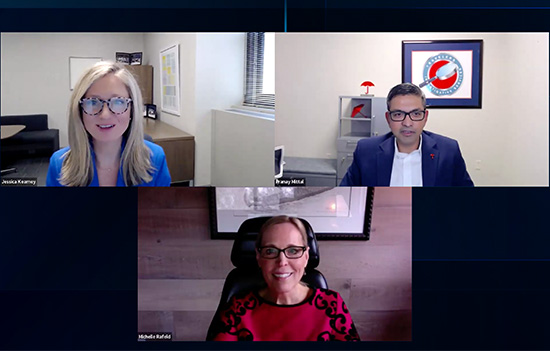
What’s Driving Huge Jury Awards? Navigating Legal Liability in the Era of the Nuclear Verdict
Changing cultural attitudes toward corporations combined with increasingly aggressive plaintiff attorneys are helping drive unprecedented growth in nuclear liability verdicts and jury awards.
