Mastering M&A: Strategies for Risk Management

Mastering M&A: Strategies for Risk Management
May 14, 2025
Wednesday 1:00 p.m.-2:00 p.m. ET
With over 9,000 deals closing in 2024, how prepared is your organization for a merger or acquisition? Travelers’ 2024 CFO study found that 70% of CFOs say they have faced M&A activity whether or not the deal closed. And while successful M&As require strategic risk management at every stage, 38% of respondents admit to only having reactive risk management programs. Watch this replay to learn about key findings from our latest release, the 2025 M&A Study: A Travelers Special Report. Equip yourself with knowledge to help clients manage uncertainty, mitigate risks and position their organizations for long-term success.
Study highlights
Conducted in partnership with PitchBook, the leading resource for M&A data on global capital markets.
- M&A activity weighs heavily on the minds of risk professionals, with 68% reporting they personally felt at least some stress or worry as a result.
- Nearly all companies changed management practices following a merger or acquisition (96%).
- 45% changed or added new technology safety practices
- 43% engaged with new suppliers
- 31% changed insurance carriers or brokers
This program is the first webinar in a three-part series on Travelers’ 2025 M&A study. Explore the series:
- Part two: Mastering M&A: Opportunities and Challenges in Tech and Life Sciences
- Part three: Mastering M&A: Risk Management in Manufacturing Transitions
This program is presented as part of the Travelers Institute’s Forces at Work initiative, an educational platform to help today’s leaders navigate the shifting dynamics of the modern workplace and prioritize employees and their well-being.

Host
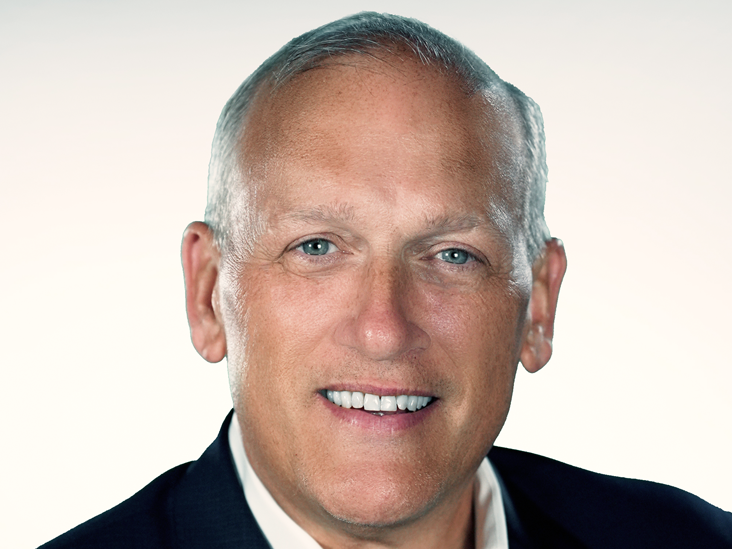
Joan Woodward
President, Travelers Institute; Executive Vice President, Public Policy, Travelers

Speaker
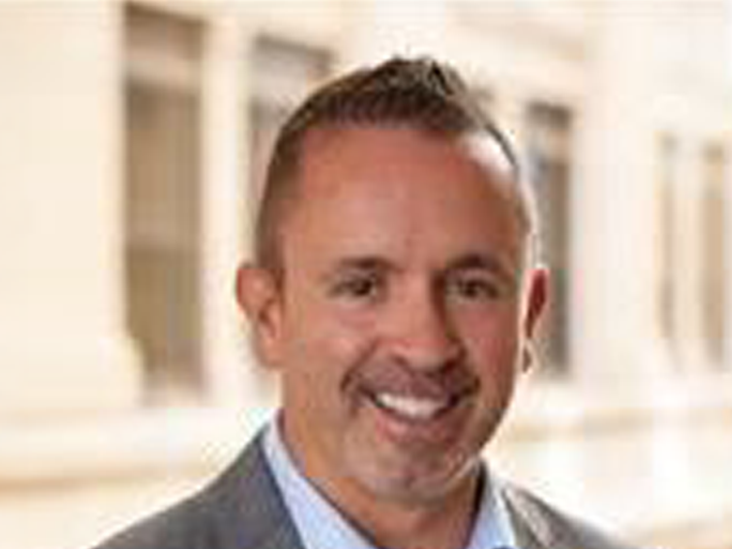
Myles Gibbons
Executive Vice President & President, Middle Market and National Property, Travelers
[MUSIC PLAYING]
(DESCRIPTION)
Slide, text: Wednesdays with Woodward (registered trademark). Webinar Series. The slide appears on a laptop screen next to a red mug with the Travelers umbrella logo in white. Joan Woodward appears on a labeled video call tile in the upper right.
(SPEECH)
JOAN WOODWARD: Hi, everyone. Welcome. Thank you so much for joining us. I'm Joan Woodward, coming to you today from our Rancho Cordova, California, office. So, appreciate you joining us.
Before we get started today, I would like to share our disclaimer about today's program.
(DESCRIPTION)
Slide, text: About Travelers Institute (registered trademark) Webinars. The Wednesdays with Woodward (registered trademark) educational webinar series is presented by the Travelers Institute, the public policy division of Travelers. This program is offered for informational and educational purposes only. You should consult with your financial, legal, insurance or other advisors about any practices suggested by this program. Please note that this session is being recorded and may be used as Travelers deems appropriate.
(SPEECH)
I'd also like to thank our program partners-- the MetroHartford Alliance, the Big I and the UConn Master's in FinTech Program. OK, let's get started.
(DESCRIPTION)
Slide, text: Mastering M&A: Strategies for Risk Management. Logos: Travelers Institute (registered trademark), Travelers, Master’s in Financial Technology (FinTech) Program at the University of Connecticut School of Business, MetroHartford Alliance, Big I (Independent Insurance Agents & Brokers of America)
(SPEECH)
At Travelers, we are committed to understanding new and emerging risks always, especially as they impact risk management functions. Mergers and acquisitions can have a significant impact on a company, influencing its outlook, workforce and risk management. That's why we took a deeper look at M&A through our new Travelers Special Report here on the screen, which surveyed 800 risk and insurance professionals.
This study, published in partnership with PitchBook, explores how risk teams are navigating and evolving M&A landscape. It looks at the risks, the challenges and the opportunities emerging in deal-making today. The link to the full report has now been put in the chat.
(DESCRIPTION)
Image of report titled, 2025 M & A Study: A Travelers Special Report, Today’s M & A Trends – What Risk Teams Need to Know. Travelers Institute (registered trademark), Travelers, PitchBook.
(SPEECH)
To walk us through these results and insights, I'm pleased to introduce three fantastic speakers joining me today.
(DESCRIPTION)
Slide, text: Speakers. Joan Woodward, Executive Vice President, Public Policy; President, Travelers Institute, Travelers. Annemarie Donegan, Senior Analyst, Custom Research, PitchBook Data. Myles Gibbons, Executive Vice President & President, Middle Market and National Property, Travelers. Todd L. Mattiello, Vice President, Client Services Group, National Accounts, Travelers.
(SPEECH)
Annemarie Donegan is Senior Analyst for Custom Research at PitchBook, a resource for data, insights and global capital markets. She leverages PitchBook data and external sources to produce insights across industries and private asset classes. Prior to joining PitchBook, she worked in venture debt underwriting.
Next up is Myles Gibbons, my friend and Executive Vice President of Middle Market and National Property here at Travelers. He started his career with the Travelers Claim team in 1988, and since then has held positions of increasing responsibility. His previous leadership roles including President of Select Accounts, President of Specialty Practices and most recently, President of Commercial Accounts Group, a role he continues to hold today. So welcome, Myles.
Todd Mattiello is Vice President of Client Services in our National Accounts group at Travelers. He's responsible for Constitution State Services, Travelers’ third-party claims administrator, and our Risk Management Information Services. Welcome to the program, everyone. It's really great to have you with me today.
So, Myles, we're going to go to you first. Before we jump into any of the study's results, can you really tell us why your team conducted the study and why this topic is so important in today's society?
MYLES GIBBONS: Yes, and thanks, Joan, very much for having me be part of this webinar. Last year, we released a proprietary study on the strategic mindset of the CFO. And one of the key learnings from that study was 70% of the CFOs we surveyed across middle and large companies experienced new work demands because of M&A activity, whether a deal ultimately closed or not.
They expressed this dynamic was creating new stress on the job for them and for their teams. Thirty-eight percent of those same CFOs said their risk management programs were reactive. And for us, that's a trend we believe at Travelers we can absolutely help reverse.
So while there are many studies on M&A, we really couldn't find one that specifically addressed the impact to risk professionals. So we invested in this study, which we're talking about today, which we believe provides both a qualitative and quantitative view of the marketplace.
JOAN WOODWARD: Wonderful. OK, thank you for that. And thank you for seeing around corners and identifying this as a risk for us all to manage. So to you, Annemarie, and thank you for joining us. Your study does show us that over 9,000 deals closed in 2024, with a total deal value of $1.2 trillion in M&A. Well, that's a huge number. Deal volume was actually slightly down but deal size increased. So what do you think is driving that trend?
(DESCRIPTION)
Slide, text: Deal Volume. In 2024, over 9,000 deals closed in the United States with a total deal value of $1.2 trillion.
(SPEECH)
ANNEMARIE DONEGAN: Yeah, that's right. Still a strong volume of consolidation we're seeing across the board. But things definitely slowed down a bit in 2024, largely driven by the macroeconomic risks that companies were facing. We had high interest rates. We had an election year. So there were some policy uncertainties. And so we saw companies start to take a wait-and-see approach to transactions.
These figures here are showing us the official closed, finalized numbers, but it doesn't show us the number of companies that are currently engaged in due diligence talks. Still in the stages of completing deals, just not necessarily finally executing on them.
And yeah, I would say that we'd expect things to pick up moderately over the next few quarters. There are still some uncertainties, but we are seeing some pickup in the overall figures. And we think about, as you mentioned, the total dollar value of that rising, while the number of deals declines.
That's showing us that there's going to be a select number of very large deals that are swaying those overall figures. And that's where we see some of these really mission-critical deals going through. Last year, we saw significant-- hundreds of billions of dollars in value deals in oil and gas. We saw some consumer staples areas and financial services. Those are areas where those large transactions are still going through.
JOAN WOODWARD: OK, thank you for that. So more than half of the deals last year were led by strategic buyers, but private equity remains a major force. First of all, what's the difference between a strategic buyer and private equity? And how are those private equity firms approaching acquisitions differently in today's marketplace?
ANNEMARIE DONEGAN: Great question. I would say basically splitting out strategic deals and PE buyouts. Strategic deals, you can think of that as a marriage between two companies. That's your classic acquisition, a company buying up a competitor or a similar tangential offering to expand their overall portfolio. Whereas, the PE buyout space, it's more like a company hiring a personal trainer, where the idea is at the end of the day, the trainer will get paid, the company will get better and eventually they do split off. They're not necessarily going to be permanently entangled.
And so we saw those strategic buyers pull back more so, based on that macro risk I just talked about, more so than the private equity buyers where they're seeing these companies, where valuations are coming down. It's going to be cheaper for them to buy up those companies. And so they remain more resilient in terms of their deal flow versus the strategics.
(DESCRIPTION)
Slide, text: Strategic vs. Private Equity Buyers. Private Equity firms account for 43% of U.S. M&A Activity. A bar chart depicts Strategic M&A and Buyout per year from 2014 to 2024.
(SPEECH)
JOAN WOODWARD: OK. An area that's near and dear to my heart-- I know that PitchBook is doing quite a bit of work on female founders for PE firms and venture capital. Could you share any of the learnings that you're working on for the female founders there?
ANNEMARIE DONEGAN: Yeah. So PitchBook puts out a report every year looking at the amount of venture capital investment in female-founded startups. And we've seen significant growth in that cohort over the past decade. We also see last year, it was around $38.8 billion collectively raised by those companies, which is exciting. It's up 27% from the year prior. And so there are some silver linings there.
And when we think about the broader M&A conversation, we're looking at trends in venture capital investment. They're one very early indicator for us when we think about, what is the M&A landscape going to look like in seven to 10 years? Eventually, the trends that we see in the venture capital space is eventually going to create more targets for acquisitions and PE buyouts.
JOAN WOODWARD: OK. Also, the study pointed out that cybersecurity remains a top concern in M&A. We have a business risk index that shows cybersecurity is a major concern of risk managers. How has the rise of advanced technology, cloud expansion, AI or hybrid workforces influenced deal risk assessments, which is, after all, what we worry about?
(DESCRIPTION)
Slide, text: Cyber and Tech Risks in M&A. Challenges of Combining Organizations' Tech Stacks is More Complex. Rise of cybercrime. More expansive data collection, storage, and usage at an enterprise level. Reliance on third parties.
(SPEECH)
ANNEMARIE DONEGAN: Absolutely. Yeah, cyber risk has really expanded beyond just the traditional tech industries. It's now everywhere. And we're seeing companies across the board, they're collecting, they're storing and transacting a higher volume of data than ever before. And it's really only ever going to continue to increase.
And so that tech stack, that infrastructure and resiliency, is hugely important for any company that's either going through a transaction themselves or a firm that's looking to purchase a company, they're going to be paying a lot more attention to that tech stack, to the IT infrastructure and focusing on really the steps that it's going to take to make sure that integration is going to be clean. And so definitely seeing more scrutiny and more questions being raised about the cyber infrastructure and the cyber risk for those companies.
JOAN WOODWARD: OK, great. Todd, I want to bring you into the conversation here a little bit. What did we learn are the biggest risk challenges large companies are facing post-M&A?
(DESCRIPTION)
Slide, text: Integration Challenges for Large Companies. Cultural, values and work practices. Geographic, teams across locations. Process, systems and workflows.
TODD MATTIELLO: Thanks for having me on the panel. It's great to be alongside Myles and Annemarie. Appreciate it. When we-- when you think about it, all companies face challenges when undergoing an M&A integration. But specifically, large companies mention three top challenges-- cultural integration, which involves blending of corporate cultures, values, work practices, right, across the entities.
There's also geographic integration, which is the bringing together of operations and teams in multiple locations, which has its own challenges. And then process integration, which is aligning operational processes, systems, as well as workflows across the entities.
In most large organizations, they have dedicated risk management teams. Our experience is that those teams are stretched pretty thin. Risk managers are known as the fixers within these large organizations.
In the morning, they can be spending time with frontline employees, addressing any challenges or issues associated with the M&A. And in the evening, they could be spending time with executives in the C-suite talking about how things are going.
(DESCRIPTION)
Slide, text, Post M & A: Risk Management at Large Companies. 56% of survey respondents enhanced their risk management programs with: Added new technology and suppliers. Updated insurance coverage. Adopted new physical safety practices.
(SPEECH)
And I do see that these risk managers, they're oftentimes considered single-source dependencies to CFOs or Chief Legal Counsel, as they grapple through challenging questions, such as layoffs, real estate consolidation, or how to manage an existing legacy vendor partnership and dealing with that. And all of this is happening while they're onboarding new and less experienced employees.
On the positive side, though, the large majority of risk professionals responding to the survey indicated that their risk management practices actually strengthened following a merger or an acquisition. Fifty-six percent said that their risk management programs were enhanced either with new suppliers, new technologies that they were taking advantage of, adding additional physical safety practices to their regimen or updating their insurance coverages.
To us, all this indicates a sentiment that with the increased exposures and challenges coming with a merger and acquisition, the risk managers are getting the support, the resources that they need to better equip them to address these challenges within M&A.
JOAN WOODWARD: Wonderful. I imagine during the whole due diligence process that would encourage or enhance, as you say, your risk management practices. And so that does make sense, I guess. But what are some of the common risk areas that get overlooked during that due diligence-- important phase of due diligence, Todd?
(DESCRIPTION)
Slide, text: Action Items During Due Diligence. Engage your broker and carrier early in the process. Review common property exposures. Talk about loss experience and controls on challenged lines. Address management philosophies on business continuity.
(SPEECH)
TODD MATTIELLO: Yeah, I'd say some of the common risk areas-- the large majority of the deals taking place, we know, are due to market expansion-- the acquisition of new businesses or operations across. Eighty percent of the time, these deals are pretty easy to integrate, pretty easy to insure and incorporate. Twenty percent of the time, though, there's real challenges that need to be addressed.
Involving your broker and carrier earlier in the process can certainly help manage through it. We oftentimes find out from our brokers they're learning of a deal much later in the process, as their customer or their client is undergoing due diligence. Brokers can add tremendous value if they're involved early on to help prepare for any potential costly expenses coming out outside of the deal.
When we look at challenged lines in our industry, the impact of legal system abuse on auto liability and general liability, that could lead to adverse loss development and the uncovering of insufficient risk control practices following the deal. Those are things that could be prevented, if involved.
And the last thing we think of is business continuity plans. Entities coming together may have different management philosophies. During the due diligence process, get involved soon. Look at those business continuity plans and have open and frank conversations about operational processes, systems, as well as the employee base.
JOAN WOODWARD: OK, terrific. Myles, time to bring you into the conversation here. Let's talk about middle market. What industries were cited as the biggest opportunities for strategic buyers?
(DESCRIPTION)
Slide, text: Strategic Buyers: Top 3 Middle Market Industries. Technology. Health Care. Motivations: Fast growth and talent acquisition are most important. Financial Services (Banks). Motivations: Strengthening the balance sheet and growing and acquiring new technology.
(SPEECH)
MYLES GIBBONS: Yeah. So in the middle market specifically, really three. So tech, health care and financial services are really the most attractive sectors in the M&A space. For tech and life sciences, the key motivators there were-- really were talent, product development and penetrating new geographies. For health care, think about staffing shortages and high turnover remained very persistent issues. And M&A is very much a strategic approach to how to address those kinds of challenges.
Financial services, a bit different. Acquiring talent hasn't necessarily been the primary motivator. The focus has been more on really strengthening the balance sheet, kind of expanding market reach, certainly acquiring new technologies and growing, but really more of a diversification strategy to be better prepared and resilient for changing economic conditions.
JOAN WOODWARD: OK, terrific. So then what in the study do we learn about how M&A impacted frontline middle market risk professionals?
MYLES GIBBONS: Yeah. And I think one thing that's notable here is there's real credibility in the numbers in terms of the size of the survey. And there were a lot of respondents who were in the middle market space. And so I feel confident in the conclusions here.
(DESCRIPTION)
Slide, text: Middle Market: Differences in Risk Management Dedication. Cultural integration is the biggest M&A challenge for these companies. Smaller Middle Market Companies (50-499 employees), Almost no one was solely dedicated to risk management. 33% changed their broker and/or carrier post M&A. Larger Middle Market Companies (500-999 employees), 41% are solely dedicated to risk management. 29% changed their broker and/or carrier post M&A.
But let's first put middle market in the context of M&A, generally speaking. Think about two different tranches of companies. Those with, say, 500 to 1,000 employees, 41% of those had a dedicated risk manager. So a thought process not dissimilar to what Todd was just referencing.
But those with less than 500 employees, there was almost no one with a full-time accountability for risk management. And in those instances, the accountability and the challenges don't go away. It's just a portion of someone's job or perhaps multiple people being involved.
So, some of the conclusions here coming out of the survey, the most notable outcomes identified by the respondents, really cultural integration was definitely identified as a pretty significant challenge. Middle market companies post-M&A experience more leadership changes and layoffs. And 33% actually saw their broker and/or carrier change.
So obviously, the first two are notable red flags when focused on safety. And, as Todd said, very interesting to note that respondents told us, despite all of the challenges associated with M&A and some of the risks to a safety culture, there was real conviction that risk management became stronger post-M&A.
JOAN WOODWARD: That is interesting. What can insurance carriers or brokers do to help here?
(DESCRIPTION)
Text: How Brokers and Carriers Can Help. Prioritize onboarding and training support for frontline managers. Plan for your insurance renewal early. Commit to site visits to showcase the combined organization.
(SPEECH)
MYLES GIBBONS: So I know there are a lot of agents and brokers on the line here, and I certainly wouldn't be presumptuous enough to tell our agency and broker partners how to do their jobs, or at least not on this call. But I do believe collectively we must be more proactive consultants with almost an anticipatory kind of mindset, that clients, including PE firms, need to understand our collective consultative capabilities, some of what Todd was referencing before.
We know definitively with M&A, as I just referenced, they often experience leadership and cultural changes and potentially have pending layoffs. Those factors just alone necessitate a heightened sense of urgency as respects the safety culture. So our collective goal here, as always, but maybe even heightened, is to be strategic advisers and really indispensable partners in that M&A environment.
I think from a consultation standpoint, again, onboarding and training support for frontline managers-- absolutely critical. Training newer employees on how to perform their job safely-- so critical. We know from a study that Travelers conducted almost over a year ago, that roughly one-third of workplace accidents come from first-year employees.
So through the lens of an underwriter and a carrier, I would say to the portfolio company and the PE firm, do everything you can to humanize the risk. Bring underwriters into your facilities. Highlight your focus on safety. Let people see it in action.
JOAN WOODWARD: All right. Because it's such an important topic, I think, for our listeners today, Todd, I want to ask you the same question. So what can carriers and/or brokers do to help here?
TODD MATTIELLO: Yeah. Thanks, Joan. And I agree with a lot of-- all the points Myles has made.
MYLES GIBBONS: That's good.
TODD MATTIELLO: In National Accounts-- thanks, Myles.
JOAN WOODWARD: That's a good thing.
TODD MATTIELLO: [LAUGHS] Yes, it is. In National Accounts, we look to be an extension of our customer and our broker risk management teams. That's what we strive to do. Our underwriters actually will accompany risk control professionals as they visit on a prequote, a site, to better understand the operations, their exposures, the controls they have in place, and to preidentify any opportunities that exist for improvement.
With existing customers, we actually meet with them in something we call a stewardship. And we're meeting with the risk and claim management teams from the customer, as well as the broker, and making sure that we continue to meet their needs. But we're also demonstrating and pointing out, here's what's working well, and here are some areas where we think we can continue to improve your total cost of risk.
We get to leverage heavily the data and analytics we have available to us to identify trends that are going on with a customer's casualty experience and bring actionable solutions to the table. That is our goal in the stewardship.
As a company is looking to expand a geographic footprint, they may be going into territories they're unfamiliar with. They can count on their broker or their carrier to help them understand what some of those liability exposures that might exist in those territories. And we can offer some recommendations on how to mitigate.
And lastly, as I think about the broader Travelers and Constitution State Services, if you're considering different ways or options to manage your risk, such as captive programs or outsourcing your claim management to a third-party administrator, we have vast resources here at Travelers and Constitution States. And we have a great amount of experience in all of the industries that we serve. So we would look forward to helping.
JOAN WOODWARD: All right. Sounds like a lot of support. So thank you for that, Todd. Back to you, Myles. You mentioned earlier nearly a third or more of risk professionals we spoke with change their insurance carrier or broker after an M&A transaction.
What is drive-- that's a pretty high number, a third. To me, anyway. So maybe after all the due diligence process that they're doing with regard to a transaction, what's driving these shifts in people changing their carrier or their broker?
(DESCRIPTION)
Slide: A map of the United States of America titled, Impact of Private Equity Ownership, appears with locations marked with symbols for one private equity firm, one private equity broker, and twenty Portfolio of manufacturing companies owned by the Private Equity Firms. Text: 43% of manufacturers changed their insurance coverage, (middle market overall was 35%).
(SPEECH)
MYLES GIBBONS: Yeah. So I would say let's take a very real example focused on the manufacturing sector, an industry that's obviously highly attractive to PE firms. In manufacturing post-M&A, the broker and carrier relationships are changing 43% of the time, which is higher than the average that we cited earlier in the discussion. And so, again, in the context of the middle market, I actually think some of that makes sense.
The middle market manufacturer being acquired more often than not is likely a privately held, family-operated business. More likely than not, they have local relationships with an agent and are likely engaged in the insurance placement decision.
The PE firm is coming at it from a bit of a different perspective. In the purchasing process, they are relying on the broker and the carrier to manage total cost of risk across the entirety, in this case, of their manufacturing portfolio, not on a deal-by-deal basis. So the PE firm, again, in the vein of being our customer, is expecting the buying decision to be managed at scale.
Subsequently, I think the newly acquired company likely loses their ability to make the selection of their own agent, and ultimately, the carrier. And that's why you see some of the change that you do.
JOAN WOODWARD: OK. So now that we better understand how things can shift with a private equity ownership structure, let's talk about the impact to the risk professional. So we found that 68% of people we interviewed in this study said an M&A is creating new stress on them. And 92% said they are now working with private equity-backed firms. So, Myles, what is notably different in the day job?
(DESCRIPTION)
Slide, text: Private Equity. Key Facts: 92% of the risk professionals we interviewed are working with Private Equity backed firms. PE firms are holding onto companies longer, hold periods are up from 5.7 years to 7.1. Expectations of Private Equity. Quotes delivered in alignment with the deal timeline (Letter of Intent through due diligence). Benchmarking support for portfolio companies in similar industries. Safety transparency reporting for their investors. Financial reporting across their portfolio companies.
(SPEECH)
MYLES GIBBONS: Yeah. I would say what's totally different, certainly from our perspective, is that first, and most importantly, in many ways, PE firms aren't just in and out anymore. Hold periods have actually increased almost 25% over the last few years and are now actually averaging over seven years. So PE firms now are expecting high levels of engagement and very robust risk management capabilities across a multitude of industries to serve their portfolio. So I think that's a significant difference.
And at Travelers, a bit of advertising here, we certainly have a dedicated private equity practice with dedicated underwriters. And, in essence, we've built kind of an operational and underwriting model to support the uniqueness and realities that PE firms and their brokers need in I guess what we would refer to as modern dealmaking. And we're supporting that process literally from the letter of intent all the way through due diligence to fruition. And so I feel terrific about that. I think we're well prepared to serve the transaction.
JOAN WOODWARD: Myles, just personally, to me, I think that's fascinating. And no doubt, we've built this world-class PE practice. It doesn't surprise me a bit. I spent a little bit of time in PE when I was at Goldman Sachs. And I'll tell you, it's just a fascinating, fascinating industry.
MYLES GIBBONS: It really is. And I'd be remiss if I didn't just quickly mention that our National Practice Lead, Charlie Tice, resides in our Metro region, but is very active and always engaging the PE firms and the brokers themselves.
JOAN WOODWARD: Yeah, Charlie is one of a kind. If folks don't know who he is, get to know him in our PE practice. So thank you, Myles.
MYLES GIBBONS: Yeah.
JOAN WOODWARD: OK, Annemarie, so we learned that PitchBook is estimating $1 trillion is sitting on the sidelines in dry powder ready to be invested. So what are the sectors, in your view, are most active right now? And are there any surprising shifts in M&A trends by industry? Let's break down the industries for now.
ANNEMARIE DONEGAN: Yeah. I would say across the board you have basically three elements that we think about these days. We have fragmented markets. So that's any business where there's going to be many different companies that do the same thing. They may be smaller companies. Those will be attractive for more M&A activity.
You also have regional focus or more rural businesses, like Myles mentioned, that have that local expertise. Those are going to be highly attractive for firms and for especially firms looking to potentially expand a strong company into other markets for the growth aspect.
And then you also have family businesses. I think that was also mentioned as well. There's a lot of companies out there that don't have succession plans in place, and so they're going to be looking to sell. And that's going to be an attractive opportunity for a lot of PE firms and competitors as well.
And then in terms of specific sectors, we see the B2B side of things, the enterprise companies, they drive the majority of M&A transactions, typically. Within that space you have-- tech manufacturing is always a staple. And I would say now we have the rise of AI, of course.
In terms of M&A specifically, we're looking at more activity, not necessarily in terms of the AI software models themselves, but rather the physical tech infrastructure that supports that activity. There's huge demand right now for data centers. You have semiconductor chips, a lot of activity happening there that I would expect to drive more activity in the tech manufacturing side of things.
You also see a lot of activity in the consumer space as well. So those customer-facing companies. We saw consumer manufacturing was one of the only subsectors to see growth in the number of M&A deals last year. So that's, of course, very notable.
We have a high-cost environment. You have supply chain shifts, companies looking to enter new markets and support their operations while staying lean. And so that's another opportunity for more M&A activity to pick up as well.
JOAN WOODWARD: Interesting. We're definitely going to stay watchful on that. So back to you, Todd. We had so much data on manufacturing and tech and life scientists-- life sciences. We will be coming out with additional insights for those industries later this year, I heard, but a final few high-level thoughts for the group. So what did we learn about manufacturing, Todd?
(DESCRIPTION)
Slide: A map of the United States of America titled, Manufacturing Growth, depicts the highest growth of 11.4% in the south region, specifically triangulated between West Point, Starkville and Columbus.
(SPEECH)
TODD MATTIELLO: Actually, in National Accounts, we've been receiving quite a few calls the past year on M&A activity in the manufacturing space. As you look at the map, Mid-Atlantic and West regions represent the second and third most volume of M&A activity for manufacturing. But the Southern region is the one that jumps off the page with that robust growth of 11.4% in deal activity. It’s-- some of the momentum is driven by the automotive and aerospace industries with some steel and aluminum production finding its way into Alabama and what we refer to as the Golden Triangle out of Mississippi.
What we see where there's higher volume of M&A activity, obviously, it's an indicator of a strong base of targets for larger companies that are looking to expand and acquire new businesses, leveraging any tax incentives that exist for promoting job growth in those localities. And they may be looking to get closer proximity to key suppliers that they need to engage. As these larger firms do move into these territories and establish themselves, certainly the competitive pressures that exist, it attracts new talent into these localities and generates economic stimulus, which is a win-win.
JOAN WOODWARD: Definitely. That's awesome. That's awesome. OK, back to Myles. So what did we learn about manufacturing risk practices?
MYLES GIBBONS: So manufacturing risk practices, again, very much consistent with what Todd has been saying. They continue to experience very real challenges with M&A. Operational disruptions and loss of productivity is significant.
Cultural differences, which can slow, I guess what I would say, cohesion efforts. And then the geopolitical risks and supply chain challenges, which impede-- definitely can impede achieving financial targets. So as I said, despite those challenges, the prevailing sentiment is that safety practices are stronger post-M&A. But in the manufacturing space, those challenges are very real.
JOAN WOODWARD: Yeah, that's really terribly interesting. Everyone's talking about manufacturing today. It's on the headlines of every newspaper and making sure that we're doing enough manufacturing in the U.S. here domestically. So we'll watch that.
Folks out there, to my audience, if you have a question for any one of our terrific panelists, please drop that in the Q&A, question and answer, feature, at the bottom of your screen there. But Myles, close us out now on technology and the technology industry, which of course, is moving so quickly. And then, of course, life sciences. It's another big focus for us. What are the headlines there?
MYLES GIBBONS: Yeah. So I think with tech specifically, there's just been significant fluctuations in the M&A activity there, and the challenges are very real. You've got regulatory scrutiny, as I mentioned before, with manufacturing supply chain disruptions.
What's probably most notable is just the criticality of contingency planning for supply chain issues. And I know with a lot of the distributors on the line, they have consultative products available, as do we, associated with contingency planning for supply chain challenges. But those are really the biggest issues.
From a life sciences standpoint, look, there are-- every single day there are significant scientific breakthroughs that kind of fuel the life sciences industry. But with all of that, there continues to be an enormous amount of cost and competitive pressures. And consolidation is still very much the industry theme. And so we're likely going to continue to see PE involvement in this space continue.
JOAN WOODWARD: OK, folks. Now it's time for those wonderful audience questions. So, again, just drop them in the Q&A function. First one coming in to Todd. Can you describe a unique scenario that we would not expect but is more common than not in M&A transactions? And that's from Sandy Vaughan, IMA in Washington state. So, Todd, to you.
TODD MATTIELLO: Sure. Thank you. And may be unique, or may not be as unique going forward, and this might be a little bit self-serving. But when a PE firm is bringing together multiple companies and forming a new co. and wanting one approach to the insurance, that becomes challenging.
You have multiple brokers that are involved managing their individual clients wanting to demonstrate value. But on the receiving end is the carrier getting a lot of demands from multiple brokers. It becomes complex and challenging. And we're doing all of this while maintaining discretion. These deals are not public at the time. So it's a little bit complex in nature.
Our advice or counsel with brokers is think through these scenarios before they happen. How you can demonstrate value not only to your client, but to the broader, the new co., and knowing that you're going to have to collaborate and work across with your competition.
JOAN WOODWARD: With your competition. OK, that sometimes can be hard. So--
TODD MATTIELLO: Yes, of course, it is.
JOAN WOODWARD: Got to navigate through that. OK, Todd, you seem to be the popular one today on the questions. So back to you. How can we proactively identify and address legacy liabilities and coverage gaps that could surface post-acquisition. That comes to us from Danielle Couldry, again, from IMA. I suppose the due diligence process is where it's at, but suppose something gets missed?
TODD MATTIELLO: Yeah. No. Great question. And we know liabilities come with any deal. You take it with it. There's the known liabilities, and then there's the unknown, the incurred but not reported-type losses. That's just what we deal with as an industry. Risk managers should and can partner with their brokers and their carriers to help them better understand the unforeseen that may surface post-deal.
At Travelers, we have the size and the scale. We may be working with an existing customer. We may have worked with that customer in the past or have evaluated that customer in the past. So we have intelligence and insights.
In fact, there was a recent example we went through where we identified a $3 million loss-- claim loss that happened several years ago that was not uncovered during the due diligence process. So it's things like that.
Our advice to customers going through this-- preservation of records and documents, regardless of personnel and geography changes or location changes. Securing that information is hugely important. Plaintiffs’ attorneys are very much aware of the various statute of limitations across the jurisdictions in which they work. These claims could come in and having that secured is really, really important. The other piece of advice would be as claims do happen, engage your carrier. Engage your broker. Stay involved to help manage and mitigate.
JOAN WOODWARD: OK. Thank you so much for that. Myles, we have a question for you from Elena Chong at VEC Life Sciences in North Carolina. Through the lens of an underwriter, which you just said you spent decades in underwriting, what--
MYLES GIBBONS: I don't think I said decades.
JOAN WOODWARD: Oh, no? Oh, I thought I heard decades.
[LAUGHTER]
OK. But as an experienced underwriter--
MYLES GIBBONS: There you go.
JOAN WOODWARD: --with a lot under your belt-- how's that-- what typically delays M&A deals from progressing with more agility and what worked to detangle them? This is a very good and interesting question because these can be very complex. So what would you say to Elena?
MYLES GIBBONS: Yeah. Honestly, I think I'd probably boil that down to something that's fairly simplistic and maybe not a shock here, that information transparency is a big issue. So the primary delays generally are caused by lack of information.
And what I would say is in the PE space, in particular, it's critical for me to clarify lack of necessary underwriting information-- the true need to have versus the nice to have. We recognize time sensitivities, and we can't always get what we'd like. But information transparency, as I mentioned, really is critical. The more we know, the better the risk decision that we can make and pricing we can provide.
I would say even in the PE space, and especially in the context of whole terms being longer than they've ever been before, our value proposition is very much anchored to long-term stability. So information up front helps us get there. So from that underwriter's perspective, you know there are curveballs. There are things that we need to understand with a company that's being acquired, if they've been involved in other deals.
Was that an assets only or an assets and liabilities? So there's tail coverage concerns. Do we have time, in essence, to risk control a risk? If not, that's not always an impediment to moving forward, but it can be a challenge. Loss history, as Todd just mentioned. Such a relevant issue can be incomplete for prior entities purchased. There can be named insureds challenges.
But at the end of the day, really what solves most of this is an ideal engagement model, one that's really just rooted in active communication and collaboration with everyone involved in the process. Think broker, carrier, portfolio company and the PE firm. Honestly, that is the key to our success and why we've been so successful is that we encourage and engage as early in the process as possible.
JOAN WOODWARD: OK, thank you. That was a very comprehensive answer. We really appreciate that.
MYLES GIBBONS: Yeah.
JOAN WOODWARD: Another one coming in either-- maybe for Todd or Myles-- you guys decide-- from Nancy Germond. What are the risks for both firms, both the merged and the acquirer, in terms of E&O risk insurance challenges-- so E&O, executive and officer. You want to talk about what are the risk insurance challenges for either side-- the merged or the acquired?
MYLES GIBBONS: Yeah. I mean, Todd, you can kick in here as well. But obviously, I probably index to the coverages that are available to deal with those types of risks. So if you think about reps and warranties coverage, which generally protects the buyer from financial losses due to breaches of representation and warranties that might be made in a purchase agreement, that type of thing. Certainly tax liability-- there are coverages associated with tax liabilities. But a lot of it is just based upon representation.
And so the D&O obviously becomes pretty critical in terms of protecting the assets of the directors and officers against claims of mismanagement. So it can go in a number of different places. But I think there are comprehensive coverages and suites of coverages available, and readily available, with a lot of marketplace capacity to address these issues in the M&A situation for both the buyer and the company that's being acquired.
JOAN WOODWARD: OK. Todd, did you have a thought there?
TODD MATTIELLO: No, I defer to the gentleman with the decades of underwriting experience.
[LAUGHTER]
MYLES GIBBONS: OK.
JOAN WOODWARD: From here on out, he shall be known that.
MYLES GIBBONS: Yes. Yeah.
JOAN WOODWARD: One last question coming in from anonymous. So how come the new risk manager in your study is hiring underqualified or new employees? As you say, I think Myles, 33% of accidents on the job or other mishaps come from those who have less than a year of experience. So it's just an interesting point in the study. Do you have any comment on that, or they're just-- it's hard to find workers?
TODD MATTIELLO: Well, I guess I would probably defer and likely have to get more specific around what industry, and I don't have the study right in front of me. But I would likely say that, look, there are challenges with hiring. And sometimes you don't always get the ideal employee. But even really good employees get injured early on in the course and scope of their employment just because they're getting used to, and maybe the training hasn't been as robust as you'd like.
So there are likely a myriad of different reasons why. I wouldn't say it's people hiring not qualified individuals. I just think the newness, especially perhaps in the manufacturing space, lends itself to just greater susceptibility to injury. And, as I said, a third is startling. So a hyper focus on those first-year employees and safety is time well spent.
JOAN WOODWARD: OK. This one comes-- thank you-- in to Annemarie. What surprised you in the study you just completed with these 800 folks? Was there anything that really stood out to you? Maybe it was that they changed the carriers or the brokers a third of the time? What stood out to you the most?
ANNEMARIE DONEGAN: Yeah, I would say that there's a lot of different industry focuses, at least from what I'm looking at, in terms of the transaction data. I would say the fact that there were still so many deals of such a massive scale that were completed in a high-risk environment tells us that there are still a lot of initiatives that companies are working on despite the risk, and that they are still choosing to forge forward in an environment where a lot of companies may have stepped back. And so I think that plays into, of course, the risk profile.
As Myles mentioned, it's highly dependent on the industry, of course, but we are seeing, of course, financial services and energy particularly is where we're looking at a lot of unique macro factors. So I'd be watching those ones closely for the headlines the next few quarters.
JOAN WOODWARD: Sure. The macroeconomic environment globally is top of mind for every risk manager out there for sure. OK, one last question coming in from the audience. Do you have an M&A checklist for risk management? And that's from Jeffrey Yang, Treasury Director at Bio-Rad Laboratories in California.
Actually, I'm going to answer this one because we understand every situation is different. We actually created a playbook, versus a checklist that you asked for, but a playbook from the insights we gathered from over 800 interviews with these risk professionals. So we're dropping this in the chat right now, a link to this.
This is a really invaluable resource if anyone's going through an M&A transaction at the moment. This digital experience outlines their success, their struggles, recommendations and actions that we recommend for folks. This asset is in addition to the study we highlighted at the beginning of the webinar. So please take a look at it. We did add it to the chat there. So we really appreciate that question.
DESCRIPTION)
Image of a computer screen with the text, Risk Professional Playbook. Mergers & Acquisitions Playbook and Insights for Risk Professionals. By Travelers.
(SPEECH)
And we did-- you did submit that during your registration. So we pulled this playbook together for everyone to use. It's free and available for anyone on this call-- the press, any company, any risk manager. We're sharing the link right there.
So, I don't know if you all have any last comments, but I have some closing remarks. And we, of course, want you to take our survey about today's program. So when we have these webinars, whether they're on insurance or noninsurance issues, we love to hear from our thousands of people who tune in every week and our audience and what you want to see on our next program-- a speaker, if you read a recent, interesting book, whether it's in the insurance space, we'd love to have that and understand what the deep dive areas of insurance programming. So there's a link to our survey also in the chat.
I think that's it for questions. So I just want to thank my terrific panelists today. We also had a comment in the Q&A section that this was very well-organized, and the speakers were incredibly knowledgeable and helpful. So that was good. But I don't know if you have any final thoughts for us today before we close out. Myles, Todd, Annemarie?
MYLES GIBBONS: Look, I think something that Todd said resonated with me, and if I connect that to the opportunity to be kind of proactive, consultative partners with PE firms, and that is scale matters here. And at Travelers, we have an enormous amount of scale across a multitude of industries that cover probably more than 80% of the GDP. And within each of those industry verticals, with that degree of scale and risk control history and expertise and claim volume, we understand what is average and what average looks like.
And if you know what's average, you know what's above average and what's below average. And to the extent that we can provide some degree as early on in the process to assist you all in how you're looking at companies from the lens of or through the topic of risk management and safety and a safety culture, I think we can be very helpful in that regard. So that would be my closing comment.
JOAN WOODWARD: And I 100% agree. I mean, we see thousands of claims over the course of many, many industries and P&E transactions and so-- M&A transactions-- with PE or strategic buyers. So I just echo that, that we definitely have the resources.
OK, with that, I want to thank my terrific panelists and talk about some of our upcoming webinars.
(DESCRIPTION)
Slide, text: Wednesdays with Woodward (registered trademark) Webinar Series. Register: Travelers Institute dot org. Upcoming Webinars: May 21: Mindset for Success on the Course and in Your Career with Dr. Mo Pickens. June 4: Live from the CAT Center: Where Expertise Meets Innovation. July 23: Recruiting Your Rising Stars: The Insurance Industry's Emerging Talent. July 30: Cargo Theft: Rising Frequency, Sophisticated Methods and Protecting Our Supply Chain.
(SPEECH)
So on May 21, we're going to be talking with renowned sports psychologist and golf coach, Dr. Mo Pickens. His clients have won four majors. He'll share his insights on mindset, framing and routine, and how these principles can help you succeed on the golf course and in your career. A lot of things that he talks about are going to be career oriented as well.
So have you ever wondered how Travelers prepares for natural disasters? On June 4, we're going to be coming to you live from the flagship Claim University Travelers CAT Center. It's really a cool center. Tons of monitoring the weather and other activities go on at our CAT Response Command Center.
This is Part 2 of our part-3 series covering our Travelers claim capabilities. We'll take you behind the scenes to see how we prepare for and respond to hurricanes, tornadoes, wildfires and other weather events. Then on July 23, join us as we explore the insurance industry's emerging talent, and importantly, what they're looking for for those of us who are hiring within the industry.
We're going to be joined by a number of risk management school deans throughout the country to talk about how they're preparing our kids, our young adults, for a career in the insurance industry. And I know hiring and talent retention is on top of mind for all of our agent and broker partners.
And then July 30, we're going to take a fascinating look into the latest trends in cargo theft.
(DESCRIPTION)
Slide, text: Cyber (registered trademark), Prepare, Prevent, Mitigate, Restore. Travelers Institute (registered trademark), Travelers. In-Person Events: June 12: Houston, Texas, Cyber: Prepare, Prevent, Mitigate, Restore (registered trademark). Register: Travelers Institute dot org.
(SPEECH)
So we also have a number of in-person programs coming up. On June 12, we're going to be in Houston, Texas, and other places throughout the country this summer and fall.
So, do take a look at our schedule, travelersinstitute.org. Go there often. Connect with me on LinkedIn. And if you are a podcast person, certainly go to our podcast, the Travelers Risk & Resilience podcast on Apple, Spotify and Google.
(DESCRIPTION)
A podcast logo has a red microphone icon. It says, Travelers Institute Risk and Resilience. Travelers Institute (registered trademark). Travelers.
(SPEECH)
So with that, my friends, we're going to close out a few minutes early today, give you some time back in your day. But thank you again, as always, for joining us. I love doing these webinars. I love having your feedback. So shoot me a note, let us know what you like and what you want to have in the future on the programming. And thank you again to my terrific panelists. Have a great afternoon, folks.
[MUSIC PLAYING]
(DESCRIPTION)
Text: Travelers Institute, registered trademark. Logo: Travelers. Travelers Institute dot org.
Please note: Due to the nature of the replays, survey and chat features mentioned in webinar recordings are no longer active.
Listen on the go
Travelers works to make its content accessible to all, including those with disabilities. A transcript of this program will be posted here shortly. If you have questions, please call or email us at 866.336.2077 or [email protected].
Learn more, explore the most recent episodes and subscribe to the Travelers Institute Risk and Resilience podcast.
This episode is also available on Apple Podcasts® .
Summary
What did we learn? Here are the top takeaways from Mastering M&A: Strategies for Risk Management:
The report is the first of its kind to focus on the impact of M&A activity on risk professionals. Travelers surveyed more than 800 risk and insurance professionals to explore how risk teams are navigating an evolving M&A landscape. Travelers saw a need for this study after a survey found that 70% of CFOs of medium-sized and large companies experienced new work demands due to M&A activity whether or not the deal closed. “This dynamic created new stress on the job for them and their teams,” said Myles Gibbons, Executive Vice President and President, Middle Market and National Property at Travelers, noting that 38% of those CFOs characterized their risk management programs as reactive. “That’s a trend we at Travelers believe we can absolutely help reverse,” he added.
More than half of deals in 2024 were led by strategic buyers, the study found. But private equity (PE) firms still played a major role, accounting for 43% of all U.S. M&A activity. So what’s the difference? “You can think of strategic deals as a marriage between two companies, such as when a company buys a competitor to expand its overall portfolio,” said Annemarie Donegan, Senior Analyst, Custom Research at PitchBook. In contrast, a PE firm deal is like a company hiring a personal trainer, she said. “At the end of the day, the company will get better, the trainer will get paid, and eventually they will split,” she said, adding that in 2024 strategic buyers pulled back due to macroeconomic risk factors while PE firms were more likely to act due to decreases in company valuations.
Cyber risk is having a growing impact on mergers and acquisitions. The challenge of combining two organizations’ tech stacks is more complex than ever due to the increase in cybercrime, reliance on third parties and the fact that companies collect, store and transact a higher volume of data than ever before, Donegan said.
Large companies face three big integration challenges. Companies must tackle cultural, geographic and process challenges after a merger or acquisition, said Todd L. Mattiello, Vice President, Client Services Group, National Accounts at Travelers. “Cultural integration involves blending corporate cultures, values and work practices across the entities,” he explained. Geographic integration involves bringing together teams that may be working from various locations. And process integration involves aligning operational processes, systems and workflows, he added. The good news: 56% of risk managers said their risk management programs were enhanced by a merger or acquisition with new suppliers and technologies, increased physical safety practices or updates to insurance coverages, he said.
The top three middle market industries for M&A are tech, healthcare and financial services. For tech and life sciences, the key motivators for M&A are talent, product development and expanding to new geographic areas, Gibbons said. For financial services, the focus has been on strengthening the balance sheet, expanding market reach and acquiring new technologies. “It’s more of a diversification strategy to be better prepared and resilient for changing economic conditions,” he said.
The study shows how M&A impacts frontline middle market risk professionals. The study broke middle market companies into two groups: smaller middle market companies (50-499 employees) and larger middle market companies (500-999 employees). Almost none of the smaller middle market companies had full-time dedicated risk management professionals, while 41% of the larger middle market companies did, the study found. Cultural integration was a big challenge, with middle market companies experiencing more leadership changes and layoffs and 33% changing their broker and/or carrier post-M&A, Gibbons said.
The report offers insights on a variety of sectors, including manufacturing, tech and life sciences. In manufacturing, the South has had the most growth with an 11.4% jump in M&A activity. Momentum is being driven by automotive and aerospace industries with steel and aluminum production in Alabama and the “Golden Triangle” area in Mississippi, Mattiello said. In terms of risk practices, challenges in manufacturing include cultural differences that can lead to operational disruptions and productivity issues, along with geopolitical risks and supply chain challenges, Gibbons said. In tech, there have been fluctuations in M&A activity, with challenges including regulatory scrutiny and supply chain issues that require contingency planning, he said. And the life sciences space will likely see continuing PE involvement, he said. “With enormous cost and competitive pressures, consolidation is still very much the industry theme,” he said.
The report highlights three important M&A risk management action items. First, engage your broker and carrier early in the due diligence process, Mattiello said. “Brokers can add tremendous value if they’re involved early on to help prepare for any potential costly expenses,” he said. Next, review common property exposures and talk about loss experience and controls on challenged lines, he said. Finally, address each entity’s philosophy on business continuity. “Look at those business continuity plans and have open and frank conversations about operational processes and systems as well as the employee base,” he said.
Brokers and carriers are indispensable partners in the M&A process, Gibbons said. “Collectively we must be more proactive consultants with almost an anticipatory mindset,” Gibbons said, noting that clients, including PE firms, need to better understand brokers’ and carriers’ consultative capabilities. The leadership changes and potential layoffs that often accompany M&A activity require a strong focus on safety culture, he said, adding that a broker or carrier can consult on onboarding and training for frontline managers to make sure newer employees learn how to perform their jobs safely. “That’s so critical,” he said, citing a recent Travelers study that found that one-third of workplace accidents involve first-year employees. “So, through the lens of an underwriter and a carrier, I would say to the portfolio company and the PE firm, do everything you can to humanize the risk, bring underwriters into your facilities, highlight your focus on safety and let people see it in action,” he said.
Going through an M&A deal? Grab the Travelers playbook. Every M&A is different, and Travelers recognizes that there’s no one-size-fits-all resource like a static checklist. So Travelers used the insights gleaned from the over 800 interviews done for this report to create an M&A playbook that can help business leaders and risk professionals navigate this complex process, mitigating risks and increasing the chances for positive outcomes. “This is a really invaluable resource,” said Joan Woodward, President, Travelers Institute and Executive Vice President, Public Policy at Travelers. . “If anyone’s going through an M&A transaction at the moment, this digital experience outlines successes, struggles and recommended actions.”

Wednesdays with Woodward® webinar series
Wednesdays with Woodward is a webinar series hosted by Joan Woodward featuring candid talks with industry and government thought leaders on today’s top challenges.
Workforce initiative
This program is presented as part of the Travelers Institute’s Forces at Work initiative.
Webinar presented by




Related content
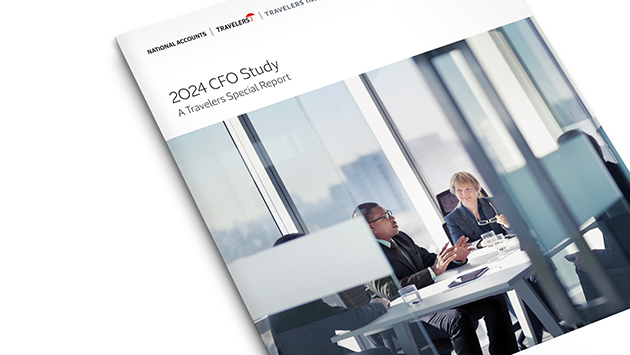
2024 CFO Study: A Travelers Special Report
Every wonder what keeps CFOs up at night? Get insights from a Travelers survey of CFOs and explore how CFOs are approaching risk management, talent shortages, mergers and acquisitions, upskilling and more.
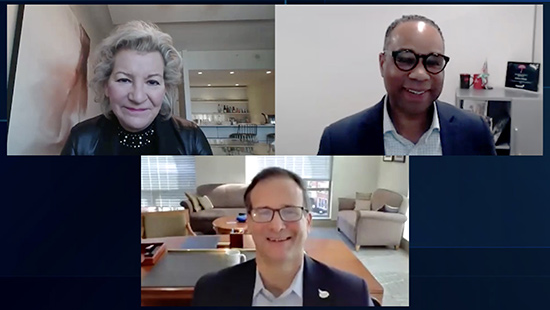
Mastering Market Shifts: What Independent Insurance Professionals Need to Know
Discover how the insurance world is changing for independent agents and brokers and how the Big “I” is supporting its members. Explore new findings from the Agency Universe Study and get tips on overcoming challenges and seizing opportunities in today’s fast-paced insurance market.
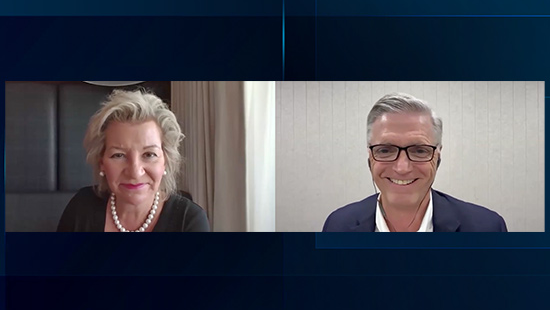
AI in Action: The Future of Risk Management Through Predict & Prevent®
Peter Miller of The Institutes discussed the Predict & Prevent® model in risk management and explored how this proactive approach could leverage technology like AI to enhance safety and reduce claims.
Related news
Industrial M&A ramps up as tariffs settle in, interest rates drop and funds are flush
November 12, 2025 | Manufacturing Dive
M&A breakup: Why a third of firms switch insurance brokers post-transaction
May 13, 2025 | Insurance Business Magazine