Mastering M&A: Risk Management in Manufacturing Transitions

Mastering M&A: Risk Management in Manufacturing Transitions
October 15, 2025
Wednesday 1:00 p.m.-2:00 p.m. ET
Mergers and acquisitions (M&A) activity in the manufacturing sector creates a complex risk landscape for companies in transition. How are risk managers responding, and what should insurance agents and brokers know to support their manufacturing clients? In this webinar, the third in a series on mergers and acquisitions, we analyze the manufacturing-specific findings from Travelers’ 2025 M&A Study. Timed with National Manufacturing Month, we explore regional and global trends, examine the prevalence of strategic versus private equity buyers and share insights from real-world case studies. Discover what's driving manufacturing expansion and how risk teams are adapting to challenges, plus gain actionable strategies to help your clients successfully navigate the evolving M&A landscape.
This program is the final webinar in a three-part series on Travelers’ 2025 M&A study. Explore the series:
Part one: Mastering M&A: Strategies for Risk Management
Part two: Mastering M&A: Opportunities and Challenges in Tech and Life Sciences
This program is presented as part of the Travelers Institute’s Forces at Work initiative, an educational platform to help today’s leaders navigate the shifting dynamics of the modern workplace and prioritize employees and their well-being.
Please note: Due to the nature of the replays, survey and chat features mentioned in the webinar recordings below are no longer active.
Watch webinar replay
[MUSIC PLAYING]
(DESCRIPTION)
SLIDE. Text: Wednesdays with Woodward (registered trademark) Webinar Series. The logo appears on a laptop screen sitting on a desk next to a red mug with the Travelers umbrella logo on it in white. Logos: Travelers Institute (registered trademark), Travelers.
Jessica Kearney speaks to us in the corner of the slide from her office.
(SPEECH)
JESSICA KEARNEY: Hello and welcome. Thank you so much for joining us. My name is Jessica Kearney. I'm Vice President here at the Travelers Institute, standing in for our host today, Joan Woodward. Welcome to our webinar series.
Before we get started, as always, I'd like to share a quick disclaimer about today's program.
(DESCRIPTION)
SLIDE: Text: About Travelers Institute (registered trademark) Webinars. The Wednesdays with Woodward (registered trademark) educational webinar series is presented by the Travelers Institute, the public policy division of Travelers. This program is offered for informational and educational purposes only. You should consult with your financial, legal, insurance or other advisors about any practices suggested by this program. Please note that this session is being recorded and may be used as Travelers deems appropriate. Logos: Travelers Institute (registered trademark), Travelers.
(SPEECH)
Also as always, I'd like to thank our wonderful webinar partners, the MetroHartford Alliance, the University of Connecticut's Master's in FinTech Program, the National African American Insurance Association, and the Big I.
(DESCRIPTION)
SLIDE: Text: Wednesdays with Woodward (registered trademark) Webinar Series. Mastering M&A: Risk Management in Manufacturing Transitions. Logos: Travelers Institute (registered trademark), Travelers. Master’s in Financial Technology (FinTech) Program at the University of Connecticut School of Business. MetroHartford Alliance. BIG I (Independent Insurance Agents & Brokers of America). National African American Insurance Association (NAAIA).
(SPEECH)
OK, let's get started.
At Travelers, we're committed to understanding new and emerging risks, especially as they impact risk management, as you can imagine. Mergers and acquisitions, or M&A, can have significant impact on a company, influencing not only its outlook, but also its workforce and risk management.
Today's program, I'm pleased to share, is the third in a series looking at the impacts of mergers and acquisitions across different industries. Back in May, we took a deep dive into a Travelers special report, which surveyed 800 risk and insurance professionals and explored how risk teams are navigating M&A.
Last month, we drilled down on dealmaking activity in the tech and life sciences in particular. And today, as part of National Manufacturing Month, we are wrapping up the series with a special look at a new Travelers report on M&A in manufacturing. And we'll drop that link for you in the chat so you can take a look.
Specifically, today we're going to discuss, how are risk managers within this industry responding to recent deals? And what should insurance agents and brokers know in order to best support their manufacturing clients? So we're going to break it all down. And to do that, I am very pleased to introduce today's guests.
(DESCRIPTION)
SLIDE. Text: Speakers. A smiling photo of each speaker appears. Text: Jessica Kearney, Vice President, Travelers Institute, Travelers. Anthony Giannone, Vice President, Multinational Accounts, Travelers. Brian Gerritsen, Assistant Vice President, Manufacturing Segment Leader, Commercial Accounts, Industry Edge Team, Travelers.
(SPEECH)
First, Tony Giannone is Vice President for Travelers’ Multinational Practice, helping Travelers customers meet their cross-border insurance and business needs. Tony sits on the Board of Directors for the International Network of Insurance, the world's largest network of independent insurers, covering more than 150 countries. He also serves as Chairperson of that organization since 2024.
Tony has been with Travelers since 1997. Prior to Multinational, Tony served 18 years as President of Travelers Boiler and Machinery division, which provides equipment breakdown products and engineering services to businesses on a global basis.
I'm also pleased to welcome Brian Gerritsen. He is Travelers' Assistant Vice President and Manufacturing Segment Leader on the Commercial Accounts IndustryEdge team. He is responsible for maintaining market-leading appetite and underwriting expertise, and partnering with our Risk Control and Claim organizations to ensure Travelers meets the needs of our manufacturing customers.
Brian joined Travelers in 2015 as a Managing Director in Excess Casualty. And prior to that, he had various product and industry leadership roles at Fireman's Fund and Allianz. Welcome to you both. Thanks so much for being here.
BRIAN GERRITSEN: Thank you very much.
TONY GIANNONE: Thank you.
JESSICA KEARNEY: All right, great. So, Brian, I'm going to start with you. So, we've got a great conversation ahead, including digging into the findings of that new M&A manufacturing report that I just mentioned. But before we do that, I want to start and kind of-- can you help us set the landscape of what's going on domestically and globally that impacts U.S. manufacturing growth? What's your perspective on manufacturing expansion at the moment?
(DESCRIPTION)
SLIDE: Text: Wednesdays with Woodward: Manufacturing. Manufacturing Expansion. Positive Drivers. Technology advances increase efficiency and safety. Legislation-fueled investments and tax incentives through 2032 impacting new facility construction and component part manufacturing expansion: CHIPS Act, Inflation Reduction Act, Bipartisan Infrastructure Law. One Big Beautiful Bill Act extends the 2017 tax structure and offers tax benefits supporting provisions and incentives. Logo: Travelers red umbrella.
(SPEECH)
BRIAN GERRITSEN: Yeah, Jessica, thanks. And I think this is a really great place to start our discussion because there's so much going on. Each day, there seems to be a new headline about trade policies or raw material costs, and certainly labor. And that all has a potential impact to U.S. manufacturing growth. And frankly, it can be a little bit difficult to keep up with it all.
However, across the sector overall, we are seeing many positive signals that suggest U.S.-based manufacturing will expand. Let me explain a little bit. It starts always with innovation and technological advances, and these will continue to increase efficiency, quality and safety. And this in turn will attract new capital, new businesses, and I think most importantly, new people to the industry. So that's very exciting.
Now looking back to recent years, we had key legislation such as the CHIPS and Science Act, the Inflation Reduction Act and the Bipartisan Infrastructure Law. And these were designed to provide regular investments through 2032, supporting growth and expansion in U.S.-based manufacturing for at least seven more years. And these benefit both large and small manufacturers, ultimately helping to expand U.S. manufacturing.
And these efforts, they're driving an increase in domestic production of component parts, which has historically been a little bit limited due to availability or price points within the U.S. And as more domestic component part manufacturers emerge, the growth in U.S.-based end product manufacturers will continue to increase as well.
And a good indicator of this is a trend that we watch, and we see it in the new manufacturing construction data. This is data that's provided by the U.S. Census Bureau, and it's reported regularly by Moody's. And these stats are really exciting, Jessica.
New construction spending in the manufacturing sector-- so think ground-up construction-- that increased from a 15-year average of $96 billion annually to $193 billion in 2023, and then $228 billion last year. That is a material shift which will impact the sector positively.
And we're seeing this new manufacturing construction predominantly in the electrical, electronics and the computing spaces as companies leverage tax incentives from that CHIPS Act. But we're also seeing new investments in the transportation, food and chemical manufacturing sectors as well.
Now, fast forward to 2025 and the One Big Beautiful Bill Act-- OBBBA-- that was passed in July, extends the 2017 tax structure and offers asset depreciation and additional tax benefits that will support U.S. manufacturing. There's R&D provisions, equipment purchasing incentives and factory construction support in that bill.
It also introduced tax breaks for domestic semiconductor production. So, you might suspect big tech companies, biotech firms and even industrial machinery manufacturers are likely to benefit most from the new legislation. So, Jessica, there's a lot to be optimistic about, and we're watching all of this very closely at the macro level, but honestly also learning from our customers each day.
JESSICA KEARNEY: Thank you, Brian. I love that. Positive signals for expansion, tech advances, legislation, new construction. I think those are some real bright spots to focus on, so thank you for sharing all that with us. And Tony, I want to bring you in as well. What are some of the global implications of all this growth activity in the market that Brian just outlined?
(DESCRIPTION)
SLIDE: Text: Global Implications. Nearshoring is on the rise. Manufacturing moving to (or back to) North America. Global expansion is still a business imperative to mid and large businesses.
(SPEECH)
TONY GIANNONE: Yeah, the big thing going on right now is nearshoring. It's on the rise. And that's where manufacturing is moving back, and it's not just to the U.S. It's moving back to North America in general. Canada and Mexico, there are incentive programs right now to promote their countries. But even beside those incentives, the move for manufacturers, it could provide better operational and financial benefits to them.
So, a simple example is it's cheaper typically and easier to move goods over the road versus over the ocean, so that's a way of saving. But nearshoring definitely is on the rise, and offshoring right now is in a decline.
But I think more importantly is that the trend is attractive to manufacturers, but it doesn't mean that their global exposures are going away because they're moving stuff here. It's potentially to the contrary. But global expansion still continues to be a business imperative, not just to the larger companies, but also to the midsize companies. So going global will continue to be an important source of growth for them.
Plus, even if they're not focused on a global strategy, manufactured products typically, many times if they're made in the U.S., they end up overseas in other products. So it potentially creates some unknown exposures, just making it more important to understand the risks and making sure you have the right strategies in place to protect them.
JESSICA KEARNEY: Absolutely. Thank you for that. And Brian, I want to-- just building on that, I want to pick up on one thing you said in your opening comments was about learning from our insureds on a micro level. So Travelers, we manage a lot of risk all across the country and beyond. So we insure over 25,000 manufacturers. What are you seeing across our middle market customer base in terms of investments in things like property, fleets, equipment?
BRIAN GERRITSEN: Yeah, great question. And we've got a lot of data at Travelers, and it does inform some of our strategies as well. And
(DESCRIPTION)
SLIDE: Text: Manufacturing Investments: Trends to Watch. Travelers Data Insights. Physical Footprints including Manufacturing and Warehousing Locations: Optimizing by maintaining or increasing operations with fewer locations (2023 to 2024). Equipment. 5-year trend of increased values of content excluding stock (22% from 2019 to 2023)
(SPEECH)
our data suggests for manufacturing, particularly within that midsize, middle market space, they are optimizing their footprint. And what I mean by that is that they're maintaining or increasing their operations. And we use sales as a proxy for that with fewer factory and warehouse locations. So they're getting more efficient. And we saw this shift happening in 2023, and it continued into 2024.
And manufacturers are also consistently investing in new equipment. At Travelers, we're able to use certain data to understand what's going on with equipment and machinery with our manufacturing customers, and we've seen a five-year trend of increased values in that data. Equipment and machinery values on average have increased 22% between 2019 and 2023, suggesting consistent investment in upgrades or even new equipment. But of course, having the right direct damage and equipment breakdown insurance in place for these assets is very important.
(DESCRIPTION)
SLIDE: Text: Reported Sales. Strong recovery in 2022, Year over year sales normalize in 2023, increases beginning in Q3 2024 and continue through Q2 2025. Workers Compensation Payroll: Post-pandemic rebound in 2022, Payroll projections increased in second half of 2024, Positive trends hold through midyear 2025.
(SPEECH)
And because we utilize sales revenue and payroll in our premium calculations, we can also draw some inferences from these on general growth trends of our midsize manufacturing customers. Let's start with sales.
After the expected strong recovery in reported sales post-pandemic, year-over-year sales changes, they normalize beginning in 2023. But then we saw another jump in reported sales beginning in the third and fourth quarter of last year, and this continued into the first half of 2025. This trend is really encouraging to us.
And similar for workers compensation payroll, we observed that same post-pandemic rebound by the end of 2022. But then again, we had six quarters of leveling off for that year-over-year view. But again, payroll projections increased in the second half of last year, and we're seeing that positive trend continuing again into 2025 and through the second quarter again.
JESSICA KEARNEY: That's terrific and very encouraging along those same lines. Tony, to keep going on that thought, obviously where products are being made is a critical topic right now for manufacturers. Can you talk about that as it relates to global exposures?
(DESCRIPTION)
SLIDE: Text: As manufacturing and assembly increases here in the US, so will the need for component parts made outside the US. Manufacturing and Technology sectors will continue to have high probability of Global exposures. Estimate about 25 to 30% have global exposures- through Joint Ventures, Cross Border partnerships, distribution channels. And Importing/Exporting business can also present unique risks.
(SPEECH)
TONY GIANNONE: Well, as manufacturing and assembly for that matter increases here in the U.S., you're going to need component parts. And guess what? A lot of them are actually made outside the U.S. So the manufacturing tech sectors, they're going to continue to have a high probability of global exposures for that reason alone.
We estimate 25–30% of all manufacturers actually have decent-sized global exposures. So, it could come in through a joint venture, or a cross-border partnership, or the distribution channels they're working with. Importing, exporting, those can present some pretty unique risks, so that's one thing to mention.
But the hot topic right now you'll hear in the news is these trade agreements. A lot of things in motion in that world. Trade agreements can work in both directions. That is, certain scenarios can be very beneficial to manufacturers who find they now have an increased access to markets which were protected at one point.
So, the example to bring out is this new U.S.-Vietnam trade agreement. It includes preferential market access for our U.S. goods. So under that agreement, Vietnam is going to reduce the costs on our imports to them, in essence granting easier access for certain American goods. So if you see similar arrangements being made with other countries, it could potentially increase the export sales for our U.S. manufacturers. Increase the export sales, you're increasing your foreign sales, and that could mean some increased global exposures.
JESSICA KEARNEY: All very good things to keep in mind, so thank you for sharing that.
(DESCRIPTION)
SLIDE: Text: New M&A Manufacturing Research. The cover of a Travelers Pitch Book titled 2025 M&A Study: A Travelers Special Report: Today's M&A Trends: what manufacturing risk teams need to know, featuring a photo of a factory floor with rows of machines.
(SPEECH)
I do want to pivot now. So I mentioned that Travelers released this M&A study. We partnered with PitchBook and analyzed $200 billion in recent manufacturing M&A activity, surveying over 150 manufacturing risk professionals to glean all the insights into their frontline experiences before, during and after an M&A deal is done. So some really good nuggets here, some really good information. Brian, at the highest level, can you share with our audience what your takeaways were from this study?
BRIAN GERRITSEN: Yes. Let's begin with the high level. And the study shines a spotlight on some very interesting areas, and these are themes and topics that we are discussing with our customers as well.
(DESCRIPTION)
SLIDE: Text: Manufacturing is Growing, Driven by Strategic Buyers. Areas of focus Include: Cultural Integration & Workforce: Managing employee retention, reporting structure changes and safety culture alignment. Cyber Risk: Evaluating new risks from advanced technologies and new vendors to mitigate them. Geography: Assessing new locations for weather or business continuity risks. Product Liability: Reviewing product design, fabrication, and warning practices. Supply Chain and Trade Risk: Addressing trade uncertainties affecting costs and domestic production.
(SPEECH)
And our findings confirm that manufacturing remains an attractive growth sector for M&A. The activity is happening, and it's happening because manufacturers are looking to scale up, improve their competitiveness and ultimately grow their business.
That said, as they grow, today's acquisition dealmakers must continue to be vigilant to identify and manage the new and emerging exposures. So five key areas of M&A risk management focus that emerged from this study include, first, cultural integration and workforce. It always begins with people. For example, managing employee retention, reporting structure changes and safety-culture alignment.
Secondly, cyber risks, hot on everyone's mind these days over the last few years, for sure. And these can be associated with adopting new technologies and the technology integration that always happens within M&A.
Next is geography. Often overlooked, but carefully reviewing new locations for weather or business continuity risks is a key M&A impact focus. There's a really big difference between the property perils facing a Southern California plastics manufacturer and one located in Nebraska or New England.
Fourth is a continued focus on products liability. For example, reviewing and updating product design and fabrication processes, but also evaluating adequacy of product warning practices. We're going to be talking a little bit more about that later in today's webinar.
And finally, supply chain and trade risks. And this can be mitigated by vetting new suppliers and distribution partners and the very important contractual arrangements with all of the parties involved.
JESSICA KEARNEY: That's terrific. I think these are five really critical bullets. And I love what you said. No matter what it is, even if it's an M&A deal in manufacturing, it always begins with people. People first. And then I have to give a plug. I said it's National Manufacturing Month. It is also National Cybersecurity Awareness Month to your bullet No. 2. We just hosted a session on cybersecurity last week, so this is very much on top of our minds at the Institute as well. OK, wonderful. And Brian, so did we find in this study that more of the deals were strategic buyers or private equity firms?
(DESCRIPTION)
SLIDE: Text: Private Equity firms shift strategies. A bar chart, titled US manufacturing M&A deal activity, has bars representing deal value in billions of dollars, for the years 2019 to 2024. 2020 is the shortest bar, 2023 and 2024 are the next tallest and have similar heights. 2019 and 2022 are the next tallest and have the same height, and the tallest bar is 2021. Text: Sectors of High P.E. Interest: Food & Beverage, Medical Equipment, Electronics.
(SPEECH)
BRIAN GERRITSEN: Yes, very interesting. So strategic deals. So these are the ones where one company's acquiring another for-- and this is important-- long-term value versus private equity. The strategic deals actually account for most of the overall manufacturing M&A in the recent year. And this might be because manufacturers are looking for companies to augment assets, add to talent and also their own customer base.
So, a couple of things that we learned from the study. This lower share of M&A activity from private equity firms last year was likely due to pressures from inflationary challenges and high lending costs. However, we do feel that with more economic clarity and U.S. manufacturing growth, as I previously mentioned, paired with some tempered company valuations, revival momentum could be on the horizon for PE firms looking at this sector. So we're watching closely.
And products with consistent demand like food and medical equipment, these offer predictable cash flows and resiliency even in economic downturns. And these sectors will remain attractive for private equity firms. And other products, including electronics and electrical components, these have growth potential kind of alongside the industries they serve. So think microchips for computers and phones, and importantly, electrical components for electric vehicles. So, Jessica, private equity networks are also watching all these sectors.
JESSICA KEARNEY: Makes total sense. OK. So you mentioned, Brian, a bit of the geography earlier, weather. So how is dealmaking playing out regionally across the U.S., and is it impacting how private equity firms are approaching port co-management?
BRIAN GERRITSEN: Yeah. Yeah. I don't think really any surprises in the results of this study. And the study looked at the last five years of data. And regionally, the deals are still focused on the same manufacturing hubs that we might expect.
(DESCRIPTION)
SLIDE: Text: Regional manufacturing hubs drive more M&A activity. Manufacturing M&A trends vary across the US, influenced by policy, supply chain infrastructure, and trade agreements. A map of the US has different sized and colored circles over each of five regions. The largest circle represents the Great Lakes. Text: The Great Lakes and the Industrial Heartland remain key hubs, with the Great Lakes alone driving over 22% of the nation's M&A activity in the past five years. Automotive, chemical, and electronics manufacturing fuel M&A interest. Two pink circles cover The Mid-Atlantic and the West Coast. Text: The Mid-Atlantic and West Coast ranked second and third in M&A volume in 2024. A medium sized yellow circle covers the South. Text: The South saw the only annual growth at over 11% driven by automotive and aerospace. A smaller gray circle covers Alabama. Text: Alabama's steel and aluminum production drive activity and it's "Golden Triangle" continue to attract high-tech manufacturers.
(SPEECH)
So as we might suspect, Great Lakes leads the way, as you can see here on the slide.
The South, interesting, was the only region to experience annual growth last year of 11%, driven primarily by automotive and aerospace. Exciting things happening in those sectors. And we also see southern states attracting steel and aluminum production. Those are in the news these days, as well as high-tech manufacturers.
And while deal flow for PE firms has been down, the study shows that the private equity hold periods are on the rise. This is interesting. Manufacturing is the largest industry segment amongst our own portfolio companies at Travelers that we insure, and we're seeing that many PE firms are taking more time to focus on risk management across their entire portfolio. They want to understand which of their companies have the best risk practices and why and how those can be implemented across their group.
But we're also starting to see PE firms investing in dedicated risk managers to look across and manage their portfolios. I encourage the audience to read our full report, which we dropped in the chat. It provides so much other insights from that study.
JESSICA KEARNEY: That's really great to hear and that there's this double down on the risk management component. That's fantastic. OK. So I think a lot of these slides have been helpful. I think the map gives some good color into how we look at this issue. But let's look at some case studies to bring this to life for our audience and look at some of the deals to help illustrate what motivated a purchase and some of the key recommendations for those responsible for this risk management function, like I'm sure many are who are dialed in today and listening to it.
(DESCRIPTION)
SLIDE: Text: Case Study 1: Driving cleaner engines through a strategic buy. Primary Motivator: Growth. $325 million deal: Connecticut based engine brake manufacturer, Indiana based leading engine manufacturer. Insights: All cash transactions, Vertical integration, Sustainability. Risks: Business continuity, Cargo, Cyber, Global.
(SPEECH)
So, our first deal for the case study is strategic. A classic example of, as you mentioned earlier, integration of two companies, one acquiring the other. So, Brian, can you share this case study with us?
BRIAN GERRITSEN: Yeah, sure. Nothing learning like from the real deals, right? That's where it happens. And this first example is quite classic. It's essentially increasing vertical integration through an acquisition. This happens every day, small, medium and large manufacturing. But I would say it still highlights key considerations before, during and after the transaction by a strategic buyer.
So in this case, we've got two companies in the automotive supply chain. First, we have a Connecticut-based component parts manufacturer. And they specialize in engine braking and start-stop technologies. Second is an Indiana-based engine and power generation equipment manufacturer, and they happen to have a large global footprint as well.
And the second company, they were looking to expand its capabilities in engine braking systems while enhancing its emission reduction strategies, all part of its long-term growth plan, which included EV power applications. So Jessica, you might suspect where we're going with this story.
In 2022, that engine manufacturer bought the Connecticut-based component part company for $325 million in an all-cash transaction. The acquisition brought key technologies in-house to that larger company, supporting its efforts to meet stringent environmental regulations-- this is the automotive industry-- and optimize performance across its significant engine division.
Now, we have some thoughts about this type of strategic deal, which is pretty common in manufacturing, like I said. The use of all-cash transactions, it reflects the financial considerations at the time of sale, including the current interest rates at the time, other borrowing costs and capital allocation for that company.
And these all-cash deals, they can improve negotiating power by the buyer, as well as speed up the deal as well. And I think ultimately, it can ensure that the synergies that are financially realized are fully realized by that acquiring company rather than sharing those riches with the investors of the project. So there's some considerations for all-cash transactions.
And vertical integration is particularly valuable in sectors such as automotive where systems efficiencies and compliance standards are high and essential for competitiveness. Acquisitions can be driven to meet those regulatory demands or accelerate sustainable innovation. Now, companies offering this type of value are attractive for M&A.
So those are the whys behind this deal. We also acknowledge some important risk management best practices associated with it. So first, business continuity planning. It will remain critical even when vertically integrating to better control your supply chain. The best practice will still consider alternative channels and suppliers to plan for that worst-case scenario.
In this case, we have an acquired company supplying component parts that's 1,000 miles away. Cargo coverage may now be needed for materials and products being transported from the acquired company, and the component part manufacturer, the one in Connecticut, may still be sourcing themselves from other domestic or global manufacturers. So reviewing appropriate coverage for the blended organization is going to be really important.
We've mentioned cyber a couple times and cyber risk management best practices, including having the right cyber insurance. That will be critical for the imminent technology and data integration between the two companies. And this should be planned well ahead of that transaction close.
And finally, the new organization may benefit from enhanced global coverage to provide protection for employees traveling outside the U.S. to meet with foreign suppliers, for example. This would include foreign voluntary workers compensation coverage, which fills a gap in a domestic work comp policy. So lots of risk management implications from what appeared to be a simple deal.
JESSICA KEARNEY: I love that. That's always my favorite part, is just some very practical recommendations that people can use and think through how it might apply in their own deal and with their own offices, so that's great. OK, so let's keep it going. We're going to look at a second deal. But this time, it's where a portion of the company is being pulled out by a private equity firm to be operated on its own. So walk us through that one.
(DESCRIPTION)
SLIDE: Text: Case Study 2: Private equity carve-out unlocks growth in building products. Primary Motivator: Growth. $1 billion deal: Parent divests non-focus cabinet division, Acquired by a P.E.-backed company in leveraged buyout. Insights: Carve-outs are attractive, New focus on operational efficiencies and strategic reinvestments, Supply chain spotlight. Risks: Speed of P.E. deals, Change in insurance programs and resources, Employee safety, Cargo & Cyber.
(SPEECH)
BRIAN GERRITSEN: Yeah. So this deal and this example illustrates a typical private equity transaction, in this case being an opportunistic acquisition of a division of a large company. So a little bit of background on this deal.
We have a large Michigan-based manufacturer of building material products. And they had shifted their corporate strategy over the past several years to focus on their higher margin divisions, which included home improvement products and plumbing products. And their strategy was steering away from their cabinetry division. Now, a PE firm with expertise in the industrial sector saw an opportunity to carve out and grow this cabinetry division that was no longer a growth focus for that company.
So in 2020, that private equity company acquired the division in a leveraged buyout. And that's pretty typical. The deal allowed the parent company to divest their noncore segment while giving the PE firm an opportunity to reposition that business as a stand-alone, growth-focused platform. Under that new ownership, the company concentrated on operational improvements, enhanced customer service and greater manufacturing efficiencies. It got a new spotlight.
So some observations about this deal. These carve-outs, which are common in private equity, they can be attractive to private equity firms and create opportunities for focused growth and margin expansion under their stewardship, which often prioritizes operational efficiencies and strategic reinvestments more than the former owner. This is why the deals happen.
Also, supply chain vendor disruption might occur when divesting or pulling out a division of-- a division of a company from a larger organization, particularly in this case with wood products. Fluctuating raw materials and sustainability requirements can influence pricing and availability. This new entity might simply have less buying power than before. These are all cost considerations for the deal.
And while that has some risk management implications itself for supply chain, we acknowledge that some others-- there are some other risk management insights for this deal as well. So the speed of these PE deals can be very quick, putting timing pressure on securing new insurance coverages and services. And increasingly common, we're finding that new agents or brokers are involved. And some information that underwriters require may be limited or unavailable in the time frame needed to underwrite the deal.
So Jessica, consider the insurance impact of such a deal. Pulling a single entity out of a larger corporate insurance program could introduce some complexities, such as potentially less buying power from an insurance perspective, meaning less favorable terms, maybe different retentions or deductibles, and maybe even higher costs.
And employee safety-- we've already tapped on this-- should be a key focus for leadership, especially during the transition periods, and especially if new leadership and financial goals are introduced, which is most often going to be the case. And from an insurance perspective, the work comp structure may be moving from a loss sensitive program under a former parent, especially if they're much larger, to a guaranteed cost program as a stand-alone business, perhaps with a differing level of risk control support and services and claim expertise.
Now in this case, the carve-out was a $1 billion company and likely had some insurance buying power and risk management program sophistication. But the spotlight on understanding the potential program shift of insurance is important here, and I think this example exemplifies that. And as stated before, there may be needed upgrades to how cargo exposures are insured and how technology and data systems are protected under the new ownership.
JESSICA KEARNEY: That's terrific. And I love with this private equity example the insurance implications as you mentioned with the speed, just the speed differential there. So that's a really important one. And also, as you mentioned, always the focus on employee safety. So those are some great callouts there.
So Tony, let's bring you into these cases that we've looked at, these two scenarios. What should our audience understand about the global risks in each of these deals?
(DESCRIPTION)
SLIDE: Text: New M&A Manufacturing Research. The cover of the 2025 M&A Study: A Travelers Special Report, is shown again.
(SPEECH)
TONY GIANNONE: Well, as you can see from listening to Brian, there's a lot to these things. There's a lot of different angles. But for all the reasons he discussed in both those cases, as regards from a global perspective, new ownership possesses really all the same considerations globally. So the same recommendations would actually apply.
He had also mentioned just recently the new smaller entity absolutely does lose leverage of the larger entity once-- that they once belonged to. And you'll find them maybe taking a look at alternative suppliers, maybe to optimize costs. That could introduce the global exposure. So you have to assess that, and that's what the new risk manager is tasked with.
But it's been in my experience, business leaders in general, even brokers, it's a challenging process, and they don't have that luxury of missing an exposure. So it can be pretty stressful.
So, I think that I'd also add the importance of considering putting the domestic coverage with the global coverage, with the same carrier. You want to make sure the coverage intent is clear in these deals, which would eliminate potential gaps doing that, using the same carrier.
If I were to add one more thing, it would be the importance also of navigating the local insurance regulations of any countries that all of a sudden, you're involved in and have exposures in, especially if they're physical, because physical brick-and-mortar poses a separate type of challenge if it's sitting in another country. So it's important for your carrier to have a footprint which they are properly connected locally. And that eliminates a lot of the potential regulatory and compliance risks that exists.
So, for instance, the stuff we deal with typically involve claim. And even though we may agree a loss is covered, we may be prohibited from paying that claim locally for regulatory reasons. And you'll see situations where the lawsuit actually comes back to the U.S., and we might have to deny the coverage under the domestic policy because of the coverage territory definition.
So, not to plug our product, but our Travelers Global Companion product takes all this into consideration. We do build in a separate million-dollar financial interest CGL limit so that we can possibly make payment in the US if we run into issues in another country. So those are a few things.
JESSICA KEARNEY: That's great. And again, just some very practical takeaways that I think I'm sure everyone in the audience appreciates. Thank you for sharing those. Brian, I want to bring you back in to talk about liability specifically. So what about manufacturing liability risk?
BRIAN GERRITSEN: I love this topic, and I think it's something I deal with every day. And it certainly has risk management implications in the M&A space. And the landscape, the liability landscape, it needs focus by an owner, a CFO, a risk manager, whether you're acquiring, divesting, or it's just the status quo in your business. If you're not doing anything, you still need to have a focus on what's going on in manufacturing liability.
First, let's talk about the scale of legal advertising, which grew again last year with 27 million ads for legal services across the United States. Billboards and TV ads are everywhere. And the impact of that consistent spend is that we're seeing higher attorney representation on general liability and auto claims. Attorneys understand how to tap into that evolving social attitudes and the sentiment towards corporate America, and it's having an impact on jury verdicts as well.
Take, for example, a record products liability verdict last year of over $450 million in a strict liability case in the transportation manufacturing sector. The number is striking. While an appeals court later reduced the amount to $120 million, this is still way over the $11 million compensatory damage value of the claim.
Now, appeals are still happening, so it'll be interesting to see where the final number lands if it is disclosed. But it's a really good example of the magnitude of potential impact to cases tried in front of a jury and argued by attorneys who know how to lean into that changing perspective of jurors. So there's some real stuff happening here. And that is why in our manufacturing M&A study, we specifically highlight key products liability controls when acquiring a new company, particularly those in the consumer goods space.
So, let's talk about design, manufacturing and quality control as critical aspects of that risk management program. Consider the following. For design, are there safer options offered in foreign markets or by domestic competitors that could complicate your products liability case? Are there safety features sold as options to your product versus integrating them into the standard product offering? This can complicate things.
And finally, the clarity of instructions and warnings always seems to be challenged in these cases, so putting a spotlight on that is important as well. So as M&A activity continues in manufacturing, a spotlight on these product liability considerations will be important for those businesses to manage through and after the transaction closes.
JESSICA KEARNEY: That's great. And we've done entire webinars on legal advertising, so thank you for raising that and making that part of the color and the picture here. OK. So before we get to audience questions, I want to highlight one other thing that we had in the M&A manufacturing study.
Survey respondents were asked what they think are the biggest future risks for manufacturing M&A. And we learned that cultural and operational disruptions ranked as top future concerns, ahead of financial challenges and loss of talent even.
(DESCRIPTION)
SLIDE: Text: Manufacturing is Growing, Driven by Strategic Buyers. A horizontal bar chart titled, Manufacturing Sector: Biggest future risks of the M&A (Aggregated volunteered responses). Operational disruptions, loss of productivity, efficiency, delays: 24%. Cultural differences creating tension, slowing down team cohesion: 23%. Failure to meet financial targets, financial strain, hidden fees/expenses, 23%. Loss of key employees, loss of talent, institutional knowledge, 16%. Lower staff morale, employee dissatisfaction, 11%.
(SPEECH)
So, Brian, could you comment on that forward-looking data that we received in the study?
BRIAN GERRITSEN: Right. So the study reveals the top risks you see here on the slide. And again, I'll encourage the audience to read the entire study. And that sheds more light on the real-life successes of M&A activity, and the workforce impact, and the overall impact on risk management programs. We talked a little bit about that today.
But coming back to the top future risk shared by our respondents, you'll note here out of the top five, they're quite employee centric. And this really matters because the manufacturing industry continues to struggle with attracting and retaining talent.
I mentioned earlier the importance of emphasizing employee safety during the M&A transition period, and there's a reason for this. On average, the number of days a manufacturing worker misses due to a workplace injury is 74 days. I'll pause there. 74 days. That's according to the most recent Travelers Injury Impact Report. And this is an analysis we do every year of the latest five years of our workers compensation claim data. And this 74-day number, it's up seven days from the previous five-year average.
Now, think about how that could affect a company's ability to meet orders and maintain customer satisfaction, especially during that critical M&A transition period. A reduction in headcount could lead to an operational slowdown, or in some cases, a halt to production, depending on the situation. And healthy workers might need to work overtime, which could then lead to fatigue and more injuries.
The role of the injured employee is a factor, too. What if the injured employee is the one responsible for training or the only one who knows how to operate or repair a particular piece of machinery? Even if there's someone else who can step in, the added responsibility can significantly affect that employee's workload.
And while one injured employee doesn't necessarily create a worst-case scenario in most cases, the effect of any single person's absence in the work stream for that amount of time will be noticeable. Remember 74 days away from work on average.
But I'd like to think that these things are in the business's control if they have a proactive mindset towards employee safety, especially during the M&A transition period. And Tony, I'm sure you have a global perspective on this as well.
TONY GIANNONE: No, absolutely. Just to emphasize, again, the employees. Employees that are outside the U.S., whether they're temporarily working there or some are working on a longer-term basis, there's unique safety challenges, obviously, especially during the manufacturing process. But it extends beyond the manufacturing process when they are overseas. They're moving around 24/7. And especially in some various hot spots which we've seen some geopolitical risks in the Middle East, for instance, but those are challenging outside of work or during work.
The executive support services are also important. They're usually found as part of a global policy, although they are service-oriented. But they do provide that 24/7 access to medical or personal and travel assistance to an employee. And that can be really key if there's an emergency especially. And it even carries over to maybe an emergency evacuation from hotspots. We've dealt with that. So those are key things to think about as regards the employees.
(DESCRIPTION)
A split screen shows Jessica, Brian, and Tony, each speaking from their own offices.
(SPEECH)
JESSICA KEARNEY: That's fantastic. And again, very practical components to think about. So at this point we're getting some audience questions in, so I'd love to pivot to some of those and get your responses. So, first question coming in from Spencer. What is a common miscalculation business owners make while in the process of selling their business? Brian, do you want to take that one first?
BRIAN GERRITSEN: Yeah, I will. And I think it comes down to valuation. Spencer, thanks for your question. So for C-suite executives, it's important to expand just beyond the advice of your CPA, as there really can be a difference between what the perceived value is of the business by the seller and how the buyer is looking at the business as well.
Buyers are going to be considering some hidden risks under the advice of their PE firm and maybe their agent and broker which don't appear on a company's P&L. For example, consider the overreliance on one person in that organization. It's often the owner, or the founder, or the CEO. If they always have their fingerprints on the front line, what happens to the team when they're gone? Are they integral to the culture of that company?
What about those legacy customers who may have gotten value-adds over the years and don't pay for them, which means the company never adjusted their margins to account for the cost of those services or those goods? These might be inherited by the new buyer.
What about businesses where workers are in short supply like manufacturing? Will they get better valuations if they can improve employee retention? Perhaps. Alternatively, if the company uses contract labor, that can heighten liability risks and impact the perceived value by the buyer. And finally, outdated processes or systems that are costly to improve post-purchase could be a factor in the buyer's perceived value as well. Tony, anything to add?
TONY GIANNONE: Well, I think as regards to the cost of doing business, sometimes many suppliers fall under the definition of legacy. And that basically means there's long-term relationships that are in place. They're very strong. But the pricing isn't competitive. Might be outdated. And they may have never even looked for a supplier, especially overseas, just as an option.
So there's a chance that some of these deals, they can actually improve their margins by making a supplier change. And that needs to be taken into consideration during the negotiations, obviously. It would work to everybody's benefit to know.
JESSICA KEARNEY: That's great. Thank you. And definitely a great point on overreliance of a single person when you're merging these organizations, selling your business. OK, great. Another question coming in from Tom. What's the most overlooked risk area during due diligence? And how can insurance brokers add the most value in helping clients navigate it? Brian, again, do you want to take that one first?
BRIAN GERRITSEN: Sure. Thanks for the question, Tom. It's a good one. So we talked about that many of these deals are driven by market expansion as companies acquire new businesses and operations. However, brokers might find that some of these insurance deals or individual exposures are difficult to place, and they might face heightened underwriter scrutiny. We talked about sometimes limited information or incomplete information in those fast-paced deals.
So it's in the business's best interest to speak with their broker as early as possible and include your carrier if you can. We frequently hear from brokers that they're the last to know about an M&A deal involving their customer, but they can add value to that due diligence process to mitigate potential costly surprises, and I think, really importantly, Jessica, to advocate for optimal outcomes with their insurance carrier partners and their underwriters.
We talked about general liability and auto lines, and that continues to be a challenge for the industry, in part due to the legal system abuse I mentioned earlier. And property lines can be challenging, depending on the geographic location of the acquisition, the insured values, the construction and protection of that new facility. So early discussions between the broker and the customer are essential on these exposures. We just can't wait till the last minute.
And I mentioned this a few times, but business continuity planning. This planning can be vastly different based on the management philosophies of the managers that are involved, and especially if there's multiple locations involved. Due diligence is a good time for the broker and the customer to proactively look at those plans and talk openly about what changes need to happen in operational processes or systems and talk about how employee safety does impact business continuity as well. Tony, I'm sure you have a global perspective on this as well.
TONY GIANNONE: Yeah. I mean, missing stuff during due diligence causes issues. So if you can evaluate-- if I were to suggest anything, it's evaluating the global footprint as good as you could of the new entity. It's essential. Especially in this active political environment we're dealing with, it's important to consider, where are they going to be doing business? Where are the products being manufactured? Where are they being sold? How well positioned is your workforce? These are the critical questions not to be overlooked during due diligence. You don't want to be dealing with these after a deal is done.
JESSICA KEARNEY: Those are great insights. I love the focus on business continuity planning. We talk about that across all of our content for customers and businesses, as well as obviously underscoring the partnership between the customer, the broker and the carrier. So that's terrific.
So we are approaching the end of our program. But Brian, I wanted to mention-- so obviously, we've been talking about the manufacturing study, but we also have a risk professionals playbook that insurance agents and brokers can share with their clients. Can you share a little bit more about that as we're closing out the program?
(DESCRIPTION)
SLIDE: Text: Risk Professionals Playbook. A laptop shows the Mergers and Acquisitions Playbook and Insights for Risk Professionals on the screen. Text: https://www.travelers.com/resources/business-topics/business-risk/risk-professional-mergers-acquisitions-insights. Logo: Travelers red umbrella.
(SPEECH)
BRIAN GERRITSEN: Sure, yeah. So during the study, we asked for ideas from the risk professionals that have recently been through an M&A. These are the folks that dealt with the risks and the headwinds. And we created a digital playbook to help guide action. You can find this valuable resource on our website, and I think we dropped the link in the chat. And you see the screenshot here of that page.
And this is not theoretical guidance. It's advice from those frontline risk professionals who have navigated these complex integrations. The playbook brings together their successes and struggles, of course, along with their recommended actionable insights for how to navigate four discrete categories: culture, operations, technology and compliance.
So for example, one key insight example is starting that cultural integration planning during due diligence, not after closing, coming back to employees. Employee communication is going to be key as soon as you can do it. So, Jessica, I encourage the audience to review this digital playbook if there is interest to go deeper. And I also want to say I appreciate everyone attending today.
JESSICA KEARNEY: Well, Brian, Tony, thank you so much for sharing all of your insights. I know this was a big undertaking with the study and this playbook, but I love that we've brought and infused the conversation with a little bit of optimism looking forward at manufacturing, empowerment, just giving folks on the line some useful things that they can do, and importantly, resources like this one. So thank you both for your time. I really appreciate it. It's been a terrific hour. Thank you.
BRIAN GERRITSEN: Thank you.
TONY GIANNONE: Yes. Thank you, everybody.
JESSICA KEARNEY: All right. And with that, thank you so much for joining us today. And we'll spend the last few minutes here looking at what we have ahead.
(DESCRIPTION)
SLIDE: Text: Wednesdays with Woodward (registered trademark) Webinar Series. Take our survey. Link in chat.
(SPEECH)
As always, we dropped a link to our survey about today's program in the chat. We'd love to know what you thought. Share your thoughts as well as what you'd like to hear about in the future on our Wednesdays with Woodward series.
(DESCRIPTION)
SLIDE: Text: Upcoming Webinars: Oct 29: Strategic Connections: Short-Term Negotiation Tactics for Long-Term Success. Nov. 12: Dynamic Risk, Strategic Response: Property Insurance for Today's Market. Nov. 19: Beyond Benefits: Building Personalized Mental Health Support at Work. Dec 3: Livestream from Dallas: Risk. Regulation. Resilience. Responsibility (service mark) Symposium. Dec 10: Live from Travelers Risk Control Labs: Bringing Science to Insurance Risk. Register: travelersinstitute.org.
(SPEECH)
And look at some of the programs that we have coming up over the next few weeks, because we've got some really great programs. So if you've ever wondered how you can negotiate effectively without compromising long-term relationships, then I hope you'll join us on October 29 when Joan sits down with Dr. John Burrows for a mini masterclass in negotiation strategy. This has been a really popular topic on past webinars, so I hope you'll join us for that.
Then on November 12, we'll be joined by Travelers own Angi Orbann, who's going to give us the latest on the property market. A very important one, I'm sure, for this audience. On November 19, we're going to have our third in our series of employee well-being with Spring Health Co-Founder and CEO April Koh. This will be another great one.
And then on December 3, we hope you'll join us for a special edition of this webinar series. We will be livestreaming from Dallas as part of our new initiative addressing the availability and affordability of property casualty insurance. Don't miss that one. That's going to be a great one for us to cap out the year.
And then on December 10, join us for a look inside Travelers' nationally accredited Risk Control Lab where engineers, scientists and technicians uncover the facts behind insurance losses. It's the third in our three-part series on Travelers’ Claim organization, and you won't want to miss that one as well.
(DESCRIPTION)
Logo: Travelers Institute Risk and Resilience. A red microphone. Logos: Travelers Institute (registered trademark), Travelers.
(SPEECH)
Lastly, don't forget, you can listen to our webinar series on the go with the Travelers Institute Risk & Resilience podcast. It's available on Apple, Spotify and Google. And thank you once again to our speakers and to you all on the line for joining us today. Hope you have a great afternoon. Thank you.
[MUSIC PLAYING]
(DESCRIPTION)
SLIDE: Text: Wednesdays with Woodward (registered trademark) Webinar Series. Watch: travelersinstitute.org. Logo: LinkedIn. Text: Connect: Joan Kois Woodward. Listen: Wherever you get your pods.
Logos: Travelers Institute (registered trademark), Travelers. Text: travelersinstitute.org.
Summary
What did we learn? Here are the top takeaways from Mastering M&A: Risk Management in Manufacturing Transitions:
Positive trends signal an expansion in U.S. manufacturing, said Brian Gerritsen, Assistant Vice President, Middle Market Manufacturing Segment Leader at Travelers. New construction spending in manufacturing reached $228 billion in 2024, primarily in computing, electrical and electronics, as well as in chemicals, food and transportation. “That’s a material shift that will impact the sector positively,” he said, adding that tax credits and incentives from recent federal legislation have helped spur this growth. Nearshoring is on the rise, with manufacturing moving to or back to North America, but “going global” still represents an important growth strategy for large and midsized companies, said Tony Giannone, Vice President of Multinational Accounts at Travelers, noting that Travelers estimates that one in three manufacturers face significant global exposures.
Manufacturing remains an attractive growth sector for M&A, a Travelers study shows. Strategic deals, in which one company acquires another for long-term value, far outpaced private equity (PE) deals in manufacturing M&A, according to the 2025 Travelers M&A Study, which includes a detailed analysis of $200 billion in recent manufacturing M&A deals and insights from surveys of 150 risk professionals in the industry. “Manufacturers are looking to scale up, improve their competitiveness and ultimately grow their business,” Gerritsen said. That means managing new and emerging exposures, and risk managers surveyed cited their top focus areas as: cultural integration and workforce, cyber risks, geographic issues, product liability, and supply chain and trade risk.
The Great Lakes region leads the way in manufacturing M&A dealmaking. The Great Lakes region drove 22% of manufacturing M&A activity in the past five years, with the automotive, chemical and electronics sectors attracting the most M&A interest, according to the study. The South was the only U.S. region to experience annual growth (11%) last year, driven primarily by the automotive and aerospace sectors, with steel and aluminum production in Alabama’s “Golden Triangle” attracting high-tech manufacturers. While deal flow for PE firms has been down, PE hold periods are increasing, Gerritsen pointed out. “Many PE firms are taking more time to focus on risk management across their entire portfolios,” he said.
Employee safety plays a vital role in manufacturing M&A deals. One reason it’s crucial to emphasize employee safety during an M&A transition period: A manufacturing worker misses 74 days on average due to a workplace injury, according to the Travelers Injury Impact Report, Gerritsen pointed out. This could lead to an operational slowdown or stoppage and cause fatigue in other employees who must cover missed shifts, he added. Globally, employees outside the U.S. face unique safety challenges, Giannone noted, adding that a global policy typically includes executive support services, which provide 24/7 medical, personal and travel assistance to employees. “That can really be key, especially if there’s an emergency,” he said.
Brokers should get involved early to guide clients through manufacturing M&A deals. “We frequently hear from brokers that they’re the last to know about an M&A deal involving their customer,” Gerritsen said. “But they can add value to the due diligence process to mitigate potential costly surprises and advocate for optimal outcomes with their insurance carrier partners and underwriters.” Brokers also can help clients proactively review business continuity plans, including employee safety considerations and changes that must be made to operational processes or systems. Finally, brokers should remind clients to evaluate the global footprint of the new entity, reviewing all locations where they do business, manufacture products and sell goods, Giannone said. “These are critical questions not to be overlooked during due diligence,” he said.
Speakers

Tony Giannone
Vice President, Multinational Accounts, Travelers

Brian Gerritsen
Assistant Vice President, Middle Market Manufacturing Segment Leader, Travelers
Host

Jessica Kearney
Vice President, Public Policy, Travelers Institute
Presented by



Related content
Mastering M&A: Opportunities and Challenges in Tech and Life Sciences
In part two of our webinar series on mergers and acquisitions, we explore Travelers’ 2025 M&A study findings on tech and life sciences. Uncover data trends, regional differences and insights from executives and risk professionals. Learn what impacts M&A has on risk managers and how agents and brokers can support their customers.

Mastering M&A: Strategies for Risk Management
Successful mergers and acquisitions require strategic risk management at every stage. Join us to hear key findings from our latest report, the 2025 M&A Study: A Travelers Special Report, so you can help clients manage uncertainty, mitigate risks and position their organizations for long-term success.
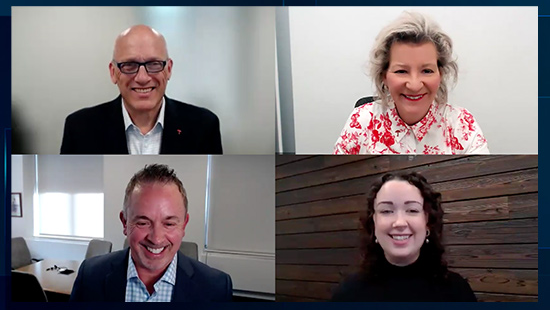
2024 CFO Study: A Travelers Special Report
Ever wonder what keeps CFOs up at night? Get insights from a Travelers survey of CFOs and explore how CFOs are approaching risk management, talent shortages, mergers and acquisitions, upskilling and more.
Related news
Industrial M&A ramps up as tariffs settle in, interest rates drop and funds are flush
November 12, 2025 | Manufacturing Dive
M&A breakup: Why a third of firms switch insurance brokers post-transaction
May 13, 2025 | Insurance Business Magazine