Economic Outlook with U.S. Chamber of Commerce Chief Economist

Economic Outlook with U.S. Chamber of Commerce Chief Economist
January 7, 2026
Wednesday 1:00 p.m.-2:00 p.m. ET
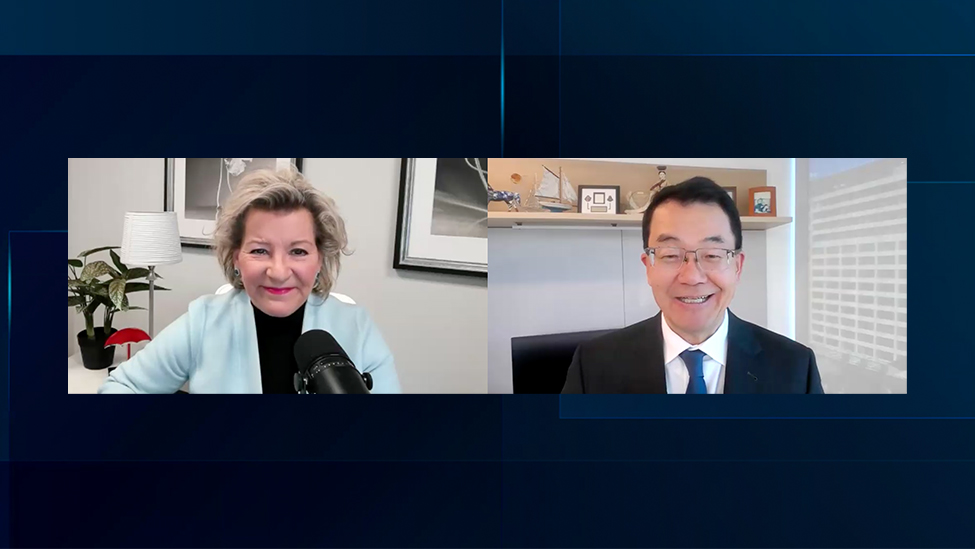
What’s ahead for the economy in 2026? Curtis Dubay, Chief Economist at the U.S. Chamber of Commerce, joined us to discuss the headwinds and tailwinds facing the U.S. economy, including inflation, interest rates and the labor market. He examined the impact of new tax law on businesses and reported on the current legislative outlook. Watch the replay to get valuable insights to help your business and clients navigate the evolving economic landscape in the year ahead.

Host
Joan Woodward
President, Travelers Institute; Executive Vice President, Public Policy, Travelers

(SPEECH)
[SOFT PIANO MUSIC]
(DESCRIPTION)
Slide: Wednesdays with Woodward (registered trademark) Webinar Series.
Slide. In an image, a red mug with a white Travelers umbrella and a potted plant sit on a desk next to a laptop open to the Wednesdays with Woodward (registered trademark) presentation. Logos: Travelers Institute (registered trademark). Travelers. The speaker's video appears in the upper right.
(SPEECH)
JOAN WOODWARD: Hi there, everyone. Thank you so much for joining us, and happy New Year. I'm Joan Woodward, President of the Travelers Institute. Welcome to Wednesdays with Woodward.
Before we get started, let's briefly review our disclaimer for today's webinar.
(DESCRIPTION)
Slide: About Travelers Institute (registered trademark) Webinars. Text: The Wednesdays with Woodward (registered trademark) educational webinar series is presented by the Travelers Institute, the public policy division of Travelers. This program is offered for informational and educational purposes only. You should consult with your financial, legal, insurance or other advisors about any practices suggested by this program. Please note that this session is being recorded and may be used as Travelers deems appropriate. Logos: Travelers Institute (registered trademark), Travelers.
(SPEECH)
I want to give a huge thanks to our co-hosting organizations, the Connecticut Business & Industry Association, the Master's in FinTech Program at UConn, the MetroHartford Alliance, the Risk and Uncertainty Management Center at the University of South Carolina. So, we really appreciate all of your engagement throughout the year to our partners. And welcome everyone from those networks.
(DESCRIPTION)
Slide: Wednesdays with Woodward (registered trademark) Webinar Series. Text: Economic Outlook with U.S. Chamber of Commerce Chief Economist Curtis Dubay. Logos: Travelers Institute (registered trademark), Travelers, Master's in Financial Technology (FinTech) Program at the University of Connecticut School of Business, CBIA, University of South Carolina Darla Moore School of Business, MetroHartford Alliance.
(SPEECH)
All right, so for the next hour, we're going to take a deep dive into the U.S. economy, the global economy, and the impacts that interest rate cuts, consumer spending trends, trade and GDP growth will have on our businesses and our lives. I'm thrilled to welcome our special guest today, my friend Curtis Dubay, who's going to offer his insights and expertise for the conversation.
(DESCRIPTION)
Slide: Wednesdays with Woodward (registered trademark) Webinar Series. Text: Today's Speaker: Curtis Dubay. Chief Economist, U.S. Chamber of Commerce. A picture of the guest speaker in a suit is on the left. Logos: Travelers Institute (registered trademark). Travelers.
(SPEECH)
He's the Chief Economist at the U.S. Chamber of Commerce.
Prior to joining the U.S. Chamber of Commerce, he was a Senior Economist at the American Bankers Association, where he worked on tax issues and followed economic trends affecting the banking industry. His insights are published frequently on a wide range of tax and economic issues. He's a regularly quoted economist in the media and has testified before Congress numerous times.
He'll kick off with a opening presentation with some terrific slides. And then I'm going to rejoin him, and we're going to have a conversation about what's going on in the world and what's going on here in the U.S. and why it's important for your businesses. And I think it's really important that we kick off the year to understand what might happen, what might not happen.
And as you know, all of these trends really do affect our business lives. So in addition to today's session, we're going to do a deep dive with an economist from the National Association of Realtors coming up in a few weeks. So join us for that. So, Curtis, thank you so much for doing this. We're really appreciative of your time. And the floor is yours.
(DESCRIPTION)
The screen splits between the two speakers.
(SPEECH)
CURTIS DUBAY: I'm a Connecticut native, if you remember from last year--
JOAN WOODWARD: Yes.
CURTIS DUBAY: --and a Travelers alum. So it was nice to see the Travelers, UConn and CBIA logos up earlier. We're going to go through a lot of stuff today. There's an awful lot going on in the economy, as there often is, but with a lot of differing things all happening at once. So it's a bit difficult to make a coherent picture out of what's going on. But I'm going to do my best. And I think we'll get there at the end of all this.
The thing to keep in mind is that, so if you look at surveys-- and it could be surveys of consumers, small businesses, midsize businesses, big businesses, manufacturers, service providers-- they're kind of all over the place. But they're kind of consistent in the sense that they think the economy is, eh, OK, not so great, could be better. Particularly consumers-- consumer sentiment is probably the thing that is the lowest of all those things right now.
But if you look at the economic data, it's actually pretty good.
(DESCRIPTION)
Slide: U.S. Chamber of Commerce.
(SPEECH)
The economy grew at 4.3% in the third quarter. We finally got that data. It was delayed by the government shutdown. We finally got that data right before Christmas. And the economy grew really, really strongly in the third quarter of 2025, and above what you would get from just talking to businesses and consumers. So there's that part of it.
The other thing to keep in mind is we do have some delayed data when it comes to the government shutdown. So we still haven't gotten all caught up on all the data that was delayed because of the shutdown. So we're still somewhat flying a little bit blind-- better than we were a couple of weeks ago when it comes to what was going on at the end of the year, really at the tail end of the fourth quarter of 2025. But all indications are the economy remained in pretty good shape at the end of the year.
So as we go into 2026, the thing to keep in mind is that the economy is growing-- probably going to grow about 2% in 2025 when all is said and done.
(DESCRIPTION)
Slide: Curtis Dubay. Chief Economist, U.S. Chamber of Commerce. CDubay@ U.S. chamber.com. Logo: U.S. Chamber of Commerce.
(SPEECH)
That's about where the economy will grow without anything else happening.
(DESCRIPTION)
Slide: Tariffs Caused Large Swings in First Half of 2025 -- And Slowed the Economy for the Year. Logo: U.S. Chamber of Commerce. A bar chart displays bars titled 2024 Annual at 2.8%, 2025 Q1 at negative 0.6%, 2025 Q2 at 3.8%, 2025 Q3 at 4.3%, 2025 Q4 Forecast at 1.2%, and 2025 Annual Forecast at 2.0%. A line falls from 2.8% on the left to 2.0% on the right.
(SPEECH)
It's a little slower than where it was in 2024 and 2025. But it's a pretty good growth rate, all things considered, considering everything we went through in 2025.
Now, so we'll start 2026 by growing at about that rate. If nothing else happens, we'll probably get that 2% growth rate this year. The thing is, though, we could get 3% growth. We at the Chamber, our target growth rate for the U.S. economy is 3%. That makes us all better off. And it makes a lot of our fiscal challenges a lot better. And we can get there. We can get there over the long run with the right set of policies. And if we get those policies this year, we could hit that 3% target this year.
On the flip side, we could also get much slower growth. If we get the wrong set of policies, we could see growth slowed down, as well. They're probably about both equally as likely. So let's talk about why the economy would grow at 2% or why, just status quo, it will grow 2%.
And the two big reasons are, one, consumers keep spending. They've been doing that at just an incredible pace for a long, long time, going back to COVID era. Consumers have kept spending month after month, quarter after quarter, year after year. And then the other thing is that businesses are investing heavily, but particularly in AI through data centers. The data is very clear-- very high levels of investment, or strong growth rate, but it's very, very concentrated in AI.
So consumers have been able to keep spending. I think I have a chart that--
(DESCRIPTION)
Slide: Consumer Sentiment Up in December After Four Straight Monthly Declines. A line graph begins in February 2020 at roughly 100 and drops to the right with occasional peaks to a low around 50 in June 2022, rises with peaks and valleys to about 80 in February 2024, then falls to about 50 in October 2025. Logo: U.S. Chamber of Commerce.
(SPEECH)
oh, by the way, here's-- consumer sentiment is really, really low. There's the chart that shows it over time-- falling since the end of-- since COVID and then really remaining at that lower level. But this is just retail sales, which is just sales in brick-and-mortar stores and online and at restaurants and bars.
(DESCRIPTION)
Slide: Retail Sales Flat in October. A line graph has months from November 2024 to October 2025 across the x-axis, sales in millions from 690,000 to 735,000 on the left y-axis, and percentage from negative 1.1% to 1.4% on the right y-axis. A dotted horizontal line at around 700,000, 0, crosses the chart. The bars are labeled Total Retail Sales in millions of dollars, and begin around 712,000 on the left and rise to about 733,000 on the right with a few ups and downs. The line is labeled % Change Previous Month and begins around 0.6% on the left, then rises and falls large distances until about 0.9% in June 2025, then falls steadily to about 0% in October 2025.
(SPEECH)
So it doesn't include the broad part of the service sector. But you can see it's been strong month after month. And it continues to remain strong and growing pretty steadily.
So consumers have been able to spend and keep spending at a really impressive clip. The answer for this is-- so we used to talk a couple years ago about pent-up savings from COVID, using credit card balances. Those things are long since-- are long over with. We're not doing this spending with pent-up savings and with credit card balances. This is all driven by wage growth being above inflation.
So wages have been growing about 4%. Inflation has been running about 3% on an annual basis. So even with the affordability crunch, which I don't want to downplay at all-- there's no doubt-- and we'll talk about inflation and affordability more in a little bit. There's no doubt that consumers are rightfully feeling a pinch on affordability.
But overall, their wages have been growing more strongly or faster than inflation. That has allowed them to keep spending above the rate of inflation and allows for this growth that we've experienced for year after year now, that's really helped driving the growth rate for the overall economy higher and higher. And even in the third quarter of 2025, it was consumer spending that was really the biggest driver of growth for the quarter.
The other thing when it comes to spending right now is the stock market. We can't overlook that. The stock market's been growing steadily and strongly for a long time now-- hit record highs again this week. That's certainly boosting-- even if they don't say so in those surveys, it's certainly giving consumers confidence to spend out of their wealth. And that's helping to drive up spending, as well.
OK, so that's the consumer side. That's really, again, the biggest driver of economic growth. But the other side of this is businesses investing in AI in a really big way. And it's keeping a lot of people employed.
There's a lot of people that have to be-- particularly when you're building these giant data centers, it takes a long time to build them. It requires a lot of workers on the ground to put them in place. So they're a real big part of the economic growth story the last couple of years. And that's going to continue as AI continues to be a big growth opportunity for businesses and the U.S. economy.
It's possible as we go into 2026-- and I'll talk about this in a second-- that we could see investment even get stronger, particularly because the tax bill that was enacted last year creates stronger incentives for investment going forward. And that would apply to AI and to other areas of investment, as well. So if nothing else happens, if just these two factors remain steady, the economy is going to grow at 2% in this year.
Keep in mind that tariffs do have a big impact here. They do create swings from quarter to quarter.
(DESCRIPTION)
He returns to the Tariff bar chart slide showing the economy fall from 2.8% to 2.0%.
(SPEECH)
So I want to go back to this chart here where you can see we had a quarter of contraction in the first quarter of last year. And then we had a big growth rate in the second and third quarter.
Now, part of what's driving those kind of inflated numbers and the depressed number in the first quarter is trade flows. So as the threat of tariffs was going into place, businesses front-loaded their buying of inventories in a really big way in the first part of last year. Mechanically, the way GDP is calculated, imports subtract off of GDP. So the big, huge amount of buying, which, by the way, is still-- businesses are still working through.
One of the reasons why tariffs have not fully translated into higher prices-- and it's happening now kind of slowly, and it's going to continue to happen. But one of the reasons why it's been so slow to develop is because businesses bought up a huge amount of inventory in the first quarter. That mechanically drove down the rate of economic growth in the first quarter.
Now, they stopped doing that buying in the second quarter. So you get this big-- so when they're not there, when you don't have that surge of imports, the number, again, mechanically goes higher. So you get the swing to the positive in the second quarter.
So you had to average the first-- those two numbers to get the growth rate for the first half of last year. But then in the third quarter, it kind of moderated. But there's still depression on imports. It kind of pushed up the number a little bit. I don't want to overstate that. The third quarter was really pretty strong when it came to, again, consumer spending and business investment.
Those trade flows that are heavily influenced by tariffs will continue to push the data one way or another. So it's important to keep that in mind when you first see those numbers, that eventually those things will moderate and not be a big part of it. But for right now, they do influence the quarter-to-quarter swings.
OK, so I said we could get to 3% growth this year. And we certainly could have-- it certainly could happen. But the right set of things have to happen. The first thing would be that AI has to continue to boom. The way that it would really drive growth higher-- certainly with higher investment. But it takes a long time to plan investment. You got to find sites. You got to start construction. You got to do all that. That's a multiyear process.
The way AI could really start driving economic growth higher this year-- and we're starting to see it-- is through productivity growth. By making us all much more productive, that would certainly drive the growth rate higher. I think we're starting to see that. There's certainly something with a very strong growth rate in the third quarter.
Remember-- we'll talk about this in a second-- the labor market has been cool. So we aren't adding as many jobs as we used to. And yet the economy is growing at a really strong clip. All productivity is is GDP production divided by the number of hours worked in the economy.
If we have really strong economic growth and we have somewhat moderated labor force growth, it necessitates a really big jump in productivity numbers. We'll get those numbers, I think, tomorrow. I didn't check to see if it was going to be delayed. But we should finally get updated numbers tomorrow, and we'll see.
But we kind of already know that it's going to be higher because it has to be based on how the numbers are calculated. Whether that's AI-driven or something else, I guess we'll have to dig into that. That will be the job of other economists to tease out of the data. But it seems like AI is starting to filter through and make us all much more productive. If that continues this year, it will drive the growth rate closer to that 3% level.
We did have a big tax bill last year. A lot of things get lost in the shuffle here in D.C. But we did have a very big pro-growth tax bill last year. The benefits from that could prove to be stronger than we anticipate. That would really likely come from two things. One would be the extra investment incentives I talked about earlier. That would mean that businesses expand investment more than they otherwise would have.
What businesses can do now is they can write off the full cost of their investments. They could for a long time, but it was never permanent. There was always the chance that that policy would be repealed, or it would expire. Now they know it's permanent. They can write off the full cost of investments in the year they make them.
If that businesses-- if that kind of becomes clear to businesses and they do more investment in 2026 than they otherwise would have, that will also-- that will drive the growth rate higher. The other thing, too, is there's going to be liquidity pushed out into the economy. The tax bill, if you remember, the One Big Beautiful Bill, it lowered taxes for families, for individual taxpayers.
So there's two reasons why we could see some more money in people's pockets starting right now. One is that we didn't adjust withholding tables after the bill passed for 2025. That means that they'll be adjusted now. So take-home pay should start going up with the first paycheck of the year.
And then, second, refunds should be larger come April, or whenever you file your taxes. That will push more money out into the economy, as well. So that could boost consumer spending and give an extra jolt, pushing the economy stronger to that 3% level.
There are other things that, if we could get Washington moving, that would really make it even easier to get to that 3% growth rate. One would be permitting reform, to make it easier for businesses to invest. That would be a big deal. Continued deregulation-- that would make it easier for all businesses to invest and plan ahead.
We're going to need more workers. We'll talk about this, but we are very, very slow labor force growth rate. And that is largely driven by the immigration restrictions. If we could ease that, we would-- it would go a long way to getting-- it's going to be hard to get a 3% growth rate with a shortage of workers. So we need more workers. And then, lastly, the tariffs coming down. If we got lower tariffs, just average lower tariff rate, we would see a much stronger growing economy.
The key thing with all of these policies is that they emphasize the supply side of the economy, not the demand side. We saw in the last couple years that when you push on the demand side, basically giving people money to spend, that's going to drive up inflation. If we can get these growth-- these policies will push on the supply side of the economy, it won't be inflationary. So that's really important to remember.
That's the positive case. There's a good chance that could happen. Unfortunately, there's an equally-- an equal-sized chance that we could get the wrong set of policies and growth could fall. The first thing would be states are kind of taking on the regulation of AI on their own.
A patchwork of different regulatory policies across the country could really slow the investment in AI. And that would-- again, it's one of the bigger drivers of growth right now. That could put a real-- could hamper the investment in AI. That would slow what we're doing with AI, and it would slow the investment in it. And that means-- it puts pressure on the financial side.
There's a lot of growth in the stock market based off of the potential growth in AI. And then, again, this is why-- AI is really exciting for economists because of the productivity enhancement, but also because AI necessitates investment on the ground. It means that people are building-- or businesses are building those giant data centers that require so many people to employ to build.
If businesses start investing less because the regulatory environment is so negative, that would mean less of that investment on the ground and fewer jobs created for people across the country. So the thing that this brings back to mind is the dot-com bubble of the early 2000s. That was driven by the web coming online and this great, big expectation that there was all this money to be made from the World Wide Web.
The bubble burst because we kind of got ahead of ourselves. And the revenue-making capacity didn't catch up with the positive expectations. I don't think we're here in that case. I think that we're being-- we know more now. We know that there has to be a business use case for AI to justify all the investment.
I think that this lines up. So I'm not really worried about a bubble bursting. It doesn't mean there won't be pullbacks here and there. There certainly will be. And it'll probably be some consolidation, but nothing like the dot-com bubble bursting from 25 years ago now.
Another thing that we always have to be on guard for is an increase in tariffs. So we certainly want a decrease in tariffs. And by the way, I think a lot of businesses are hoping the Supreme Court bails us out from specifically the IEEPA tariffs, the International Economic Emergency Powers Act, that the president has used to justify some of the tariffs-- not all of them, just a selection of them.
Here's the thing. I don't think we can bank on that. We have no idea what's going to happen at the Supreme Court. But more importantly, the president has, first of all, a deep belief in the necessity of tariffs, but, more importantly, a lot of laws that are on the books that he can point to and say that he has the power to apply them based on that law.
So what could happen if the Supreme Court does invalidate the tariffs? He could say, “I didn't mean that law; I meant this other law. And I'm not taking them off. I'm applying them under this law. And I meant that all along, by the way. So I'm not going to do any refunds.” So I don't think we can-- [CHUCKLES] I don't think we can bank on the courts bailing us out on the tariffs.
But that said, hope springs eternal. We could hope that the president decides a different tact when it comes to tariffs and trade. That would go a long way to boosting the economy. But because he believes in them so much, we have to be-- always be on guard that he goes the other way. And it wasn't that long ago that he applied to-- I think it was furniture. There was something at the end of the year, a new group of tariffs.
He believes in tariffs. We have to accept that. It's very clear at this point. And it remains a risk that they go higher. And that would really-- that would put a damper on growth next year.
(DESCRIPTION)
He moves to the slide with the multi-colored bar chart titled, Sources of Change in Real GDP Growth 2026, showing growth go from 1.75% Base Real GDP to 1.66% Resulting GDP. Then he returns to the Tariffs bar chart slide.
(SPEECH)
The last thing that could slow growth in 2026 would be the consumers finally losing confidence, so their spending habits catching up with their declining confidence. So as I talked about, confidence is down.
(DESCRIPTION)
He moves to the slide with the line graph titled, Consumer Sentiment Up in December After Four Straight Monthly Declines.
(SPEECH)
But this isn't lining up with how consumers are behaving.
Confidence is low, but they're out there spending as if it's high. There's any number of reasons why that could happen. But if they finally-- if these things finally equilibrate and consumers pull back on spending, then you could see us getting closer to that 1% growth rate rather than the 2% or, more hopefully, the 3% rate.
(DESCRIPTION)
Slide: Sources of Change in Real GDP Growth 2026. A multi-colored bar chart has bars in blue for total, green for increase, and red for decrease. A blue bar begins on the left with Base Real GDP Growth at 1.75%, then small green bars rise to the right from the top of the blue bar to reach a peak at 2.89%, with the categories Monetary Policy, Tax and Spending, AI Capex, AI Stock Wealth Effects. Then red bars drop to the right until they reach another blue total bar at 1.66%, labeled Resulting GDP. The red bar categories are Tariff and Trade, Immigration Policy, and Other. Text: Source: Moody's Analytics. Logo: U.S. Chamber of Commerce.
(SPEECH)
I think I skipped over this, but you can see the base case why we say it's 2%. We're about there. That's kind of where the economy will grow without any other-- anything else happening. But you can see the real-- the red part, the drag, comes from trade, which is the tariffs-- tariffs and trade-- and then immigration, which we're going to talk about in a bigger way in a second because it plays a big part of our worker shortage.
Labor market has slowed somewhat. We just got numbers out today. Hiring is slowing. And then we've seen that with the monthly job numbers. But we also don't have to add as many jobs as we used to to keep the unemployment rate steady.
We used to have to add about 125,000 jobs a month to keep the unemployment rate steady. Now we only have to add about, say, 30 to 50,000, so a third of what we used to have to do. And that's a large part of the immigration. But it's also an immigration-- or, sorry, a demographic issue that's long been in the offing. But I'll come back to that in a second because it's a really big part of the economic story right now.
Let me just run through a couple other things when it comes to-- and we'll talk about inflation, too.
(DESCRIPTION)
Slide: Tariff Costs Continue to Move to Consumers. A bar graph shows three pairs of bars with Consumer in blue and Business in orange, labeled in June, August, and December. The June blue bar is 22% and orange 64%, the August blue bar is 37% and orange 51%, and the December blue bar is 55% and orange 22%. Text: Source: Goldman Sachs. Logo: U.S. Chamber of Commerce.
(SPEECH)
And you can see here I talked about the stockpiling of inventory. And that's kind of kept tariffs from being fully passed on to us. That's declining less and less.
Businesses are pushing more onto consumers. That's the blue. The blue is the impact of tariffs on consumers. And so that's been rising each and every month. And that will continue as that inventory buildup lessens.
And a key point that I think gets somewhat glossed over is this is the price of all products and imported products.
(DESCRIPTION)
Slide: Tariffs are Raising the Prices of Imported and Domestic Goods. A double line graph has time from October 2024 to October 2025 on the x-axis and Deviation from trend (P.P.) from Negative 0.2 to 0.8 on the y-axis. A blue line labeled All Products climbs from around 0 to 0.70 P.P,, and a red line labeled Imported Products climbs from about negative 0.05 to about 0.45 P.P. Both lines have many peaks and falls. Text: Source: Cavalto, Llamas and Vazquez (2025). Updated on 09/08/2025. Logo: U.S. Chamber of Commerce.
(SPEECH)
When prices of imported products go up because of tariffs, all prices go up because the domestic producer can raise their prices now because the price of their foreign competitors goes up. And they can raise it by a lower amount and still come out better. So all prices go up when tariffs go up.
I'll still go back to inflation in a second. But a couple other things to keep in mind in 2026. We're not going to have a recession. There's always people out there who will predict that a recession is likely-- is going to occur. They have lots of reasons why they think that might be the case. But something has to happen.
Let's go back over the last six causes of recession. There was the COVID pandemic. There was the global financial crisis, then the dot-com bubble bursting, the S&L crisis, really high inflation followed by really high interest rates in the early '80s, and then the oil shocks of the 1970s. Something like that, something of that magnitude has to occur to push the U.S. economy into a recession.
So the economy will continue to grow without something like that occurring. That doesn't mean we couldn't have slower growth. We can have slower growth, and we probably will have that this year. Even if we get between 2% and 3%, we were growing close to 3% in 2023 and 2024.
Now, things are relative. Slower growth feels bad, and it's not as good as stronger growth. But it's not the same thing as a recession. When you have a recession, when the economy contracts for two consecutive quarters, it's really bad because it means jobs-- people lose jobs and incomes fall. So people see their pay fall, largely because they're out of work. That's a much different animal than slower growth.
So while we're likely to get slower growth, or we could get slower growth, we're not going to have recession unless something happens. There's lots of people who predict all sorts of things that will cause a recession. I'm not one of those economists. They're out there if you want to look it up.
There's always a chance that something happens. Those people who predict lots of recessions, if they get it right once in their career, they look really good for a while. And they can make a lot of money off of it. But there's always those risks that are out there, and you always have to keep them in the back of your mind. But unless something like that happens, we're not going to have a recession.
OK, and I touched on the labor force issue before. And let's go into that deeper discussion now. The-- oh, policy risk. I wanted to talk about policy risk.
(DESCRIPTION)
He rapidly clicks past several slides and stops on a slide with a line graph titled, Economic Policy Uncertainty at Financial Crisis and Covid Levels. The graph runs from year 2002 to 2024 on the x-axis and from 0 to 700 Index on the y-axis. Logo: FRED. The line is labeled, Economic Policy Uncertainty Index for United States. It begins around 50, peaks around 320 in 2001, lowers and zig zags around 100 until around 2008 to 2010, where it rises to about 620, then lowers and zig zags around 300 until about 2014, where it lowers and zig zags around 80 to 100 until 2020, where it peaks around 550, then lowers and zig zags around 150 until 2024, where it rises to 500. There is a shaded area in 2001, 2008 to 2010, and 2020. Text: Shaded areas indicate U.S. recessions. Sources: Baker, Scott R., Bloom, Nick, Davis, Steven J., via FRED. M.Y.F. dot red slash g slash 1 N h Z D. Logo: U.S. Chamber of Commerce.
(SPEECH)
This is a big part about, how do we get to the 3% growth rate? Certainty from Washington. So no changing policies when it comes to tariffs and trade, immigration, anything else. Really makes businesses uncertain about what the future will look like. That makes them hold off on big investments.
Just think how much stronger investment would have been had we not had such high levels of uncertainty. It's as high as it was during the global financial crisis and during COVID. That's how high businesses-- and this is a metric that's been used for a really long time.
It pulls keywords from media reports like The Wall Street Journal, things like that. And so business policy uncertainty is at the highest levels ever in the last few months. If we could get some policy certainty, it would go a long way to helping us get to that 3% growth level.
OK, so workforce.
(DESCRIPTION)
He rapidly clicks through slides to a double line graph titled, There were 47,000 More Unemployed Workers than Job Openings in October. The graph runs from March 2020 to September 2025. The y-axis is not labeled. A dark blue line labeled Job Openings begins low on the left, rises to about the bottom third in March 2022, then falls to about the bottom quarter in September 2025. A light blue line labeled Unemployed begins low in March 2020 and rises steeply to the top in the same month, then falls steadily until it reaches a low point around March 2022, then rises slowly until it reaches the bottom quarter in September 2025. Logo: U.S. Chamber of Commerce.
(SPEECH)
So this is the kind of-- and this is the data that just got updated today. Excuse me. We now have about 630,000 more unemployed workers than we have job openings. That's a flip. For a long time, we had many more job openings than we had unemployed workers to fill them.
That said, we still have fewer-- we have fewer workers than we've had for, really, ever. We only have to add, again, that 30 to 50,000 each month to keep the unemployment rate steady. Hard to get the 3% growth when you're only adding 30 to 50,000 jobs a month. But we're there because immigration has gone down basically to zero.
And we are in a demographic pinch like the rest of the world. We have birth rates that are about at replacement level. We're better than most places, but it's still an issue. This is a really interesting stat. The United States of America has never-- we've never in our history had a year where our population declined. So never in periods of world wars-- civil war, world wars, pandemics, the Spanish flu, COVID. Our population has always increased.
In 2025, our population might have decreased for the first time ever. And that comes from two things. One is immigration. We might see 350,000 more people leave last year than came in. So that alone would push the population down by 350,000.
Last year, births outpaced deaths-- or in 2024, births outpaced deaths by 315,000. So we added 315,000 naturally. If those numbers-- if that's the same in 2025, you add those things together. The population declines by about 35,000-- never happened before. That's from data from economists at AEI.
So we have a declining birth rate. What you want from your demographics is every generation to get bigger than the one before it, like an inverse pyramid. We don't have that. We have the baby boomers, then Generation X-- that's the generation I'm from. We're smaller than the baby boomers. That kind of starts the problem.
The millennials are bigger. They're the biggest generation ever, but not by that much compared to the baby boomers. And then it's the succeeding generations, the alpha-- whatever, the ones after alpha, beta. Whatever the two generations after the millennial generations are, they're smaller than the millennials. And that really is the problem.
And so we're just not growing the population at a strong enough rate to keep up with what we need to grow the labor force. So that's where the problems come in. There's not a real easy solution to this other than letting up on the immigration restrictions.
It takes a long time to change the demographic problem. So there's going to be a lot of pressure to get more workers here, because we're going to need them going forward. Even with the slowdown of hiring, we're still going to be still short of workers.
And then, I think, yeah, let me hit-- we got two or three more minutes. Let me hit-- I haven't talked about the Fed and inflation. And I think it's an important thing to get to.
(DESCRIPTION)
He moves to a slide with a double line graph titled, Wages are Growing Faster than Inflation. The graph runs from January 2021 to October 2025 on the x-axis and from 0.0% to 9.0% on the y-axis. A dark blue line labeled Wage Growth begins at around 5.1.%, drops sharply to around 0.5% in April 2021, then grows to about 6.0% in April 2022, then falls steadily to around 3.5% in October 2025. A light blue line labeled Inflation begins around 1.2%, climbs to about 9.0% in April 2022, then falls to about 3.1% in April 2023, then falls to about 2.8% by October 2025.
(SPEECH)
And, oh, by the way, here's the chart on wages have been growing faster than inflation for several years now. This remains the case.
Wage growth is starting to moderate a little bit. But inflation is coming down, as well. So the gap remains pretty good. For the first time, in December, actually since inflation took off in March of 2021, wage growth over that period-- so since March of 2021 through December of 2025, wage growth and inflation are equal.
So prices had risen almost 22%. That had been above the cumulative growth in wages. They are now both at 22% higher than they were in March of 2021. So they're finally equal.
You can see why affordability remains a really big issue in people's minds. Their wages have been growing. They've been growing above inflation. But inflation was still running higher than wages. So it's going to take a while for that to seep into people's minds.
Yeah, there's really no other way to-- this is a problem if you're the president and Congress and you want to speak to the No. 1 issue on people's minds, is that there's no really good, easy way to fix that. You just have to have wages growing faster than prices overall. And it has to happen for a really long time before people accept that we have a new higher price level. But it's OK because our wages have kept up. A long time for that to seep into our consciousness.
So when it comes to-- and by the way, here's more on the worker shortage.
(DESCRIPTION)
He moves to a slide with a double line graph titled, We are Short more than 2.3 Million Workers From Population Factors. It runs from February 2020 to October 2025 on the x-axis and from 156,000 to 174,000 on the y-axis. A dark blue line labeled Labor Force Level with February 2020 Participation Rate begins at roughly 165,000 and grows steadily to about 174,000. A light blue line labeled Actual Labor Force Level begins at about 164,000, drops to about 156,000 in April 2020, then grows steadily to about 169,000.
(SPEECH)
If we just had labor force participation rate, which is the number of people in the population who are in the labor force, the same as in the early part of COVID, we'd have 2.3 million more workers in the economy. And that's all because of demographics, the issue I talked about. That's all that's going on there. That chart encapsulates that whole demographic issue.
(DESCRIPTION)
Slide: Consumer Prices Rose 2.7% Annually in November. A line graph runs from January 2020 to October 2025 on the x-axis and from 0.0% to 9.0% on the y-axis, with a dotted horizontal line at 2.0%. The line begins at roughly 2.5%, dips to about 0.3% in April 2020, then rises to about 8.5% in April 2022. It then falls to about 3.0% in April 2023 and remains roughly steady.
(SPEECH)
OK, here's on the Fed. The Fed is in a really tough spot because inflation remains too high. Remember, its target is 2%. And we've not been at 2% since March of 2021. We were getting close to there. Tariffs came in, pushed the price level back up. We're starting to moderate back down closer to the 2% level.
Now, the Fed's job is really complicated right now because, put aside all the outside pressure that's being put on it, its monetary policies, the policies that it controls and that it sets are not-- it has nothing to do with tariffs. They can't control tariffs at all. But tariffs-- and bear with me for a second. It's an interesting point.
Tariffs are not inflationary. They just raise prices. And those are two different things. Inflation is all prices rising simultaneously. Tariffs raise the prices of imported goods. That's a big part of the things we buy, but it's not everything.
So if you're the Fed, you have to figure out, OK, the price level is rising, as it was in the early-- through the middle part of the year. But what part of that price increase is tariff-driven? And what part is our policies, our monetary policies, our interest rate policies, not being right? And you have to tease out the tariff part to get to the monetary policy part. It's harder for them to do that in an environment where tariffs are going up and playing havoc with the data.
So they've lowered interest rates a couple of times at the end of 2025. That was clearly-- and they said very clearly that it was because of the weakening labor market. The Fed has a dual mandate-- full employment and stable prices. They switched over to concentrating on the full employment part.
And now-- they've been also clear-- now they're going to have to hold off for a little bit because they have to figure out-- you usually don't cut rates when the economy is growing at 4.3%, unemployment rate is not all that high, and inflation is still above where you want it to be.
So they're going to hold steady for a little bit and figure out-- once the tariffs have been in place for a year, the impact they have on this data goes away. It's kind of a one-time shock. And then they can reevaluate where they are when it comes to price level and with the labor market and then what the appropriate interest rate policy is. So I think for now they're going to hold steady.
We're going to have a new Fed chair in a few months. The president will announce that at any time. And then that person will probably be confirmed by the middle of the year. And maybe that person sets a new track. But I think for right now, because of everything that's going on that they have to deal with, they're probably going to have to stay pat at least until the middle of the year.
OK, I think that-- yeah, that's 35 minutes. I've said an awful lot. There's a lot more stuff that I could probably go on for another 35 minutes. But I think it's probably best to turn it over to the Q&A portion. Thank you.
(DESCRIPTION)
The screen splits between the two speakers.
(SPEECH)
JOAN WOODWARD: All right, Curtis, that was a lot. Thank you for going so quickly through it. And there are very conflicting economic indicators.
We have a number of questions coming from the audience. And they're like, try to reconcile the fact that consumer sentiment is one of the lowest readings we've had in many, many years, yet retail sales are soaring and the consumer is still spending. So a lot of things to unpack here-- the tariffs, the trade. Thank you for walking us through all of your thoughts.
And now we're going to get the audience thoughts. So we haven't done this in a few webinars, folks. So you may be rusty out there. It's very easy. We're going to do an audience poll. We have two questions for you. And we're just trying to get a gauge of what people are worried about.
So first question-- what is your top concern for the economy in 2026? Inflation? Tariffs? Interest rates? So just vote to every one of my followers out there. You've done this before. So we want to get a macro look at what people are worried about, Curtis. Then we're going to go on to a second question. I'm just going to give our audience a minute here to vote.
OK, so it looks like people are worried about global instability. That's obviously very much in the headlines in the news right now. Interest rates, inflation. Not so worried about tariffs. I think maybe you have put that to rest a little bit by saying the policies are still unclear. There's a lot of uncertainty with what the Supreme Court's going to do, etc.
Tax and regulatory changes-- not a lot of worry. Actually, labor market, this is surprising that people are not more worried about the labor market. So let's go on to inflation. You see the results here. Curtis will talk about the results in a second.
Let's move on to the second question. And if we can pull that up. OK, how optimistic are you about the economy? Very, somewhat, neutral, not optimistic at all. So this is just on the economy folks-- not on everything else that's going on, but on the economy. And we have a lot of small business owners on the line. And I know you're optimists by nature, so thank you all for voting.
And it looks like-- I'm going to group the first two answers together as optimistic. And that looks to be like 44%. And the last two answers there, that looks to be about 56%. So we have somewhat of a pessimistic audience there.
Anyway, I'm sure we can all know that there are times in your day and in your life you're more optimistic or more pessimistic, depending on what's going on in your business that day or the outlook. So we have a bit of a mixed bag from our audience on optimism and pessimism. So do you have any thoughts on some of these results? Is it basically in line with some of the surveys you've done at the Chamber?
CURTIS DUBAY: Yeah, I think so. And I think that it's mostly-- small businesses have been surprisingly resilient. Their optimism has actually been stronger than you would guess it would be. I think part of it is that a lot of small businesses are actually OK-- at least originally were.
They're getting hit by the tariffs. There's no doubt about that. They don't have the financial buffer that middle and big businesses have. But they feel like they were getting a raw deal with trade. And they were willing to take the hit if it would rebalance the overall trade environment. I'm not sure where we are in evaluating the success of that.
But they're also-- probably the other thing, too, is it hasn't been quite as bad as they thought it was going to be. So they were willing to take a big hit. We've had a hit, but maybe it wasn't as bad as they thought it was. And they've been able to muddle through.
The other thing that's interesting about the surveys of small businesses is that they are wanting to hire. They're wanting to invest. But they're also anticipating lower margins going forward. So they see profitability falling. But they still want to invest, and they still want to grow their businesses.
Again, another hard circle to square, the only thing that really brings it all together is that tariffs are putting-- and higher prices are putting-- compressing their margins. But they still see the demand for their products. And so they're willing to continue to invest to meet that demand, even at the compressed margin.
JOAN WOODWARD: That makes sense. And obviously, as we saw the third quarter, fourth quarter, I mean, the last couple quarters' growth has looked pretty good compared to the second quarter, which was slightly negative. So does it make sense for us to just look at GDP?
Give our viewers-- what are the other economic indicators that you really look at first? I mean, I know I look at the Consumer Sentiment Index. But again, as we just said, retail sales are up, and consumers aren't feeling it. So what other economic indicators do you look at besides GDP?
CURTIS DUBAY: Yeah, so here's the thing. So a lot of times you'll hear arguments that we shouldn't look at GDP. We should look at lots of other things. There's better evaluators of well-being. We can go into that debate. The thing is, GDP is kind of a catch-all. When it's growing, overall things are going to be better. When it's growing slower, things are not as good as they otherwise could be.
That said, it shouldn't be the only thing we look at. We should look at-- I think really the key thing right now is affordability. Americans feel like the cost of living is just unaffordable. I think they're right. I think they're-- I wouldn't want to argue against their feelings. But I think they're right because the prices of necessities are really what's keeping inflation up. So that is housing, food, energy and transportation.
So how do you get the prices of those things down? Well, the bad news is inflation doesn't come down with prices falling. That's bad. Prices falling is bad. That's deflation. Deflation is more destabilizing than inflation. When prices fall-- just think about a business. If the price of your product falls but your cost basis doesn't go anywhere, you're in bad shape.
So we don't want deflation. What we want is prices to rise at a lower rate over time. It takes a long time-- I talked about this before-- it takes a long time for people to accept that. So they're going to feel that they are pinched for a while now. But the way that we get over that is with real wages, so inflation-adjusted wages growing strongly positive. So that means wages growing above the rate of inflation.
We want to see-- back to that chart I had before where wages were above inflation-- we want to see inflation going down and wage growth going up. And that will quickly lead us to a situation where people start feeling much better about the economy. That consumer sentiment number will go back up. So that would be the other key one. And that's going to be tied to labor growth, job market growth. But those two things will really tell you the whole story.
JOAN WOODWARD: OK. I want to shift a little bit. You talked about the One Big Beautiful Bill. It includes lots of tax cuts for every American in there, as well. But it adds to the deficit and the public debt. Public debt's $36 trillion. How much more sustain-- I mean, how do we deal with the national debt?
There seems to be no appetite, Democrats or Republicans, for addressing the national debt. Do you think at some point there's a breaking point where other countries aren't going to keep buying our Treasury bonds to support our addiction to spending? How do you think about, as an economist, having a $36 trillion debt and rising? It's going up.
CURTIS DUBAY: What it takes is it takes a presidential election cycle where one of the candidates, the candidate who wins, makes it a key part of the campaign, says, this is going to be-- I'm running on this. This is my agenda. I'm going to bring down debt and deficits because it's going to lead to an economic crisis.
The thing is, we've been telling people about this for a very long time, and it just hasn't sunk in. So I'm not real optimistic that we'll ever do anything about it. And to answer the first part of the question, I think it's kind of an-- it doesn't really need to be said, but of course it's a problem. It's, of course, a problem to have debt at the level we have.
Now, we have some advantages. Usually the benchmark is 100% of GDP is where you don't want to get with debt. We're there. We're the United States of America. We're the richest country that the world has ever known. We can absorb-- we can probably have more debt than any other country. But there's a limit.
And the thing is, we don't know when it is-- or we don't know where it is, and we don't know when. Just, the bond market in general says enough is enough. So we're in really dangerous territory.
JOAN WOODWARD: OK. All right, I agree with everything. Yeah, go ahead.
CURTIS DUBAY: The other key problem is-- it's like I said, I could talk about this forever. The other key problem is that the driver is Social Security and Medicare. Those are really hard programs to cut spending on.
JOAN WOODWARD: Right, right. And the baby boomers, we want it. We want every penny that we think we deserve. And so it's not politically-- no one's going to be cutting Medicare or Social Security, I think. I agree with you.
CURTIS DUBAY: And--
JOAN WOODWARD: All right, let's move on. Let's talk about monetary policy. So we have a new Fed chair coming in in 2026. And what do you think-- I mean, obviously slightly reduced interest rates for small- and medium-sized businesses is a big deal. That saves them a lot of money with their financing.
But for every 25 basis points cut, does-- I mean, is there a ratio that the U.S. Chamber kind of looks at for every-- to have economic increase in activity for every basis point that it gets cut? Is there a way to think about that for us?
CURTIS DUBAY: Well, I think-- so for lower interest rates-- and there's one other thing I want to say on the small business angle, especially for this audience, that one of-- and this ties into the Fed and inflation-- on lower rates and stronger growth, I think that you want the right-- you want the right interest rate set.
So you want an interest rate that's not overly juicing the economy or one that's holding it back. And for every-- so for the industries that are better off when interest rates are lower, so like real estate and housing, construction, things that require lots of financing, yeah, that helps. But lower interest rates means that people save less. They're putting less into-- they'll have to go into the market to look for returns. So it changes.
There's two sides of the coin. So you have to look at who benefits from the lower rates and then, what happens when rates go lower? And where does the money go around the economy? I think lower rates will help on housing with affordability. I can get into the economics of why that's maybe not fully the case.
But I think it will help psychologically, when interest rates come down, that you get people going back into the housing market and feeling that they can afford to be in the market or more house than they otherwise would have. That's the key one, and then just construction and manufac-- construction in a large sense, everyone doing more construction than they would with higher rates.
JOAN WOODWARD: OK. Actually, let's stay on that because I'm going to take an audience question now. There's a lot of audience questions coming in on this topic. So the construction of these AI data centers and stimulating local economies, I mean, they're building-- these are multibillion-dollar projects. And there's one not too far from Washington, D.C., where I live in Virginia, that I passed the other day. And it was just-- it was mind blowing to see all of the land that's being disturbed to build this huge data center.
But is it really going to impact these local economies? Because there's not going to be a lot of workers there. This is not a manufacturing plant they're building. They're building data centers with lots of computers and very few workers. Is that the case? Or how do you think about these data centers and, frankly, the demand for energy that they're going to create?
CURTIS DUBAY: Yeah, so there's a lot going on. It's a great question. And I'm actually doing a project on this now. So I have a little bit of background that I wouldn't have had a few months ago.
The local benefit is concentrated in those two years of construction. So it takes a couple years to put them in place. So the construction company, the HVAC people, the electric and water utilities that-- the infrastructure that has to be built out, those are front-loaded. But you still need the water and the electricity over the long run. So the investments that the company has to put into those infrastructure-- that infrastructure, that remains.
And there still has to be people that are employed there to maintain and run the data center. So there is a long-run benefit. There's a lot of maintenance that goes into keeping the places modern and running functionally. So there is a long-term benefit. But I agree that the benefit is front-loaded.
The big issue I do agree will be the energy. How do we not end up driving up energy prices for local residents? And so we can see very clearly that this is a problem because you have locations around the country that are saying no to data centers, and people applaud that.
I would think that you're better off with the data center than without the data center. But I understand the concern with energy prices going higher. Something's got to give here. This is one of the reasons why we are so adamant about permitting reform, because it would allow for more capacity to be built into the system, and that would bring prices down.
But my optimistic side is that something will happen to allow-- we have businesses that are trying to build small-cell nuclear reactors to power the data centers. Something like that will have to come along to alleviate that pressure. The demand is so high for the data centers, and the technology is there to figure it out that hopefully, in the next couple years, there's a solution that's equitable for everyone.
JOAN WOODWARD: OK, thank you for that. I want to go on to small businesses. We mentioned them a few times. I want to know, do you think they have access to capital that they need right now? I think you were telling me a story the other day about one of your members who was very strategic in raising capital. You want to share that story with the group?
CURTIS DUBAY: Well, I think the best thing we can do is go off of the survey data that we have, which is-- comes mostly from the National Federation of Independent Businesses. And we have our own survey. They haven't really mentioned that there's a lack of access to capital. They have-- they can still get loans if they need it.
The key issue is that, because interest rates are higher than they were, they are-- it's less affordable than it was a couple years ago. So a small business that relies on financing would be significantly helped by lower interest rates.
Right now, I think the key-- if you look at the two major surveys for small businesses, the key issues remain they have a really hard time getting-- inflation remains an issue, so higher prices on their inputs, which is compressing their margins. They can't pass on the prices as much as bigger businesses. And then they're really struggling to get workers. Those remain their two biggest issues right now.
JOAN WOODWARD: OK, all right. Let's move on to 2026 and what's going on in Washington, or not going on, with tax laws or legislative changes. Is there any regulatory changes out there on the horizon that people should worry about? The big tax bill was done last year. Do you expect any new tax changes this year going into the midterm elections?
CURTIS DUBAY: So I expect that Republicans will want to pass another big piece of legislation before the election. So that would benefit senators that are up for reelection and then all members of the House who are up for reelection.
As of yesterday, a House member in California passed away, one resigned-- Marjorie Taylor Greene-- and then one is hospitalized. They've lost three in just this week. There's no majority, no functional majority for Republicans in the House. Very hard-- excuse me-- to pass anything at this time.
So I can't see a major bill getting over the finish line. It's just very, very difficult. So you have to look to the administration and their deregulatory efforts. I think you could see some stuff there. I don't know how major-- there's not going to be one major thing. That's just not how regulations work.
But the continued push in all the different agencies to deregulate will help over time. The other thing, too, is that when you're looking to deregulate, you're not regulating. So we're not adding new burdens to businesses.
Businesses are largely-- small businesses, all businesses will-- they can handle the current set of things. It's when you're adding new burdens going forward. Once they get used to what the current situation is, they can be OK going forward. If we just hold the status quo, that's, in effect, deregulatory action.
JOAN WOODWARD: OK, thank you for that. Another question from our audience coming in-- K-shaped recovery. And so the wealthy are getting wealthy, but people are struggling. And so lower-income, middle-income folks, that K shape, has that gotten more severe in, say, the last year or two? And do you expect it to converge and not be so much a higher-income versus lower-income recovery?
CURTIS DUBAY: Yeah, it's a really good question, and it comes up all the time. So I think two things are true at the same time. I think that higher-income consumers are spending in a rather big way. If you've been in events-- so sporting events are sold out. Concerts are sold out.
JOAN WOODWARD: Yeah, they are.
CURTIS DUBAY: Travel is-- airports are packed. High-end hotels-- I'm sure a lot of us go to conferences. You go to conferences at these nice places. They're packed. Everything's packed. So the higher end of the income scale is certainly spending and driving those numbers higher.
It's driven by, they're making a lot of money, stock market returns, all the things where high incomes come from. Yes, middle and low income are pinched. But the growth numbers are so big on spending, it can't just be the higher end.
Remember, by definition, if you're going to the top 10%, it's only 10% of the consumer market. The growth is so large it can't just be driven by them. It has to be broad-based.
So like I said, I understand totally the issues with affordability. But even low incomes, they're spending more. They're just not-- their growth level is smaller than at the top. But because of the wage growth outpacing inflation, they are able to spend more. It's just not-- it's smaller than at the top.
The way that-- This is why you have to-- while we could get stronger growth-- we could get 3% growth-- we could get that 1% growth because say the stock market cools, we get a correction. Jamie Dimon, others have said we're in a bubble. It's just a matter of, how big does the bubble inflate, how much does it deflate, and when does it happen? No one can predict that. It can go on growing for a long time.
But even a 20% correction in the stock market, we're still a heck of a lot higher than we were before. But that would cause high-income people to pull back. And then if you get slower wage growth because there is some slowing in the labor market, you get the growth slower at the bottom.
The way to solve the K shape was to get the bottom group growing faster-- let's not worry about the top end-- the lower end growing faster. And that's got to come from a stronger-growing economy. That will pull that up. We had that before COVID. Lower-income-- lower-skilled jobs had the highest level of wage growth because jobs were so scarce.
JOAN WOODWARD: Right, right, right. Let's hope for that in the next few years. Another question coming in-- Naomi Martinez in Arizona. "Based on your outlook of seeing the 2026 economy, what risks do you believe businesses are underestimating today? And how should risk advisors and insurance producers help clients prepare for those risks now and those exposures?" Good question.
CURTIS DUBAY: Wow, that is a great question.
JOAN WOODWARD: It's a good question. It's a true insurance question.
CURTIS DUBAY: Yeah, it's one I have not-- well, OK. So we've done some work on this. And I just think it's the lost capacity from major events. We do clearly see an uptick in bigger, more costly disasters. So it's the one-year anniversary of the Palisades fire, right? Wasn't that this week last year?
JOAN WOODWARD: Yes.
CURTIS DUBAY: And the devastation. So I think it's not necessarily businesses. I think it's just all of us. It's businesses underestimating the risk. It's individuals, families underestimating the risk that could happen. No one in Western North Carolina thought that they would see devastation from a hurricane. And it was beyond devastation. And then policymakers at the-- and this is federal, state and local.
We just don't have a lot-- I don't think we are sufficiently prepared for major disasters just because the severity of them has gone up so much. And that is very pertinent for all your businesses, but just the key thing we don't hear a lot of talking about. And when these things occur, I mean, the costs are just kind of through the roof. And the number of those events has been really going up substantially.
JOAN WOODWARD: Yeah, incredibly devastating and disruptive for not just the people affected, but the whole state, the whole county, supply chain, etc. So, Curtis, this was fantastic. Thank you so very, very much. I'm sorry we have to end it, folks. I know we could go on longer, but I want to be respectful of everyone's time. So, Curtis, thank you again. Please come back.
And I want to talk to my audience just for a moment about taking our survey. It's really, really important. Fill out our survey. Let us know what you thought.
(DESCRIPTION)
Slide: Wednesdays with Woodward (registered trademark) Webinar Series. Take Our Survey. Link in chat. Logos: Travelers Institute (registered trademark). Travelers.
(SPEECH)
It informs who we bring on these shows. I read every single word, so we love that.
Also, hope you join us for our upcoming programs. So on January 21, we're going to be joined by Lawrence Yun. He's been with us before-- Chief Economist for the National Association of Realtors.
(DESCRIPTION)
Slide: Wednesdays with Woodward (registered trademark) Webinar Series. Upcoming Programs. January 21, Real Estate Market Outlook with National Association of Realtors Chief Economist Lawrence Yun. February 11, Leadership Growth: From Where You Are to Where You Want to Be. February 18, The Changing Liability Environment: What Leaders Need to Know. Register: travelers institute.org. Logos: Travelers Institute (registered trademark). Travelers.
(SPEECH)
We're going to talk about the commercial and the personal real estate industry and how that's going for 2026.
Then we have, on February 28, a special guest, my friend Byron Loflin, Head of Global Board Advisory at Nasdaq. He's got a new book out, folks, and we're giving it out for free. So go sign up right now. Get your book. It's called CEO Ready. He's going to talk about leadership, succession planning-- maybe you're a family business out there and you're worried about your succession plan-- career advancement, and, of course, how to get on track to be the CEO. So I know everyone's going to get that book and join us for that.
February 18, we're going to be joined by my Travelers colleague Rich Ives for a conversation about today's liability environment. One of the very, very cores to our business is the liability environment. And things are rapidly changing there.
So always visit us on travelersinstitute.org.
(DESCRIPTION)
Slide: Wednesdays with Woodward (registered trademark) Webinar Series. Icons appear for a video, Linked In, and a podcast. Text: Watch. travelers institute.org. Connect. Joan Kois Woodward. Listen. Wherever you get your pods. Logos: Travelers Institute (registered trademark). Travelers.
(SPEECH)
I'm thrilled you're with us today. Thank you so much for following us. And happy New Year, everyone. It's going to be a great one. I'm an optimist by nature, so see you in a few weeks.
[SOFT PIANO MUSIC]
(DESCRIPTION)
Logos: Travelers Institute (registered trademark). Travelers.
Please note: Due to the nature of the replays, survey and chat features mentioned in webinar recordings are no longer active.
Summary
What did we learn? Here are the top takeaways from Economic Outlook with U.S. Chamber of Commerce Chief Economist:
Economic growth is stable but sensitive to policy choices, said Dubay. According to the U.S. Chamber of Commerce, despite lower consumer sentiment, economic data remains strong: The economy likely grew 2% in 2025, with 4.3% growth in Q3 and indications of steady growth in Q4. For 2026, Dubay forecast that maintaining current policies would likely keep growth around 2%, but pro-investment policies could push growth to 3%, while restrictive policies or uncertain policies could slow it to 1%.
Consumer spending and business investment are the main economic growth engines. Wages have grown faster at 4% than inflation at 3%, keeping consumer spending strong even as affordability concerns rise, he said. Consumer spending was a major driver of Q3 2025 growth. Business investment is also accelerating, particularly in AI and data center construction, which he said continues to be a major contributor to overall economic expansion.
Policy uncertainty could limit economic growth, said Dubay. “Business policy uncertainty is at the highest levels ever in the last few months. If we could get some policy certainty, it would go a long way to helping us get to that 3% growth level,” he noted. High uncertainty around tariffs, trade, immigration and AI regulation is a critical drag on confidence, he explained. A patchwork of state-level AI policies or a renewed push for tariffs could significantly weaken investment and economic momentum in 2026, he added.
Labor market constraints are a structural challenge for economic growth in 2026. Dubay noted that the labor market has cooled. The U.S. now has 630,000 more unemployed workers than job openings. Openings exceeded the number of unemployed in recent years. At the same time, we have a shrinking labor force driven by declining birth rates and lower immigration. “We used to have to add about 125,000 jobs per month to keep the unemployment rate steady. Now we only have to add about 30,000 to 50,000 to keep it steady,” he explained. Despite the recent softening, the long-term issue is a labor shortage, not a surplus, he said, adding that without more immigration to expand the workforce, businesses will continue to face hiring constraints that limit long-term growth.
Inflation pressures and tariffs could complicate the Federal Reserve’s path. Wages and inflation have roughly matched since March 2021, but affordability concerns remain, said Dubay. He explained that tariffs likely interrupted the progress toward the Fed’s 2% inflation target and have made the Fed’s job of setting appropriate interest rates much more complex. He predicts that the Fed is likely to hold rates steady until it can distinguish between tariff-driven price increases and those caused by monetary policy, especially with a new Fed Chair expected in mid-2026.

Wednesdays with Woodward® webinar series
Wednesdays with Woodward is a webinar series hosted by Joan Woodward featuring candid talks with industry and government thought leaders on today’s top challenges.
Webinar presented by



Related content
A Tale of Two Economies with Marisa DiNatale of Moody’s
The Travelers Institute hosted Marisa DiNatale, Senior Director and Head of Global Forecasting at Moody’s Analytics, for a deep dive on the economy. She shared her macroeconomic outlook and her perspective on what businesses and individuals should be watching in the months ahead.

Geopolitics and the Global Risk Landscape
The conflict in the Middle East has sent shock waves around the globe. Lt. Gen. (Ret.) William “Dave” Beydler joined us to share insights on military strategy in Iran and the region. He also weighed in on the current global geopolitical landscape, the changing nature of war today, U.S. alliances and national security challenges.

Real Estate Market Outlook with National Association of Realtors® Chief Economist Lawrence Yun
What’s the latest in the real estate market and what does it mean for the broader economy? National Association of Realtors Chief Economist Lawrence Yun joined us to discuss the state of the residential and commercial markets and what that means for buyers, sellers, renters, investors and the insurance industry.
Related news
US Chamber chief economist has some growth predictions for 2026
January 9, 2026 | CFO Brew
Strong growth, sour “vibes”? Why US businesses enter 2026 with confidence down
January 8, 2026 | Insurance Business Magazine