Podcast
Travelers Across America: Spotlighting Resilient Build and Design in Los Angeles

This special edition of the Travelers Institute Risk & Resilience podcast is the second episode in a four-part series highlighting Travelers Across America – a unique initiative by Citizen Travelers® that reflects Travelers’ long-standing commitment to strengthening community resilience.
Host Janice Brunner, Head of Civic Engagement and Corporate Affairs at Travelers, was joined by leaders from the Charles & Ray Eames Foundation, the Getty Conservation Institute and Case Study Adapt to discuss how Travelers is partnering to deliver innovative landscape hardening that protects one of America’s most iconic midcentury modern homes from wildfire threats. They explored how this groundbreaking preservation effort demonstrates that climate resilience and historic preservation go hand in hand – and how the project serves as a scalable model for cross-sector collaboration in building resilience against extreme weather.
Joan Woodward: Hi, folks, and welcome to the Travelers Institute Risk and Resilience podcast. I'm your host, Joan Woodward, President of the Travelers Institute. Today's episode is part of a special Travelers Across America series, spotlighting a first-of-its-kind partnership between Travelers and the National Trust for Historic Preservation to strengthen community resilience coast-to-coast – to commemorate the 250th anniversary of the United States. The effort includes projects to restore and protect iconic landmarks in California, Connecticut, Louisiana and Minnesota that are vulnerable to natural disasters. Each episode is hosted by Janice Brunner, head of civic engagement and corporate affairs at Travelers, and will bring together preservation leaders, policymakers, innovators and community experts to deep-dive into these projects and their role in strengthening the long-term resilience of the surrounding neighborhoods. Take a listen to the conversation in Los Angeles.
Janice Brunner: Good morning, everyone. I'm Janice Brunner, head of civic engagement and corporate affairs at Travelers. And I'm so glad to be here today for Episode Two of our Travelers Across America podcast series – this time in Los Angeles, centered around the Eames House, one of the most celebrated examples of modern architecture in America. And as we'll discuss today, a place that came remarkably close to being lost forever. As a reminder, Travelers Across America is our national initiative launched in partnership with the National Trust for Historic Preservation to restore and protect historic landmarks across the country in celebration of America's 250th anniversary. Each of our landmark sites shares a common thread: vulnerability to natural disaster. Here in Los Angeles, that threat became very real on January 7, 2025, when the Palisades Fire swept through this neighborhood. The Eames House survived – but barely – and the experience has since become a catalyst for exactly the kind of cross-sector collaboration and community resilience that this initiative is all about. Today I'm joined by four remarkable guests. Eames Demetrios is the Chairman of the Board of the Charles and Ray Eames Foundation and the Director of the Eames Office. He has spent his career preserving and extending the legacy of Charles and Ray Eames as an author, lecturer and steward of one of the most influential design archives in the world. Eames, welcome.
Eames Demetrios: Thank you. Thanks for having me. And thanks for your support of the Charles and Ray Eames Foundation – what you've done has been very helpful, because needless to say, we put it right into some of our projects around resilience and dealing with the threats of fire.
Janice: Adrienne Luce is the inaugural Executive Director of the Charles and Ray Eames Foundation. Her career has spanned leadership roles at the Getty Villa and the Claremont Lewis Museum of Art, and she brings deep expertise in museums, education and nonprofit leadership to the work of preserving and expanding the legacy. Adrienne, welcome.
Adrienne Luce: Thank you so much, and thanks for having the Charles and Ray Eames Foundation be part of the Travelers Across America initiative. It's been a privilege and an honor.
Janice: Susan Macdonald is Head of Buildings and Sites at the Getty Conservation Institute, where she leads more than 20 international projects aimed at advancing conservation practice globally. She has a particular passion for conserving modern architecture and has been a longtime collaborator with the Eames Foundation on the conservation management plan that now guides the house's long-term care. Susan, welcome.
Susan Macdonald: Thank you. I'm really delighted to be here and to play a small role in this incredible initiative.
Janice: Dustin Bramell is a lifelong entrepreneur and the co-founder of Case Study: Adapt, a nonprofit initiative he launched the day after his own home burned down in the Palisades Fire, drawing direct inspiration from the original Case Study House program – the very program that gave us the Eames House. Dustin is partnering with leading Los Angeles architecture firms to design climate-resilient, beautifully livable homes for families who lost everything in the Palisades Fire. He is also the CEO of Pillar, a company working at the intersection of design, technology and insurance to help homeowners finance and rebuild to resilient, insurable standards. Dustin, welcome.
Dustin Bramell: Thank you for having me.
Janice: Together, these four voices represent something powerful: the idea that out of loss can come innovation, and that the best response to crisis is collaboration. So, with that, let's dig in. Eames, can you set the stage for us? Charles and Ray Eames believed that good design should be available to everyone, and the Eames House grew out of that post-war spirit – part of the original Case Study House program that challenged architects to reimagine how Americans live. Can you tell us more about who Charles and Ray were and why their vision is so relevant today?
Eames: Charles and Ray are recognized as some of the most important designers of the 20th century, and I think it has a lot to do with their holistic vision of design. They're definitely best known for their furniture – most people have seen Kelsey Grammer brag about his Eames chair on Frasier, and we've all sat in their chairs in airports and schools. Most people come to the Eames work through the door of furniture, but they also made films. They also did architecture. The Eames House is definitely the most famous of their structures, but they saw everything they did as an extension of architecture in a certain way. They designed about eight houses and structures – only half of them were built – and throughout that time they were trying to figure out a module that would lend itself to flexibility. They believed that something can be very rigid and still offer people a lot of freedom. Think of Lego blocks – the blocks themselves are very specific, but look at everything people can make out of them. The idea of the Case Study program was how to use the technologies that came out of the war effort for purposes other than destruction. One thing they were very fascinated by was the Jeep. The Jeep at the beginning of World War II was very different from the one at the end – it was improved by every soldier who complained about it. War is terrible, but sometimes it focuses people on making things work. The same thing happened in building. America got very good at building factories fast, and there was a lot of wisdom in those prefabricated methods they wanted to harness to house people. The Case Study program was not didactic. You weren't supposed to want an exact copy of a house – you were, as a homeowner, invited to collage your own dream house out of the three-dimensional source material you were seeing in person. One of the surprising statistics is that in a six-month period in 1948, 350,000 Angelenos walked through Case Study houses to see them for themselves – a substantial portion of the population. These were people hungry to take advantage of new ways of living and building. You could say the Case Study program was bringing modernism to everyday people. And what's happening now with programs like yours and like Case Study: Adapt is that we're putting resilience at the center of that same spirit, making sure we can harness it for as many people as possible.
Janice: Such an important point. Thank you. I want to pivot now to the recent fires and the role the Eames House has played in community rebuilding. The Eames House barely escaped the Palisades Fire in January 2025 and had to close for five months due to smoke damage. Can you take us back to that moment? What was it like when you realized this iconic home was in danger, and what did the experience reveal about the vulnerabilities facing the site?
Eames: We were very lucky – very fortunate that our house made it. I still have people telling me they were so worried about the house that they were following its fate on Watch Duty, and that positive energy has been very generous. People like Dustin, who lost everything, are still generous and passionate about taking care of the Eames House, and that comes with a real sense of responsibility. What happened was that it all unfolded very quickly. My wife and my sister Lucia – we all work at the foundation at different times – went up to the house with a list of items we had prepared for exactly this situation. That plan kept us focused. We didn't have very much time, but we got a second opportunity the next day and took out a few more items. In the previous five years, we had removed about 100 trees from the property and applied fire retardant, but there are no sure things. We were very fortunate that we were situated quite a distance from where the fire started, and by the time it reached us, the water-dropping helicopters were more able to participate. We certainly dodged a bullet. What we realized almost immediately afterward – and Adrienne can speak to this – was: How do we do better? How do we require less luck going forward? The fire retardant helped, but it also took two weeks to clean off in an archival-appropriate way, and this is two buildings. It was a wake-up call and at the same time an opportunity to rethink the future of the site with a real understanding of fire – being resilient, but also more self-reliant in those moments when the fire department has its hands full. The scariest moment was when all the surveillance and security cameras went down and the fire got close. We were watching from Santa Monica across the canyon, but then the evacuation zone pushed us out of there too. We just had no idea what was happening. We resolved that we would rebuild no matter what – even the way we took objects out of the house reflected that: We tried to take something from each tabletop, so that if we had to re-create it, we'd always have at least one object to tell the story of what the original house looked like. Fortunately, we didn't have to do that.
Adrienne: I can just add – that was right before my third interview for this position, and the headhunting firm called me and said, "Adrienne, if the house burns down, the family is still going through with the new foundation." That was profound. I live 10 minutes from the Eames House, and it was unbelievable to be here in LA and witness the vast destruction in Altadena and the Palisades. Very humbling.
Dustin: The night of the fire, like everyone, I was watching Watch Duty, and at one point it had stopped updating. We could see the fire moving down the hill, and then Watch Duty went dark for basically the whole night – we learned our fate the next morning. But the other thing I was watching was an account called Save Iconic Architecture, who were an early partner with Case Study: Adapt. They were updating in real time: Here's what's happening with the Case Study houses, here's what's happening with the Stahl House – whatever information they could find. It really speaks to what a beacon these houses are for a community. Everyone was laser-focused on the fate of these particular structures. That speaks to the power of architecture and what it can express about a place.
Adrienne: Historic sites represent our collective cultural heritage. As we think about America's 250th anniversary, they represent the best of American ideas, creativity and innovation. We have a responsibility in stewardship and in addressing resilience. I think we have a tremendous opportunity. These architects – the Eames in particular, but all of them – were optimistic. Not naive, but optimistic. And that vision means even more today.
Janice: We were so thrilled to partner with the Eames Foundation on this project. It represents exactly what we were hoping to achieve when we set up this initiative. Our three pillars were innovation, service and optimism – and the Eames Foundation embodies all of that. This is such a great story. Susan, let's pivot to you and the Getty Conservation Institute. The Getty works globally to advance the preservation of cultural heritage, from ancient sites to modern landmarks. One of your current collaborations is with the Eames Foundation, developing a conservation management plan to guide the house's long-term care. Can you tell us about the Getty's mission and what drew you to this partnership? What makes the Eames House such a unique conservation challenge, and how did the wildfires reshape the way you and your team think about protecting a mid-century landmark? How do you balance making the property safer without losing what makes it so special?
Susan: Our Conserving Modern Architecture initiative is one of the flagship projects at the Getty, and its aim is to advance the conservation of modern architecture internationally. The partnership with the Eames Foundation is our first field project – and a really important one – because it gave us the opportunity to work with an organization with aligned values, to understand the key challenges affecting modern architecture and how to address them, with the Eames House potentially providing a model for others. Conservation is essentially about managing change in a way that deals with the issues at hand – for a house museum, that means visitor access, risk management – and finding appropriate ways to balance that change with preservation. Fire was identified as a risk very early in the planning process because of the really important landscape. So how do you manage what's significant about that landscape while also managing fire risk? What the tragic fires in Los Angeles tell us is that risk management is so important. Prevention has to come first, and then you have to build in thinking about the implications of what happens when you've had to react as well. The conservation management plan is an umbrella for thinking those things through in ways that balance the need to conserve the authenticity and integrity of this important place, while recognizing and managing the risks. Resilience and risk management require looking across the full range of values that make a place important and the way those things interact – which demands a multidisciplinary approach.
Adrienne: We're so honored to have the ongoing partnership with the GCI. We really see the Charles and Ray Eames Foundation as a living laboratory. As we think about how this can be scaled and serve as a model, it truly is a place for continued discourse and scholarship around resilience and conservation.
Janice: And you've made this point before – about the house as a community gathering place, particularly after the fires. Could you talk a little bit about that?
Adrienne: Yes, absolutely. I came into my position very soon after the wildfires and quickly realized it was both a privilege and an opportunity to serve the community – both our local Palisades community and the broader community impacted by such devastating losses. Our first instinct was to simply offer the place as somewhere to gather. After the immediate remediation Eames described, our first event was just to bring neighbors together in the meadow – about 40 wildfire survivors. We toasted to resilience, and it was an amazing moment of clarity where we realized the possibilities and potential of the foundation: not just as a physical space, but as a place to leverage the ideas of Charles and Ray to inspire new thinking around community rebuilding and resilience. The second event came out of my connection with Dustin. I had read about Case Study: Adapt in Architectural Digest during my interview process and thought: If I'm hired, this is the first connection I want to make. I came down from a meeting a few weeks later and Dustin's card was on the table. I quickly emailed him that Friday afternoon, and about 30 seconds later my phone rang – it was Dustin. Complete synergy. Things that are meant to happen in the Eames ecosystem just seem to fall into place. Our second event at the Eames House was a working meeting of the Case Study: Adapt architects – probably the first time the studio had been used as a real working studio in quite some time. Dustin, maybe you want to take it from there?
Dustin: Yes. We brought together our architects with IBHS – the Insurance Institute for Business and Home Safety – and Steve Hawks, who runs their wildfire program, to talk about the challenge in front of us. The original Case Study program came out of a dark period post-war. We have our own dark period to learn from. The question was: How do we move forward and how do we popularize resilience? IBHS has learned a lot about how to deal with wildfire and how to build in ways that reflect that. The more challenging piece has been how to popularize those ideas and bring them into the mainstream. A lot of that conversation was about bringing together the art and the science – IBHS has the science. These architects are incredible artists who shape the way we live. How do we bring those together to solve a real problem through design and inspire people to do things differently? And the proof is in the pudding. We've broken ground on two of the 16 homes, and we expect a couple more to break ground this month. Each one will be a new expression of how we might live – not just in the 21st century but into the 22nd. We're sitting here talking about a home built in the 20th century that set the stage for the next 100 years of living. The foresight of that – the indoor-outdoor life, the big windows, the connection with nature – is remarkable. What wasn't contemplated in the original Case Study program was: If we're going to live that way, how do we also respect the risks in the environments around us? That's what Case Study: Adapt is trying to solve.
Eames: What I love about Case Study: Adapt is what it has in common with the original program – this idea of three-dimensional source material that moves out of theory into reality. You can see one of the houses and think: I don't want to live exactly like that, but I can see why they did it, and I can adapt it. That was really what happened with the first Case Study program. And I think you've created something similar: a whole group of structures that people are going to tour the same way those 350,000 Angelenos did in the late 40s.
Dustin: There's a great story about Case Study House 22 – the Stahl House. When Pierre Koenig was designing it, he couldn't figure out why the budget was twice what he expected. He knew he had to build in steel because of the site conditions, but something wasn't adding up. Then he realized: He was designing it as if it were a wood-frame house, putting studs every 12 inches. With steel, you can span much greater distances – and that insight unlocked what the house is known for: glass on all three sides, essentially a transparent house on a hillside. It came from a moment of realizing: I don't have to do this the same way. I think that's one of the things we hope will come out of Case Study: Adapt – looking at ideas we've always held as universal truths and saying, wait, there's a new way to do this.
Janice: Dustin, let's rewind for our listeners who may not know the full story. You lost your home in the Palisades Fire and one day later began building Case Study: Adapt – a direct callback to the original Case Study House program that gave us the Eames House. What drove you to channel that loss into a movement, and what are you trying to accomplish? How has the architecture and design community responded to the challenge of building climate-resilient but livable, inspired homes?
Dustin: The very next morning after the fire – we learned around 4 or 5 a.m. that we had lost our house. Later that morning, I called one of my best friends, Leo Siegel, a fellow entrepreneur and mid-century modern architecture enthusiast. We were talking about how to move forward, and he asked what he could do. We walked through a bunch of ideas, and then I just blurted out: We should bring back the Case Study House program. In my mind, it was the most obvious thing to do. Our house was on Chautauqua Boulevard – the same street as the Eames House, the John Entenza House and a number of other Case Study houses. At the bottom of Chautauqua there's essentially a Case Study colony. So it made total sense. Every crisis creates an opportunity, and the opportunity here was to take this incredible thing born on the street where I lived and repurpose it for the modern challenges we face. Leo said yes and we started working on it that day. The first thing we did was reach out to Architectural Digest through Leo's business connections. They were very excited and agreed to cover it. Over the next two or three weeks we reached out to architects – ultimately 10 of the best residential modern architects in Los Angeles – and they all agreed. In late February or early March we brought everyone together for the first time. One thing the architects really pushed on was the idea Eames described – the program was about inspiration, not replication. How do we apply that same thinking to resilience? How do we build homes that reflect how we need to live for the next 100 years? We launched an open submission process, received three or four hundred applications, did about 80 calls with homeowners and narrowed it down to 10 and then expanded to 16, matching each with an architect to work on finding a new way to build.
Janice: Let's talk about cross-sector collaboration. At the roundtable we held at the Getty Center during our recent Travelers Across America stop in LA, we brought together scientists, community leaders, preservationists and business partners to talk about resilience – a conversation similar to the one we had in New Orleans. What stood out to each of you from that conversation, and why is this kind of cross-sector collaboration essential to solving something as complex as wildfire resilience?
Eames: I think what comes across as soon as you get into this topic is how the solution is going to be greater than the sum of its parts. In New Orleans, a huge part of the discussion was about insurance – so essential to certain aspects of the equation, both as a policy matter and in terms of people's individual lived experience. Another fire could happen at any time. As our populations expand into wilderness areas, houses become the fuel. No single discipline is going to solve this. The most beautiful piece of architecture is nothing without thinking carefully about materials – and about making sure those materials are accessible to more than just the first house. Scalability was something Charles and Ray thought about a lot. They designed a piece called the Sofa Compact with one key design constraint: It had to ship flat. A dry-sounding constraint, but it has enormous implications for cost to the consumer. They were not averse to incorporating as many constraints as possible in order to arrive at the best solution.
Dustin: One important thing about wildfire versus other hazards is that it's largely a community challenge. It's not just: Can we figure out a new way to build a roof? It's: Can we create cultural change that alters the shape of our communities so they're more resilient? That's a really interesting idea in the context of the Eames legacy. Charles and Ray's goal was "the best for the most for the least." Ultimately, the ideas that come out of Case Study: Adapt – or the original program – should scale broadly. Sometimes that's not the cheapest solution, but if it means your house is more resilient, it's worth it in the long run. And the community dimension is crucial. Everyone who's been through such a difficult experience is open to finding connections with each other and recognizing we're all in this together.
Susan: What stood out to me was the multi-scale nature of potential solutions. These things have to be addressed at a governance level, at a community level and at a place-based level. That requires different sectors coming together – private, public and nonprofit – because often it's a cultural shift that needs to happen in how we think about climate and the increasing incidence of disasters. As a conservation practitioner, I'm trained to think in a multidisciplinary way. Conservation can sometimes be seen as preventing change, but innovation and creativity in conservation are really important. We need to look at how new technologies, new approaches, new materials and new ways of thinking can be brought to bear on place-based challenges. Conservation can mean preserving a specific piece of fabric, but it can also mean asking: How can environmental management innovations help me change something in a way that minimizes impact – or even leverages the inherent qualities of a place or material to generate creative solutions? Getting people in the room to share ideas they don't otherwise have the opportunity to share – that's incredibly powerful.
Adrienne: I've been thinking a lot about the idea of adaptive preservation – which extends not just to a piece of fabric but to an entire community. There's a real concern that Altadena and the Palisades won't be preserved the way they were pre-fire. And to a certain extent, that's true – not because we want change for its own sake, but because we have to adapt in order to preserve the places we want to live in. If we don't adapt, we can't live there anymore. Adaptive preservation is a really interesting notion not just for an individual house but for an entire community: How do we adapt to preserve the places that matter to us?
Eames: If your neighbor's house survives, yours is more likely to survive. We're all in this together.
Adrienne: My biggest takeaway from the Getty Center convening was that this initiative is genuinely visionary. To have Travelers come together with the National Trust and bring in other partners who we might assume are already talking to each other – but often aren't – created so many aha moments. You can't overestimate the power of a systems-based approach. Getting people in the same room to share ideas they don't otherwise have the opportunity to share, to imagine the future together with new creativity – that was incredibly powerful. And I think that's part of how we see the scalability of this project: that ability to have interdisciplinary conversations and approach resilience from many different vantage points, almost like a collective impact model bringing organizations around a common challenge.
Susan: I learned so much at that event, because I didn't know much about insurance going in – though I did know it can be seen as a barrier in conservation terms. What was really illuminating was better understanding the drivers behind it and how it impacts individual properties. That's what we need to do all the time: understand the challenges to good conservation, where the barriers come from – sometimes the market, sometimes government – so we can find common solutions together. It was the first time in a long time I'd been in the room with an industry that is so directly impacting how change happens in the built environment. Very powerful.
Janice: One of the goals we stated when we started this initiative was that if an architect is building a house and thinking about construction, they would know someone at Travelers they could call and say: Does this work? What's going to happen when fire hits this property, based on all the data and experience you have? I think we've made those connections, or are working to make them, because that proactive conversation is ultimately how we'll solve some of these problems.
Dustin: That idea is something I've spent a lot of time thinking about. Before all of this, I spent a decade at Facebook thinking about how to bring together communities and help people share ideas. What became clear through the rebuilding process is that there isn't a shared language across these different industries – which makes it really challenging for an architect to understand the needs of insurance, or for banking to understand what's happening on the insurance or design side. Out of that realization, I created a startup called Pillar, where we're trying to build a shared language of resilience investments that can be understood across disciplines – whether it's a homeowner, a lender or an insurer – to make sure that capital flows to resilience investments, that they're reflected in the risk profile an insurance carrier uses when insuring a home and that homeowners understand the implications of their own decisions. When they decide to plant a tree or build a deck, how does that affect their risk? So far the response across industries has been really encouraging – there's a real need for this.
Janice: Dustin, beyond Case Study: Adapt, you're working at the intersection of design, technology and insurance to rethink how we build and protect our homes. What emerging innovations in the resilience space are you most excited about? And how does meaningful cross-sector partnership between architects, communities and insurers actually work in practice?
Dustin: The first challenge is making sure everyone has a shared language. With Pillar, we're building what we think of as a canonical record of investments being made in resilience – something that can be easily understood by the insurance industry, the lending industry, the homeowner and municipalities as well. We know this isn't just about hardening your home; it's about hardening communities. Can we take all the data around the composition of a home, the landscape immediately around it and the broader landscape and make that accessible and actionable?
Eames: The other thing I keep coming back to is how quickly we forget what was there. You walk past a tree every day, and three weeks after it falls, you can't remember what it looked like. Part of this whole process is holding onto those different layers of community and time – not letting go of them so much that we forget their stories and meaning. That's why this rebuilding process is inherently complex and multidisciplinary, and why government has to be involved. The insurance world has a role to play too, because at its best, insurance is analytical in a way that helps people understand risk in a matter-of-fact way. No one did anyone any favors by preventing insurance premiums from factoring in climate change in certain states. It muted a signal to the market that could have driven different investments earlier.
Dustin: Exactly. It masked the risk, and as a result, we lost communities. Now the opportunity is to adapt and build in smarter ways – but we potentially could have avoided some of this if we'd done that adaptation earlier.
Janice: In closing – we're marking America's 250th anniversary and partnering with the National Trust for Historic Preservation on a project built around the idea that the places we care about should endure for the next 250 years and beyond. What gives each of you optimism that we can find ways to build and preserve the places around us to genuinely stand the test of time? Susan, I'll start with you.
Susan: Historic places have already stood the test of time. They're a testament to resilience and adaptability – both in terms of the quality of their construction and the meanings and community connections they hold. They're good indicators for how to build resilience and adaptability into what we create for the future. What we're always trying to do in conservation is preserve the core values of a place and take lessons from the past. How can those inform the future – both in creating new places and in adapting existing ones so they continue to be resilient?
Eames: One of the reasons architectural preservation is important is that every building is an opinion about the future – and you can never go back to hold the same opinion, because it's always informed by everything that happened since. That's why preserving these places matters. The Eames House represented a certain attitude about what these materials could do, what this way of living could feel like. As we go through these processes, we are changing our opinion of the future – and maybe it's a more realistic one. Maybe in the future, people will look at old photographs of the house and be amazed by how many trees surrounded it. And that's OK. It's even helpful. Hopefully this is something we're refining as a culture and as a community.
Adrienne: Resilience isn't only about materials and codes. It's about relationships, memory and giving communities a place to come back to. For Charles and Ray, constraints were never obstacles – they were the starting point. Fire risks, climate realities and insurance challenges are simply today's design constraints. If we approach recovery the way Charles and Ray approached design – with curiosity, humility and discipline – we can rebuild places that are both safer and more meaningful. America's historic sites have a vital role to play in moving these conversations forward and in bringing people together.
Dustin: This might sound funny on a podcast about insurance, but the thing that gives me optimism is that as human risk-takers, that quality is precisely what will help us get out of the crisis we're in. We will take risks to find new ways of doing things, and that will ultimately create better results. The biggest risk we face is blindly accepting that the future will look like the past – and in doing so, missing the opportunity we have to build a more resilient one.
Adrienne: Resilience is about relationships. As we approach America's 250th anniversary, the Travelers Across America initiative is a powerful reminder of what's possible. I'm optimistic because I believe in the power and potential of us as Americans. Charles and Ray believed in the power of ideas and in the ability of design to bring people together to solve complex problems. And I think that belief is exactly what this room, and this initiative, embodies.
Eames: I hope Charles and Ray would be proud of this conversation. It feels like innovation in and of itself. When we were kids, they actually listened to us – they wanted to know what we thought. I think we've looked at this from a lot of different angles today. They talked about an object in India called the lota – a vessel for carrying water – and said that if you made a list of all the questions it had to answer, you could have answered all of those questions, but nobody made that list in advance. What we're doing here is making part of that list. And our neighbors, the Case Study: Adapt architects – they're making other parts of that list. As we bring those together, a picture will become clear.
Janice: I want to thank you all so much for joining us today. This was an amazing conversation. One of the things we talked about after our meeting at the Getty was how to keep this momentum going – everyone in that room felt it had started conversations that were much needed and very valuable. This is just another step in that. Thank you for being here, and we look forward to continuing the conversation.
Eames/Adrienne/Susan/Dustin: Thank you.
Joan: Thank you for joining us for this special episode with our guest host, Janice Brunner. Check out our show notes for more information about the Travelers Institute and Travelers Across America. If you enjoyed our content, please be sure to subscribe, rate and review on Apple Podcasts and Spotify. Thanks again for listening.
This episode is also available on Apple Podcasts®.
Subscribe
Host
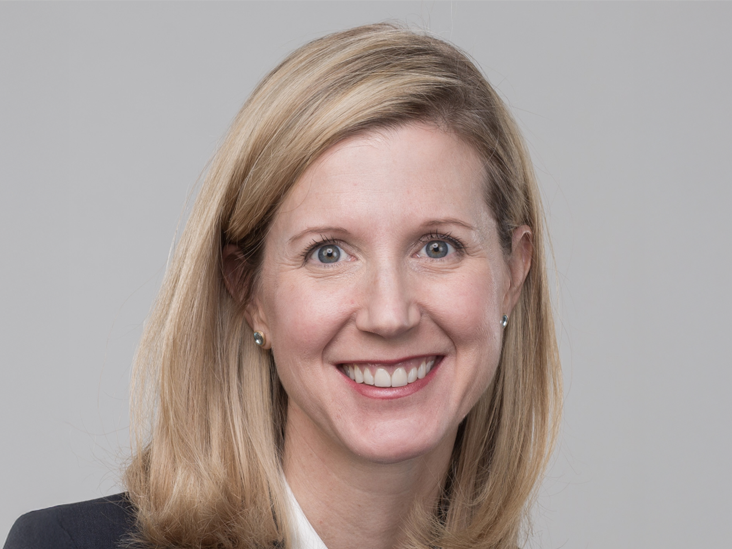
Janice Brunner
Group General Counsel, Head of Civic Engagement and Corporate Affairs, Travelers

Speaker
Eames Demetrios
Chairman of the Board of the Charles & Ray Eames Foundation, Charles & Ray Eames Foundation


Key takeaways
- The Eames House narrowly survived the 2025 Palisades Fire and the experience became a catalyst for rethinking what resilience means for historic sites.
- Prevention, advance planning and years of landscape management all played a role in the house’s survival.
- Historic sites serve communities well beyond their walls. After the fire, the Eames Foundation opened the house as a gathering place for wildfire survivors, demonstrating that cultural landmarks can anchor community recovery as much as they anchor cultural identity.
- Cross-sector collaboration is a path to meaningful wildfire resilience. Scientists, architects, conservationists, insurers and community members each hold pieces of the solution. Convenings like the Getty Center roundtable are where that connection starts.
Travelers Institute Risk & Resilience podcast
Subscribe on LinkedIn® (Opens in a new window)
The Travelers Institute Risk & Resilience podcast is available on Spotify and Apple Podcasts®. Subscribe today to be alerted when new episodes are released.
Explore more
Travelers Across America (Opens in a new window)
A Travelers and National Trust Partnership dedicated to restoring and protecting historic places across the nation that face increasing threats from natural disasters.
Travelers Across America: Building Community Resilience in New Orleans
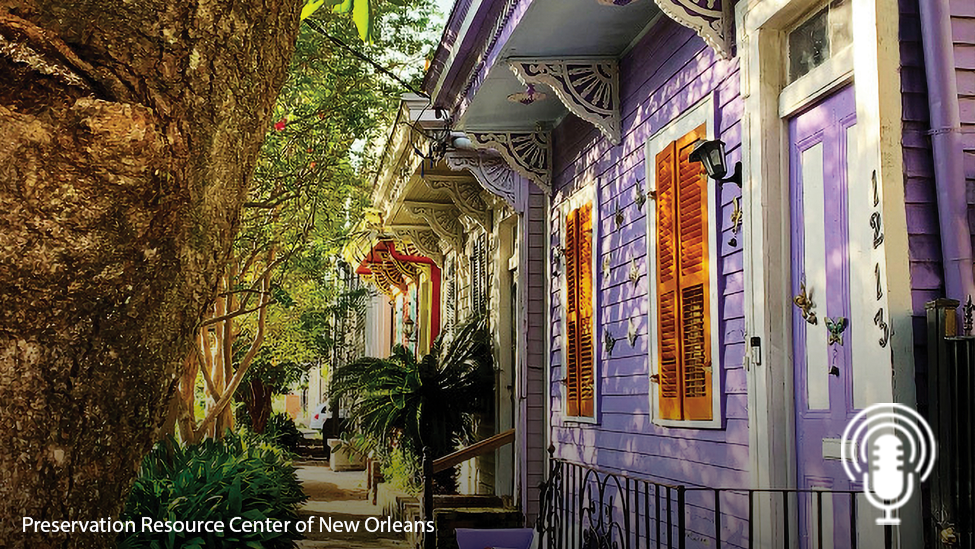
Host Janice Brunner speaks with leaders in New Orleans about a partnership delivering repairs that protect historic homes from hurricanes and flooding, part of Travelers Across America, a unique initiative focused on strengthening community resilience.
Related news
Travelers and National Trust for Historic Preservation bring national resilience campaign to Minnesota
August 6, 2026
Travelers Across America: 250 ACP mentorships for 250 years
January 2026
Travelers and National Trust take resilience initiative to Los Angeles
Jan. 30, 2026
Travelers and National Trust take resilience initiative to New Orleans
November 2025
Travelers launches landmark preservation initiative to commemorate America’s 250th anniversary
July 1, 2025