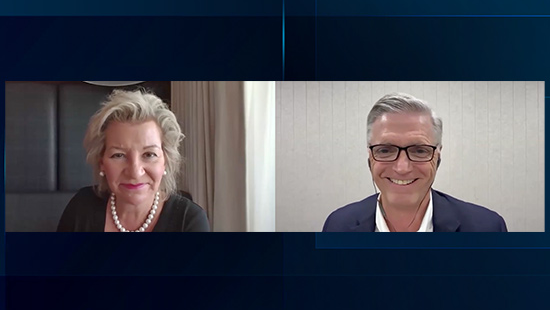
Live from Travelers’ Risk Control Lab: Bringing Science to Insurance Risk

Live from Travelers’ Risk Control Lab: Bringing Science to Insurance Risk
December 10, 2025
Wednesday 1:00 p.m.-2:00 p.m. ET
How does forensic science inform claim investigations? We took a look inside Travelers’ nationally accredited Risk Control Lab, where engineers, scientists and technicians help to uncover the facts behind losses. We went behind the scenes to see how we analyze losses, identify emerging risks and bring science to claim handling. Discover how our forensic expertise also helps us identify loss trends and develop information that can help protect customers and prevent future losses.
This program is the third webinar in a three-part series on Travelers Claim. Explore the series:
Part one: Live from Claim University: Behind the Scenes at Travelers’ Flagship Educational Hub
Part two: Live from the CAT Center: Where Expertise Meets Innovation
This program is presented as part of the Travelers Institute’s disaster preparedness initiative, which works to raise awareness about the risks posed by natural disasters and how communities and businesses can respond and recover.
Please note: Due to the nature of the replays, survey and chat features mentioned in the webinar recordings below are no longer active.
Watch webinar replay
(SPEECH)
[MUSIC PLAYING]
(DESCRIPTION)
Slide: Wednesdays with Woodward (registered trademark) Webinar Series.
Many vehicles fill a parking lot beside a sizeable building.
A woman walks across the parking lot toward the building's entrance.
Automatic double doors open as she approaches. A second set of double doors open, revealing a sign inside the lobby with text: Travelers National Catastrophe Center, Risk Control Laboratory.
Numerous machines and computers fill a lab. Two scientists work side by side within separate fume hoods.
A Caution Hot sticker covers a box beside another scientist who works at a third fume hood. Text: Jessica Kearney, Vice President, Public Policy, Travelers Institute.
(SPEECH)
JESSICA KEARNEY: Hello and welcome to a very special episode of Wednesdays with Woodward, and actually our final episode of 2025. Thank you so much for joining us. I'm Jessica Kearney, Vice President for Public Policy at the Travelers Institute, filling in for our host today, Joan Woodward. I'm coming to you live from a different location today.
You might see we are live on site here at the Travelers Risk Control Lab in Windsor, Connecticut. And this is actually the third in our three-part series showcasing Travelers’ innovative claim and risk control capabilities. So, you might have joined us back in February. We were here on-site at Travelers Claim University looking at the learning facility for our claim professionals. And then we were also back here in June at our National Catastrophe Center, looking at Travelers’ response to extreme and major weather events.
Today, we're going to go behind the scenes at Travelers state-of-the-art risk control, forensics, and industrial hygiene labs to see how our engineers, scientists and technicians uncover the facts behind losses and help our customers keep their employees safe at work, which we know is so critically important. This is completely live, folks. For the next hour, literally anything can happen. So I hope you'll stick with us, and I hope you'll learn a thing or two along the way.
So before we get started, before we jump in, just a few housekeeping items. First, just a quick disclaimer, as always about our program.
(DESCRIPTION)
Text: About Travelers Institute (registered trademark) Webinars. The Wednesdays with Woodward (registered trademark) educational webinar series is presented by the Travelers Institute, the public policy division of Travelers. This program is offered for informational and educational purposes only. You should consult with your financial, legal, insurance or other advisors about any practices suggested by this program. Please note that this session is being recorded and may be used as Travelers deems appropriate. Logos, Travelers Institute, Registered Trademark, Travelers.
(SPEECH)
And then, as always, a huge thank you to all of the partners joining us today. And a special welcome to your students, members, networks, faculty and others.
(DESCRIPTION)
Text: Wednesdays with Woodward (registered trademark) Webinar Series. Live from Travelers Risk Control Lab, Bringing Science to Insurance Risk. Logos: Travelers Institute (registered trademark), Travelers, 15 years. University of South Carolina Darla Moore School of Business. CBIA, MetroHartford Alliance, Master's in Financial Technology (FinTech) Program at the University of Connecticut School of Business, The Big I (registered trademark), Independent Insurance Agents and Brokers of America. NAAIA, National African American Insurance Association, American Property Casualty Insurance Association (service mark), Insuring America, apci.org.
(SPEECH)
The MetroHartford Alliance, the Risk and Uncertainty Management Center at the University of South Carolina's Darla Moore School of Business, the CBIA, the National African American Insurance Association, The Big “I,” the American Property and Casualty Insurance Association, and the Master's in FinTech Program at UConn's School of Business. So thank you, again, to all of our partners today.
So, I am actually here with Tim Corrigan, who is a vice president at Travelers, and he leads the Risk Control Forensic and Industrial Hygiene Lab where we are today. Tim, thank you so much for welcoming us on-site today.
(DESCRIPTION)
Tim Corrigan, Travelers – Risk Control Lab.
(SPEECH)
TIM CORRIGAN: Thanks for coming, Jessica. This is fantastic. It's great to see you again. And we're thrilled to be able to showcase the lab this afternoon.
JESSICA KEARNEY: Absolutely. So, tell us a little bit about where we're standing today. This location that our viewers are getting just a little sneak peek of at the moment.
TIM CORRIGAN: Great. So right now we're in the Analytical Chemistry and Industrial Hygiene Laboratory, which is part of our larger Risk Control forensic lab. And it's here where we like to say science meets claim and risk.
JESSICA KEARNEY: So tell us a little bit more about what happens at the Risk Lab here.
TIM CORRIGAN: Sure. So each year we get the opportunity of getting involved with literally thousands of claims investigations. We'll look for product claims. We'll look at electrical fires. We'll look at property losses. We'll look at claims involving digital evidence. And fundamentally, our job is to take those technically complex events and translate them into clear, empirical answers that our claims professionals can use to get good claim results.
JESSICA KEARNEY: Well, I think that's a nice opening statement because you underscore really the science underlying all of this. And then some of the pieces that we're going to see really mapping out the next hour as we move location to location around the Risk Lab. So a nice preview for our audience. Tell us a little bit about the people. Who are the people that work here?
TIM CORRIGAN: So, we've got an amazing team. So, we're 60 people in total. About 45 folks are located here in Windsor. The remainder are co-located with our claims offices around the country. And we're comprised of engineers and chemists and digital forensic specialists and evidence warehouse technicians. And we've got really deep technical engineering experience in all of the engineering disciplines-- mechanical engineering, chemical engineering, biomechanical engineering. And as we like to say, we've got experience in really everything from A to Z, automobile fluid analysis to zinc detection.
JESSICA KEARNEY: Well, I think that's been one of my biggest takeaways working at Travelers for as long as I have is just really the depth and breadth of different experiences around our 30,000-plus employees here at Travelers. So I know we're going to get to see a good subsegment of that in today's program.
TIM CORRIGAN: Yeah. We are.
JESSICA KEARNEY: So, all these folks here and all this expertise. Can you tell us a little bit what they do on the day-to-day here?
TIM CORRIGAN: Sure. We're pretty busy day in and day out, as you would imagine. So we're doing all sorts of things. We may be trying to identify the root cause of a fire. We may be looking to determine whether or not there's a defect associated with the product, either a manufacturing defect or a design defect. We may look at installation issues to see whether or not that may have contributed to a claim. We may be doing experimentation in some of the rooms that we'll see later today.
We may be extracting key digital information to see whether or not that gives us insights into a loss. And here in the Analytical Chemistry Lab, obviously, this is where we support our industrial hygiene focus as well. And we look to help keep our customers, keep their employees safe by looking for hazardous chemicals in air quality.
JESSICA KEARNEY: Yeah, we're going to hear more about that in a moment because I think that's a really important piece of this. So in a claim investigation, what are some of the things that these risk labs help us look for?
TIM CORRIGAN: They'll look for all sorts of things. Oftentimes we'll try to get underneath exactly what the facts and circumstances of the loss were-- was a particular product the cause of a loss? Was it an effect of the loss? We'll examine fire debris to determine whether or not we can really pinpoint what the specific cause of the fire was. And again, when we get to the Digital Forensic Lab, you'll see how we can use digital information from a variety of digital devices to give us insights into losses.
JESSICA KEARNEY: So that's a good segue because I was going to ask you, there's more than one lab here in this building. And you just talked about the Digital Forensics Lab, which is actually going to be our last stop on the tour today. But can you tell us about the different labs that are housed here.
TIM CORRIGAN: Absolutely. So we've got three labs. We're here now in the Analytical Chemistry and Industrial Hygiene Lab.
(DESCRIPTION)
Many beakers, test tubes and other scientific supplies cover tables behind Jessica and Tim.
(SPEECH)
And this is where we focus on our industrial hygiene capabilities. And we work with our industrial hygiene team and risk control. We've also got a Materials and Failures Analysis Lab. And in that lab that's essentially where we try to figure out why something broke. So we'll analyze certain materials. We'll do some mechanical failure testing. We've got a variety of microscopes, including a scanning electron microscope. And ultimately in that lab, we can determine whether something failed and why it failed.
And then lastly, and we'll get there in a little bit. We've got our Digital Forensics Lab. And in the DFL, as we call it, we extract, analyze and very importantly, preserve digital evidence. Evidence that we can retrieve from DVRs or computers or smart home devices, sometimes vehicle components, that sort of thing. So the great thing about it is that among all of those labs, we get really a comprehensive view of risk and the causes of claims.
JESSICA KEARNEY: Absolutely. So if you were keeping track of that at home, three different labs, and we're going to look at both physical and digital evidence. So we'll get to see all that within the next hour.
TIM CORRIGAN: Yes, we are. Yeah.
JESSICA KEARNEY: So I want to take just one moment to underscore something, maybe put a fine point on it. You said, we're bringing science to claim and underwriting. And I think it's very evident in all the things that you just said. But could you just 30,000 foot-- take a step back and just underscore why that's so important here?
TIM CORRIGAN: Absolutely. So at the end of the day, I think what we do here is we bring scientific certainty to really complex and challenging technical and scientific questions and answers. And as a result of that, we can help our Claim professionals get good claim results. And we can also work to inform our underwriters about emerging risks and help them enhance risk selection.
JESSICA KEARNEY: Great. That's terrific. So, why don't we take a moment now that we've gotten the 30,000 view, 30,000-foot view of the place, and learn a little bit more about what happens here in this lab. And I know we're going to speak to one of your colleagues.
TIM CORRIGAN: We are. Yeah, terrific.
(DESCRIPTION)
Tim turns to face a woman working in the background. She steps away from her task and joins Tim and Jessica.
(SPEECH)
So I'd like to introduce Jennifer Fries. Jennifer is part of our leadership team here at the lab and works in the Industrial Hygiene Lab here.
JESSICA KEARNEY: Awesome. Jennifer, thank you for stepping away for a minute and giving us some time here on the program today and for all that you do for Travelers. Can you give us a little bit about your background and what it is that you do here.
(DESCRIPTION)
Jennifer Fries, Travelers – Risk Control Analytical Lab.
(SPEECH)
JENNIFER FRIES: Sure. I have a master's degree in chemistry as well as an MBA, and I've worked in environmental laboratories, pharmaceutical laboratories as well as chemical manufacturing laboratories before I came to Travelers. And about 20 years ago, I started here as an analytical chemist. Now I'm a lab director here, and I oversee the quality program for the Analytical Lab.
JESSICA KEARNEY: And tell our viewers a little bit more about what goes on in an analytical chemistry lab.
JENNIFER FRIES: Well, our lab is fully accredited, and there are two main components of the laboratory. One is forensics analysis with chemicals, and the other is industrial hygiene analysis.
JESSICA KEARNEY: All right, so let's break each one of those down because I think probably many of our viewers don't spend a lot of time in each of those buckets in their day-to-day. But can you give us some examples of what forensic chemical analysis is?
JENNIFER FRIES: Well, there's a couple of different analyses that we do here. One major one is identification of unknown materials. And the majority of the forensic analysis done in the lab is fire debris analysis for ignitable liquids.
JESSICA KEARNEY: So bringing in evidence after a fire and trying to figure out the ignition source.
JENNIFER FRIES: Yes.
JESSICA KEARNEY: Yeah, terrific. And then you also mentioned industrial hygiene. Can you tell us a little bit more about that?
JENNIFER FRIES: Sure. Industrial hygiene is the science of protecting the health and safety of people in the workplace. And it's a proactive approach that will identify, evaluate and control hazards that workers may encounter during their workday. We work closely with our Risk Control field organization to supply our customers with programs in industrial hygiene, so that we can help them take samples to evaluate exposures on their employees.
JESSICA KEARNEY: So this is actively something-- a service that Travelers provides to our business customers and so on and so forth to help them keep their employees safe. That seems like it's a very valuable exercise to do.
JENNIFER FRIES: Yes.
JESSICA KEARNEY: So how do you evaluate the exposures that employees might face at work?
JENNIFER FRIES: Well, after the hazards are identified, usually by one of our Risk Control consultants, they do an on-site survey or a risk assessment. Next is the evaluation and that's where we come in. We'll either work directly with the client or one of our industrial hygienist specialists and develop a sampling plan. We'll supply them with all the equipment and the materials that they need to take samples.
JESSICA KEARNEY: So taking real-life samples in their work environment to see what's going on. And I know you have some equipment to show us about what that looks like. So, can you tell us about the equipment that you would use for sampling for a business owner that wants to evaluate the safety on-site?
JENNIFER FRIES: Many of our sampling methods do require the use of an air sampling pump.
(DESCRIPTION)
She grabs an air sampling pump.
(SPEECH)
And it also uses a filter or a sorbent tube. And the employee actually wears this throughout their work shift. And the filter takes air volume from the employee’s breathing zone. And then we'll take this filter and ship it back to the laboratory. But the reason why we take filter or an air sample in their breathing zone is that most of our hazards we're evaluating by inhalation.
(DESCRIPTION)
She sets the air sampling pump aside. In a photo, a woman in a lab coat observes another scientist as he examines a small object.
(SPEECH)
JESSICA KEARNEY: And so your sample’s collected from a business customer. What do you do with the sample then?
(DESCRIPTION)
In another photo, the woman eyes a test tube.
(SPEECH)
JENNIFER FRIES: Well, they all come back to this laboratory, and then we'll process it here, as they arrive.
(DESCRIPTION)
A screen displays a sizeable data chart, a periodic table of elements, as well as a line graph with numerous lines peaking over a green bar near the graph's center.
(SPEECH)
Here in this area, we actually do metals analysis.
JESSICA KEARNEY: OK.
JENNIFER FRIES: And when we run a sample for metals, we routinely screen for 20 metals that are known to cause occupational illness. And we'll notify the customer if any of these metals are actually approaching hazardous levels.
JESSICA KEARNEY: So that seems very critical, very important. Can you give us a real-life scenario or an example to maybe help bring it to life for folks?
(DESCRIPTION)
The screen displaying data, the table of elements and a line graph appears behind Jennifer.
(SPEECH)
JENNIFER FRIES: Sure. Just recently we had one of our specialists who was out sampling some employees who were working at a scrap yard, and they were doing torch cutting. Now this process actually releases hazardous metal fumes into the air. There was one sample where we noticed that had unusually high concentrations of lead, and this was on the fork truck operator. And this was unusual because it was not detected on any of the other employee samples.
Well, further investigation actually led to the discovery that a component on the fork truck was misaligned, and that component was wearing down and releasing lead dust into the air. So the truck operator was being exposed to high levels of lead that could potentially cause future health issues.
JESSICA KEARNEY: So this is really uncovering a potentially life-changing issue for someone. It sounds like an issue that wasn't known about before and a unique scenario. So really, really important insights for employers and for this employer and the person in particular. So you've collected the analysis. You've done the analysis. And then what happens from there?
JENNIFER FRIES: Well, that's actually the final step in industrial hygiene. And that is to control the hazard. And there's a few different ways that we can do this. One is by engineering controls. And that would be installing ventilation or maybe a physical barrier. Another way would be administrative controls. And that would be something like standing up standard operating procedures or routine maintenance.
And then another way is personal protective equipment. And that would entail having the employee wear a respirator throughout their work shifts. In the case of the fork truck operator, the repairs were done to the fork truck to eliminate the release of lead dust, and that in turn eliminated the exposure.
JESSICA KEARNEY: That's a fantastic outcome in that scenario. And I think I'm going to ask this question. I think it answers itself. But can you really underscore the value that all of this work drives to Travelers’ businesses and our customers?
JENNIFER FRIES: Well, we actually help our customers understand exposure levels of different hazards. And we will also recommend how to control those hazards. And this can lead to a safer work environment. And that not only benefits the customer, but it also benefits Travelers by reducing risks and preventing losses.
JESSICA KEARNEY: That's great. Well, I think this is one of many examples that you're going to see and hear over the next hour about all the great work that happens here. Tim and Jennifer, thank you for sharing what goes on here in the Analytical Chemistry Industrial Hygiene Lab.
And now we are headed to our second location on our tour. We're headed to one of our forensic exam rooms. And we're going to be examining evidence that's actually been burned in a fire. So we have a fire forensics video that we're going to tee up for you. Give that a look, and we will see you on the other side in just a minute.
[MUSIC PLAYING]
(DESCRIPTION)
Jessica and Tim smile. Flames overtake a background. A person snaps a photo of a singed electrical component. An X-ray, top-down photo of the component's interior parts appears. Text: Next Up, The Forensic Exam Room.
Images of a badly burned building and the beginning of an electrical fire appear. A man disassembles an electrical component. Flames rise from a badly burned building. A scientist uses tweezers to pick through burned rubble. She dials a knob on the side of a microscope.
One burned oven and two burned front load washers and dryers appear.
A heap of small machine parts litter a dirty floor. A top-down photo depicts a massive, burned building. Sparks fly from a cable in slow motion footage. A person presses a power switch on a piece of lab equipment.
A person places a brick-shaped device with two protruding cables inside of the piece of lab equipment, which glows with green light.
A man dial's the tool's knob, revealing an image of the component within the machine.
Another black and white, top-down image of electrical components appears. Several burned outlets appear. Two men approach a box-shaped device on a table.
Text: Did you know? Travelers Risk Control Lab team collectively has over 1,000 years of technical experience.
Did you know? In 2024, the Travelers Industrial Hygiene Laboratory performed more than 36,000 analyses for chemical exposures on approximately 20,000 samples, helping our customers better protect their employees. Jessica Kearney and Tim Corrigan join another man in an exam room.
(SPEECH)
All right, and we are back. So Tim and I are standing here in one of the forensic exam rooms, and we just saw a short video that we hope piqued everyone's interest.
(SPEECH)
TIM CORRIGAN: Hope so. And here we are in our fire examination room. And in this room, we can test really a wide variety of appliances to see whether or not they may have been the cause of a fire or simply involved in a fire. And really excited to introduce Andy Cox. Andy is a forensic specialist with the lab and has been with us for a short period of time.
JESSICA KEARNEY: Andy, welcome to the program. Thank you for inviting us in here to see some of the work that you do. First, I would love for you to share with our viewers some of your background. So where did you come to Travelers from?
(DESCRIPTION)
Andy Cox, Travelers – Risk Control Lab, Forensics.
(SPEECH)
ANDY COX: My educational background is in engineering. I have a bachelor's degree in mechanical engineering and a master's in fire protection engineering. And I'm a licensed professional engineer. And I'm also a certified fire investigator.
And Travelers is really my second career. I spent 25 years as a Special Agent with the Bureau of Alcohol, Tobacco, Firearms and Explosives, or ATF. That's part of the U.S. Department of Justice. And my role there was to work on investigations related to fire and explosion incidents.
JESSICA KEARNEY: So right in the wheelhouse here with what we're going to be talking about today. Thank you for sharing that. So, we mentioned you're a forensic specialist here at Travelers. Can you tell us a little bit about the role that you play here?
ANDY COX: Well, because of my background, you can imagine that I probably focus in the area of fires and explosions. And my role here is really to help our claims professionals understand what happened in a fire and why it may have happened, because then that allows them to resolve a claim appropriately.
JESSICA KEARNEY: Yep, so we are actually standing in front of this table with this nice blue sheet and some interesting things to look at. Can you tell us what we have here in the room today?
ANDY COX: Yeah, this is a sample of some evidence that we might look at that came from a fire scene. And this is one of the types of work that we do here at the laboratory.
(DESCRIPTION)
Badly singed cables extend out from the remnants of a power strip.
(SPEECH)
We may also do analysis of investigative information. We may even do some physical experimentation or testing of appliances to really understand better the conditions that need to come together in order to cause a fire. But before I talk a little bit about this evidence, I should probably give you some context as to where it came from.
JESSICA KEARNEY: Definitely.
ANDY COX: So over here on the screen, I have a photograph, and it's probably hard for you to pick this out, but this is actually a burned-out living room in a residence. And what you're seeing here on the left-hand side is the remains of a sofa. In the center of the screen here, we've got the remains of a love seat. We've got a TV stand over here on the right and the outline of a door that leads to the rest of the residence. Now we have experts and investigators in the field that examined this fire scene and determined that this is where the fire started.
JESSICA KEARNEY: So looking at this, the first thing that comes to my mind is this would be a very difficult place to work, and to collect evidence and to examine what's going on. So I completely understand these rooms that we have set up for more detailed analysis. So you mentioned they determined the origin of the fires here. So once that happens, what's next?
ANDY COX: So the next step is after we've determined origin is really to look for things in that area of origin that may have resulted in a fire. And as you can imagine, one of the things that is a potential fire cause is things that are powered by electricity, because those items have a potential, when things go wrong, to generate heat that can result in fires.
And you alluded to the fact that this environment in this room is a really hard place to work. It's dirty. It's filthy. It may be open to the weather because the windows are broken, the lighting is not good, and the people that are working in this environment might very well have to use personal protective equipment. That makes it cumbersome. So they may very well want to focus in on certain pieces of evidence and extract them from this less-than-ideal environment and bring them to the laboratory space like this, where we can look at them in a more controlled circumstance. And that's where this evidence comes into play.
JESSICA KEARNEY: Great. So what do we have here?
ANDY COX: Well, it may be obvious to you right away that we have some wiring here that's associated with an electrical appliance or appliances. But what may not be relatively obvious to you is what we have here in this region is the remains of a power strip. Now we have some material masses here that is likely some of the plastic from that power strip. And because I've done this for a long time, I recognize that these metal rails are a component that are part of power strips.
So right away I can see we have a power strip. And then I can also see coming out of that power strip we have two pairs of wires. And these are likely items that may have been plugged into this power strip. Now these wires have severed. And so we don't necessarily know what they were attached to. But that's an important new question that we have to answer as part of our investigation.
JESSICA KEARNEY: That's great. Yeah, all the little clues. And I will say, you mentioned this is a power strip, which I think is something that most of us have in our homes and are familiar with, but it goes to show you just how unrecognizable it is in this state and trying to really uncover some of the information about it.
ANDY COX: Yeah. And so there is some additional details that we can learn from this. So there's a power cord leading up to the power strip. And you can see that it has three different conductors associated with it. And so it might have looked something like this where we have a power cord that has three internal wires and a plug with three separate prongs.
But what's really interesting is we have another material mass here where only two wires come out. And that leads me to suspect that this power strip may have been plugged into another extension cord. But because there's only two wires, that extension cord may have looked something like this, where we only have two wires coming out of it and we only have two slots in the receptacle. My concern with this situation is that if you have three prongs and two slots, it doesn't fit. And so someone may have manipulated this power cord to make those fit together.
And in fact, if we have an opportunity to look at an X-ray image and we focus in on this area here, we can actually see that that power cord that leads to the power strip has two wires that lead to prongs, and one wire that does not have a prong associated with it. So my suspicion is that that prong was removed. And that may be a safety hazard, but it's not necessarily a cause of the fire or this fire. It's just another data point that we want to consider for analysis.
JESSICA KEARNEY: Yeah, that's terrific. And I think you need to consider them all. And really go through all the facts. So how does your work really help the Claim organization here at Travelers?
ANDY COX: Well, again, my role is to answer the question about what happened and why it happened. But we also want to do that in an efficient manner because the sooner our claims professionals have that information, the sooner they can appropriately resolve the claims that they're working on.
JESSICA KEARNEY: That's great. And I have to ask you, before we wrap up in this room and go to our next location. So, you mentioned your background in government. Can you tell us what it was like transitioning from law enforcement and government into the insurance industry and here at Travelers?
ANDY COX: Yeah, when I came here two years ago, I was a little nervous about that transition. But I quickly got comfortable with it because the people here at Travelers are phenomenal. And the technical staff that we have here within the laboratory system is really quite remarkable in the sense that you can't dream up a loss that we don't have somebody who has some experience with that loss. And that's a really fun and interesting environment to work in.
JESSICA KEARNEY: Yeah, that's incredible. Andy, thank you so much for sharing your time, showing us some evidence and your X-rays and really some powerful science that we have as investigative tools here at Travelers.
So now we're going to head out of the forensic exam room onto our next location, the evidence warehouse. And Tim and I are going to head over there now. And we've got a short video with some pretty amazing aerial views to keep you entertained while we head over to the room and we'll see you-- We'll see you over there.
(DESCRIPTION)
Tim and Jessica smile.
(SPEECH)
[MUSIC PLAYING]
(DESCRIPTION)
Text: Next Up, Evidence Warehouse. A drone flies across a parking lot, then lowers down and enters into a massive warehouse filled with many pallets of supplies on shelves. One man inside writes on a piece of paper as another operates a forklift.
We zoom through an opening in one of the shelves and enter another aisle of the warehouse's storage area.
A man reaches for a product on the second shelf.
Sunlight streams in through an open garage-style door on the right wall of the warehouse.
Text: Did you know? Travelers once stored a boiler that was 15 feet by 30 feet. It took a crane to get it in and out of our warehouse!
Did you know? Each year, Travelers receives over 5,000 pieces of evidence (physical and digital).
Jessica Kearney and Tim Corrigan appear in an aisle of the warehouse.
(SPEECH)
All right, and we're back. So Tim and I are now standing in the evidence warehouse where Travelers collects and stores literally thousands of pieces of evidence. Can you tell us a little bit what happens here in the warehouse, Tim?
TIM CORRIGAN: Absolutely. So we're actually in the first warehouse here. We have two warehouses. This warehouse is adjacent to the examination rooms that we just came out of and it's about 8,000 square feet. We've got another warehouse about a mile up the road that's about 30,000 square feet. And this is where we receive and store all of the inventory and all of the evidence that we examine in connection with claims.
And as you would imagine, we follow a very specific evidence protocol. So every piece of evidence that comes into the warehouse is logged, it's barcoded, it's stored so that we know at any given point in time where the piece of evidence is, whether it's been tested, who's tested it, and we can locate it pretty easily. And we receive about 5,000 pieces of both physical and digital evidence a year.
And at any given point in time, we're managing about 18,000 pieces of evidence. Again, that's between physical evidence and digital evidence. So it's a full-time job. We've got a fantastic team of warehouse technicians that help manage it for us.
JESSICA KEARNEY: Well, I think you definitely need a very extensive management system because just walking through these aisles here, and I'm sure you saw from the video as well, this place is just massive. And you walk through and you see some consumer appliances and things that you might recognize in a home or a business. And certainly some of the things that we were seeing out there in the labs as well. Can you talk to us about the types of evidence that you might find in a physical warehouse like this?
TIM CORRIGAN: We see all sorts of things. As you mentioned, we get a lot of household appliances, washing machines, dryers, hot water heaters, dishwashers. We receive a lot of consumer products, as you can imagine, but we also receive machinery parts. We receive electrical components. We recently actually even had a golf cart here. So there's really an incredibly wide variety of evidence that comes into the lab here.
JESSICA KEARNEY: Definitely and I think we can see that. So what are some of the lessons learned from these objects?
TIM CORRIGAN: It's a great point. So, every time we have the opportunity of investigating the cause of a claim, we develop an insight. And because we have the opportunity of examining so many different types of evidence, we generate really a large number of insights. And that's really valuable. It's really valuable for our underwriting partners because we can help provide some information that will, again, enhance risk selection.
It's helpful for our Claim partners because they can sometimes have a sense of what may be causing claims. If we tend to see the same type of cause happening over and over again, that might indicate a trend. We look at that as an aggregate issue. And sometimes that can support also our subrogation efforts as well.
JESSICA KEARNEY: That's terrific. Yeah, just the volume that passes through this warehouse. I would imagine there's really great insights to be had. So thank you for sharing all of that. All right, so this was a quick pit stop at the evidence warehouse, and Tim and I are on the move again. We are going to head over to the Digital Forensics Lab, which we've been previewing throughout the hour. Here's another short clip, and we'll see you in just a moment.
(DESCRIPTION)
Jessica and Tim smile. A sign: Digital Forensics Laboratory, appears on a wall. Text: Next Up, The Digital Forensics Laboratory. A man holds a burned laptop. He inverts the laptop, then takes a photo of its underside.
(SPEECH)
[MUSIC PLAYING]
(DESCRIPTION)
A man eyes footage of a fire on a computer monitor. Two men work side by side to test electrical components hooked up to one main device. A man disassembles a laptop and removes its battery.
A man places a tiny pinhead screw in place in an electronic device.
A scientist inspects an electronic device in a fume hood. A person manipulates colorful, tangled cables. Multiple tabs display line after line of code.
A man uses one of many computers in the Digital Forensics Laboratory. The lab's sign hangs above its entrance.
Text: Did you know? Travelers Digital Forensics Lab has two petabytes of storage. We could hold enough movies to provide over 100 years of nonstop viewing - or store 500 million selfies!
Jessica Kearney and Tim Corrigan smile as they stand before the row of computers in the Digital Forensics Lab.
(SPEECH)
All right, so now Tim and I-- we are back. And we are in the Digital Forensics Lab.
TIM CORRIGAN: We are. So this is the Digital Forensics Lab or the DFL as we like to call it. And we've seen some of the physical examination rooms. This is where we dive into the world of digital. And as I said a few minutes ago, we examine all sorts of different things here and really excited to introduce Reese Cann, who's part of our Risk Control leadership team. And he's going to walk us through a few things.
REESE CANN: Sure.
JESSICA KEARNEY: Reese, thank you so much for giving us a little bit of your time today to show us the Digital Forensics Lab and all the great work that you and your teams do. Can you tell us a little bit about your background?
(DESCRIPTION)
Reese Cann, Travelers – Risk Control.
(SPEECH)
REESE CANN: Sure. So, I work for our broader Risk Control organization, where I lead our general liability and technical or product liability and general liability disciplines. Travelers Risk Control helps Travelers and our customers assess and mitigate insurable risks. So we work closely with the lab and engage them frequently because the work that they do here helps us understand risks for customers that may have similar operations or products, for example, or even influence our underwriting appetite.
JESSICA KEARNEY: That's terrific. And can you help our viewers understand what goes on in this room?
REESE CANN: Sure. So you've heard probably that the lab provides technical and scientific support in the event of a claim and also preserves and analyzes evidence so we can get a better understanding of a loss. Well, it's very much a digital world. And so in addition to the physical evidence, we want to be able to capture any digital information wherever we can find it, to help give us facts related to that event. And basically, the lab has three steps here. We will extract information, preserve it and then analyze it.
JESSICA KEARNEY: And so I have to ask, you can even analyze information coming from something that looks like this? Because this looks very crispy to me.
REESE CANN: Yes, it is. And this is or was a digital video recorder, DVR.
(DESCRIPTION)
Reese picks up the burned device's hard drive.
(SPEECH)
And you can see the hard drive that was extracted here. This digital video recorder was attached to a surveillance system and looks like it was involved in a fire because it was, and we would hope captured that fire video. It may look like the rubble, but we have the technical skills and the best-in-class tools and equipment to be able to extract data even from damaged equipment.
So once it's extracted then, then we have to capture that data and preserve it in a way that we can validate it later. And so this is similar to what Tim was talking about in the warehouse in terms of chain of custody for the physical goods. Well, a digital file has a unique digital fingerprint. And any change made to that file will alter that fingerprint. So the extraction process allows us to show that the file that we're using is an exact copy, identical copy to the original source. So that's important.
And then after we have that, then we can finally analyze it. And that may include data that requires some interpretation or it's more straightforward. For the DVR, it might be something like time coding which can be a good help, but also obviously the video content. And so we would try to take the video content, may supplement that and make it clear in some way to give us some answers about it.
In this case, we were able to identify some information to help support the circumstances around it. And we're able to provide that to the fire investigators to help their determination on the call and the cause of the fire.
JESSICA KEARNEY: And you said this was surveillance footage. So something like this in theory could be a business owner's video security footage, things like that.
REESE CANN: Well, absolutely. Absolutely.
JESSICA KEARNEY: Yeah, that's great. That's great. And I imagine really delicate work, it sounds like. You only probably get one shot at it, which is why all that expertise really comes into play.
REESE CANN: Again, skilled forensic technicians on point. Yes.
JESSICA KEARNEY: All right, so we've got a few other items here on the table. Can you tell us what we're looking at here?
REESE CANN: Well, this is just a DVR to give you a comparison of maybe before and after. Not exactly the same unit, but these are airbag control modules from vehicles. And these tell us a lot more than just whether or not an airbag was deployed, but also other vehicle operating parameters. Modern cars have quite a number of onboard systems, and a number of those can provide us very pertinent information regarding the vehicle operation and related to the claim.
Things like the speed of the vehicle, when the brakes were applied, the rate of deceleration, or even if child restraints or seat belts were used in the car. And then more modern vehicles also have cameras built into them where they can record imagery up to and including the point of a collision from different angles. So pulling all that together gives us really a rich environment to gather the data regarding the vehicle. And depending on the location, we may be able to also look at external imagery and things like surveillance systems from other businesses if they're in the area or traffic cameras. And you pull all that together, and it gives us a pretty good understanding of the events that lead up to an accident.
JESSICA KEARNEY: Yeah, and we talk a lot about auto safety on our Travelers Institute program, so all tying into that. What other types of sources might you go to for investigations?
REESE CANN: Sure. We're digital for a reason. So anything digital. So that could include things like fitness trackers.
JESSICA KEARNEY: OK, interesting.
REESE CANN: Sensors of any variety. Smart home technologies are a help to us, if you think about things like smart thermostats and refrigerators. The Internet of Things has been around for a good while now. And so generally speaking, anything with connectability probably has a module in it that has data that we might find useful for investigating the incident.
JESSICA KEARNEY: That sounds like a lot of data.
REESE CANN: It is. And a claim may have a number of files and also some very large ones where video is involved. And then for the-- depending on the nature of the claim, we may have to keep that data around for a very long time. So the lab has actually already updated their storage space from 1 petabyte to 2 petabytes. In real terms, that's 2 million gigabytes of storage.
JESSICA KEARNEY: OK, yeah, that's blowing my mind a little bit. So, as we've walked through the spaces here, we've talked a lot about some of the physical evidence that we've had. And we've looked at physical devices to extract digital evidence. But what other types of non-physical researcher investigations would you do?
REESE CANN: So we're open to any digital information. And that includes publicly available online information. So we will go look at the internet. And, for example, there might be news broadcasts concerning some event. We might look at websites or blogs or social media forums or really, we'll look for anything that gives us some insights into the claim or the events surrounding it.
JESSICA KEARNEY: Yeah.
REESE CANN: And then if that may provide data that we want to keep and preserve, it may point towards things that we might want to investigate further. But in any case, regardless of the source, all this data puts us in a really fine position of gathering the facts that we need to better understand the claim. And we're very pleased that the business result is that when we provide that information to our claims partners, it often helps them move towards resolving a claim more quickly.
JESSICA KEARNEY: Yeah, that's terrific. That's terrific. Reese, thank you for inviting us into the lab today and sharing your expertise and sharing these pieces of evidence. I think this was a really important piece of the full story that we've been telling over the past hour.
TIM CORRIGAN: Yeah, thanks, Jessica. And it's really interesting. It's grown quite a bit, as you would imagine. We've been across the street. We were across the street for about 30 years before we moved into this facility, and we first opened the DFL back in 2017, I think. And at that time, as you would imagine, most of our work involved enhancing videotape to get information about a particular claim. As time has gone on, we've gotten involved with looking at many, many more types of devices, and our capabilities have really grown quite a bit. And our expectation certainly is as the world becomes even more digital, the work that we do here in the DFL will become more critical.
And the last thing I'd say, too, is this is super helpful also in terms of supplementing a lot of the analysis, the forensic analysis that we do in some of the other examination rooms, because we saw Andy evaluate the fire debris. Sometimes there may be a device that we can pull digital information from to help corroborate or enhance some of that type of analysis. So it's a huge part of what we do here.
JESSICA KEARNEY: That's terrific. And as you mentioned, I think over recent history just increasingly important and increasing amount of data available.
TIM CORRIGAN: Yes, yeah.
JESSICA KEARNEY: So, I want to circle it back to 30,000 feet. We have a number of independent insurance agents and brokers who are joining us for this program. What are some top takeaways or resources for them that you'd like them to think about as they're watching this program today?
TIM CORRIGAN: Sure. Well, it's really interesting. The lab is part of Travelers’ Risk Control organization, and we're one of the largest Risk Control organizations in the industry. And as being part of risk control, we're part of a team of more than 600 safety consultants and industry specialists who work very closely with our business insurance agents and our business insurance customers. And we're available to do on-demand and on-site consulting services.
And I think we do more than 120,000 risk assessments each year. And so the work that we do here in the lab really, really supplements, supplements our overall risk control product. Additionally, online, we've got a large number of resources. We've got a library of materials that's certainly available to our agents and our customers that help them evaluate their own programs and identify any gaps that might exist in their protocols.
We've got training materials, and we've got technical bulletins. And again, a lot of that information is supplemented by the analysis and the work that we do here. So we like to think that all of those resources will help our business insurance agents provide a great service to their particular clients. And I also wanted to mention personal insurance as well. And as you saw in the warehouse, we see a wide variety of products associated with losses. And we develop insights, deep insights into the causes of those losses.
And working with our marketing and communication partners, we can put some of those insights out onto the website in our Prepare and Prevent content. So hopefully we've demonstrated today that the lab is-- really adds a lot for our agents in terms of how they can support their own customers.
JESSICA KEARNEY: Yeah, I think you've absolutely demonstrated that in the rooms that we've been in before. And I'll just underscore-- so the public-facing content that Tim just mentioned, you go to travelers.com. It's the Prepare and Prevent section. And it's filled with just very valuable insights for businesses and consumers that anyone can access. We encourage people to check it out.
So, we are now at my favorite part of the program, which is to incorporate some questions that came in before we started from the audience. So I just have a few of them here that I'd love to incorporate. So the first one I have-- and we got a few variations of this-- is we've just seen all of the technical skill and science and expertise in the rooms that we've been in, but is there something that might surprise our viewers still to learn about the risk labs?
TIM CORRIGAN: Yeah, great, great question. And I think it actually ties into what Reese was just saying from an automotive standpoint. We've recently begun performing accident reconstruction analysis, too. So we're beginning to do that. We've got a couple of folks on staff that have experience in that. They've got biomechanical experience. So that might be a little bit surprising for folks to know.
JESSICA KEARNEY: Yeah, that's great. That's great. We had a few people ask this and I was actually wondering myself, how long do these investigations usually take?
TIM CORRIGAN: Yeah, that's maybe an impossible question to answer, as you can imagine. Every claim is different. Every investigation is different. Every product can be different. It really depends. Sometimes we could get a piece of evidence in. We could take a quick visual examination and make a pretty quick determination about what has occurred. Other times we may need to do intensive testing, again, materials analysis, mechanical failure analysis. We may even want to develop a hypothesis and then test that hypothesis.
So it's really tough to say. And the last thing I'd say, too, is it depends on the process. If a claim is involved in litigation, then obviously the process of litigation will have an impact on our involvement in the claim. So it could be a few minutes, it could be months, it could be years.
JESSICA KEARNEY: Yeah, so case by case.
TIM CORRIGAN: Case by case.
JESSICA KEARNEY: Case by case.
TIM CORRIGAN: Case by case.
JESSICA KEARNEY: This is a related question that also a few people asked. What criteria determine whether a claim is escalated for a forensic investigation versus one that is just handled through a standard process?
TIM CORRIGAN: Very straightforward answer. There has to be a scientific or technical issue presented in the claim. That's really where we come in. Our job is to help take complex scientific technical issues and, again, translate that into information that our claims professionals can use to resolve claims effectively.
JESSICA KEARNEY: Makes sense. All right, one last audience question. This is a question that had come in from Alicia. How does the Risk Control Lab balance the scientific pursuit of new risk insights with the practical needs of underwriters and Claim?
TIM CORRIGAN: That's a great question. And the answer is the good news is we don't really have to balance it. It just happens naturally. It happens organically as part of our work every day. And if you think about it, the more claims and the more products and the more pieces of evidence that we get a chance to inspect and investigate, the more learnings we develop.
And those learnings could be with respect to emerging risks as well. So, terrific-- We don't have to balance the two. It happens organically. And I think that's, again, one of the big value-adds that the lab brings to Travelers and to our agents and ultimately our customers.
JESSICA KEARNEY: Well, Tim, we are so fortunate to have you and all of the teams here working on behalf of our customers here at Travelers. Thank you again for inviting us in today and inviting our viewers in to learn a little bit more about the work that you all do here on behalf of the customers, on behalf of the company. And we just really appreciate your time and your hospitality showing us around. Appreciate it.
TIM CORRIGAN: Thanks so much for coming. We really, really enjoyed it. Thanks very much.
JESSICA KEARNEY: All right, great. So again, my deepest thanks to Tim, Jennifer, Andy and Reese for all their time and insights and for all the work that they do on behalf of Travelers. I learned a few things. So I hope that you learned some valuable insights as well. And really, just to the entire team that made this program happen today. This was really months and months of planning coming together on one day.
There are lots of folks here behind the camera that you can't see.
(DESCRIPTION)
Text: Wednesdays with Woodward (registered trademark) Webinar Series. Numerous speech bubbles appear above text: Take Our Survey, Link in Chat.
(SPEECH)
Really no small feat. There are talented teams rolling cameras, editing videos, helping us really tell the story of the powerful science that takes place here at the Risk Lab. So thank you to all of our teams. We really appreciate it.
So, we're going to wrap up now. We have a link to our survey in the chat. So take a look at that. And let us know what you thought about this program. You also have the opportunity there to let us know about what you'd like to learn more about in 2026. So, I mentioned this is our final program of the year. And we are planning all of our editorial calendar for next year. And we would love your input and insights.
(DESCRIPTION)
Wednesdays with Woodward, Registered trademark, Webinar Series. Upcoming Webinars January 7, Economic Outlook with U.S. Chamber of Commerce Chief Economist Curtis Dubay. January 21, Real Estate Forecast with National Association of Realtors Chief Economist Lawrence Yun. Register, travelers institute.org.
(SPEECH)
And with that, we have a really packed January coming just around the corner. I'm calling it economics month at the Travelers Institute. So on January 7, I hope you'll join us. Curtis Dubay is the Chief Economist for the U.S. Chamber of Commerce. He's going to be giving a macroeconomic forecast for the economy in 2026 and beyond.
And then join us again on January 21. We're going to have Lawrence Yun, the Chief Economist of the National Association of Realtors, and he's going to be looking at the real estate market. So both residential and commercial real estate markets. And I know those are-- that's a really important topic right now. So whole month of January-- economics. Please join us. You can register for both of those programs at more-- and more at travelersinstitute.org.
Don't forget we have a podcast. So you can listen to us on the go for the rest of December.
(DESCRIPTION)
Logos, Travelers Institute Risk and Resilience, Travelers Institute (registered trademark), Travelers.
(SPEECH)
The Travelers Institute Risk & Resilience podcast wherever you get your pods. I hope you have a wonderful and safe holiday season. Thank you for joining us, and we will see you in 2026.
(DESCRIPTION)
Text: Wednesdays with Woodward (registered trademark) Webinar Series. Watch travelers institute.org, Connect Joan Kois Woodward, Listen wherever you get your pods.
Logos, Travelers Institute (registered trademark), Travelers. Text: Travelers institute.org.
Summary
What did we learn? Here are the top takeaways from Live from Travelers’ Risk Control Lab: Bringing Science to Insurance Risk:
The Travelers Risk Control Lab includes three labs and a team of 60 chemists, engineers and digital forensics professionals with over 1,000 years of collective experience. Every year, the lab assists with thousands of claim investigations, using science to get clear answers on claims ranging from auto crashes to fires to data breaches. “We have experience in everything from A to Z: from automobile fluid analysis to zinc detection,” said Tim Corrigan, Vice President of the Risk Control Lab at Travelers. “At the end of the day, we bring scientific certainty to complex and challenging technical and scientific questions and answers.” Insights from the lab also inform Travelers underwriters about emerging risks and help them enhance risk selection, he added.
The Risk Control Lab includes an industrial hygiene lab that helps business customers enhance workplace health and safety. In 2024, Travelers’ industrial hygiene lab performed more than 36,000 chemical exposure analyses to help customers create safer workplaces. For example, the lab recently alerted a scrap metal business to a misalignment on a fork truck that was releasing hazardous lead dust into the air, posing a health risk to the operator. “We help our customers take a proactive approach that will identify, evaluate and control hazards,” said Jennifer Fries, Director of the Risk Control Analytical Lab at Travelers, adding that this benefits both the customer and Travelers by reducing risks and helping to prevent losses.
The forensic exam rooms at the lab allow experts to take a closer look at evidence in a controlled environment. In the fire examination room, forensic specialists test a variety of appliances and electrical components to determine the cause of a fire. For example, Travelers experts examined and X-rayed remnants of a power strip and extension cord salvaged from a burned-out living room where a house fire started. They found evidence that a prong on one of the plugs may have been removed, which was a key piece of data. The forensic experts’ goal: to efficiently determine what happened and why, said Andy Cox, Forensic Specialist from the Risk Control Lab at Travelers. “The sooner our Claim professionals have that information, the sooner they can appropriately resolve a claim,” he said.
Every year, the Travelers Risk Control Lab processes over 5,000 pieces of physical and digital evidence that provide key insights into the causes of claims. Two warehouses with a total of almost 40,000 square feet of space store physical evidence ranging from consumer appliances to electrical components, machinery and even a golf cart. “Every piece of evidence is logged, barcoded and stored,” Corrigan said. At the digital forensics lab, which has two petabytes (2 million gigabytes) of storage, experts extract and analyze digital data from sources ranging from social media content to objects such as a fitness tracker, a home sensor or a video surveillance system. “All this data puts us in a position to gather the facts that we need to better understand a claim and help our Claim partners resolve claims,” said Reese Cann, Assistant Vice President of Risk Control at Travelers.
The lab is part of Travelers Risk Control, which offers a variety of resources that agents and brokers can use to better help their customers. Risk Control includes more than 600 safety consultants and industry specialists who work closely with business insurance agents and customers, offering on-demand, on-site consulting and performing more than 120,000 risk assessments each year. “What we do here in the lab really supplements our overall risk control product,” Corrigan said, noting that the lab offers “deep insights into the causes of losses.” This data also informs Travelers’ library, including training materials, technical bulletins and Travelers’ Prepare & Prevent content for businesses and consumers.
Speakers
Tim Corrigan
Vice President, Risk Control Lab, Travelers

Reese Cann
Assistant Vice President, Risk Control, Travelers
Jennifer Fries
Director, Risk Control Analytical Lab, Travelers

Andy Cox
Forensic Specialist, Risk Control Lab, Travelers
Host
Jessica Kearney
Vice President, Public Policy, Travelers Institute
Presented by
Related content
Live from the CAT Center: Where Expertise Meets Innovation
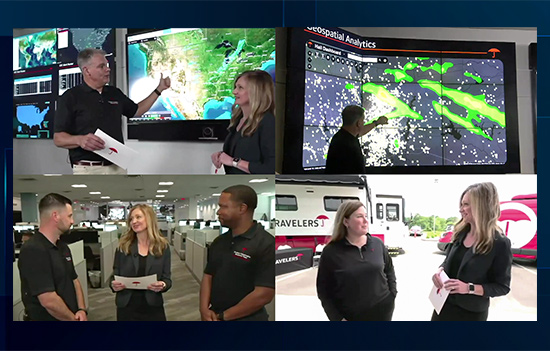
Viewers joined us in the Travelers National Catastrophe Center to learn how we monitor weather, risk and exposure in real time, and how our industry-leading AI and machine-learning tools help us assess damage quickly, ensuring we deliver on our promise to our customers.
Live from Claim University: Behind the Scenes at Travelers' Flagship Educational Hub
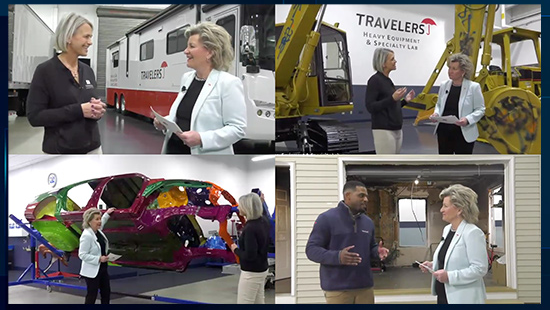
In this webinar, we got an exclusive tour of Travelers’ 200,000-square-foot Claim University. We saw where our Claim employees gain hands-on experience with property, auto, heavy equipment damage, medical and liability scenarios and explored the immersive learning labs.
AI in Action: The Future of Risk Management Through Predict & Prevent®
Peter Miller of The Institutes discussed the Predict & Prevent® model in risk management and explored how this proactive approach could leverage technology like AI to enhance safety and reduce claims.