The Evolving Property Insurance Landscape: Strategic Response and Agent Participation

The Evolving Property Insurance Landscape: Strategic Response and Agent Participation
November 12, 2025
Wednesday 1:00 p.m.-2:00 p.m. ET
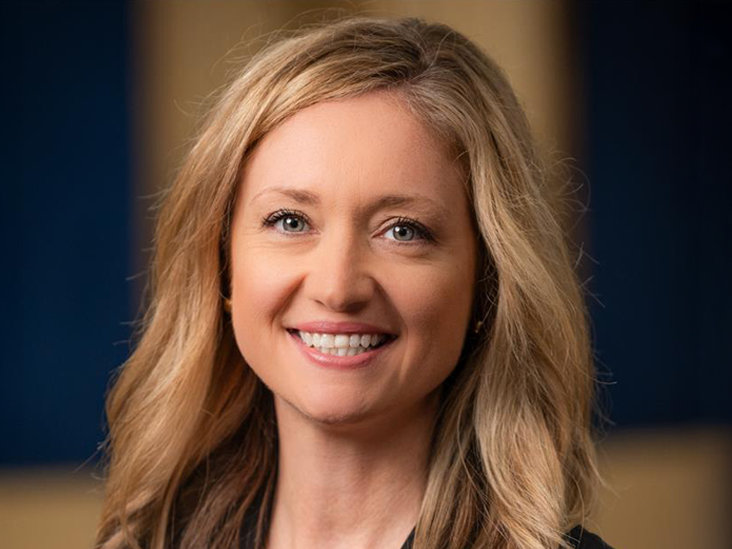
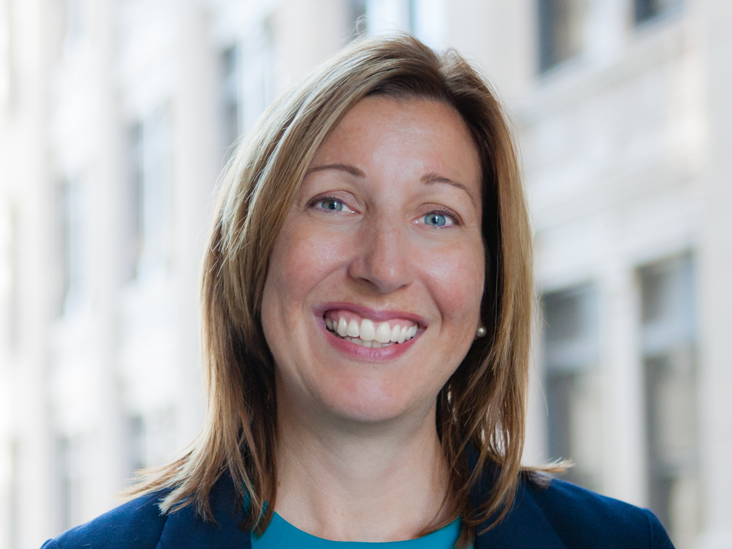
What's driving the changes in today's complex property insurance market, and how can we turn challenges into opportunities to better serve customers? Angi Orbann, National Property Lead and Vice President of Personal Insurance, and Dan DiMugno, Assistant Vice President, Risk Management, Personal Insurance, both from Travelers, joined us to examine how the company views evolving market pressures. Learn how Travelers is using innovative solutions and analytics to better assess customer needs and help them protect their home investment. Also get insights into the critical role agents play in helping customers understand their exposure and make informed decisions.

(SPEECH)
[AUDIO LOGO]
(DESCRIPTION)
Slide text: Wednesdays with Woodward (registered trademark) Webinar Series.
An open laptop, a plant and a mug with the Travelers umbrella logo. Text: Jessica Kearney
(SPEECH)
JESSICA KEARNEY: Hello, and welcome. Thank you so much for joining us. My name is Jessica Kearney, Vice President here at the Travelers Institute, and I'm standing in for our host, Joan Woodward, today. Welcome to our webinar series.
(DESCRIPTION)
Text: About Travelers Institute (registered trademark) Webinars. The Wednesdays with Woodward (registered trademark) educational webinar series is presented by the Travelers Institute, the public policy division of Travelers. This program is offered for informational and educational purposes only. You should consult with your financial, legal, insurance or other advisors about any practices suggested by this program. Please note that this session is being recorded and may be used as Travelers deems appropriate. Travelers Institute (registered trademark) Logo, Travelers
(SPEECH)
Before we get started, as always, sharing a short disclaimer about today's program.
(DESCRIPTION)
Text: Wednesdays with Woodward (registered trademark) Webinar Series. The Evolving Property Insurance Landscape: Strategic Response and Agent Participation. Logos: Travelers Institute (registered trademark) Travelers, Master’s in Financial Technology (FinTech) Program at the University of Connecticut School of Business, American Property Casualty Insurance Association (service mark), APCIA, CBIA, University of South Carolina Darla Moore School of Business, National African American Insurance Association (NAAIA), Big I, (Independent Insurance Agents & Brokers of America), MetroHartford Alliance
(SPEECH)
I'd also like to extend a huge thank-you to our program partners today-- the Master's in FinTech at the University of Connecticut School of Business, NAAIA, the National African American Insurance Association, the Risk and Uncertainty Management Center at the University of South Carolina's Darla Moore School of Business, the MetroHartford Alliance, American Property Casualty Insurance Association, the Independent Insurance Agents & Brokers of America, and the Connecticut Business & Industry Association. Thank you to all of our partners. And a special welcome to your members, students and networks. Thanks for being with us.
OK, let's get started. So today, we're going to do a deep dive into the evolving property insurance landscape, what's driving changes in the market, and how we can create opportunities to better serve communities. We'll spend the next hour exploring how Travelers views the evolving marketplace, how we as a company are using innovation and analytics to help customers evaluate their risks and their needs while also protecting their home investment.
So, I am thrilled to be having this conversation today with two of my colleagues here at Travelers.
(DESCRIPTION)
Text: Wednesdays with Woodward (registered trademark) Webinar Series. Today's Speakers. Angela Orbann, National Property Lead, Vice President, Personal Insurance, Travelers. Dan DiMugno, Assistant Vice President, Risk Management, Personal Insurance, Travelers
(SPEECH)
Angela Orbann is Vice President and National Property Lead for Personal Insurance at Travelers. Angie is responsible for new product development, innovation and strategies for dwelling, condo and tenant lines of business. And she's joined today by Dan DiMugno, Assistant Vice President for Personal Insurance Risk Management. Dan is responsible for catastrophe strategy and pricing for Personal Insurance.
So we'll start out with presentations from Dan and Angie. I'll join them on the other side for some discussion, and we'll take your questions. Dan, Angie, welcome. And Dan, take it away. Floor is yours.
(DESCRIPTION)
Text: Dan DiMugno
(SPEECH)
DAN DIMUGNO: Good afternoon, everyone. Good morning to those on the West Coast. And thank you, Jessica, so much for having us today.
(DESCRIPTION)
A graph, a forward arrow, a home, and two hands shaking. Text: Agenda, Industry Performance, Insurance Evolution, Insurance Need, Understanding the Risk, Protecting the Home, Agent Partnership.
(SPEECH)
We have a robust agenda that we'll be walking through. We'll start off talking about industry performance. And then we'll spend time talking about the evolution of insurance, both how the need itself has changed as different catastrophes have shaped the industry as well as how we've evolved understanding the risk itself.
We have a great section about protecting the home. Make sure to have your notepads ready with the-- ready to take great notes on some tips. We'll then talk about the crucial agent partnerships in the triangle between agents, homeowners and the insurance industry.
(DESCRIPTION)
Graph titled Combined Ratios by Year Industry Homeowners 2015 to 2024 shows years 2015 to 2024 on the x-axis and percentage from 80% to 110% on the y-axis with a line starting below 90% in 2015, going up to 110% in 2017, down to below 100% in 2019 then arcing up above 100% and down to below 100% again in 2024 with a solid horizontal line at 100%. Text: Historical Performance, Source: A.M. Best 2024, Industry performance has oscillated.
(SPEECH)
So, starting off with industry performance, here's a decade's worth of combined ratios for the homeowners industry. These combined ratios, anything over 100% means that the industry paid out more in losses and expenses than it collected in premium. Anything below 100% means the industry collected more in premium than it paid out in losses and expenses.
One thing you may notice is it's pretty volatile and oscillates over time. And that can be common for the homeowners insurance industry due to things like catastrophe events. So for example, in 2017 and 2018, there were some large wildfire activities in addition to some major hurricanes, like Hurricane Harvey, Irma, Maria, Hurricane Michael, which put some pressure on the industry.
There may be other years with fewer or less severe catastrophic events. In these years, the industry may perform a little bit better. One thing-- the peaks, those big peaks, may sometimes be caused by hurricanes, though some may be surprised that hurricane actually doesn't contribute the most, on average, to catastrophe average annual loss. Let's take a look.
(DESCRIPTION)
Pie chart shows 3% Earthquake, 3% Flood, 4% Winter Storm, 9% Wildfire, 25% Hurricane, 54% Wind/Hail with the 54% circled. Text: Peril Contribution to US Industry Catastrophe Average Annual Loss, Source of data: Verisk. Wind/Hail damage contributes the most to homeowners Average Annual Loss.
(SPEECH)
This pie chart shows the peril contribution to the U.S. industry catastrophe average annual loss. That blue wedge represents hurricane, 25%. These events often make the big headline news, can be extraordinarily damaging. But on average, it's actually those wind and hail losses that make up 54%, little over a majority, of the loss. While these may not as frequently make news headlines-- feels like a lot of days every spring, there's some part of the U.S. that gets hit by some sort of windstorm event. These can cause damaging hail, which might mean homeowners might need to replace the roof. They could spin off tornadoes that can totally destroy a home or straight-line winds, which can also be really damaging.
That said, while wind and hail contribute the most to catastrophe average annual loss on average, actually, we don't have to go back that far before-- this wasn't even covered in some states. So if you think about maybe states in the middle of the country that maybe have the most wind and hail damage on average each year, like a state like Kansas, for example-- this is an actual letter. I won't read the whole thing-- but an actual letter that an agent in Kansas sent to Travelers back in 1882.
(DESCRIPTION)
Text: Evolving Insurance Product. 1882 letter from an agent in Kansas to Travelers. "In reply to your esteemed favor of the 23rd, we beg to say that Windstorms being entirely foreign to the business of fire insurance in which we are engaged, we have nothing to do therewith. Neither do we suppose that any other reputable fire co does, but only such companies as must resort to some ludicrous method or worse in order to get any business. One would hardly expect to find ready made horseshoes for sale at a millinery store, yet such a commodity would have as fit a place in such a stock as windstorms would have in the business of fire insurance. Now do we not speak the truth?"
(SPEECH)
Essentially, the crux of the letter was that Travelers-- we started offering wind insurance in a state like Kansas. And they thought this was "ludicrous." They compared it to selling horseshoes in a millinery store, a hat store. And while I agree it is ludicrous to sell horseshoes in a millinery store, I do think we were on to something by selling windstorm coverage in a state like Kansas, even though maybe at the time fire was really the peril that we really thought about insurance in that state.
So how did we get from there to where we are today?
(DESCRIPTION)
A timeline from left to right. Text: Historic Events for Home Insurance. 1871, Great Chicago Fire.
(SPEECH)
Let's look back in time and start with the Great Chicago Fire in 1871, about a decade before that agent letter I just shared. There certainly was some precedent to major fires. You can think about maybe the Great London Fire in 1666. But this Great Chicago Fire was very damaging at the time, one of the largest events in that area we had seen, and led to a couple of things.
(DESCRIPTION)
Text: Building Codes
(SPEECH)
One, it led to the development of more building codes-- so for example, mandating that certain buildings in certain areas needed to have firewalls. Today in 2025, when I think about a firewall, I think about cybersecurity. But back in 1871, firewall being a literal wall between buildings that would prevent fire from spreading from one building to the next--
They also mandated in certain areas that streets needed to be a certain width to help avoid fire spreading across the street. And buildings, again, in certain dense areas needed to be made out of more resilient materials, like stone or masonry, instead of maybe more flammable wood. Also, at the time, reinsurance was a budding industry and, given a handful of primary insurance companies went bankrupt from the Great Chicago Fire, underscored the importance of that newly budding reinsurance industry.
(DESCRIPTION)
Text: 1938, Great New England Hurricane
(SPEECH)
Moving along a little bit, couple decades later, the Great New England Hurricane in 1938-- while there had certainly been hurricanes in New England before, maybe 87 years ago, maybe some folks might not have expected that damaging of a hurricane up in the Northeast.
(DESCRIPTION)
Text: Catastrophe Models
(SPEECH)
There were wind speeds recorded of over 120 miles an hour up in Massachusetts-- and really led to the need, greater need, for catastrophe models.
In the 1950s, in the 1960s, there were some early pioneers, two teams in particular, one from Harvard and one from our very own Travelers Insurance, that were looking to develop more sophisticated versions of CAT models-- still nowhere near the sophisticated versions we have today, but more than maybe a simple 10-year average or something like that for catastrophes.
(DESCRIPTION)
Text: 1969 & 1972, Hurricanes Camille & Agnes
(SPEECH)
Moving a little bit further along, in 1969 and 1972, hurricanes Camille and Agnes hit. Hurricane Camille in the Gulf had some devastating storm surge and flooding in Mississippi. And Hurricane Agnes started in the Gulf but then swooped back around and hit the Northeast and had some really devastating flooding in states like Pennsylvania.
At the time, there was a brand-new program that had come out, the NFIP, National Flood Insurance Program.
(DESCRIPTION)
Text: Flood Insurance Requirements
(SPEECH)
And so maybe in part due to these really damaging flooding events, they started to mandate that homes built in certain flood zones-- if they wanted to get a mortgage, they needed to get flood insurance.
(DESCRIPTION)
Text: 1992, Hurricane Andrew
(SPEECH)
Next, Hurricane Andrew in 1992-- this was one of four Category 5 U.S. landfalls in addition to Hurricane Camille that I just mentioned a moment ago, certainly an eye-opening event for the industry to underscore maybe how severe certain catastrophes could be-- led to more building codes, like homes in certain areas needed to be able to withstand hurricane force winds or things like impact-resistant glass-- also led to the emergence of catastrophe bonds.
(DESCRIPTION)
Text: Catastrophe Bonds Emerge
(SPEECH)
So like traditional reinsurance, catastrophe bonds are a way for primary insurance companies to offload some of the risk to another entity or to an investment vehicle that investors could purchase and invest in.
(DESCRIPTION)
Text: 2005, Hurricane Katrina
(SPEECH)
Next, Hurricane Katrina in 2005-- many of us may remember, the severe storm surge and flooding in Louisiana led to many insurance companies thinking about what kind of coastal appetite they have and the concentration they wanted to have on the coast-- additionally, made some insurance companies think about how much capital protection they wanted to hold for these very significant events.
(DESCRIPTION)
Text: IBHS Research Center Opened
(SPEECH)
On the positive side of things, in 2010, IBHS, Insurance Institute for Business & Home Safety, which we'll be talking about them a little bit more later, opened up a research facility, really neat facility where they can build normal regular-sized homes and throw hail at it, throw severe winds, fire, and see what kind of building materials or building techniques could make a home withstand this damage better. And so the power of this science can help customers understand, how can we make our homes safer and be a little bit more resilient against natural catastrophes?
(DESCRIPTION)
Text: 2017+, Wildfire Events
(SPEECH)
The last thing I'll mention is the wildfire events in 2017, 2018, and certainly more recent wildfire events. These sorts of events have underscored the importance of understanding wildfire risk and have put a lens on these kind of wildfires aren't just in rural areas but can also impact suburban or even urban areas.
(DESCRIPTION)
Text: Events throughout history have shaped how we view and manage risk
(SPEECH)
Over the last 150 years, these events have certainly shaped how we think, view and manage risk. And I'm looking forward to the next 150 years to see how things continue to evolve.
(DESCRIPTION)
Map of United States with fire over the West Coast, hail on a home over the plains, hurricanes over the South and East Coast and snow and wind over the Northeast. Text: Matching Price to Risk. Rates are an estimate of expected costs. To price a policy, we need to know both what risks the home faces, and the characteristics of the home.
(SPEECH)
One thing that's been consistent is our desire to match price to risk. I know what many of you are thinking right now. We finally get to talk about some actuarial principles. But in all seriousness, this is the only one I'll mention. Rates are an estimate of expected cost. So what does that mean?
To price a policy, we need to know both what risks a home faces and then what are the characteristics of the home that can help maybe withstand the damage from that type of event. So for example, if a home is somewhere in the Gulf or East Coast, there is hurricane risk. But also it matters where specifically that is. Is the home built right on the beach? Is it 100 miles inland? Is it 1,000 miles inland? Is it all the way up in Montana, which historically has had less hurricane risk than maybe right up along the coast in the East?
And so, again, knowing what the risk the home faces is-- again, maybe hurricanes out in the East, some states out in the West have some wildfire activity. Wind and hail are prevalent across the entire U.S. But maybe in particular, the middle of the country has maybe the most wind and hail risk.
But knowing what the risk the home faces and then what are the characteristics of the home-- so for example, is the home made out of resilient material that can better withstand wind or fire damage? Is a roof made out of resilient material that can withstand that hail damage, or is it maybe a roof that's less-- or excuse me, more susceptible to hail damage and is maybe more likely to need to be repaired or replaced if there's a hailstorm?
How we've understood those home characteristics over time has evolved, though. And Angie, I will toss it over to you to walk through.
(DESCRIPTION)
Text: Angela Orbann
(SPEECH)
ANGELA ORBANN: Great. Thank you, Dan. Understanding those characteristics of a specific home has been one of the great challenges for home insurers. It's not like a car, where you have a VIN number that provides the majority of the details and specifications of the car. In comparison, the details of a home are much more varied. There are about 85 million single-family homes in the U.S. And they're all unique, from construction styles to number of bathrooms, features, selected finishes, contents. And there's been no easy way to gather those basics until now.
And to Dan's point, it's important to understand these details so that we can price appropriately. But at the end of the day, it's also important that we understand the unique details of a home so that the insured has appropriate coverage for their unique property.
I've had the privilege of working here at Travelers for over 20 years, most of that time focused on home insurance. And it's amazing to reflect on how far the industry has come, especially in just the last handful of years. We're now able to leverage advanced technology and data to gain insight into customer exposure in a more efficient way.
(DESCRIPTION)
An outline of Hartford County, 20 to 30 miles wide and zip code 06103, with a zoomed in map of 1 mile with a location pin in the center. Text: Understanding Home Risk.
(SPEECH)
So, let me walk you through this evolution and start with location. Here's an example, Hartford County in Connecticut. And we're going to zoom in on the Travelers location where we're joining you from today. It's not a home, per se, but we'll use it to demonstrate how the location-specific technology works. And it's our own little home away from home here.
Historically, companies likely used counties and sometimes cities for pricing and eligibility, assuming that the risk was the same across the entire area. This particular county is about 20 to 30 miles wide. And there can be huge risk differences within those 30 miles-- not true for Hartford County, but also think about a county that borders an ocean. There's significantly different hurricane risk near the ocean versus over 20 miles away.
So carriers started drilling down to ZIP codes. And we're showing a relatively small ZIP code here about one mile wide. But even then, you can see in the pop-out for the ZIP code there could be differentiation. This ZIP code in Hartford borders a river. And there could be different flood or water backup risk, depending on exactly where that property sits within that ZIP code.
In the past, if a carrier identified high risk within a ZIP code, they might either have to make the entire ZIP code ineligible or, my personal favorite, we would give guidance to agents like, if the house is east of Main Street and south of Memorial Bridge, it's ineligible. Imagine being an agent trying to manage those different guidelines, especially if you weren't familiar with the area.
But today, technology has advanced where we can simply enter an address. And by leveraging geocoding technology, we can place that pinpoint exactly where a risk sits and determine accurate distances to different peril risks and make eligibility decisions quickly-- no more geography quizzes for agents, resulting in a seamless and faster process with confidence.
But now let's turn to the home itself.
(DESCRIPTION)
A two-story home with a garage. Text: Understanding Home Risk. House Structure & Interior Details. Dwelling Coverage: $350,000. Construction: Frame, Fire Department: 4 Miles.
(SPEECH)
Back in the day when I was an underwriter just learning the business, we looked at maybe half a dozen characteristics-- the age of the home, any prior losses, the construction type. And even then, fire was the primary concern. So brick construction might get better pricing than frame. We would also see how far the risk was to a fire department and how much dwelling coverage was needed. But imagine trying to price homes using only this limited data. Homes that look similar on paper could be vastly different in reality.
So then came the digitalization and availability of public records.
(DESCRIPTION)
An arrow points to a cross-section of a two-story home with a kitchen, laundry room, bathroom, bedroom and basement. Text: # of Stories: 2, Bathrooms: 2.5, Garage Detached - 2 car, Basement: Yes - Finished, Fireplaces: 1, Square Feet: 2800
(SPEECH)
That gave us insights that we've never had before. And suddenly, we could differentiate homes based on things like square footage, number of stories, bathrooms, garages, finished basements, fireplaces. A 2,800 square foot two-story home is very different from a 2,800 square foot ranch home.
That two-story home has higher water damage risk when a pipe bursts upstairs and gravity takes over. And the ranch house of the same size has a much bigger roof in comparison when a hailstorm comes through. So understanding these details helps to ensure that customers are priced appropriately for their unique home and risk, but that they also have the right coverages. And that plays a crucial role in restoring properties after a total loss.
(DESCRIPTION)
Two houses next to each other from above. The one on the left has a pool and cars parked out front. The house on the right has a green space in the backyard and car parked out front. Text: Understanding Home Risk, Exterior Details, Nearmap.
(SPEECH)
Now let's expand our view to the broader property and external details. This is where we historically had the least amount of information and relied heavily on customer and agent input. This gap has improved with aerial imagery. And let me take a moment to clarify what that actually means.
Some people hear aerial imagery, and they often imagine drones hovering over their backyard. That's not what we're talking about here. Aerial imagery refers to images that are captured from manned aircraft, flights that are tens of thousands of feet above the ground and are dedicated for national mapping. This approach provides coverage for a significant percentage of homes in the U.S., with most homes being captured multiple times per year.
So let's look at these two houses side by side. They appear that they could be similar square footage. Clearly, they're in the same location. And both have trees near the back of their property.
(DESCRIPTION)
Solar Panels and Pool are circled and labeled on the left. Trees, Roof Material and Roof size are circled and labeled on the right.
(SPEECH)
But now we can differentiate that the house on the left has solar panels and a pool, while the right has clay tile roofing, which is more wind-resistant than your typical asphalt shingle roof, but also costs more to replace in the event of a total loss.
(DESCRIPTION)
Person at computer, pencil drawing a home, a magnifying glass over a zig zag line. Text: Data Insights. Ease of Quoting, Efficient Underwriting, Accurate Data at Scale. Data evolution has enhanced insurance fundamentals, plus agent and customer experience.
(SPEECH)
So what does all this data matter? From a carrier perspective, it helps us price and underwrite more accurately. But more importantly, it just makes the whole process easier. It brings ease of quoting. We can prefill information for quick validation instead of a lot of manual entry during the quoting process. And honestly, some features of the home are nearly impossible for customers to provide accurately.
Most homeowners can tell you how many bathrooms they have, although even that can get tricky with half-baths and three-quarter baths, as people are trying to figure out how to round up or down. But ask a homeowner how many solar panels they have or their exact roof size-- that's a lot trickier.
So this data also helps us with efficient underwriting. More upfront data means fewer back-and-forth requests and faster decisions for the agents and homeowners-- no more submitting applications only to discover days later that the home is actually too close to the beach.
And lastly, it provides accurate data at scale. Traditionally, to get this level of detail on a property would have required a live physical inspection to get all those home details. That just wasn't feasible. It would be expensive, driving up costs and premiums. But it would also be intrusive to expect every homeowner to schedule appointments and delay decisions, especially when they may be depending on those decisions as part of a home closing. So now we can get this data more efficiently with consistency and with less disruption to the agent and homeowners. It's better for carriers, better for agents, and better for customers.
(DESCRIPTION)
Satellite view from above of a home with trees near the house, a car out front and a pool. Text: Protecting Our Customers. Nearmap, Jan 10, 2023.
(SPEECH)
These insights and technology don't just help us assess risks for identifying house features. It can help us partner with customers on risk reduction. We leverage our extensive claims database, the expertise of our claim adjusters, and combine that with aerial imagery to proactively advise customers about risk concerns. For example, our experience shows that large trees and close proximity to homes in high-wind areas pose significant danger to both property and families.
So let me share this example from a recent event. We can identify trees that pose potential threats to homes during those events. And rather than waiting for the storm to come, we can advise homeowners of the risk in advance. In this first image, you can see a large tree or two at the front of the home. Right to the right, you can see a red car. In the upper left there are those trees to the right of that car-- is really that front of the home. And those trees are very close to the structure itself.
(DESCRIPTION)
Satellite view of same house with trees near the house cleared away. Text: Nearmap, Jan 10, 2024
(SPEECH)
The second image shows that same property a year later, after the homeowner removed the trees. It's a little tough to see with the shadows. But you can see that those closest trees that posed the largest risk were removed.
(DESCRIPTION)
Satellite view of the same house with downed trees all around the yard but not hitting the house. Text: Nearmap Sept 28, 2024
(SPEECH)
And now here's the same house after a significant wind event hit the area. You can see damage from surrounding trees that fell. But notice the home that we're focusing on. There's still some minor damage. But this was a clear win-win situation. Not only did the homeowner avoid what likely would have been a large loss, more importantly, the family avoided a much more disruptive experience, which would have been time out of their home and potential safety concerns during the storm.
This gives us a glimpse of what's possible when we combine data with proactive outreach, moving beyond just responding to losses to helping prevent them. There's tremendous opportunity to expand prevention. And prevention is exactly where we're going to shift to next because as we'll see, there are ways to help customers avoid claims altogether.
(DESCRIPTION)
Text: Protect the Things that Matter Most. Top Five Ways Things Can Go Wrong. We analyzed five years of home claim data to uncover the most common and most expensive causes of damage. Click on the prevention tips below to learn how to prepare and prevent losses before they happen. National Risks, Choose Another City or Season. Most Common: Wind 16%, High-velocity winds can uproot trees, damage roofs, collapse walls or worse. Non-weather water 23%, Plumbing, sewer or appliance leaks and failures can create devastating issues. Hail 18%, Hail typically damages roofs, but may also harm windows, siding and more. Weather-related water 12%, Leaky roofs, frozen pipes that burst and ice dams can really take a toll. Theft 8%, Break-ins may result in both personal property losses and property damage. Learn More. For more information, visit our Home Protection: Water Resource Center. Logos, Insurance Institute for Business & Home Safety, Fortified Home, Wildfire Prepared A Program of I.B.H.S.
(SPEECH)
Travelers has analyzed five years of personal insurance property claim data to understand what actually goes wrong at homes across America. What we found helps us focus our prevention efforts where they matter most. We've made this actionable through resources like our interactive "Top Five Ways Things Can Go Wrong" guide, which provides specific maintenance recommendations based on our claims experience.
And Dan mentioned it earlier, but I'd be remiss if we're talking about prevention without mentioning our partnership with the Insurance Institute for Business & Home Safety, IBHS. We've highlighted them in the past webinars. And Jessie put the links in the chat. But they showcase the excellent independent research IBHS conducts, with a full focus on building homes to be more resilient. And they've got a couple of programs that I'll hit on as we walk you through a couple of examples where prevention can make a big difference.
(DESCRIPTION)
Clippers cut back branches of trees overhanging the roof of a home. Bits of hail on a deck with some dents. Text: Windstorm & Hail. Most common loss in Spring & Summer. Annual Prep, Prune Trees, Secure outdoor items, Anticipate power outages, Storm Shutters, Roof Inspection, Organize garage, park car. Home Upgrades, I.B.H.S's FORTIFIED Program, Wind-rated Garage Doors, Whole-home generator, Hail Impact-Resistant Shingles, Impact resistant windows, Upgrade siding.
(SPEECH)
Let's start with windstorm and hail. These are two of the most common causes of loss that rise to the top of the list, especially in spring and summer. And keep in mind when we say windstorm, that typically means thunderstorms, but also tornadoes and hurricanes. Those are all considered wind events. And there are things homeowners can do simply on an annual basis as regular maintenance. And then there are considerations for larger investments, like renovations or new builds.
For annual maintenance related to wind protection, we recommend homeowners prune those tree limbs back within-- or within 10 feet of their home on an annual basis and check for and remove any dead limbs and weakened trees. When high winds are expected, also move outdoor items indoors and secure anything that can't be safely moved. And as far as hail preparation, annual roof inspections are recommended, especially as those roofs age. And whenever possible, move cars into the garages/under carports for protection.
As for upgrades, when renovating or building, consider the FORTIFIED designation standards established by IBHS. Their research identifies ways to make homes more resilient to prevent claims and keep families safe. A simple example that's not well known are wind-rated garage doors.
In high-wind events, standard garage doors can buckle and be the first frailty that allows storm forces to enter the entire home and do more damage. Wind-rated doors offer much better protection. But many may not know to consider them when they're building or replacing. And for homeowners in hail-prone areas planning for roof replacement, we strongly recommend that they consider impact-resistant materials, and to also consider impact-resistant windows and siding choices like brick or stone veneer that can withstand hail better.
(DESCRIPTION)
A roaring fire in a fireplace. Smoke and flames on a hillside near houses. Text: Fire & Wildfire. Less frequent, but costliest of claims. Annual Prep, Holiday safety, Inspect heat sources & cords, Fireplace & disposal of ashes, Fire Extinguisher, Remove all vegetation within 5 ft, Clear roof and gutters of debris, Remove vegetation and all stored items from beneath decks. Home Upgrades, Avoid Wood Roofs, Siding, Monitored Smoke Alarm System, Composite Material Decks, I.B.H.S. Wildfire Prepared Program, Replace Wooden Fences w/in 5 ft, Ember-resistant vents, Non-combustible siding, deck, doors.
(SPEECH)
Now let's talk about fire. Fortunately, fires don't happen as often as other perils. But when they do, they're the costliest cause of claims and most disruptive to homeowners, typically requiring relocation for months during a rebuild. So let's walk through some general fire prevention. And then we'll expand into wildfire scenarios.
It's hard for me to believe, but we're quickly approaching the holidays, which brings decorations, entertaining and unfortunately, some increased fire risk. Some simple reminders for the upcoming holiday season is turn off or unplug all holiday lights and extinguish all candles before leaving the home or going to bed. And never leave food cooking unattended, especially during those distracted moments where there's big holiday meals and kitchens can get busy. And be thoughtful around overloading outlets or electrical cords with all those extra decorations.
If you're building or renovating, avoid materials that ignite easily, like wood roofs, siding and decks, and considering adding monitored or smart smoke alarm systems that can send alerts if you're miles away from home.
For homeowners in wildfire-prone areas, prevention takes on added urgency. A key insight from IBHS is that the embers from the wildfires that fly through with the wind, not actually the flames, are the leading cause of home ignition during wildfires. So removing all mulch and vegetation within 5 feet of the home and clearing debris from roofs and gutters to reduce the likelihood that those embers can ignite when they land near the home--
IBHS provides a very comprehensive guidance through their Wildfire Prepared Home program. And one good example from their research is they found that wooden and plastic fencing can act as a pathway that carries flames home to home in wildfire scenarios. So during build or renovation, consider replacing the wood or plastic fencing section, at least within those first 5 feet of the home, to break that path of the flames to the home and resisting the ability for them to get right up next to the home.
Our ultimate goal isn't just protecting property. It's keeping families safe. So this information and much, much more is available on travelers.com and the IBHS websites. And I know Jessie has shared some links here in the chat for your reference.
(DESCRIPTION)
Text: Our Indispensable Partners. Agents continue to be indispensable partners to help customers protect what matters most to them. Continue to help us understand what customers need to protect, Continue to help customers understand their coverage needs, Continue to help customers understand their risk sharing options, Continue to foster discussions to reduce customers' risk.
(SPEECH)
And as we wrap up, one last thing here from Dan and I's perspective till we open it up is really thinking about how important this is for our trusted agents and brokers. We've talked about the evolution of our industry, which is fundamentally driven by the evolution of customer and homeowners' needs. Agents and brokers play a key role, especially when considering homeowner needs at the individual level.
As products evolve to provide more options and rating sophistication, you can leverage these capabilities to differentiate yourself as an agent and better serve your customers. First, help keep customer information current as their homes evolve. Did they finish a basement, add a large shed, replace their roof? Thinking through then all the coverage options that can be tailored to each customer's unique situation rather than forcing them into broad categories-- this means you have more tools in your toolkit to truly tailor that protection.
Third, discuss the expanded risk-sharing options-- there's more flexibility than ever before beyond the typical all-peril deductibles. There are deductible options by specific perils, adjustments based on shingle roof age, and dozens of endorsements. This granularity lets the agent find the right balance of coverage and cost for each customer.
Lastly, partner with us on risk reduction. Agents also now have access to more accurate, comprehensive risk information than ever before. When sitting with a customer, you can speak confidently about their specific exposures because you have access to much of the same data as the carriers. And this technology enables truly consultative conversations. Instead of just discussing coverage limits, you can talk about specific risk factors we've identified, like that tree overhang that we showed earlier, and how our prevention recommendations address them.
Finally, leverage the prevention resources, share our prevention materials, discuss IBHS FORTIFIED standards for customers that are building or renovating, and use our seasonal maintenance reminders. When customers see you helping them prevent losses, not just respond to them, you become even more of that indispensable advisor.
The property insurance landscape is going to continue to evolve. But with our partnership, we can ensure that evolution serves customers better than ever before.
(DESCRIPTION)
Presenters and host videos return
(SPEECH)
And with that, I'm going to welcome back Jessica and Dan. And Dan and I have covered a lot. And so we'd love to hear your thoughts and answer any questions.
JESSICA KEARNEY: That was fantastic. I know, Dan, you gave us all the assignment to get our notepads ready, and I did and took lots of good notes. I, for one, love a good history lesson. So the history of building codes and CAT models was really fascinating, bringing us up to current day.
And Angie, I appreciate you sharing some of your-- as you've seen the evolution back as you started as an underwriter, even, to really focus on some of those prevention efforts and specific things that we can all-- those very tangible, practical things that we can all take for ourselves in our personal lives, as well as into our businesses, and certainly in advising insureds. And I think you're right. Keeping our families safe at holiday time-- this is the perfect time of year to have that top of mind. And those wind-rated garage doors-- I think that was a good call that you made as well.
So having all of that said-- so you mentioned so many practical tips for folks to prepare their homes. And I know you mentioned windstorms and fires. You gave the early example of a pipe burst. And I wanted to just probe a little bit on that water damage piece because we hear about that day in and day out. How can homeowners prepare for water damage?
ANGELA ORBANN: That's a great one, Jessica. Water damage is actually one of our most common claims. And it’s the biggest-- The biggest threat for water is often not from the weather, to your point. It's actually the plumbing and appliances inside the house.
So for water, I think of a couple of prevention steps that are easy and not very expensive as well. So first of all, most importantly, know where your water shutoff valve is, the main water shutoff valve for the house. When a pipe bursts, every second counts. Make sure you know where it is and how to use it. It's typically pretty simple. But it's knowing where it is.
Second, we mentioned the holiday season. The colder weather is upon us now. So maintaining a temperature of at least 55 degrees in the home to avoid any frozen pipes, especially if you plan to be away for an extended time--
And then the last thing that comes to mind is really check your appliance and plumbing connections regularly, not only those connections to the toilets. But we have a lot of appliances, like washing machines, dishwashers, refrigerators that all have water lines. Inspecting those hoses and connections-- and look for signs of wear, corrosion or small leaks. A simple replacement of a $20 washing machine hose can prevent a $20,000 water damage claim. So the key is being proactive. They're not expensive solutions, but they can save homeowners from major disruption.
JESSICA KEARNEY: Right, focusing on those preventive efforts. That's great. And so we've spent time talking about the home. But what about some of other assets, like your car, your vehicle? Any tips there?
ANGELA ORBANN: Sure. Clearly, Dan and I are very passionate about the home protection. But that same prevention mindset is important for other valuable assets, too. So for cars, I mentioned parking in the garage during severe weather. But if you think about hurricane situations, if you're evacuating, it's ideal to take your vehicle with you, when possible, clearly.
Travelers also offers a Save My Ride program in select geographies. And that program is available to proactively move your vehicle to a safer location in the event of inclement weather. And then there's items for your higher valued or scheduled personal property that might be on a different policy than your homeowners. Think items like jewelry or fine arts.
If there's weather coming, move those to upper floors or interior rooms. Consider investing in fireproof and waterproof safes for these items. And especially think about taking any of these items with you if you're evacuating, if possible.
JESSICA KEARNEY: Terrific, and all very practical. Dan, I want to bring you in here. So on our webinar series, we talk a lot about the economy and the economic outlook. But I'm wondering if you can talk about the trends that impact the cost to repair or replace a home-- lots of factors interweaving there.
DAN DIMUGNO: For sure. So maybe I'll start off with, I think, inflation, something that folks are probably pretty well familiar with. Over the last handful of years, inflation has been high. This means that every time a shingle needs to be replaced, that shingle is going to be more expensive than it was a decade ago. Every two-by-four is going to be more expensive than it was a decade ago. And the labor costs to replace or repair the home is going to be more expensive than it was a decade ago.
I'll say, in addition to the individual cost of the items, over the last, say, 50 or so years, the median size of new homes has increased. And so maybe 50 years ago, the new home median size was maybe around 1,500, 1,600 square feet. And today, the median new home size is over 2,000 square feet. And so not only is each shingle or each two-by-four more expensive, but you might need more shingles and more two-by-fours if there is an event.
JESSICA KEARNEY: Great-- so all important points. So, how is the insurance industry, how are insurers adapting that property valuation practice to keep pace with all of that?
DAN DIMUGNO: Great question. So essentially, we have policy limits. And those are intended to cover the cost to replace a home in a total loss. They're established at new business. We take information from the agent and from the customer and work through what that policy limit, what that coverage offering is.
Typically, historically, over the last handful of years, say, a home that starts off at $300,000 to replace in a total loss each year might tick up a little bit because inflation might make it a little bit more expensive the following year. So maybe at new business, again, say with the customer, it's decided that it's $300,000 worth of coverage. Maybe the next year, it automatically goes to $305,000 or $310,000 to try and keep pace because it will be more expensive if there is an unfortunate total loss.
I'll say, that said, the customer definitely knows their home best. And so especially as folks make changes to their home, and you mentioned customers might finish their basement-- so if that $300,000 home finishes their basement or adds on a sunroom or puts on solar panels, it's really important for homeowners to let their agents, let their insurance company know that they added those things. That coverage may need to be increased to cover that-- so again, one more place that agents can play a nice role.
JESSICA KEARNEY: Great, a great time to check in with your independent insurance agent and broker. And Angie, you actually had a whole slide, your last slide of your presentation, talking about some of those connections between the insured and the agent. I'm going to pull in some audience questions here. We had a question come in from Edward, who wants to know if you can share some actual examples of how agents can help foster a better understanding of coverage needs. Any specific examples that stand out to you?
ANGELA ORBANN: Sure. Thanks, Edward. Thanks for that question. I think about insurance as really building blocks of coverage. And the agent is key to helping putting together that right combination. So a couple of examples that come to mind-- the first one would be other structures coverage, or coverage B. Think of things like detached garages, sheds, barns, even fences.
Typically, the standard coverage is just 10% of your dwelling amount. So if we took that $300,000 dwelling that Dan was just talking about, you would get $30,000 of coverage total for any other building or structure on your property. But here's where the agent adds value. Maybe your customer doesn't have any detached structures. So they could decrease that coverage and save some money, or maybe they have a large barn or multiple outbuildings and actually need more than that standard 10%. So having the agent really understand those needs is critical.
And then another example would be specialized endorsements. Homeowners has a lot of endorsements. Think examples like home-sharing endorsements if customers rent their home on vacation rental websites or water backup coverage, which could be really helpful for those homeowners that have a finished basement.
And then lastly, I would just add not only about the coverages that are available-- agents play such a critical role in explaining what's not covered. So think about flood and earthquake-- aren't part of your standard home policy. So as the agent, you're positioned to assess whether your customer needs separate coverage for these risks based on that location.
So this is where the data we discussed earlier really helps. When an agent knows a customer has a large garage or is in that flood-prone area, they can have an informed conversation with their customer about what their actual coverage needs are.
JESSICA KEARNEY: That's terrific and where those conversations, those personal level, one-to-one conversations, really come into play. So continuing on the coverage questions-- so Dan, I mentioned the history lesson that you shared with us at the beginning. And you talked about some very historic catastrophic events throughout history. You walked through those. But there's things that are, obviously, more common that happen maybe once a year with more regularity. So what are some reasons why customers might not always get the coverage they need for those instances?
DAN DIMUGNO: Thanks for the question. There's a book out there called The Ostrich Paradox by Howard Kunreuther and Robert Meyer about why we underprepare for disasters. They have a bunch of reasons that they list in the book-- amnesia, optimism, herding, myopia, inertia, simplification. I'll talk about two of them.
First is amnesia, a human-- natural human tendency to maybe forget about events a little bit too soon after they happen. So whether it's a large catastrophe that maybe happens on the other side of the country-- it's in the news for a couple of days. Folks have it in mind. But maybe by the time they go to make their insurance purchasing decision, maybe it's a little further back in their memory. It could be a catastrophe event, or maybe it could be a fire or anything.
Another one, I'd say, is optimism that's mentioned in the book. And so-- can sometimes be human tendency to think bad things might not happen to us and maybe underestimate the likelihood of that loss happening. And so, again, critical role for agents to help customers understand what risks they do face-- and then they can help them work through what the right amount of coverage that they might need or the types of coverage that they should be thinking about.
JESSICA KEARNEY: That's great. And that's fascinating, too, just the human psychology element around disaster preparedness. Thank you for sharing that. I want to pull in a few more audience questions. So Angie, I think this is a good one for you. So we had a question come in from Cindy. She wants to know, why might insurers have different standards for roof age than what manufacturers offer in their warranties? For example, if a shingle has a 30-year warranty, shouldn't that be sufficient for insurance purposes?
ANGELA ORBANN: Oh, great question, Cindy. That comes up a lot recently. And this really gets to the heart of how we assess risk differently than manufacturers assess product quality. A manufacturer's warranty typically covers defects in materials and workmanship-- so essentially, promising if the product is properly installed and maintained that it will perform as designed under normal conditions.
But insurance is about protecting against severe weather events that go well beyond normal conditions. A 30-year warranty doesn't mean that the roof can withstand hurricane force winds or baseball-sized hail for 30 years. What we've learned from our experience through our claims and IBHS research is that roofs age in ways that affect their resiliency to storms. So think of things like heavy rain, snow, hail, freeze cycles, even UV exposure. All of those gradually weaken the materials. Flashing around chimneys and vents can corrode. And even the sealants for the shingles themselves can deteriorate over time.
So the research consistently shows us that older roofs are more susceptible to storm damage than newer ones, even when they're well maintained and free of defects. This isn't a reflection of manufacturing quality, but rather how materials respond to severe weather after years of exposure in the elements. Older roofs respond differently to severe weather. And as insurers, we need to underwrite that risk appropriately.
JESSICA KEARNEY: That's an important distinction. I'm glad we got to that question. Thank you, Cindy. Related follow-up question for you, Angie, coming in from Kristin-- is there a consideration given to higher quality roofs in insurance proposals?
ANGELA ORBANN: Yeah, absolutely. And this is where the industry is really evolving to recognize those quality and performance differences. So, considerations are typically given from both pricing and eligibility perspectives for higher quality roofing materials and systems. So, for example, we mentioned the FORTIFIED roofs by IBHS. Those may be eligible for discounts, depending on the carrier and the state. And the FORTIFIED program we mentioned earlier isn't just about the materials. It's about the entire roofing system being built to better withstand severe weather.
Consideration is also given from an eligibility perspective to higher quality roofs. So think about roofs that are labeled as more durable or lifetime materials, like tile or slate or other similar premium materials. These materials typically have better longevity and storm resistance than your standard asphalt shingles. So there's consideration given for those, too.
So, the key here is that we're moving beyond just looking at age to really think about the entire characteristics of the home and that performance. So we're increasingly recognizing that not all roofs are created equal. And pricing and underwriting are reflecting those differences.
JESSICA KEARNEY: So you mentioned FORTIFIED. And I know we've talked about IBHS. And I believe we dropped in the chat our webinar from last year, where we actually went down to the IBHS facility in Richburg, South Carolina, and got to show all of their scientific evaluations. They have a roof farm where they've got roofs of varying ages. So I would encourage anyone to take a look at that or visit their website because there's some really fascinating resources on that. So thanks for sharing that.
OK, so we've talked numerous times about the connection between the agent and the customer. Dan, I'm wondering if you can elaborate a little bit on those conversations when it comes to things like lowering premiums or the variety of risk-sharing options that are available. Can you dig into that?
DAN DIMUGNO: For sure. So maybe the first one that comes to mind is different deductible levels. So, there's a wide variety of deductible options that a homeowner may be able to choose from. Homeowners could have a higher deductible, which might mean a lower initial premium, but potentially higher out-of-pocket costs if there is a claim. On the other side, they could choose a lower deductible, which might start off with a higher premium, but then lower out-of-pocket costs if there is a claim. And so again, agents can partner with homeowners to see what is right for them. Angie, I don't know if there's any other ones you'd add.
ANGELA ORBANN: Yeah. Thanks, Dan. The only thing I would add is understanding the full suite of risk-sharing options that might apply to a loss because it could go beyond just those deductibles. In addition to those that Dan mentioned, in some areas or with homes that have older roofs, there's a roof depreciation schedule that might apply in the market. So this, basically, pays a lower percentage of the replacement cost based on the age of a roof. So even after meeting your deductible, you might receive less than full replacement cost for an aging roof.
So it's important to not only understand these different options but also consider how they might overlap in what the customer's total out-of-pocket expectations could be at the time of loss. And really, another great place where agents can add value by helping customers understand that complete risk-- or that complete picture of their risk sharing, not just what those individual components are--
JESSICA KEARNEY: Perfect. Another question coming in-- and I think this one could be good for you, Angie-- about first-time homebuyers. I know the first-time homebuyer's in the news a lot with today's housing market. Do you have any thoughts specific to them on ways to minimize insurance costs and simply mitigate risks on that first home that they've purchased for themselves?
ANGELA ORBANN: Sure. We've walked through several examples of ways homeowners can upgrade their homes. Those same principles apply for first-time buyers, but with, really, the advantage of being able to choose more wisely from the start.
So most buyers might have a wish list around their ideal neighborhood, an updated kitchen, the ideal backyard. I would just suggest adding some risk mitigation criteria to that list. So look for homes with newer roofs, updated electrical and plumbing, or those built to those higher wind standards.
The other key thing that we've seen with new homebuyers is-- and the advice we would give is to take time to consult with your agent about the coverage options we discussed today. The home buying process can be overwhelming. And insurance often is treated as just another checkbox along a long list of to do’s during that process. And if you can't deep dive initially, which is completely understandable, make sure to loop back with your agent after you've been in the home for a while and are more settled and discuss the specifics of your property, any changes that you're planning and questions that have come up as you've lived in this space.
JESSICA KEARNEY: That's terrific. And I will offer a shameless plug here. We haven't announced this yet, but we will have the Chief Economist of the National Association of Realtors on this program in January for a real estate market outlook looking not only at residential, but also commercial. So if anyone's interested in that, please keep an eye out for January.
OK, great. And thank you for that, Angie. So Dan, one thing I was thinking as you were going through your-- one of your earlier slides-- so we've given some examples of some of the historic hurricanes that have really shaped the industry and shaped some of the outcomes. Have other types of catastrophic events had an impact on the insurance industry, too? I have a few in mind. But I'd love to hear from you on what some of those things are and what stands out to you.
DAN DIMUGNO: There definitely have been. So maybe first one that comes to mind-- the Northridge earthquake, 1994, impacted, say, a little outside of Los Angeles-- could be felt all the way over in Las Vegas. So extremely damaging events, cost billions of dollars’ worth of damage, and at the time may have made some insurance companies be a little hesitant to write insurance in California because of the earthquake.
In California, it's required to offer earthquake coverage if you're selling the rest of the home insurance. But at the time, the CEA, California Earthquake Authority, stepped in to help partner with the industry to offer coverage. And so it allowed some companies to be able to sell the fire, the wind, the water coverage. And then the CEA could provide the earthquake coverage so homeowners could continue to be protected against earthquakes and the industry could function well.
Another one I'll say would be the September 11 terrorist attack. Prior to September 11, insurance companies may have included terrorism coverage and maybe not thought too much about it. There certainly had been terrorism attacks prior to September 11. But September 11, in addition to the extraordinarily tragic loss of life-- there was very, very damaging from a property perspective and caused the industry to rethink, are they willing to cover terrorism in the future?
But the TRIA program came out from the government. And that acts as a really nice backstop. Insurance companies certainly still have some risk on their balance sheet for terrorism. But the government is-- and the TRIA program can act as that backstop to provide maybe additional protection if there's a really, really large terrorist attack.
And maybe the last one I'll mention is in 2021, there was a cold snap in many Southern states, particularly in Texas. A lot of the electrical infrastructure had trouble. And there were a lot of power outages, which led to a lot of frozen pipes, a lot of pipes bursting, and a lot of water damage. And while many folks may think about winter storm damage as, say, your blizzards up in the Northeast or something-- maybe a little bit of a eye-opener for some folks, at least, on the potential winter storm damage that Southern states could have, too.
JESSICA KEARNEY: Yes, certainly remember all the headlines around the Texas freeze. Thank you for that overview and your insights there. We're getting a number of questions in about technology. And Angie, I know you mentioned digitization of public records and things like that. Can you elaborate? And can you go back to that topic? How is technology helping speed up the claims process?
ANGELA ORBANN: Oh, great question. We're very proud of our claim technology and department here at Travelers and really consider ourselves an industry leader. And it's clearly an area for claim where technology is really transforming the customer experience in meaningful ways. So clearly, the faster we can get payments to insureds, the better the satisfaction. Nobody wants to wait weeks or months to get their life back to normal after a loss. So technology helps us speed the claims process in a couple of ways.
First, in catastrophic events, our CAT response begins with a proprietary geospatial platform that allows us to identify areas that were impacted by weather events, often before claims are even reported. So having that awareness of where the event is happening and being ahead of it-- and then that technology helps us deploy the right number of claim professionals to the right locations quickly, which is key, obviously, as-- and during those widespread events.
Beyond catastrophes, we have platforms that can complete automatic measurements from photos. This dramatically speeds up the inspection process, enabling customers to begin their repairs more quickly. So rather than waiting for a physical inspection or your claim adjuster to be on site, it allows that speed of processing. So technology allows us to be more responsive, more accurate and ultimately just more helpful when our customers need us the most.
JESSICA KEARNEY: That's fantastic. And in June, some of our webinar viewers might recall we actually did a live program at Travelers National Catastrophe Center, which was eye-opening and got to look at all that technology and meet some of the folks on those teams, which was really fantastic.
OK, Dan, I want to pivot to you for another audience question. So, we have someone asking, you mentioned that homeowners had some volatile results. And you showed that chart. Is it really that much more volatile than other lines of business?
DAN DIMUGNO: Great question. I'd say yes. So if you compare maybe the last, say, decade or so for homeowners and maybe compare it to, say, personal auto or maybe commercial auto or commercial multi-peril, homeowners is going to have the higher, maybe I'll say statistical, standard deviation over that period of time with those ups and downs, catastrophe events being maybe one of the things that could drive some of that.
I'll say as we think about other lines of business, that volatility up and down-- it's, again, both the ups and the downs. I will say, for instance, personal auto may-- had a down, say, in 2020. During COVID, there were fewer cars on the road. The industry returned some premium, given there weren't as many people driving around. There might be fewer accidents when there are fewer cars on the road.
But I'll say overall, homeowners is certainly going to be the most volatile compared to at least a handful of other lines of business. And I'll say maybe that's also magnified at the state level. So, for example, if you look at a state that might experience hurricanes, if in a year that state does have a large hurricane, it's going to have a pretty unprofitable year for the industry.
And on the flip side, if that hurricane-prone state has no hurricanes at all for the year, it might do maybe a little bit better. Over time, it balances out. But you're going to have those peaks and peaks and valleys year to year, and I'll say especially at the state level.
JESSICA KEARNEY: That's terrific. Thank you for sharing that, Dan. I think we have time for one more audience question. I'll throw this one to you, Angie. What do you expect to see relative to wind and hail deductibles and scheduled roof coverage in the coming years?
ANGELA ORBANN: Wow, that's a thoughtful question. And honestly, if we've learned anything over the past few years, it's that predicting weather patterns and economic conditions is really challenging. But with that said, I think we can expect some continued evolution in both areas.
So for deductibles, the inflation environment has reinforced the importance of percentage-based deductibles rather than flat dollar amounts. So thinking about your typical $1,000 deductible, that might have been reasonable five years ago. But it's not keeping pace with today's repair costs that Dan mentioned as the cost of shingles and lumber and other things go up. So percentage deductibles automatically adjust with inflation. And basically, the deductible is a percentage off of your dwelling coverage. So I would expect that will remain a fundamental approach going forward.
As for scheduled roof coverage, which is essentially that additional risk sharing for older roofs, that-- I expect that to continue to evolve as the science on roofing continues to advance. So we're learning more about how different materials age and their resiliency to weather over time.
What makes it even more interesting is that new shingle types are making their way into the market. So think composite materials. There's rubber-based shingle products and other innovations. So the question becomes, how do these perform over time compared to those traditional asphalt shingles? And do they maintain their storm resistance better as they age? So I think it's fair to assume that both deductibles and roof coverage will likely continue to evolve based on real-world events and the advancement of those roofing materials.
JESSICA KEARNEY: That's fantastic. Angie, Dan, you both are a wealth of knowledge. I so appreciate you spending the time with us. I know you're both a busy group over there. But I think this has been just a really illuminating look at the property insurance market, equal parts technology, history, practical advice, IBHS-- can't say that enough. Ibhs.org-- check that out. Know where your water shutoff valve is. That's a really important one. Thank you, again, for your time. This was fascinating. And thanks to everyone joining today. Thank you, Angie and Dan. Appreciate it.
DAN DIMUGNO: Thanks for having us.
ANGELA ORBANN: Thank you.
JESSICA KEARNEY: So, I'm going to pivot in our final few minutes now to show you some things that we have coming up for the rest of 2025.
(DESCRIPTION)
Text bubbles with ellipses. Text: Wednesdays With Woodward (registered trademark) Webinar Series. Take Our Survey Link in chat
(SPEECH)
So we're also dropping a link to our survey in the chat. So as always, let us know what you thought about today's session. But actually, right now, we are planning for all of our 2026 programs. So there's a question in our survey about what you'd like to see and what you'd like to learn about. So let us know what you'd like to hear on this program next year. And we will take that into consideration as we're mapping out 2026.
(DESCRIPTION)
Text: Wednesdays With Woodward (registered trademark) Webinar Series. Upcoming Webinars: Nov 19: Beyond Benefits: Building Personalized Mental Health Support at Work. Dec 10: Live from Travelers Risk Control Labs: Bringing Science to Insurance Risk. Register: travelersinstitute.org
(SPEECH)
And then looking ahead the next few weeks, we have some great webinars coming up before we close out 2025. On November 19, we're going to have the CEO and Co-Founder of Spring Health, April Koh-- she's terrific-- as well as Travelers' own Greg Landmark for a conversation on how employers can play a proactive role in improving mental well-being in America. And if you've been following us at the Travelers Institute at all, you know that we've been talking all about this topic on numerous events across the country-- webinars, as well-- all through our Forces at Work initiative. So be sure to check that out.
And then I just mentioned that back in June, we were live from our National Catastrophe Center, looking at some of our claim capabilities, how we monitor the weather. I'm really pleased to share that that was the second in a three-part series about our claim capabilities. And we're capping off the series coming up on December 10. We're going to head to Travelers' nationally accredited Risk Control Lab, where engineers, scientists and technicians uncover the facts behind losses. And I promise you, it'll be a fascinating look into both emerging risks and how we bring science to claim handling. So join us on December 10 for that one.
(DESCRIPTION)
Screen with play button, Logo, LinkedIn, a microphone. Text: Wednesdays With Woodward (registered trademark) Webinar Series. Watch travelersinstitute.org, Connect Joan Kois Woodward, Travelers Institute Risk & Resilience, Travelers Institute, Travelers logo. Listen Wherever you get your pods.
(SPEECH)
As always, you can listen to our webinar series on the go with the Travelers Institute Risk & Resilience podcast, which is available on Apple, Spotify and Google. And with that, I hope you all have a wonderful afternoon. And thank you so much for joining us.
[AUDIO LOGO]
(DESCRIPTION)
Text: Travelers Institute (registered trademark), Travelers logo
Please note: Due to the nature of the replays, survey and chat features mentioned in webinar recordings are no longer active.
Travelers works to make its content accessible to all, including those with disabilities. A transcript of this program will be posted here shortly. If you have questions, please call or email us at 866.336.2077 or [email protected].
Learn more, explore the most recent episodes and subscribe to the Travelers Institute Risk and Resilience podcast.
This episode is also available on Apple Podcasts®.
Summary
What did we learn? Here are the top takeaways from The Evolving Property Insurance Landscape: Strategic Response and Agent Participation:
The property insurance market experiences more ups and downs than other lines of business. A major driver is catastrophic events, DiMugno said. For example, in 2017 and 2018 the industry paid out more in losses and expenses than it received in premiums due to wildfires and major hurricanes, including Harvey, Irma, Maria and Michael. But industry data shows that wind and hail events account for more of the catastrophe average annual losses (54%) than hurricanes (25%), wildfires (9%), winter storms (4%), floods (3%) and earthquakes (3%). “Over time, it balances out, but you’re going to have those peaks and valleys year to year, especially at the state level,” he said.
New technology helps insurers and agents understand home characteristics to better serve customers. “There are about 85 million single-family homes in the U.S., and they’re all unique,” Orbann said. A detailed understanding of home characteristics helps carriers price policies and assists agents in guiding homeowners to appropriate coverage, she noted. Insurers now use geocoding and aerial imagery captured by aircraft dedicated to national mapping to glean details that would have required an in-person inspection in the past. “Now we can get this data more efficiently with less disruption to the agent and homeowner,” she said. “It’s better for carriers, better for agents and better for customers.”
Travelers leverages data and tech to proactively help customers reduce risk. Aerial imagery allowed Travelers to alert one homeowner to the risk of large trees near their home, and they removed the trees, preventing major damage in a wind event the next year, Orbann said. “This was a clear win-win situation,” she added, noting that agents can also access these tools to enable truly consultative conversations with customers. “You can talk about specific risk factors we’ve identified and how they can be addressed with our prevention recommendations,” she said. Agents can also share resources such as Travelers’ Top Ways Things Can Go Wrong, based on claims data, as well as recommendations from the Insurance Institute for Business & Home Safety (IBHS) FORTIFIED HomeTM program.
Evolving products allow agents to partner with customers to help put the appropriate coverage in place. Agents play a key role in helping customers understand risk-sharing options that offer more flexibility, such as peril-specific deductible options and dozens of endorsements, Orbann said, noting that this can help agents find the right balance of coverage and cost for each customer. “As products evolve to provide more options and ratings sophistication, you can leverage these capabilities to differentiate yourself as an agent and better serve your customers,” she said. “You have more tools in your toolkit to truly tailor that protection.”
Technology is transforming the claim process in meaningful ways. Travelers’ proprietary geospatial platform identifies areas impacted by weather events often before claims are reported, allowing for rapid and precise deployment of claim professionals, Orbann said. Advanced technology can also take automatic measurements from photos, dramatically speeding up the claim process. “Technology allows us to be more responsive, more accurate and ultimately more helpful when our customers need us the most,” she said.

Wednesdays with Woodward® webinar series
Wednesdays with Woodward is a webinar series hosted by Joan Woodward featuring candid talks with industry and government thought leaders on today’s top challenges.
Webinar presented by








Related content
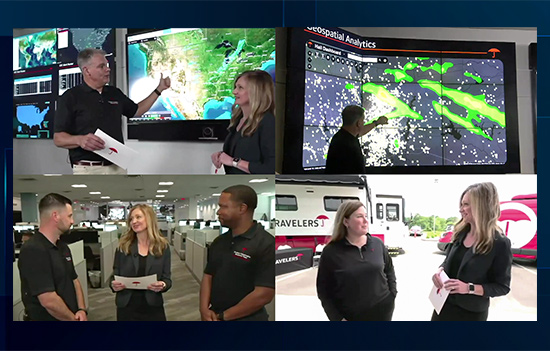
Live from the CAT Center: Where Expertise Meets Innovation
Viewers joined us in the Travelers National Catastrophe Center to learn how we monitor weather, risk and exposure in real time, and how our industry-leading AI and machine-learning tools help us assess damage quickly, ensuring we deliver on our promise to our customers.
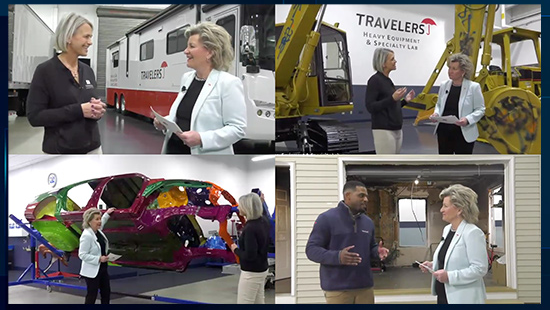
Live from Claim University: Behind the Scenes at Travelers' Flagship Educational Hub
In this webinar, we got an exclusive tour of Travelers’ 200,000-square-foot Claim University. We saw where our Claim employees gain hands-on experience with property, auto, heavy equipment damage, medical and liability scenarios and explored the immersive learning labs.
Reducing Wildfire Risks One Tree at a Time
Jad Daley, President and CEO of American Forests, and Michael Klein, President of Personal Insurance at Travelers, joined us for an in-depth look at wildfires, with a special focus on forests.

Related news
Travelers Institute: How aerial imagery and geospatial data have transformed property insurance
November 17, 2025 | Digital Insurance
Holiday season agent playbook: Turning risk prevention into client touchpoints
November 14, 2025 | Insurance Business Magazine
How much do you know about insuring your home?
September 25, 2025 | The Washington Post