Mental Health at Work: Workforce Well-Being Guidance for Leaders and Teams

Mental Health at Work: Workforce Well-Being Guidance for Leaders and Teams
March 4, 2026
Wednesday 1:00 p.m.-2:00 p.m. ET
Key takeaways
- Mental well-being is a continuum, and no industry’s workforce is immune to challenges.
- Workplace mental health affects productivity, sick time, engagement and retention. Lack of employer support could be costly.
- According to a recent National Alliance on Mental Illness poll, 78% of managers say they engage in mental health conversations, but only 32% strongly agree they have the resources and training to do so.
- Travelers’ workers compensation data shows that mental health drives recovery outcomes.
- When paired with supportive leadership and culture, technology can broaden access to mental well-being support.
Mental health is no longer a topic to be avoided at work. It’s a critical factor impacting employee well-being, productivity and overall business success. Speakers from Hartford Hospital’s Institute of Living, the American Psychiatric Association and Travelers explored mental health as a continuum and its connection to workplace safety. The panel provided actionable mental health strategies for leaders and managers to help support worker well-being, strengthen organizational resilience and help them better understand emerging trends in workers compensation programs.
This program is presented as part of the Travelers Institute’s Forces at WorkSM initiative, an educational platform to help today’s leaders navigate the shifting dynamics of the modern workplace and prioritize employees and their well-being.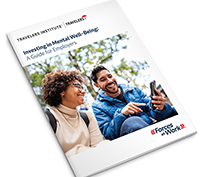 Investing in Mental Well-Being: A Guide for Employers
This white paper explores the importance of mental health in the workplace and introduces strategies employers can implement to help create a supportive and thriving environment.
Download the Investing in Mental Well-Being: A Guide for Employers white paper.

Host
Joan Woodward
President, Travelers Institute; Executive Vice President, Public Policy, Travelers
Speaker
Javeed Sukhera, M.D., Ph.D., FRCPC
Chair of Psychiatry, Institute of Living; Chief of Psychiatry, Hartford Hospital
Speaker
Heidi Christensen
Director, Center for Workplace Mental Health, American Psychiatric Association Foundation
(SPEECH)
[AUDIO LOGO]
(DESCRIPTION)
SLIDE. Text: Wednesdays with Woodward (registered trademark) Webinar Series. The logo appears on a laptop screen sitting on a desk next to a red mug with the Travelers umbrella logo on it in white. Logos: Travelers Institute (registered trademark), Travelers.
Joan Woodward speaks to us in the corner of the slide from her office.
(SPEECH)
JOAN WOODWARD: Hi, everyone. Welcome, I'm Joan Woodward, President of the Travelers Institute. Thank you so much for joining us for another Wednesdays with Woodward episode. Each week, we try to bring you very interesting conversations that matter to us, ones that resonate with our audience. And again, thanks for filling out those surveys because we're bringing you the content you've asked for.
(DESCRIPTION)
SLIDE: About Travelers Institute (registered trademark) Webinars. The Wednesdays with Woodward (registered trademark) educational webinar series is presented by the Travelers Institute, the public policy division of Travelers. This program is offered for informational and educational purposes only. You should consult with your financial, legal, insurance or other advisors about any practices suggested by this program. Please note that this session is being recorded and may be used as Travelers deems appropriate. Logos: Travelers Institute (registered trademark), Travelers.
(SPEECH)
Today, we're going to talk about a very important topic, which is promoting mental well-being in the workplace and also in our communities. But before we dive in, I want to start with a quick disclaimer about today's program.
(DESCRIPTION)
SLIDE: Text: Wednesdays with Woodward (registered trademark) Webinar Series. Mental Health at Work: Workforce Well-Being Guidance for Leaders and Teams. Logos: Travelers Institute (registered trademark), Travelers. Master’s in Financial Technology (FinTech) Program at the University of ConnecticutSchool of Business. MetroHartford Alliance. Insurance Association of Connecticut.
(SPEECH)
I'd also like to thank our webinar partners today, University of Connecticut Master's in FinTech Program, the MetroHartford Alliance and the Insurance Association of Connecticut. So many of you have been part of our Forces at Work initiative over this past year, which is a new platform we launched to help us navigate the evolving workforce issues.
(DESCRIPTION)
SLIDE: Logo: Forces at Work (service mark). Text: 1, Risk Management and Insurance, 2, Labor Market, 3, Leadership and Management, 4, Talent and Development, 5, Employee Well-Being.
(SPEECH)
Our programs draw insights from workers compensation, and they offer professional development, like strengthening your negotiation skills. So we've also featured some top economists on the labor market.
(DESCRIPTION)
SLIDE: Employer Guide for Emotional and Mental Well-Being. View our position paper here. A QR code with a red Travelers umbrella logo in the center appears below. The cover of the guide appears, showing a picture of a smiling couple looking at a phone together outdoors. The text reads: Investing in Mental Well-Being: A Guide for Employers. Logos: Travelers Institute (registered trademark), Travelers, Forces at Work.
(SPEECH)
As part of that platform, we published an employer guide, “Investing in Mental Well-Being,” with practical steps you and your organization can use to strengthen mental health support in your workplace. If you haven't had a chance to read it, I really encourage you to check it out at travelersinstitute.org.
In the spring, we recognize National Stress Awareness Month and Mental Health Awareness Month. So here at Travelers, we are doing our part to really try to bring awareness to those two important topics. And on the program today, we're going to explore actionable steps. That's really important that we provide you with some actionable steps managers can take to promote healthier and more resilient teams. So
(DESCRIPTION)
SLIDE. A smiling photo of each speaker appears. Text: Javeed Sukhera, M.D., Ph.D., FRCPC, Chair of Psychiatry, Institute of Living; Chief of Psychiatry, Hartford Hospital. Heidi Christensen, Director, Center for Workplace Mental Health, American Psychiatric Association Foundation. Claude Howard, Vice President, Workers Compensation Claim, Travelers.
(SPEECH)
we're joined by three outstanding guests, who actually already participated in one of our symposiums in Massachusetts last year. That was an in-person session where we had a couple hundred people gather, and it was so impactful that we knew we had to bring this conversation to our national audience on this webinar.
So, first up with us is Dr. Javeed Sukhera, who is the Chair of Psychiatry at the Institute of Living and Chief of Psychiatry at the Hartford Hospital in Connecticut. He's also a medical school professor with Quinnipiac University and a researcher, whose work focuses on reducing the stigma around mental illness and mental health challenges in the workplace setting today. So he's going to share practical insights on supporting worker mental well-being and being more resilient in our workplace cultures.
Next up is Heidi Christensen. Heidi leads the Center for Workplace Mental Health at the American Psychiatric Association Foundation. She works with employers nationwide to strengthen mental health literacy, reducing the stigma and implementing strategies that really can support employees at all levels, no matter what level you're at.
So then we have our very own, my friend, Claude Howard, who is Vice President of Workers Compensation Claim here at Travelers. He has a very big job. We're one of the top writers of workers compensation in the country, as many people know. So he brings valuable perspectives on how mental well-being influences return-to-work outcomes. Really, really important stuff. How we can get our employees back in their chairs sooner, and they have a healthier outlook.
So we're thrilled to have all three of you with us today. Thanks so much for joining us.
(DESCRIPTION)
The screen splits into quadrants, each one showing one of the speakers, each speaking to us from their offices: Joan, Heidi, Claude, and Javeed.
(SPEECH)
Alrighty, so, Claude, before we jump into the discussion, can you kick us off with some definitions? So let's level set here. When we think about mental health, it can be a broad and maybe, abstract term. What exactly are we talking about when we say mental health in the workplace?
CLAUDE HOWARD: Well, Joan, thanks for the question, and thank you for inviting me here. It's a privilege to be in this conversation, and I appreciate your passion around this topic.
We think that this topic is an important one for health and well-being of businesses. Mental health in the workplace is not just for diagnosed conditions. It's a spectrum, and that framing matters enormously for how leaders show up. If you look at the Travelers Institute white paper “Investing in Mental Health Well-Being,” we define mental health as comprising the emotional, psychological and social well-being of an individual. It affects how we think, how we feel, how we act. It influences our ability to handle stress and interact with others and make choices.
So mental health is not a fixed state. Mental well-being exists on a continuum, not just diagnosed conditions. It ranges from flourishing and thriving all the way to struggling and experiencing crisis. So on any given day, you, me, all of us, each of us will be somewhere along that spectrum. And as I consider that or think about that, this means that leaders should not be waiting for a crisis to engage their teams. The opportunity and the responsibility for all of us is to pay attention across the full range of that continuum.
Since we got Heidi here with us, I'm going to share an external statistic from the American Psychiatric Association survey that was done recently, and it brings it to life. That survey actually reflected that 92% of workers said it was very or somewhat important for them to work for an organization that values their emotional and psychological well-being. And then 77% of workers report experiencing workplace stress in the last month. So it's not just a crisis population, it's the everyday workforce.
And so from our vantage point, as one of the leading writers of workers compensation, we see that psychological and social risk factors deter recovery after workplace injury. In workers compensation, we know that mental well-being is a contributing factor to both injury prevention and recovery post-injury. And our data shows that the disability duration is 50% longer for injured workers that have a psychological or social risk factor. All these things are extremely important as we think about this.
So when you talk about mental health in the workplace, we're talking about the full continuum, from everyday stress and strain to symptoms to diagnosed conditions. And it's important for leaders to understand where their people are at at that range, and then they need to look for tools to respond appropriately at each stage. And that starts with training, it starts with the leaders taking care of their own mental health and being there and engaging with their teams.
JOAN WOODWARD: All right. Thank you for that-- getting us off the ground here. So, Heidi, I want to go to you because you have the privilege of talking to many, many large employers, medium and small employers.
(DESCRIPTION)
Heidi nods.
(SPEECH)
And you're hearing the buzz about what's going on in the country. So what is the prevalence of mental health issues nationally? And what does that mean in the workplace?
HEIDI CHRISTENSEN: Sure. Thank you so much, Joan. And thank you. I, like Claude, I'm so happy and grateful to be continuing this conversation with you all.
Well, speaking nationally, we know that 50% of the world's population will experience a mental health disorder in their lifetime. And what's tricky about that is a third of those folks will suffer without treatment. But to put that in perspective, across the country, mental health conditions are more common than cancer, diabetes or heart conditions. And that has significant implications for the workplaces, as Claude was just saying.
But employees don't leave their mental health challenges at the door, right? They're showing up as a whole person. They may be overwhelmed as a caregiver. They may have financial burdens. They may be grieving a loss. They may be worried about the world, and all those stressors and those distractions are going to come to the workplace with them, where that work culture may or may not be a particularly supportive one. And for an employer, that lack of support is very costly.
And if I could just share a few stats. A highly stressed employee takes eight times more sick days and disengage at four times the rate of their low-stress peers. And it's estimated that there is a $12,000 loss in productivity for each highly stressed employee per year. Those are real numbers. Americans are taking more mental health-related leaves of absences than the total combined absences for accidents, cancer, COVID, heart disease and heart attacks.
And we're mindful of the specific industries that have accelerated levels. They're experiencing accelerated levels of mental health challenges. The construction industry reported this year, 64% of their workers experienced anxiety or depression in the past year, which is a sharp rise of 10% in just one year. In the oil and gas and extraction services, we are losing close to 74 out of every 100,000 workers to death by suicide. That's over four times the national average. And we have serious concerns in the legal profession and the healthcare professions.
These are really tough numbers. And behind them are real people with their loved ones just seeking access to critical services and the support they need. And if I could just say, I just wanted to touch on what-- how employers are doing in response to these critical numbers.
We know that 88% of HR and benefits leaders have prioritized mental health for implementation strategies across their workforce. And one way that organizations are making-- being able to tell the impact of their benefits, and they're creating a culture of wellness, is by tracking employee engagement. And we've been hearing that term a lot. But employee engagement as defined by Gallup, who does a lot of the work in this space, is the level of involvement or enthusiasm a person has for their work or workplace.
Current surveys are revealing that engagement is falling across the globe, and we can talk about that more later. But I think what's really relevant for today's conversation is that mental health and employee engagement rise and fall together. An employee's level of engagement can reflect their mental health and well-being and vice versa. When an employee feels valued, supported, connected, their engagement, their contributions to the workplace is going to be stronger. And on the other side of that kind of parallel relationship, it's estimated that poor mental health reduces engagement by up to 60%, while low engagement increases mental health risks by six times.
So, the practical side of this is employers who are seeking to support workplace mental health can benefit by focusing those efforts on the levers that drive engagement. So work-life balance, clarity of role and expectations, recognition for work and contributions, opportunities for professional development. There's so many. And significantly and especially for younger generations, opportunity for connection and fellowship in the workplace. Do they have friends in the workplace?
So these are levers, they're policies, they're programs and resources that nurture and inspire engagement, and are, in turn, the same levers that will support mental health and well-being in the workplace. So that's kind of a hopeful pathway, I think.
JOAN WOODWARD: That's wonderful. We know there's a Gallup engagement survey out there that a lot of companies do, and there's definitely some indicators about how to motivate your employees to be more engaged. And I think what's interesting, I think, the No. 1 thing is do you have a best friend at work, is what-- if you have friends at work, then you're more highly engaged. OK, that's a different topic.
(DESCRIPTION)
They all smile.
(SPEECH)
So, Javeed, I want to go to you. Why is this issue so important and critical now? What's different now versus, say, two years ago, five years ago, 10 years ago?
JAVEED SUKHERA: Yeah. So I think we are living in a cross-section of history where we're not just dealing with the same old kind of stress. What we're seeing a lot in workplaces across the country is what I would call identity-based stress. There are people who aren't just carrying kind of a workload, but a broader stress and uncertainty, a kind of chronic strain about whether they can feel safe or rooted or connected.
People right now are asking questions of themselves like, do I fit in here? Do I matter? Do I belong? And how workplaces address that kind of uncertainty has implications. If questions like that go unheard or people feel invalidated, there are implications not just for well-being, but there's emotional implications. There's implications for trust, as was being shared earlier, implications for engagement, and then further downstream, for retention and for recruitment.
We know from research, for example, that essentially when someone's not feeling well, how people respond to that kind of disclosure has huge implications for their ability to work, their ability to stay and their stigma. We know leadership plays a role, as well. So we have to remember that people heal better in environments where they feel like they don't have to constantly question their worth, where they feel affirmed. And that's why right now, more than ever, workplace well-being is not just about reducing stress. It's about helping foster a sense of agency, a sense of dignity and factors that are really foundational to healing and sustainable return to work.
JOAN WOODWARD: All right. Thank you for that, doctor.
Claude, I want to go to you because this is a really important question around workers compensation, which is how is the insurance industry, particularly through our workers comp programs, responding to mental health challenges in the workplace today?
CLAUDE HOWARD: Well, workers compensation sits at a unique intersection of physical injury and psychological well-being. And what Travelers has learned from years of data and innovation here is that you can't simply address one without the other. When an injured worker comes into the workers compensation system, we think more about the-- we think more about the physical injury, but we know that psychological and social risk factors, things like pain catastrophizing and fear avoidance, perceived injustice, a lack of positive coping skills, those things can dramatically derail recovery.
Would it surprise you if I told you that 40% of injured employees losing time from work have one or more psychological or social risk factors? And we know that we have those things come into play, distraction. That's a leading cause of workplace accidents. So think about how mental well-being of our employees can contribute to workplace accidents, and how that all comes together. So understanding all of that and screening for psychosocial factors to help with looking at what's up next, we can offer solutions to that injured employee. Active listening, empathetic communication, and when necessary, interventions to overcome those psychosocial barriers that can help the recovery process be better and faster for the injured employee.
I mentioned earlier that when those factors are present, outcomes are 50% worse, longer disability duration, higher costs, harder road to getting back to work and returning back to work in a meaningful way. So when I talk about psychosocial screening, that's central to our approach. We've developed tools to identify these risk factors early in the claim and not just through blunt and intrusive questions, but through thoughtful interaction with those injured workers. And things will surface and signals will naturally come about.
We deploy our nurse case managers to provide personalized care management and guide injured workers to the right support system and the right tools at the right time. Our nurses and our claim professionals are trained to recognize those psychological and social signals and respond with empathy and direction.
And then if you think about communication and helping people understand where they're at in the process, early communication and expectation setting have proven critical to improving return-to-work outcomes. Injured workers who feel that they're supported, heard and informed, their paths fare much better than those that are left with uncertainty.
And then we actually have leveraged, actually invested in a technology-enabled support of an app that we have out there-- Wysa for Return to Work. And that app provides anonymous AI-supported coaching, which includes sleep support, cognitive reframing. That's available to injured workers 24/7. Nearly all injured workers that have used this have reported it helped with the recovery, and we see 20% better outcomes for those that engage with it.
One last thing I want to bring up in this space is that as you think about our businesses and they're thinking about their pre- and post-injury management plans and how they might partner in with risk control, there's a big part that falls on and comes over to the leaders, the managers, the supervisors that are working with their teams. And here's what concerns me most about those leaders that we're asking to be involved in pre- and post-injury management. The ones that are most positioned to make a difference across that continuum that I talked about, many of them don't feel ready to do it.
There was a recent National Alliance on Mental Illness poll that focused on full-time employees-- full-time workers that worked at companies larger-- larger employees, 100 employees or more. They found that most believe it's appropriate to talk about mental health at work, but they may not be prepared or feel comfortable doing so. Seventy-eight percent of the managers say they engage in these conversations, but only 32% strongly agree that they have the resources or training to do so. So that highlights that gap of confidence and support.
And so if you think about that gap, we got three-fourths of those managers already having these conversations, but fewer than a third are feeling like they're fully equipped. They're operating without a framework, without confidence and often, without organizational support. So think about that. Think about how that can actually fit into those plans.
There was a Spring Health Study. I was talking to Heidi about this. The Spring Health Study found that employees with untreated depression incur 149% higher annual healthcare costs than their peers. So you zoom out from work comp and look at the much broader impact, behavioral health is not just a separate line item. It's a major driver of overall medical spend and influencing chronic conditions and high-cost claims. So the insurance industry is recognizing this connection more and more. And our approach is built around the whole person recovery, addressing the physical, the psychological and the social altogether.
JOAN WOODWARD: Wow. I mean, talk about innovation at Travelers. We have a 24/7 app using AI for our workers compensation claimants. That's really cutting-edge, so thank you for that.
Just a quick question on the industries, Claude. Heidi mentioned, like construction, there's a pronounced mental health challenge with certain industries. How can you discuss some of these challenges and the opportunities to address them by sector, if you will?
(DESCRIPTION)
SLIDE: Text: Understanding Psychosocial Risk Factors in Injured Employee Recovery: Why it matters. Risk factors impacting recovery are prevalent across all industries, affecting employees universally. This widespread presence underscores the critical need to identify and address these factors, ensuring a healthier workforce and improved recovery outcomes. A bar graph titled Psychosocial Risk Factors by Top Industries shows percentages of various industries: 34.1% manufacturing, 39% services: health, education, entertainment, 36% retail, 37% wholesale trade, 35.5% construction, 39.2% Services: Low hazard, 37.5% services: all other, 39.5% transportation and public utilities, 36.3% all other. Text: 40% of overall injured employees with a lost time claim have psychosocial risk factors to recovery. Based on Travelers Internal Claim data from March 2021 to August 2024. Images show colleagues wearing hardhats at a construction site and colleagues gathered around a computer in an office.
(SPEECH)
CLAUDE HOWARD: Absolutely. And I'll start with, no industry is immune, right? Our data makes that clear. If you look at the graph that's being presented there, every industry has this. But construction is an interesting case study. You already heard from Heidi that mining and extraction has some extreme challenges. Construction does, as well.
So construction workers, they face a convergence of challenges described as that perfect storm. Physically demanding work with high injury rates, a higher prevalence of acute and chronic musculoskeletal pain, and workers that have one or more chronic conditions. And so those challenges that come into the construction work, they actually lead to those risk factors that can be a struggle for us.
You also look at construction workers. Our most recent study that was out there from the CDC reports that the construction industry had the second-highest rate of suicide among its workers. Heidi had mentioned mining, oil and gas extraction workers were No. 1, but construction is No. 2. So when you think about the fact that they have at least one musculoskeletal disorder and ongoing pain, there's a number of things that could come into play for them as it relates to depression, chronic pain or even the fact that they might go and try to use opioids.
But this cuts across all the industries. Nobody in this audience gets to say, it's not my industry. It's a universal challenge. And you see that our data on this slide here shows that those risk factors are showing up at least 30% to 40% rates across all major industries, regardless of if it's manufacturing, retail, healthcare, transportation, all of that.
JOAN WOODWARD: OK. Thank you, Claude.
Javeed, we're going to ask you about some of the main factors impacting an injured employee's recovery, maybe the healing process and even the readiness to return to work. And what are you saying what are the factors that really impact these?
JAVEED SUKHERA: Yeah. So when people return to work, they're not returning to work in a vacuum. They're returning to work to a supervisor, to a team and to a system. So it's important to keep that in mind. We know from research that there are four key drivers in the literature.
The first is supervisor response after disclosure. The second is trust and psychological safety. The third is workplace social capital, so things like relationships, perceived support, team cohesion. And the fourth is the availability of concrete and clear accommodations. Things like flexibility, assistance, support and recognition. But clarity is key there, not something that's vague or abstract.
We know, again from the literature, that supervisors who show empathy, who listen, who respond constructively when someone reintegrates into the workplace can actually improve return-to-work outcomes, for example, after depression. But we also know is the contrast that ambivalent, inconsistent or harsh supervisors can actually prolong distress and impair recovery. Experiencing that kind of harsh supervisory style is associated with higher depression, higher anxiety, higher fatigue and sense of exhaustion after someone re-enters.
So the most important piece of all of this, though, comes back to that sense of connection and that sense of workplace social capital. We know that it actually mediates that return to work so much that it even mediates against something like a harsh supervisor. People feel that they are members of the team that they're connected to that are part of their community, that can mediate even the most challenging of circumstances. So these are just a general collection of some of those factors.
JOAN WOODWARD: OK, very good. Thank you.
Go to you, Heidi. Beyond workers comp, what programs or practices have you seen other organizations use successfully to support worker-- some examples of what other things that employers are doing successfully?
HEIDI CHRISTENSEN: Absolutely. Thanks, Joan.
Yeah, we're seeing a lot more creativity and holistic efforts out there from employers. I mean, the EAPs are really changing and evolving. I mean, Claude mentioned, you have 24/7 access through an app. I mean, these digital platforms are really revolutionizing the access to care through text-based support, peer-to-peer connection, apps, virtual counseling, so people can get the assistance they need when they need it. We're seeing a lot of self-guided tools that are also coming through the EAP for mindfulness, short meditations. When people meet stress, perhaps, in the middle of the day or whenever they do need it.
But I think what's really exciting, too, is the growing movement of wellness programs that are addressing that whole person. It could be wellness and nutrition coaching, legal and financial resources. Like, for instance, financial stress is among the top three challenges workers are facing right now. And if they are worried about debt or they're trying to cover their bills, that stress and distraction is going to show up at work. And it could be easily overwhelming and could be actually a safety issue when you come down to it for many industries. And we know that folks are putting off retirement until later because they're trying to manage their-- they just can't afford to retire. So that's having its impact.
But I think it's really-- I heard this in a webinar just last week. I mean, a lot of employers are just-- on this financial assistance piece. Employers are offering programs on financial basics, but really what needs to be addressed, oftentimes, is someone's relationship to and their behavior around money. And that is kind of a deeper concern. And that's when recognizing and having those resources through counseling and coaching takes another-- has another impact and another help.
So we have some other things we're talking about. Oh, of course, the center. I mean, the center and the foundation, we advocate for-- that every employer should have some form of mental health training, whether it is to increase the mental health literacy across the organization with basic awareness and skills for communicating with one another when the time is-- when it's needed. But there's also, some employers, lifting up the capacity of individuals within the organization to be mental health ambassadors or peer specialists and navigators.
We work with an HVAC refrigeration company, and they have-- their company has invested in building the capacity of peer navigators to be present throughout the organization, because they have a lot of veterans that are working there. They have folks that may be struggling and in recovery. So that, I think, is one of the most hopeful movements that we're seeing.
Certainly, elevating support for caregivers. We've talked about this so many times, given that 70% of workers are caregivers. I'd love to even do a poll on this webinar to see how many people out there are concerned today about a child, an aging parent or a disabled family member, or any combination of that.
So caregivers are supported by flexible extended leave policies like wellness recharge days. It's just a piece of it. But we're also seeing that caregivers can benefit by participation in an Employee Resource Group, or an ERG, you'll hear them referred to. They're voluntary, they're worker-led around a mutual interest-- in this case, caregiving-- and it offers, oftentimes, such needed peer support and exchange of resources, a safe space to talk about what's happening in your life that's impacting your ability to be present on the workplace.
And companies can invest in them. They can invest resources. They can invest in community partnerships or actually just giving people time during the workday to participate in an ERG, right?
So we always talk about physical wellness. I mean, Claude, you hit that point out of the park. I mean, they are so interrelated. So how is wellness-- physical wellness incorporated? Yoga, sports teams, and even I know people on sports teams in our organization that are the-- I don't think they're there for the athleticism. I think they're there for the camaraderie. But whatever happens, people are out there together. The recognition programs we've talked about, feeling appreciated is such a powerful boost to well-being. I mean, you can't be-- when people feel seen, they do their best when they get to the office.
So that's just a couple of ideas out there. I hope they're helpful to people.
JOAN WOODWARD: That's wonderful, Heidi. For my colleagues at Travelers, if you don't already know, we have many employee resource groups here. Our network system, there's a caregivers’ network, one of our most popular, as well. So, thank you for all that.
So, let's talk about actionable steps here. I want to go back to Dr. Javeed here. From your perspective, where's the line between the kind of everyday pressure we're all feeling that helps people get motivated and perform, and then the pressure that becomes unhealthy or signals something much deeper? And how do we identify that?
JAVEED SUKHERA: Yeah. So, as you said, pressure is good. Intensity is good, right? It helps us to achieve. It gives us inertia, a sense of momentum. The way that I think of it, though, is that what we want is for there to be a steady back and forth. There's a pressure, there's time for rest, there's an engagement with that.
What we start to get concerned about is when the stress or the residue of things accumulates and it builds up over time, and then it leads to some sort of impairment or begins to interfere with someone's functioning or their ability to actualize their potential. There's a couple of signs of that. Things to consider.
The first is when the stress starts to persist. So there's something, it accumulates. It's not just one day, it's maybe a week. It goes beyond what's happening in that immediate sense.
The second is if it disrupts things for an individual. So if it starts to disrupt things like sleep, which is a huge, huge test, if it disrupts the recovery from something like a physical injury, or their ability to detach or disconnect, to get time back or to fill their cup.
The next thing is if someone gets stuck or ruminates. Rumination, this thing where people kind of experience this constant sense of not being able to get away from or let go of some of those stressful thoughts. That's a really important sign that can contribute to things like dread, shame or emotional exhaustion, which actually also has physical consequences for people's health.
And then the last is the piece about reducing functioning. So someone's not coping well, they're struggling, they're impaired, they're not quite performing or being able to do what they need to do. So we need to be asking ourselves not, is work stressful, because yes, work can at times should be stressful. But it's about, is this stress becoming something that's harmful, something that's cumulative, or something that's impairing or interfering in some ways functioning.
JOAN WOODWARD: All right. Thank you so much for that.
So let's move on. Heidi, I want to talk about what a manager can do when they notice the sign of concern. What's the framework to assess that or help them open a conversation? And suppose, some people are extroverts, some people are introvert, and there's nothing wrong with either of those. But how do you approach someone in a supportive conversation when you see some signals or some signs of concern?
HEIDI CHRISTENSEN: Yeah, yeah. Yeah.
Well, the APA Foundation uses a framework called Notice. Talk. Act. to support colleagues in the workplace who may be experiencing a mental health program, a concern. We actually have-- say a program. It's a virtual training on Notice. Talk. Act. at Work that supports this framework. But look, most of us are not Dr. Sukhera. We are not mental health professionals. We aren't going to see or really identify a mental health condition in a coworker.
But what we do have the capacity to do is to notice a shift or a change in a colleague or take that-- take an appropriate action. I mean, we can notice if a colleague who's always on time and always makes deadlines is just not doing so, or that they seem irritable or easily overwhelmed when they're normally one of the most even-tempered folks on your team.
And so the changes we are noticing may be a sign of a mental health concern or that someone just needs support. And it's important that each of us has the ability to notice these changes, have the basic communication skills to talk and have a timely and appropriate conversation, and also to act to connect that worker to the resources and support that they need. So that's the Notice. Talk. Act.
Like, most of us have good intentions. We all want to say, how are you? How are you doing today? But the hesitancy sometimes is because we're afraid of the answer, not because-- it's like, what do I do with that information? How can I really be responsible with what someone tells me? And also, I want to make sure I don't say the wrong thing in response to what they say.
So we believe that workplace mental health trainings that increase awareness and provide the skills to have an empathetic and supportive and compassionate conversation is one that is really foundational to a culture of wellness, especially at a time when interpersonal skills are becoming somewhat of a lost art. I mean, we've got younger generations in the workplace who really have not had the experience for in-person, person-to-person interactions. It's just not how their work-life has really been shaped.
And so, I know we know the Gen Z generation is considered one of the most digitally connected generations in the workforce. They're also reported to be the loneliest generation. A term was coined for them, hyper-connected isolation, and how the proliferation of AI is disruptive, supportive to that dynamic is really unknown. So we know that interpersonal skills and emotional intelligence is something that technology really can't replicate. I mean, that ability to read between the lines, respond with empathy, offer truly genuine support and build trust with another human being is really what's going to keep us grounded and collaborative and really engaged in the workplace.
JOAN WOODWARD: And how do those conversations differ across demographics? I know the older generation, of which I'm counting myself. It was a stigma or there's a taboo about talking about this stuff at work. So how do you approach different demographics? You mentioned one demographic, but what about--
HEIDI CHRISTENSEN: Gen Z generation. Well, I think, I mean, the skill building goes across the-- I mean, the skill building is also for managers, who tend to be in those older-- those leaders tend to be in the older bucket. So it's almost more important, those that already have interpersonal skills, to be able to use them and apply them appropriate. And they're also from a generation that's more hesitant. We didn't talk about mental health.
I mean, there was a sense of stoicism always in those days. You show up. I mean, I remember when you wouldn't even come to work without a suit on, let alone the more relaxed dress and style of today's workforce. So that's going to have a little bit of-- and that stoicism is really showing up in those industries that we were talking about earlier, Claude, when they have these male--
But to answer your point, the younger generations coming in, like, they want to see the mental health offerings be made. I don't have the stats right in front of me, but they want to see that they will be supported. And they will make a job decision based on that--
JOAN WOODWARD: Yeah.
HEIDI CHRISTENSEN: --on those availabilities. So it really is across the range.
But I mean, the caregiving, we have the millennials that are really suffering from that caregiving of children and older parents. We have younger generations coming in and really having a different take on what does a workday look like. So it's really all over the board. And I think the tools that we're working on, some tools right now that are going to be very specific to those various needs. But truly, mental health training across the board is essential just to be able to have that language and to understand.
JOAN WOODWARD: OK. We're going to pause this part of the webinar because we're going to turn the questions to the audience now. I have an audience polling question. We do this sometimes with our webinars. Can we put that on the screen? And we're going to ask our audience members to please, let us know on any one of these.
The question is, below are five practical steps managers can take to help promote mental well-being at work. Which step would you like to do more of? Where could you most improve? And then we're going to take a look at the results here. So please, go ahead and vote. Give it a second. OK.
Taking a look at these results, I'm going to go to you, Claude. What stands out to you here, and can you share some specific examples? Looks like recognizing distress is one of the biggest one. But give us your thoughts on this and any examples that workers compensation initiatives or programs that have been successful to address these.
CLAUDE HOWARD: Absolutely. Looking at this, I'm not surprised the results came in where they did. I will note, every one of those areas have people that are saying, boy, I would like to work more on those aspects or those things. I think that actually just reemphasizes the need for training and why that training is so important in this space, so we can improve on how we support our teams and support our coworkers.
That whole recognizing signs of distress, that is a big one. I mean, you heard it from Heidi earlier. She talked about the APA Foundation calling it out as Notice. Talk. Act. In our white paper, we call it out as identify, ask and listen.
But recognizing those signs of distress. Are they disheveled? Are they not attentive? Has their mood changed? Being able to see those things and then that identification, moving next to asking and having the conversation, those things are extremely important so you can bring them back in the fold and provide support for them. When you see changes in work engagement or productivity, you should be checking in and making sure that that or any other uncharacteristic behaviors are being identified.
I will throw in here, when you see those, as a leader, making sure that you can point them to helpful resources like EAP or other resources that are available or in critical situations, 988 for suicide or crisis lifelines so that you can help them out, having those ready and being prepared for those situations are extremely important.
As I think about workers compensation and some things that we have done in that space, some initiatives and programs, I mentioned Wysa earlier, but I'll talk about some of the things we have folded into our work system, tied to extensive research that we have done for years on chronic pain.
As you think about chronic pain, we have data modeling and identifies injured workers that are at risk in decompensating into chronic pain, and with chronic pain commonly will come these factors that we're talking about, tied to psychosocial issues. By using that early severity predictor program, we have seen outcomes that are 50% better in regards to people that are outside of that. The early identification, though, the more holistic care and reducing the stigma that prevents workers from being able to talk about this is important.
You see that last one down there about leading by example. Leading by example, being that person, that leader on the floor, that coworker that is actually having those conversations, that's so important. When a leader is being vulnerable, they're being transparent, they're talking about things that they're going through, and then checking in and having those same conversations, that's extremely meaningful. I've seen it with a number of leaders here at Travelers that I've worked with, where they're talking about their personal situations and how it folds in, and that empowers everyone else to feel like they can engage in those same conversations.
JOAN WOODWARD: Yeah, absolutely. And for us, anyway, for me, I mean, I look at our CEO, Alan Schnitzer, and he made mental health and well-being in the workplace a priority a long time ago. Maybe 10 years ago, he was talking about mental health for employees. So I'm feeling really good about-- and then that allows others, as you say, others down the line of command to talk about their journeys, as well.
So all right, let's talk about the bright spots. So, Dr. Javeed, I want to talk to you about what gives you optimism for the future of workplace mental health? What are you seeing as bright spots?
JAVEED SUKHERA: Well, it's often hard to think of optimism, but I think that many of us are optimists because that's just who we are. So I am an optimist. I think there's two things for me.
One is actually a younger generation in the workplace. I know that there is a sort of sense of these intergenerational dynamics, but I work with a lot of young people who are much more attuned to emotion and things like trauma and adversity than, I think, my generation was. They have a vocabulary for it, and an ability to describe it in a way that I've never seen before. So I do think that, in many ways, their courage will help challenge some of our norms and change things.
But the second thing is, the thing we're all talking about, which is AI. I think AI actually makes me very excited. There's so much potential for what this technology can bring. Yes, there's a lot of fear and a lot of tension, but I think there's three differentiators around AI and well-being. There's three things to remember.
The first is, is AI a partner. It's something outside of you, something that can help you. The second is to make sure that AI is being used to help you get better or do better, and not to replace or deskill. And the third is to always verify and triangulate and check what you see or read within any AI system. If you're doing those three things, then I actually think AI can help transform our ability not only to understand our well-being but also transform workflows so that we can spend more time connecting with one another and doing the things that we love.
JOAN WOODWARD: OK. To my audience, please drop your question in the Q&A. We're going to try to get to as many as we can today. And thank you, also, for those who registered and asked questions during registration. We'll get to some of those, as well.
All right. Now, to you, Heidi. Same question. So what are the bright spots? What gives you optimism?
HEIDI CHRISTENSEN: I agree. I think, it is the younger generations that are coming into the workplace. I think there's going to be a challenge as we try to figure out the multi-generational dynamic. But just the openness. And I work with a team of a lot of young folks who are basically that 20 to 30 range, and their willingness to talk about what happened in their counseling session, or that, perhaps, their medications are-- they had a change in medication that day. And so, as someone on the other end of the spectrum, one of those things to be able to say, well, what is that like for you? And I have learned so much from their presence, their openness, and their expectations. That is going to reduce stigma for everyone across the board.
So the more that they're leading with that idea of we're normalizing that mental health is the same as health. I mean, health is mental health, and mental health is health. And that it shouldn't have this kind of oh, it's over here kind of experience in the workplace. So I think it's great. That's the brightest spot for me.
JOAN WOODWARD: All right. Claude, same question. Bright spot for you.
CLAUDE HOWARD: The fact that we're having this conversation on-- in this kind of forum, and we've had this conversation a number of times, Joan, that gives me great optimism. That the industry, companies, businesses are recognizing how important this conversation is, and that it does hit their bottom line. I mean, we talked about how if somebody has some of these risk factors coming into play and they're distressed, they have some mental wellness issues that are popping up, they could be missing time from work. They could be-- not just absenteeism. It could be presenteeism, where they're actually at work and not fully active in doing all that they need to do. So the fact of having this conversation and it hits the bottom line, I think, is truly, truly important.
I'll actually jump in with the same thing, though. Our young folks are actually challenging us to engage in these conversations more. All of my kids are in their 20s, and they challenge me every day with that kind of dialogue. And then I come to work, and I'm challenged with that kind of dialogue, as well. I think it's awesome.
And then the last part that I'll throw in there is as I think about this. The fact that I am seeing more companies, and I see it here at Travelers, where they are building a culture of caring and making sure that folks feel that there's a sense of belonging, it just opens the door for that kind of dialogue to take place, to make our workplaces a much better place to be.
JOAN WOODWARD: Well said, all three of you. And I'm going to add my own little personal kind of thought, as well, is it's not a nice-to-have. It's a must-have for businesses. It's not a nice-to-do. It's a must-do for businesses. And you're hearing all the reasons why.
I think if you layer on the Gallup engagement survey for employers-- and if you're out there and you have a business, and you haven't heard of this, just go online and look at Gallup engagement survey for employers. And there's many different versions of this. You can run it in your own shop. But if you have highly engaged workforce, that's where you want to be. And then you have a lot of folks in the middle, who are somewhat engaged. What's surprising in every organization, there are people are disengaged. And then there's another category, I think, they call it actively disengaged, working against the interest of your company.
And so the mental health continuum-- Claude, you say, I come in on one day versus another day, I might have different things on my mind. Doctor, I love what you talked about, which is folks who just can't let things go. And you may not think that's a mental health crisis, but if you think about those things every single day and you worry and you ruminate-- I think is the word you used-- those signs are sometimes hard to connect for managers and see. So all these different strategies I think are wonderful.
All right. Claude, have you close it out, and we're going to get to the audience questions. For leaders across the industry, what should they be preparing for mental health-related risk as they continue to evolve? Like, seeing around corners, what are we seeing around that corner, and how do we deal with it?
CLAUDE HOWARD: Well, there's a couple of things that are coming up that I would say are trends that are coming around the corner. And as you see, workers compensation's having more co-occurring or comorbidities in the mix, the claims are more complex. And now if you fold in mental health as a factor as well, it becomes more complex, and it's challenging. So recognizing that and looking at those things are big.
We are seeing our workforce is aging. And so with an aging workforce, the prevalence of comorbidities, they grow and intensify. When a worker has one comorbidity, the cost of that workplace claim doubles. If they have two or more, it's five-fold. So you factor that in along with mental health, there's a lot that we need to manage and work around from that perspective.
Dr. Sukhera actually brought up some of the exciting things that are out there, though, in regards to AI and technology. So when you think about AI and technology and the support that could be out there for leaders, there's tools that they'll be able to leverage that can help people reframe things. If you think about the broader landscape, there's more telehealth, which opens up more connectivity in regards to an immediate treatment that might be out there. There's digital coaching platforms to help people be able to engage in these conversations and give them additional support.
And then if you think about what's out there in regards to online psychology-- online psychiatrists that are available, online counseling is more prevalent. And it opens it up, and it makes it more available for folks that are out there on all of those different things. The technology aspects of this is exciting.
I will tell you, though, we need to continue, though, to recognize that with technology, it's not just the technology. You need to have the leader that is able to take that technology and build on top of that. It really gets back into you can have the tool, but if you don't have a leader that doesn't have a culture of caring, it is not supportive and not leaning in, the tool means nothing. So you need to have both in play, but that leader is the one that is going to help us really drive this forward.
JOAN WOODWARD: OK, terrific. So we have a lot of audience questions coming in. There's a couple around-- and I think, yeah, Kat Reed from Lockton, and then a couple other folks asked the same question. Maybe to you, doctor. Can you provide fresh perspectives surrounding team engagement exercises or team building? We think it goes a long way to being in tune with one another, but maybe some people don't like the team building day activity. How do you approach that? Or actually, to all three of you.
JAVEED SUKHERA: Yeah, so there's no real one-size-fits-all. I think that there are times that these types of activities can feel like a cringe, because people have had maybe negative experiences, or there's a sense that, like, it's supposed to be a retreat, but then it feels like work. Things feel forced and inauthentic. I think one sort of golden rule is informed consent. People should know why they're there and have informed consent to be there.
I also invite people to think about their own personal value proposition. Why are you doing the work that you do at a time right now? That helps connect to a sense of choice around where you are and reflect on where things could be. But I think that authenticity is what matters the most. When people come together, there is an amazing generative opportunity to get to know one another outside of our work and outside of those duties. And those simple generative spaces, whether they're over meals or team-building exercises, especially for virtual workplaces, can make the world of difference in terms of building that sense of connection and cohesion.
JOAN WOODWARD: All right. Heidi, you have a thought on that question?
HEIDI CHRISTENSEN: I was just going to say, I love the word "generativity" because I think that is really important. It's like we continue to learn, and we learn from each other, and we build on that learning together. And I know, sometimes, it's not about the one day or the one retreat, but how are we integrating these interactive modalities out there for our meetings?
Like, there's one platform called Liberating Structures, and it's all about these kind of practices that create generativity. So you take your wallflowers away from the wall. You get even your people who-- kind of makes people engage and build their learning on one another. And you can do that. Just stream it through the year. It doesn't have to be a one day, cringey, oh, my gosh, I really just feel uncomfortable space here. It can be really something that gets integrated as a culture. So, happy to share that.
JOAN WOODWARD: OK. Terrific.
Heidi, I'm going to stay on you because this question, I think, will be good for you. It's from Jeannine Plummer Knights at Utica Insurance. How can organizations better support mental health and emotional well-being in hybrid or fully remote environments where stress is less visible? Wonderful question. Came in from a lot of people. What are your thoughts?
HEIDI CHRISTENSEN: I'm so thankful for Jeannine for asking that question because I think that is very, very important question. We just released a brief on it, which maybe we can share in the chat. I sent it earlier.
But we know, working remotely has real benefits, but it has significant challenges. I mean, it has the reduced social interaction. It adds a great distance to the workplace, which can create a kind of a psychological distance from your colleagues. Blurred boundaries, the work time, the free time collapses. You may be free of distractions at home, but you're also going to have-- you're not going to be around others for that creative input.
And so we've created a set of practices or just ideas around how to integrate more social engagement opportunities, for instance, into your virtual meetings. How are you-- I mean, you're asking people personal questions, acknowledging wins and milestones. We used to do in my other workplace, ups and downs for the week-- what worked, what didn't work-- so that way just to get personal with one another.
I think it's really important to strengthen communication skills across the board when you're online. Is your camera on? Are you nodding when people are talking? Reducing multitasking, which is also a real energy pull on most people. But the idea of when you're multitasking, you're really not engaged. And then using those little tools, those reactions. I've been on with some organizations, and the hearts and hand claps are just flowing. You can feel the energy in the virtual space. So those kinds of things, using the chat really interactively.
I think what's also very important for managers is to use one-on-ones in a meaningful way. There's lots of ways to get a work update. We can do that in a variety of ways. So using that time so that it's more, how are you doing, not what are you doing. So really have a check-in with someone who's not present in the space with you on an ongoing basis.
And one of the things we've seen work also well is shifting performance reviews from ones that are more accounting for time and hourly activity to one that is focused on accomplishments. What did you accomplish this week? And that's very important, as we go back to that generational piece, where there's generations coming up who say, why am I there 9:00 to 5:00 when I can do my job-- you've given me this task. I've completed that task. So being more focused on the accomplishments is also a way to let people enjoy the remote working and not feel like it's just a burden.
JOAN WOODWARD: Perfect. Perfect. All right.
Javeed, another question here for you. Martha Capella, Acrisure Insurance. What is the most impactful yet underutilized workplace well-being practice that organizations should be implementing more today?
JAVEED SUKHERA: Yeah, so this is a fascinating, but tricky question. And what I would say is there's lots of workplaces that think that this is about implementing programming and add-ons and interventions. And what tends to be underutilized is getting to the root of creating a sense of choice and agency. It's redesigning, recrafting workplace experiences and workflows so that people have more choice and voice in things like scheduling, their workflows, problem solving around issues, and more of a say in influence or perceived influence on what gets done or decisions that get made.
This is important because control and agency actually reduce distress at the source, rather than asking workers to cope better with something that's unhealthy. And the challenge and why it's underutilized is that most organizations tend to think that doing things that are easier and more visible are actually helping the problem, when it's getting to the source of the challenge and allowing people have control over their working conditions that actually makes the biggest impact.
JOAN WOODWARD: OK. I think this has to be our last question. To Claude, Tia Wiley from Responsive Insurance. If mental health is directly connected to workplace safety, as we say, and business resilience, should it be embedded into the enterprise risk management framework, and if so, how? Wonderful question.
CLAUDE HOWARD: It is a great question. And the short answer is yes. I think we kind of discussed the business case for embedding this kind of work into your everyday practice. Because you think about the healthcare costs. We go back to that Spring Health stat that Heidi shared with me earlier about how untreated depression incurs a higher annual healthcare cost than their peers. It is important to actually fold this into your pre- and post-management strategies.
I would actually, as I give that advice, for ERM purposes, you should be looking at mental health risk as a risk as you look at operational risk, financial risk, absenteeism and productivity. You should be looking at that and all of that and leverage existing ERM structures to have some understanding of where your teams are at.
Adopting a culture of caring strategy, that's the first and most important step to elevating mental health from just a benefits line to a leadership priority. And that incorporates the training. If you look at what our white paper described as that culture of caring, it's making sure that the senior leaders are setting the example, and it's top-down. Everyone is in the mix on all of that.
And then finally, if you think about what's needed to actually make that go, you need to have implemented targeted controls, which would include training managers to recognize and address those signs of stress. You need to have policies that are clear about what would you allow for flexible work arrangements to improve work-life balance. What will you allow for someone to work modified or return-to-work duty situations with workers compensation. And then finally, if your place has a robust and confidential EAP and mental health support resource, getting those in there and offering those up timely are critical.
JOAN WOODWARD: Wonderful. Well, listen, we've run out of time, but I'm going to have to invite all three of you back on our show in the future. It's been invaluable information, and we just thank you so much for your thoughts, really, really actionable thoughts too, as well. Thank you.
HEIDI CHRISTENSEN: Thank you.
(DESCRIPTION)
SLIDE. Text: Wednesdays with Woodward (registered trademark) Webinar Series. Take our survey. Link in chat. Logos: Travelers Institute (registered trademark), Travelers.
(SPEECH)
JOAN WOODWARD: Alrighty. So to all my audiences, I want to thank you for tuning in, of course. Take our survey. I read every single word. Sometimes, I read them twice, just to get a sense of what you want to see on our show, so please do that.
(DESCRIPTION)
SLIDE. Text: Upcoming Programs. April 22, Power of the Pivot: Leading Through Imperfect Conditions with Ashaunta Epps. May 20, Facing Today's Cyber Threat Landscape: Turning Threat Intel into Action. Register: travelersinstitute.org. Logos: Travelers Institute (registered trademark), Travelers.
(SPEECH)
All right. The upcoming events we have are also pretty special. If it's spring season, it is golf season, at least in my view and in my house. So I'm going to have on my friend Ashaunta Epps. She is an LPGA Golf Pro. She's going to join us to explore how leaders can apply the principles from her new book, which we're giving away, A Perfect Swing, to build resilience, purpose and performance in their personal and professional lives.
She's also going to share some of her golf tips. And I've taken several clinics from my friend, Ashaunta. She's based in Charlotte, North Carolina, at the Charlie Sifford Golf Course, which is a municipal. And Charlie Sifford, just as happenstance, was the first African American to win a PGA TOUR event many decades ago. So lots of connections there.
And then on May 20, I'm going to be joined by a bunch of cyber risk experts, and they are going to tell us all the scary things that are happening in the cyber world today and talk about the Travelers Quarterly Threat Report.
(DESCRIPTION)
SLIDE. Text: Wednesdays with Woodward (registered trademark) Webinar Series. Watch: travelersinstitute.org. Logo: LinkedIn. Text: Connect: Joan Kois Woodward. Logo: Travelers Institute Risk and Resilience. Text: Listen: Wherever you get your pods.
(SPEECH)
So as always, my friends, thanks for joining. Go to the travelersinstitute.org. You're going to get this replay in your inbox, as well, in a few weeks. So thanks, again. Stay safe out there.
[AUDIO LOGO]
(DESCRIPTION)
Logos: Travelers Institute (registered trademark), Travelers. Text: travelersinstitute.org.
Please note: Due to the nature of the replays, survey and chat features mentioned in webinar recordings are no longer active.
Listen on the go
JOAN WOODWARD: Hi, folks, and welcome to the Travelers Institute Risk and Resilience podcast. I'm your host, Joan Woodward, President of the Travelers Institute. Mental health is a critical factor impacting employee well-being, productivity and overall business success. I was recently joined by Dr. Javeed Sukhera from the Institute of Living in Hartford Hospital, Heidi Christensen from the Center for Workplace Mental Health within the American Psychiatric Association Foundation, and Claude Howard of Travelers. The panel explored mental health as a continuum and its connection to workplace safety, providing actionable strategies for leaders and managers. They shared practical approaches to support worker well-being, strengthening organizational resilience and help them better understand emerging trends in workers compensation programs. Take a listen to our conversation about making mental health a priority in today's workplace. So we're thrilled to have all three of you with us today. Thanks so much for joining us. Alrighty. So, Claude, before we jump into the discussion, can you kick us off with some definition? So let's level set here. When we think about mental health, it can be a broad and maybe abstract term. What exactly are we talking about when we say mental health in the workplace?
CLAUDE HOWARD: Well, Joan, thanks for the question and thank you for inviting me here. It's a privilege to be in this conversation, and I appreciate your passion around this topic. We think that this topic is an important one for health and well-being of businesses. Mental health in the workplace is not just for diagnosed conditions, it's a spectrum. And that framing matters enormously for how leaders show up. If you look at the Travelers Institute white paper Investing in Mental Health Well-being, we define mental health as comprising the emotional, psychological and social well-being of an individual. It affects how we think, how we feel, how we act. It influences our ability to handle stress and interact with others and make choices. So mental health is not a fixed state. Mental well-being exists on a continuum, not just diagnosed conditions. It ranges from flourishing and thriving all the way to struggling and experiencing crisis. So on any given day, you, me, all of us, each of us will be somewhere along that spectrum.
And as I consider that or think about that, this means that leaders should not be waiting for a crisis to engage their teams. The opportunity and the responsibility for all of us is to pay attention across the full range of that continuum. Since we got Heidi here with us, I'm going to share an external statistic from the American Psychiatric Association survey that was done recently, and it brings it to life. Uh, that survey actually reflected that 92% of workers said it was very or somewhat important for them to work for an organization that values their emotional and psychological well-being. And then 77% of workers report experiencing workplace stress in the last month. So it's not just a crisis population, it's the everyday workforce. And so from our vantage point as one of the leading writers of workers compensation, we see that psychological and social risk factors deter recovery after workplace injury. In workers compensation, we know that mental well-being is a contributing factor to both injury prevention and recovery post-injury. And our data shows that the disability duration is 50% longer for injured workers that have a psychological or social risk factor. All of these things are extremely important as we think about this. So when you when you talk about mental health in the workplace, we're talking about the full continuum, from everyday stress and strain to symptoms to diagnose conditions. And it's important for leaders to understand where their people are at at that range. And then they need to look for tools to respond appropriately at each stage. And that starts with training. It starts with the leaders taking care of their own mental health and being there and engaging with their teams.
JOAN WOODWARD: All right. Thank you for that. Um, getting us off the ground here. So, Heidi, I want to go to you because you have the privilege of talking to many, many large employers, medium and small employers. And you're hearing the buzz about what's going on in the country. So what is the prevalence of mental health issues nationally? And what does it mean in the workplace?
HEIDI CHRISTENSEN: Thank you so much, Joan. And thank you. I, like Claude, am so happy and grateful to be continuing this conversation with you all. Well, speaking nationally, we know that 50% of the world's population will experience a mental health disorder in their lifetime. And what's tricky about that is a third of those folks will suffer without treatment. But to put that in perspective, across the country, mental health conditions are more common than cancer, diabetes or heart conditions, and that has significant implications for the workplaces, as Claude was just saying. But employees don't leave their mental health challenges at the door, right? They’re showing up as a whole person there. They may be overwhelmed as a caregiver. They may have financial burdens. They may be grieving a loss. They may be worried about the world and all those stressors and those distractions are going to come to the workplace with them, where that work culture may or may not be a particularly supportive one. And for an employer, that lack of support is very costly.
And if I could just share a few stats, a highly stressed employee takes eight times more sick days and disengage at four times the rate of their low stress peers. And it's estimated that there's a $12,000 loss in productivity for each highly stressed employee per year. Those are real numbers. Americans are taking more mental health-related leaves of absences than the total combined absences for accidents, cancer, Covid, heart disease and heart attacks. And we're mindful of the specific industries that have accelerated levels or experiencing accelerated levels of mental health challenges. The construction industry reported this year 64% of their workers experienced anxiety or depression in the past year, which is a sharp rise of 10% in just one year. In the oil and gas and extraction services, we are losing close to 74 out of every 100,000 workers to death by suicide. That's over four times the national average. And we have serious concerns in the legal profession and the healthcare professions. These are really tough numbers, and behind them are real people with their loved ones just seeking access to critical services and the support they need. And if I could just say, I just wanted to touch on how employers are doing in response to, you know, these critical numbers. We know that 88% of HR and benefits leaders have prioritized mental health for implementation, strategies across their workforce. And one way that organizations are making being able to tell the impact of their benefits and their creating a culture of wellness is by tracking employee engagement.
And we've been hearing that term a lot, but employee engagement is defined by Gallup, who does a lot of the work in this space, is the level of involvement or enthusiasm a person has for their work or workplace. Current surveys are revealing that engagement is falling across the globe, and we can talk about that more later. But I think what's really relevant for today's conversation is that mental health and employee engagement rise and fall together, and employees’ level of engagement can reflect their mental health and well-being and vice versa. Right. When an employee feels valued, supported, connected to their engagement, their contributions to the workplace is going to be stronger. And on the other side of that kind of parallel relationship, it's estimated that poor mental health reduces engagement by up to 60%, while low engagement increases mental health risks by six times. So the practical side of this is employers who are seeking to support workplace mental health can benefit by focusing those efforts on the levers that drive engagement. Right? So work-life balance, clarity of role and expectations, recognition for work and contributions, opportunities for professional development. There's so many – and significantly, and especially for younger generations, opportunity for connection and fellowship in the workplace. Do they have friends in the workplace? So these are levers, they’re policies, they’re programs and resources that nurture and inspire engagement and are in turn the same levers that will support mental health and well-being in the workplace. So that's kind of a hopeful pathway. I think.
JOAN WOODWARD: That's wonderful. We know there's a Gallup engagement survey out there that a lot of companies do. And there's definitely some indicators about how to motivate your employees to be more engaged. And I think what's interesting, I think the No. 1 thing is, do you have a best friend at work. If you have friends at work than you're more highly engaged. OK. That's a different topic. So Javeed, I want to go to you. Why is this issue so important and critical now? What's different now versus, say, two years ago, five years ago, 10 years ago?
JAVEED SUKHERA: So I think we are living in a cross-section of history where we're not just dealing with the same old kind of stress. What we're seeing a lot in workplaces across the country is what I would call identity-based stress. There are people who aren't just caring kind of a workload, but a broader stress and uncertainty, a kind of chronic strain about whether they can feel safe or rooted or connected. People right now are asking questions of themselves like, do I fit in here? Do I matter? Do I belong? And how workplaces address that kind of uncertainty has implications. If questions like that go unheard or people feel invalidated, there are implications not just for well-being, but there's emotional implications. There's implications for trust, as was being shared earlier, implications for engagement, and then further downstream for retention and for recruitment. We know from research, for example, that essentially when someone's not feeling well, how people respond to that kind of disclosure has huge implications for their ability to work, their ability to stay and their stigma. We know leadership plays a role as well. So we have to remember that people heal better in environments where they feel like they don't have to constantly question their worth, where they feel affirmed. And that's why right now, more than ever, workplace well-being is not just about reducing stress. It's about helping foster a sense of agency, a sense of dignity, and factors that are really foundational to healing and sustainable return to work.
JOAN WOODWARD: All right. Thank you for that, doctor. Claude, I want to go to you because this is a really important question around workers compensation, which is, how is the insurance industry, particularly through our workers comp programs, responding to mental health challenges in the workplace today?
CLAUDE HOWARD: Well, workers compensation sits at a unique intersection of physical injury and psychological well-being. And what Travelers has learned from years of data and innovation here is that you can't simply address one without the other. When an injured worker comes into the workers compensation system, we think more about the physical injury, right? But we know that psychological and social risk factors, things like pain catastrophizing and fear avoidance, perceived injustice, a lack of positive coping skills, those things can dramatically derail recovery. Would it surprise if I told you that 40% of injured employees losing time from work have one or more psychological or social risk factors? And we know that. We have those things come into play. Distraction. That's a leading cause of workplace accidents. So think about how mental well-being of our employees can contribute to workplace accidents and how that all comes together. So understanding all of that and screening for psychosocial factors to help with looking at what's up next, we can offer solutions to that injured employee.
Active listening, empathetic communication. And when necessary, interventions to overcome those psychosocial barriers that can help the recovery process be better and faster for the injured employee. I had mentioned earlier that when those factors are present, outcomes are 50% worse. Longer disability duration, higher costs, harder road to getting back to work and returning back to work in a meaningful way. So when I talk about psychosocial screening, that's central to our approach. We've developed tools to identify these risk factors early in the claim, and not just through blunt and intrusive questions, but through thoughtful interaction with those injured workers. And things will surface and signals will naturally come about. We deploy our nurse case managers to provide personalized care management and guide injured workers to the right support system, the right tools at the right time. Our nurses and our clinicians are trained to recognize those psychological and social signals and respond with empathy and direction. And then if you think about communication and helping people understand where they're at in the process, early communication and expectation setting have proven critical to improving return-to-work outcomes. Injured workers who feel that they're supported, heard and informed, their path fare much better than those that are left with uncertainty. And then we actually have leveraged and actually have invested in a technology-enabled support, an app that we have out there. Why self return to work? And that app provides anonymous AI-supported coaching, which includes sleep support, cognitive reframing, that's available to injured workers 24/7. Nearly all injured workers who have used this have reported that it helped with the recovery. And we see 20% better outcomes for those that engage with it. One last thing I want to bring up in this space is that as you think about our businesses and they're thinking about their pre- and post-injury management plans and how they might partner in with risk control, there's a big part that falls on and, you know, comes over to the leaders, the managers, the supervisors that are working with their teams.
And here's what concerns me most about those leaders that we're asking to be involved in pre- and post-injury management. The ones that are most positioned to make a difference across that continuum that I talked about, many of them don't feel ready to do it. There was a recent National Alliance on Mental Illness poll that focused on full-time employees, full-time workers that worked at companies with larger employees, 100 employees or more. They found that most believe it's appropriate to talk about mental health at work, but they may not be prepared or feel comfortable doing so. Seventy-eight percent of the managers say they engage in these conversations, but only 32% strongly agree that they have the resources or training to do so. So that highlights that gap of confidence and support. And so if you think about that gap, you've got three-fourths of those managers already having these conversations, but fewer than a third are feeling like they're fully equipped. They're operating without a framework, without confidence and often without organizational support. So think about that. Think about how that can actually fit into those plans. There was a Spring Health study. I was talking to Heidi about this. This Spring Health study found that employees with untreated depression incur 149% higher annual health-care costs than their peers. So you zoom out from work comp and look at the much broader impact, behavioral health is not just a separate line item. It's a major driver of overall medical spend and influencing chronic conditions and high-cost claims. So the insurance industry is recognizing this connection more and more. And our approach is built around the whole person recovery, addressing the physical, the psychological and the social all together.
JOAN WOODWARD: Well, I mean, talk about innovation at Travelers. We have a 24/7 app using AI for our workers compensation claimants. That's really a cutting edge. So thank you. Thank you for that. Just a quick question on the industries, Claude. Heidi mentioned construction, there's a pronounced mental health challenge with certain industries. And, how can you discuss some of these challenges and the opportunities to address them by sector, if you will?
CLAUDE HOWARD: Absolutely. And I'll start with no industry is immune, right? Our data makes that clear. Every industry has this. But construction is an interesting case study. You already heard from Heidi that mining and extraction has some extreme challenges. Construction does as well. So construction workers, they face a convergence of challenges described as that perfect storm, physically demanding work with high injury rates, a higher prevalence of acute and chronic musculoskeletal pain, and workers that have one or more chronic conditions. And so those challenges that come into that construction work, they actually lead to those risk factors that can be a struggle for us. You also look at construction workers, our most recent study that was out there from the CDC reports that the construction industry had the second-highest rate of suicide among its workers. Heidi had mentioned mining, oil, gas extraction workers were No. 1, but construction is No. 2. So when you think about the fact that they have at least one musculoskeletal disorder and ongoing pain, there's a number of things that could come into play for them as it relates to depression, chronic pain or even the fact that they might go and try to use opioids. But this cuts across all the industries. Nobody in this audience gets to say it's not my industry. It's a universal challenge. And you see that our data on this slide here shows that, you know, those risk factors are showing up at least 30% to 40% rates across all major industries, regardless of if it's manufacturing, retail, healthcare, transportation, all of that.
JOAN WOODWARD: OK. Thank you, Claude. Javeed, We're going to ask you about some of the main factors impacting an injured employee’s recovery, maybe the healing process and even the readiness to return to work. And what are you saying? What are the factors that really impact these?
JAVEED SUKHERA: Yeah. So when people return to work, they're not returning to work in a vacuum. They're returning to work to a supervisor, to a team and to a system. So it's important to keep that in mind. We know from research that there are four kind of key drivers in the literature. The first is supervisor response after disclosure. The second is trust and psychological safety. The third is workplace social capital. So things like relationships, perceived support, team cohesion. And the fourth is the availability of concrete and clear accommodations, things like flexibility, assistance, support and recognition. But clarity is key. They're not something that's vague or abstract. We know, again, from the literature that supervisors who show empathy, who listen, who respond constructively when someone reintegrates into the workplace can actually improve return-to-work outcomes, for example, after depression. But what we also know is the contrast that ambivalent, inconsistent or harsh supervisors can actually prolong distress and impair recovery. Experiencing that kind of harsh supervisory style is associated with higher depression, higher anxiety, higher fatigue and sense of exhaustion after someone re-enters. So the most important piece of all of this, though, comes back to that sense of connection and that sense of workplace social capital. We know that it actually mediates that return to work so much that it even mediates against something like a harsh supervisor. People feel that they're members of the team, that they're connected to, that are part of their community. That can be even the most challenging of circumstances. So these are just sort of a general collection of some of those factors.
JOAN WOODWARD: OK. Very good. Thank you. Go to you, Heidi, on, you know, beyond workers comp, what programs or practices have you seen other organizations use successfully to support worker? You know, some examples of what other things that employers are doing successfully.
HEIDI CHRISTENSEN: Absolutely. Thanks, Joan. Yeah, we're seeing a lot more creativity and holistic efforts out there from employers. I mean, the EAPs are really changing and evolving. I mean, Claude mentioned you have 24/7 access through an app. I mean, these digital platforms are really revolutionizing the access to care through text-based support, peer-to-peer connection apps, virtual counseling so people can get the assistance they need when they need it. We're seeing a lot of self-guided tools that are also coming through the EAP for mindfulness, short meditations when people need stress, perhaps, in the middle of the day or whenever they do need it. But I think what's really exciting too is the growing movement of wellness programs that are addressing that whole person. It could be wellness and nutrition coaching, legal and financial resources. Like for instance, financial stress is among the top three challenges workers are facing right now. And if they are worried about debt or they're trying to cover their bills, that stress and distraction is going to show up at work. And it could be easily overwhelming and can, you know, be actually a safety issue when you come down to it for many industries and we know that folks are putting off retirement until later because they're trying to manage their – they just can't afford to retire. So that's having its impact. But I think it's really – I heard this in a webinar just the last week. I mean, a lot of employers are just on this financial assistance piece. Employers are offering, you know, programs on financial basics. But really what needs to be addressed oftentimes is someone's relationship to and their behavior around money. And that is kind of a deeper concern. And that's when recognizing and having those resources through counseling and coaching has another impact and another help. So we have some things we're talking about. Oh, of course, the center. I mean, the center and the foundation, we advocate that every employer should have some form of mental health training, whether it is to increase the mental health literacy across the organization with basic awareness and skills for communicating with one another when it's needed. But there's also some employers lifting up the capacity of individuals within the organization to be mental health ambassadors or peer specialists and navigators. We work with an HVAC refrigeration company, and their company has invested in building the capacity of peer navigators to be present throughout the organization, because they have a lot of veterans that are working there. They have folks that may be struggling and in recovery.
So that I think is one of the most hopeful movements that we're seeing. Certainly elevating support for caregivers. We've talked about this so many times, given that 70% of workers are caregivers, I'd love to even do a poll on this webinar to see how many people out there are concerned today about a child, an aging parent or a disabled family member or any combination of that, right? So caregivers are supported by flexible extended leave policies like wellness recharge days. It's just a piece of it. But we're also seeing that caregivers can benefit by participation in an employee resource group or an ERG, you'll hear them referred to. They're voluntary. They're worker-led around a mutual interest, in this case caregiving. And it offers oftentimes such needed peer support and exchange of resources, a safe space to talk about what's happening in your life that's impacting your ability to be present on the workplace. And companies can invest in them. They can invest resources, they can invest in community partnerships or actually just giving people during the time, during the workday to participate in an ERG. Right? So we always talk about physical wellness. I mean, could you hit that point out of the park. I mean, they are so interrelated. So how is physical wellness incorporated, yoga, you know, sports teams and even I know people on sports teams in our organization that are the – I don't think they're there for the athleticism. I think they're there for the camaraderie. But whatever it happens, people out there together, the recognition programs we've talked about, feeling appreciated is such a powerful boost to well-being. I mean, when people feel seen, they do their best when they get to the office. So that's just a couple of ideas out there. I hope they're helpful to people.
JOAN WOODWARD: That's wonderful, Heidi. For my colleagues at Travelers, if you don't already know, we have many employee resource groups here. Our network system, there's a caregivers network, one of our most popular, as well. So, thank you for all that. So let's talk about actionable steps here. I want to go back to Dr. Javeed here. From your perspective, where's the line between the kind of everyday pressure we're all feeling that helps people get motivated and perform. And then the pressure that becomes unhealthy or signals something much deeper. And how do we identify that?
JAVEED SUKHERA: Yeah. So as you said, pressure is good. Intensity is good, right? It helps us to achieve. It gives us inertia, a sense of momentum. The way that I think of it, though, is that what we want is for there to be sort of a steady back and forth. There's a pressure, there's time for rest, there's an engagement with that. What we start to get concerned about is when the stress or the residue of things accumulates, and it builds up over time, and then it leads to some sort of impairment or begins to interfere with someone's functioning or their ability to actualize their potential. There's a couple of signs of that, things to consider. The first is when the stress starts to persist. So there's something that accumulates. It's not just one day, it's maybe a week. It goes beyond what's happening in that immediate sense.
The second is if it disrupts things for an individual. So if it starts to disrupt things like sleep, which is a huge, huge test, if it disrupts the recovery from something like a physical injury or their ability to detach or disconnect, to get time back or to fill their cup. The next thing is if someone gets stuck or ruminates. Rumination, this thing where people kind of experience this constant sense of not being able to get away from or let go of some of those stressful thoughts. That's a really important sign that can contribute to things like dread, shame or emotional exhaustion, which actually also has physical consequences for people's health. And then the last is the piece about reducing functioning. So if someone's not coping well or struggling, they're impaired, they're not quite performing or being able to do what they need to do. So we need to be asking ourselves, not is work stressful. Because yes, work can at times should be stressful, but it's about is this stress becoming something that's harmful, something that's cumulative or something that's impairing or interfering, in some ways, functioning?
JOAN WOODWARD: All right. Thank you so much for that. So let's move on. Heidi, I want to talk about what a manager can do when they notice the sign of concern. What's the framework to assess that or help them open a conversation. And suppose, you know, some people are extroverts, some people are introvert. And there's nothing wrong with either of those. But how do you approach someone in a supportive conversation when you see some signals or some signs of concern?
HEIDI CHRISTENSEN: Yeah. Well, the APA Foundation uses a framework called Notice. Talk. Act. to support colleagues in the workplace who may be experiencing a mental health program, a concern. We actually have a program, it's a virtual training on Notice. Talk. Act. at work that supports this framework. But look, most of us are not Dr. Sukhera. We are not mental health professionals. We aren't going to see or really identify a mental health condition in a co-worker. But what we do have the capacity to do is to notice a shift or a change in a colleague, or take that appropriate action. I mean, we can notice if a colleague who's always on time and always makes deadlines is just not doing so, or that they seem irritable or easily overwhelmed when they're normally one of the, you know, the most even-tempered folks on your team.
And so the changes we are noticing may be a sign of a mental health concern or that someone just needs support. And it's important that each of us has the ability to notice these changes, have the basic communication skills to talk and have a timely and appropriate conversation, and also to act to connect that worker to the resources and support that they need. So that's the Notice. Talk. Act. Like most of us have good intentions. We all want to say, how are you? Right. How are you doing today? But the hesitancy sometimes is because we're afraid of the answer, not because – it's like, what do I do with that information? How can I really be responsible for with what someone tells me? And also I want to make sure I don't say the wrong thing in response to what they say. So we believe that workplace mental health trainings that increase awareness and provide the skills to have an empathetic and supportive and compassionate conversation is one that is really foundational to a culture of wellness. Especially, you know, in a time when interpersonal skills are becoming somewhat of a lost art. I mean, we've got younger generations in the workplace who really have not had the experience for in-person, person-to-person interactions. It's just not how their work life has really been shaped. And so I know we know the Gen Z generation is considered one of the most digitally connected generations in the workforce. They're also reported to be the loneliest generation. A term was coined for them, hyperconnected isolation, and how the proliferation of AI is disruptive, you know, supportive to that dynamic is really unknown. So we know that interpersonal skills and emotional intelligence is something that technology really can't replicate. I mean, that ability to read between the lines, respond with empathy, offer truly genuine support and build trust with another human being is really what's going to keep us grounded and collaborative and really engaged in the workplace.
JOAN WOODWARD: And how are those conversations differ across demographics? I know kind of the older generation, of which I'm counting myself, it was not, you know, it was a stigma or there's a taboo about talking about this stuff at work. And so how do you approach different demographics? You mentioned one demographic.
HEIDI CHRISTENSEN: The Gen Z generation, well, I think, I mean, the skill building is also for managers who tend to be, those leaders tend to be in the older bucket. So it's almost more important those that already have interpersonal skills to be able to use them and apply them appropriate. And they're also from a generation that's more hesitant. We didn't talk about mental health. I mean, there was a sense of stoicism always in those days of you show up. I mean, I even remember when, you know, you wouldn't even come to work without a suit on, let alone, you know, the kind of more relaxed dress and style of today's workforce. So that's going to have a little bit of – and that stoicism is really showing up in those industries that we were talking about earlier, Claude. So, but to answer your point, and the younger generations coming in, like they want to see the mental health offerings be made. I don't have the stats right in front of me, but they want to see that they will be supported and they will make a job decision based on that, on those availabilities. So it really is across the range, but I mean, the caregiving, we have the millennials that are really suffering from that caregiving of children and older parents. We have younger generations coming in and really having a different take on what does a workday look like? So it's really all over the board. And I think the tools that we're working on right now are going to be very specific to those various needs, but truly mental health training across the board is essential just to be able to have that language and to understand.
JOAN WOODWARD: OK, we're going to pause this part of the webinar because we're going to turn the question to the audience now. I have an audience polling question. We do this sometimes with our webinars. Can we put that on the screen? And we're going to ask our audience members to please kind of let us know any one of these. The question is, below are five practical steps managers can take to help promote mental well-being at work. Which step would you like to do more of? Where could you most improve? And then we're going to take a look at the results here. So please go ahead and vote. Give it a second. OK. Taking a look at these results, I'm going to go to you, Claude. What stands out to you here? And can you share some specific examples? Looks like, you know, recognizing distress is one of the biggest ones, but give us your thoughts on this and any examples that workers compensation initiatives or programs that have been successful to address these?
CLAUDE HOWARD: Absolutely. Looking at this, I'm not surprised the results came in where they did. I will note every one of those areas have people that are saying, boy, I would like to work more on those aspects or those things. I think that actually just reemphasizes the need for training and why that training is so important in this space that we can improve on how we support our teams and support our co-workers. That whole recognizing signs of distress, that is a big one. I mean, you heard it from Heidi earlier. She talked about the APA Foundation, calling it out as Notice. Talk. At. in our white paper. We call it out as identify, ask and listen. But recognizing those signs of distress, you know, are they disheveled? Are they not attentive? Are they, has their mood changed. Being able to see those things and then that identification, moving next to asking and having the conversation. Those things are extremely important. So you can kind of bring them back in the fold and provide support for them. When you see changes in work engagement or productivity you should be checking in and making sure that that or any other uncharacteristic behaviors are being identified.
I will throw in here when you see those as a leader, making sure that you can point them to helpful resources like EAP or other resources that are available or in critical situations, 988 for suicide or crisis lifelines so that you could help them out, having those ready and being prepared for those situations are extremely important. As I think about workers compensation and some things that we have done in that space, some initiatives and programs, I mentioned this earlier, but I'll talk about some of the things we have folded into our work system tied to extensive research that we have done for years on chronic pain. As you think about chronic pain, we have data modeling and identifies injured workers that are at risk in decompensating into chronic pain. And with chronic pain commonly will come these factors that we're talking about tied to psychosocial issues. By using that early severity predictor program, we have seen outcomes that are 50% better in regards to people, better outside of that. The early identification, though, the more holistic care and reducing the stigma that prevents workers from being able to talk about this is important. You see that last one down there about leading by example. Leading by example, being that person, that leader on the floor, that co-worker that is actually having those conversations, that's so important. When a leader is being vulnerable, they're being transparent, they're talking about things that they're going through and then checking in and having those same conversations, that's extremely meaningful. I've seen it with a number of leaders here at Travelers that I've worked with, where they're talking about their personal situations and how it folds in and that empowers everyone else to feel like they can engage in those same conversations.
JOAN WOODWARD: Yeah, absolutely. And for us anyway, for me, I mean, I look at our CEO, Alan Schnitzer, and he made mental health and well-being in the workplace a priority, you know, a long time ago, maybe 10 years ago, he was talking about mental health for employees. So I'm feeling really good about – you know, and then that allows others, as you say, others down the line of command kind of, you know, to talk about their journeys as well. So, all right, let's talk about the bright spots. So Dr. Javeed, I want to talk to you about what gives you optimism for the future of workplace mental health? What are you seeing as bright spots?
JAVEED SUKHERA: Well it's often hard to think of optimism, but I think that many of us are optimists because that's just who we are. So I am an optimist. I think there's two things for me. One is actually a younger generation in the workplace. I know that there is a sort of sense of these intergenerational dynamics, but I work with a lot of young people who are much more attuned to emotion and things like trauma and adversity than I think my generation was. They have a vocabulary for it and an ability to describe it in a way that I've never seen before. So I do think that in many ways, their courage will help challenge some of our norms and change things. But the second thing is the thing we're all talking about, which is AI. I think AI actually makes me very excited. There's so much potential for what this technology can bring. Yes, there's a lot of fear and a lot of tension, but I think there's three differentiators around AI and well-being. There's three things to remember. The first is, is AI a partner? Right? It's something outside of you, something that can help you. The second is to make sure that AI is being used to help you get better or do better, and not to replace or de-skill. And the third is to always verify and triangulate and check what you see or read within any AI system. If you're doing those three things and actually think, I can help transform our ability not only to understand our well-being, but also transform workflows so that we can spend more time connecting with one another and doing the things that we love.
JOAN WOODWARD: OK. To my audience, please drop your question in the Q&A, we're going to try to get to as many as we can today. And thank you also for those who registered and asked questions during registration. I'll get to some of those as well. All right. Now to you, Heidi. Same question. So what are the bright spots? What gives you optimism?
HEIDI CHRISTENSEN: I agree, I think it is the younger generations that are coming into the workplace. I think there's going to be a challenge as we try to figure out the multigenerational dynamic. But just the openness and I work with a team of a lot of young folks who are basically that 20 to 30 range and their willingness to talk about what happened in their counseling session or that perhaps their medications are, you know, they've had a change in medication that day. And so as someone on the other end of the spectrum, one of the things people is, well, what is that like for you? And I've learned so much from their presence, their opening, you know, their openness and their expectations that it's going to reduce stigma for everyone across the board. So the more that they're leading with that idea of we're normalizing, that mental health is the same as health. I mean, health is mental health and mental health is health and that it shouldn't have this kind of, oh, it's over here kind of experience in the workplace. So I think that's great. That's the brightest spot for me.
JOAN WOODWARD: All right, Claude, same question. Bright spot for you.
CLAUDE HOWARD: The fact that we're having this conversation in this kind of forum, and we've had this conversation a number of times, Joan, that gives me great optimism that the industry, companies, businesses are recognizing how important this conversation is and that it does hit their bottom line. I mean, when you talk about how if somebody has some of these risk factors coming into play, and they're distressed. They have some mental wellness issues that are popping up, they could be missing time from work. They could be not just absenteeism. It could be presenteeism where they're actually at work and not fully active in doing all that they need to do. So the fact that we’re having this conversation and it hits the bottom line I think is truly, truly important. I'll let you jump in with the same thing though. Our young folks are actually challenging us to engage in these conversations more. All of my kids are in their 20s and they challenge me every day with that kind of dialogue. And then I come to work and I'm challenged with that kind of dialogue as well. I think it's awesome. And then the last part that I'll kind of throw in there as I think about this, the fact that I am seeing more companies and I see it here at Travelers, where they are building a culture of caring and making sure that folks feel that there's a sense of belonging. It just opens the door for that kind of dialogue to take place, to make our workplaces a much better place to be.
JOAN WOODWARD: Well said, all three of you. And I'm going to add my own little personal kind of thought as well is it's not a nice-to-have. It's a must-have for businesses, right? It's not a nice-to-do. It's a must-do for businesses. And you're hearing all the reasons why I think, you know, if you layer on the Gallup engagement survey for employers, and if you're out there and you have a business and you haven't heard of this, just go online and look at Gallup engagement survey for employers. And there's many different versions of this. You could run it in your own shop, but if you have highly engaged workforce, that's where you want to be. And then you have a lot of folks in the middle who are somewhat engaged. What’s surprising, and in every organization, there are people are disengaged. And then there's another category, I think they call it actively disengaged, working against the interest of your company. And so the mental health continuum, you know, Claude, you say, I come in on one day versus another day, I might have different things on my mind. Doctor, I love what you talked about, which is, you know, folks who just can't let things go. And you may not think that's a mental health crisis, but if you think about those things every single day and you worry and you ruminate, I think is the word you used, those signs are sometimes hard to connect for managers and see. So all these different strategies I think are wonderful. All right, Claude, I’m going to have you close it out and then we're going to get to the audience questions. For leaders across the industry, what should they be preparing for? Mental health-related risk as they continue to involve, like we're seeing around corners, what are we seeing around that corner and how do we deal with it?
CLAUDE HOWARD: Well, there's a couple of things that are coming up that I would say are trends that are coming around the corner. And as you see, workers compensation’s having more co-occurring or comorbidities in the mix. The claims are more complex. And now that if you fold in mental health as a factor as well, it becomes more complex and is challenging. So recognizing that and looking at those things are big. We are seeing our workforce is aging. And so with an aging workforce, the prevalence of comorbidities, they grow and intensify. When a worker has one comorbidity, the cost of that workplace claim doubles. If they have two or more, it's fivefold. So you factor that in along with mental health, there's a lot that we need to manage and kind of work around from that perspective. Dr. Sukhera actually brought up some of the exciting things that are out there, though, in regards to AI and technology. So when you think about AI and technology and the support that could be out there for leaders, there's tools that they'll be able to leverage that can help people reframe things. If you think about the broader landscape, there's more telehealth, which opens up more connectivity in regards to an immediate treatment that might be out there. There's digital coaching platforms to help people be able to engage in these conversations and give them additional support.
And then if you think about what's out there in regards to online psychology, online psychiatrists that are available, online counseling is more prevalent and it opens it up and it makes it more available for folks that are out there on all of those different things. The technology aspects of this is exciting. I will tell you, though, we need to continue, though, to recognize that with technology, it's not just the technology. You need to have the leader that is able to take that technology and build on top of that. It really gets back into you can have the tool, but if you don't have a leader that doesn't have a culture of caring and is not supportive and not leaning in, the tool means nothing. So you need to have both in play, but that leader is the one that is going to help us really drive this off forward.
JOAN WOODWARD: OK. Terrific. So we have a lot of audience questions coming in. There's a couple around, and I think, yeah, Kat Reed from Lockton. And then a couple other folks asked the same question. Maybe to you, doctor, can you provide fresh perspectives surrounding team engagement exercises or team building? We think it goes a long way to being in tune with one another, but maybe some people don't like the team-building day activity. How do you approach that? Or actually to all three of you?
JAVEED SUKHERA: Yeah, so there’s no real one-size-fits-all. I think that there are times that these types of activities can feel like a cringe because people have had maybe negative experiences or there's a sense that like, it's supposed to be a retreat, but then it feels like work. Things feel forced and inauthentic. I think one sort of golden rule is informed consent. People should know why they're there and have informed consent to be there. I also invite people to think about their own personal value proposition. Why are you doing the work that you do at a time right now that helps connect to a sense of choice around where you are and reflect on where things could be. But I think that authenticity is what matters the most. When people come together, there is an amazing generative opportunity to get to know one another outside of our work and outside of those duties and those simple generative spaces, whether they're over meals or team-building exercises, especially for virtual workplaces, can make the world of difference in terms of building that sense of connection and cohesion.
JOAN WOODWARD: All right. Heidi, you have a thought on the question?
HEIDI CHRISTENSEN: I was just going to say I love the word generativity because I think that is really important. It's like we continue to learn and we learn from each other and we build on that learning together. And I know it's sometimes not about the one day or the one retreat, but how are we integrating these interactive modalities out there for our meetings. Like there's one platform called Liberating Structures, and it's all about these kind of practices that create generativity. So you take your wallflowers away from the wall. You get even your people who tend to – it makes people engage and build their learning on one another. And you can do that. Just stream it through the year. It doesn't have to be a one-day cringey, Oh my gosh, you know, I really just feel uncomfortable space here. It can be really something that gets integrated as a culture. So happy to share that.
JOAN WOODWARD: OK, terrific. Heidi, I'm going to stay on you because this question I think will be good for you. It's from Jeannine Plummer Knights at Utica Insurance. How can organizations better support mental health and emotional well-being in hybrid or fully remote environments with stress is less visible? Wonderful question, came in from a lot of people. What are your thoughts?
HEIDI CHRISTENSEN: I'm so thankful for Jeannine for asking that question because I think that is very, very important question. We know, I mean, working remotely has real benefits But it has significant challenges. I mean, it has the reduced social interaction. It has like a great distance to the workplace, which can create a kind of a psychological distance from your colleagues. Blurred boundaries, the work time, the free time collapses. You may be free of distractions at home, but you're also going to have, you're not going to be around others for that creative input. And so we've created a set of practices or just ideas around how to integrate more social engagement opportunities, for instance, into your virtual meetings. How are you? I mean, you're asking people personal questions, acknowledging wins and milestones. And we used to do in my other workplace ups and downs for the week, what worked, what didn't work. So that way just to get personal with one another. I think it's really important to strengthen communication skills across the board when you're online. Is your camera on? Are you nodding when people are talking? You know, reducing multitasking, which is also a real energy pull on most people. But the idea of when you're multitasking, you're not, you know, you're really not engaged. And then, you know, using those little tools, those reactions. I've been on with some organizations and the hearts and hand claps are just flowing. You can feel the energy in the virtual space. So those kinds of things, using the chat really interactively. I think what's also very important for managers is to use one-on-ones in a meaningful way. There's lots of ways to get a work update.
You know, we can do that in a variety of ways. So using that time so that it's more, how are you doing, not what are you doing? So really have a check-in with someone who's not present in the space with you on an ongoing basis. And one of the things we've seen work also well is shifting performance reviews from ones that are more accounting for time and hourly activity to one that is focused on accomplishments. What did you accomplish this week? And that's very important as we go back to that generational piece where there's generations coming up who say, why am I there nine to five when I can do my job? You know, you've given me this task. I've completed that task. So being more focused on the accomplishments is also a way to let people enjoy the remote working and not feel like it's just a burden.
JOAN WOODWARD: Perfect. All right, Javeed, another question here for you. Martha Capella, Kushner Insurance. What is the most impactful yet underutilized workplace well-being practice that organizations should be implementing more today?
JAVEED SUKHERA: Yeah. So this is a fascinating but tricky question. And what I would say is there's lots of workplaces that think that this is about implementing programming and add-ons and interventions. And what tends to be underutilized is getting to the root of creating a sense of choice and agency. It's redesigning, recrafting workplace experiences and workflows so that people have more choice and voice in things like scheduling, their workflows, problem solving around issues, and more of a say in influence or perceived influence on what gets done or decisions that get made. This is important because control and agency actually reduce distress at the source, rather than asking workers to, you know, cope better with something that's unhealthy. And the challenge and why it's underutilized is that most organizations tend to think that doing things that are easier and more visible are actually helping the problem when it's getting to the source of the challenge and allowing people to have control over their working conditions that actually makes the biggest impact.
JOAN WOODWARD: OK. I think this has to be our last question to Claude, Tia Wiley from Responsive Insurance. If mental health is directly connected to workplace safety, as we say in business resilience, should it be embedded into the enterprise risk management framework and if so, how? Wonderful question.
CLAUDE HOWARD: It is a great question. And the short answer is yes. I think we kind of discussed the business case for embedding this kind of work into your everyday practice. Because you think about the healthcare costs. We go back to that Spring Health stat that Heidi shared with me earlier about how untreated depression incurs a higher annual healthcare cost than their peers. It is important to actually fold this into your pre- and post-management strategies. I would actually, as I give that advice, for ERM purposes, you should be looking at mental health risk as a risk as you look at operational risk, financial risk, you know, absenteeism and productivity, you should be looking at all of that and leverage existing ERM structures to have some understanding of where your teams are at. Adopting a culture of caring strategy. That's the first and most important step to elevating mental health from just a benefits line to a leadership priority, and that incorporates the training. If you look at what our white paper described as that culture of caring, it's making sure that the senior leaders are setting the example and it's top down. Everyone is in the mix on all of that. And then finally, if you think about what's needed to actually make that go, you need to have implemented targeted controls, which would include training, train managers to recognize and address those signs of stress. You need to have policies that are clear about, you know, what would you allow for flexible work arrangements to improve work-life balance? What will you allow for someone to work modified or return-to-work duty situations with workers compensation? And then finally, if your place has a robust and confidential EAP and mental health support resource, getting those in there and offering those up timely are critical.
JOAN WOODWARD: Wonderful. Well, listen, we've run out of time, but I'm going to have to invite all three of you back on our show in the future. It's been invaluable information. And we just thank you so much for your thoughts, really, really actionable thoughts too as well. Thank you. Thank you for joining us for this insightful conversation. Check out our show notes for more information about the Travelers Institute and to sign up for our mailing list and LinkedIn newsletter. If you enjoy our content, please be sure to subscribe, rate and review on Apple Podcasts and Spotify. You can also contact me by following me on LinkedIn or emailing [email protected] to let me know what you really think and what else you'd like to see from us and hear from us at the Travelers Institute. Thanks again so much for listening.
Learn more, explore the most recent episodes and subscribe to the Travelers Institute Risk and Resilience podcast.
This episode is also available on Apple Podcasts®.
Summary
What did we learn? Here are the top takeaways from Mental Health at Work: Workforce Well-Being Guidance for Leaders and Teams:
Mental well-being is a continuum, and no industry’s workforce is immune to challenges.
“Mental health is not a fixed state. Mental well-being exists on a continuum ranging from flourishing and thriving, all the way to struggling and experiencing crisis,” said Claude Howard, Vice President of Workers Compensation Claim at Travelers.
Americans are taking more mental health-related leaves of absence than the total combined absences for accidents, cancer, COVID, heart disease and heart attacks, noted Heidi Christensen, Director of the Center for Workplace Mental Health at the American Psychiatric Association Foundation. While challenges affect every sector, some industries, like oil, gas, mining and construction, face accelerated challenges due to physically demanding work, higher injury rates, chronic pain and cultural barriers to seeking help. “The construction industry reported that 64% of their workers experienced anxiety or depression in the past year, which is a sharp rise of 10% in just one year,” she added.
According to Dr. Javeed Sukhera, Chair of Psychiatry at the Institute of Living and Chief of Psychiatry at Hartford Hospital, people aren’t only carrying workload stress, they’re also carrying identity-based stress, which he described as chronic uncertainty about whether they feel safe, connected and like they belong in their workplace. Watch at 3:52.
Workplace mental health affects productivity, sick time, engagement and retention. Lack of employer support could be costly.
Highly stressed employees take eight times more sick days and disengage at four times the rate of their low-stress peers, said Christensen. “According to the American Association for Physician Leadership, it’s estimated that there is a $12,000 loss in productivity for each highly stressed employee per year,” she added. Howard noted a study from Spring Health that found that employees with untreated depression incur 149% higher annual healthcare costs than their peers. Christensen also noted the link between mental health and employee engagement, which is the level of involvement or enthusiasm a person has for their work or workplace. It’s estimated that poor mental health reduces engagement by up to 60%, she said. When people feel valued and connected, engagement rises; when mental health suffers, engagement drops, creating a cycle that can directly affect performance. “Workplace well-being is not just about reducing stress, it’s about helping foster a sense of agency and a sense of dignity,” said Dr. Sukhera. Watch at 6:48.
According to a recent National Alliance on Mental Illness poll, 78% of managers say they engage in mental health conversations, but only 32% strongly agree they have the resources and training to do so.
Dr. Sukhera stressed that managers don’t need to be able to diagnose – they need to recognize the signs: persistent stress, disrupted sleep or recovery, repetitive negative thinking and impaired functioning. From there, the job is to start a supportive conversation and connect employees to resources. Companies can support managers by investing in practical training and tools so managers can respond consistently and confidently across the mental health continuum. “When a leader is vulnerable and transparent about their own challenges, it empowers everyone else to do the same,” Howard explained. Christensen shared the American Psychiatric Association Foundation’s Notice.Talk.Act.® framework, which includes a 40-minute training, as one place for managers to start. Watch at 28:27.
Travelers’ workers compensation data shows that mental health drives recovery outcomes.
“Workers compensation sits at a unique intersection of physical injury and psychological well-being,” said Howard. Distraction is a leading cause of workplace accidents and should be part of a company’s risk control strategy, he explained, making mental well-being a safety issue as well as a health issue. When a workers compensation injury does occur, 40% of injured employees have psychosocial risk factors, and when they do, recovery takes 50% longer. Effective recovery means addressing the whole person. “When people return to work, they’re not returning in a vacuum, they’re returning to a supervisor, a team and a system,” said Dr. Sukhera, who identified four key recovery drivers: supervisor response, team culture, psychological safety and clear accommodations. Empathetic supervisors improve outcomes; harsh or inconsistent ones prolong distress and increase anxiety, depression and exhaustion, he stressed. Watch at 13:58.
When paired with supportive leadership and culture, technology can broaden access to mental well-being support.
Howard shared an example of how Travelers uses technology to expand access to mental health support with Wysa for Return to Work, an app that provides anonymous coaching to injured workers 24 hours a day, 7 days a week, including sleep support and cognitive reframing. He reported that those who engaged with the app had 20% better outcomes. In addition, Christensen emphasized that employers who are seeking to support workplace mental health can also benefit from focusing efforts on the levers that drive engagement, including work-life balance, clarity of role and expectations, recognition for work and contributions, and opportunities for professional development. The panel stressed the importance of intentional connection, meaningful one-on-ones and engagement practices that keep stress from becoming invisible. “Adopting a culture of caring strategy is the first and most important step to elevating mental health from just a benefits line to a leadership priority,” Howard explained. Watch at 41:43.
Webinar resources
- Notice.Talk.Act.® at Work, a 40-minute workplace mental health training from the American Psychiatric Association
- Investing in Mental Well-Being: A Guide for Employers, a Travelers Institute white paper
- Navigating the New Normal: Supporting Mental Health Across Remote and Hybrid Workforces, an article from the American Psychiatric Association
- Return to Work (RTW) program from Wysa
Wednesdays with Woodward® webinar series
Wednesdays with Woodward is a webinar series hosted by Joan Woodward featuring candid talks with industry and government thought leaders on today’s top challenges.
Workforce initiative
This program is presented as part of the Travelers Institute’s Forces at Work initiative.
Webinar presented by


Related content
Beyond Benefits: Building Personalized Mental Health Support at Work
Mental health challenges affect millions of American adults, costing over $210 billion annually in direct treatment costs. Employers face additional losses from reduced productivity, absenteeism and turnover. Learn how employers can proactively improve mental well-being with personalized care strategies.
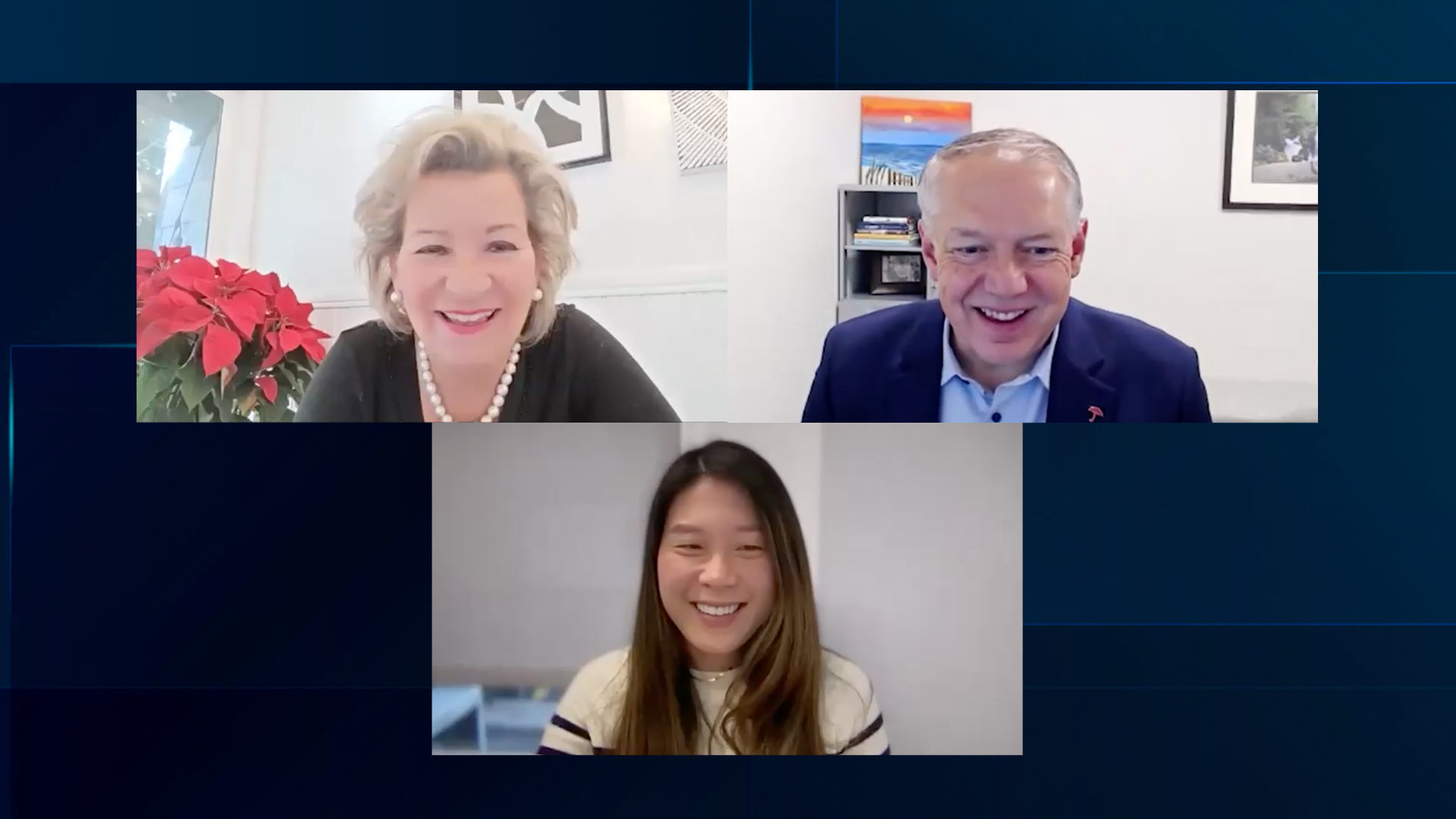
Overload: How Employers Can Help Maxed-Out Caregivers
With 53 million Americans providing unpaid care for loved ones and many contemplating reducing hours or leaving jobs entirely, caregiving has a transformative impact on America's workforce. Lindsay Jurist-Rosner, co-founder and CEO of Wellthy, joins Travelers' Greg Landmark to explore how employers can help families navigate the complexities of caregiving while retaining talent and boosting productivity.
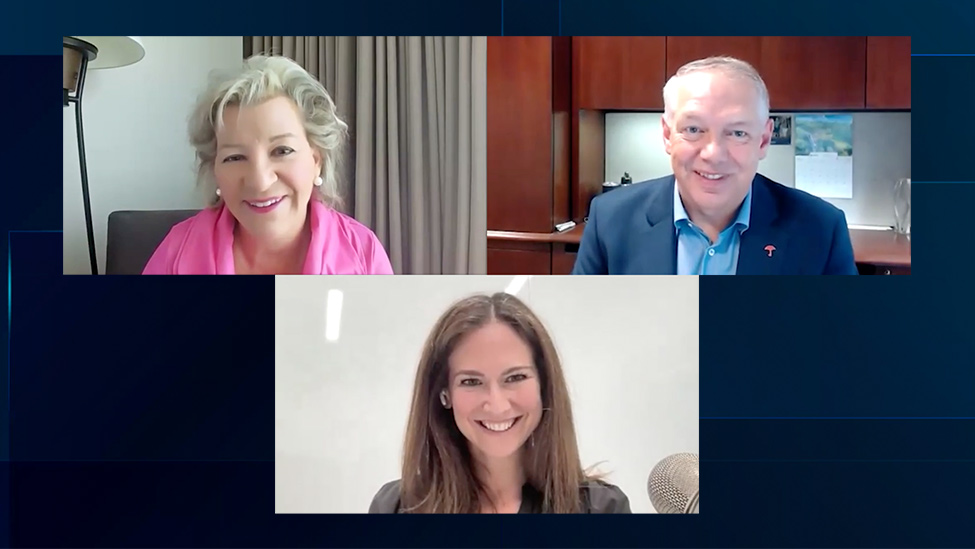
Forces at WorkSM Symposium at the New York Stock Exchange
From labor market fluctuations to shifting employee expectations, today’s workforce is evolving at an unprecedented pace. In this special extended episode of Wednesdays with Woodward®, the Travelers Institute broadcast live from the Board Room of the New York Stock Exchange to explore the challenges and opportunities brought on by these changes.