Power of the Pivot: Leading Through Imperfect Conditions

Power of the Pivot: Leading Through Imperfect Conditions
April 22, 2026
Wednesday 1:00 p.m.-2:00 p.m. ET
Key takeaways
- Preparation is key in golf, business and life.
- Cultivating grit can help you handle unexpected obstacles with grace.
- A growth mindset can pay dividends in golf and in your professional life.
- Golf is a networking tool that could boost your professional life.
- New to golf? Start small but don’t be afraid to get out on the green.
Golf and leadership share the same principle: Small decisions, repeated effectively, create big results. Ashaunta Epps, recognized as an LPGA Top 50 Best Teacher and Class A Member, joined us for a professional development session inspired by her book, A Perfect Swing: Lessons in Perseverance, Purpose, and Preparation from the Fairway of Life. Epps shared step-by-step insights to help you strengthen your focus in high-pressure moments, make strategic decisions with clarity, manage stress and build confidence through repeatable fundamentals on and off the course.

Host
Joan Woodward
President, Travelers Institute; Executive Vice President, Public Policy, Travelers
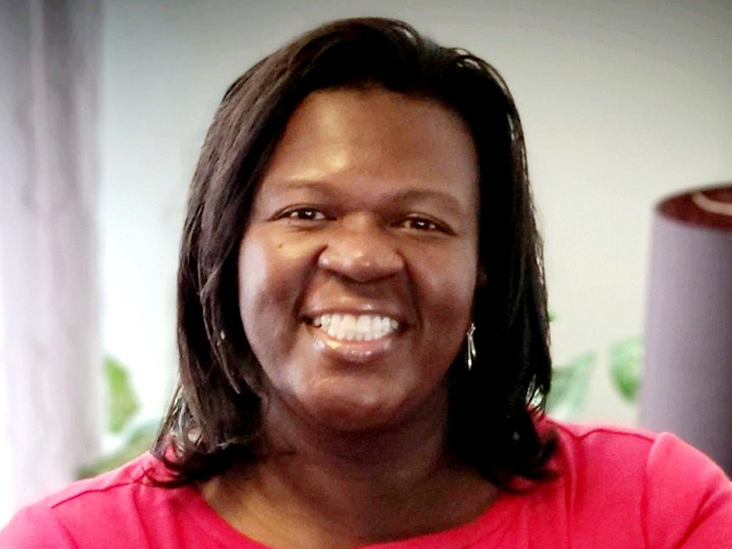
Speaker
Ashaunta A. Epps
CEO/Founder, A Perfect Swing, Inc., LPGA Class A Member, Top 50 Best Teacher
(SPEECH)
[MUSIC PLAYING]
(DESCRIPTION)
A blue slide reads, Wednesdays with Woodward (registered trademark) Webinar Series. Then, the slide appears on a laptop, next to a red mug with the Travelers umbrella logo in white. Logos: Travelers Institute (registered trademark), Travelers. Joan Woodward appears in a video call tile in the upper right.
(SPEECH)
JOAN WOODWARD: Good afternoon, everyone, and welcome to Wednesdays with Woodward. I'm Joan Woodward, President of the Travelers Institute, Executive Vice President of Public Policy here at Travelers. Thank you so much for joining us today. Whether you're tuning in for the very first time or you've been with us for years, we're really glad you're joining.
So before we jump in, I want to share our brief disclaimer about today's program.
(DESCRIPTION)
Text: About Travelers Institute (registered trademark) Webinars. The Wednesdays with Woodward (registered trademark) educational webinar series is presented by the Travelers Institute, the public policy division of Travelers. This program is offered for informational and educational purposes only. You should consult with your financial, legal, insurance or other advisors about any practices suggested by this program. Please note that this session is being recorded and may be used as Travelers deems appropriate.
(SPEECH)
I'd also like to welcome and thank our webinar partners today, including the Insurance Association of Connecticut, the Master's in FinTech Program at UConn, the MetroHartford Alliance and the Big I.
(DESCRIPTION)
Text: Wednesdays with Woodward (registered trademark) Webinar Series. Power of the Pivot: Leading Through Imperfect Conditions. Logos: Travelers Institute (registered trademark), Travelers. Big i Independent Insurance Agents and Brokers of America. MetroHartford Alliance. Insurance Association of Connecticut (IAC). Master’s in Financial Technology (FinTech) Program at the University of Connecticut School of Business.
(SPEECH)
As some of you are aware, I recently discovered my love for the game of golf and in just five short years has unlocked opportunities for fun, enjoyment with my family, with my friends, and a really valuable opportunity to connect with my professional network, my agent and broker partners, and my fellow colleagues. On a totally different level, honestly, I'm actually not that bad at it, which is also really fun.
So today, I'm happy to say we're going to dig deep into golf further, not just because it's fun, but because it also combines personal development and professional success I have found personally. I'm thrilled to welcome someone who has made it her life's work to help people find joy and fulfillment in golf and discover the lessons we can learn in playing this maddening game that helps us throughout our lives, and it keeps us coming back.
So our guest today is Ashaunta Epps, a Class A Member of the Ladies Professional Golf Association, an LPGA Top 50 Best Teacher, top 50 in the United States, and the CEO and Founder of A Perfect Swing, Incorporated, which is a foundation whose mission is to help individuals use golf as a networking tool to advance their careers.
(DESCRIPTION)
Text: Wednesdays with Woodward (registered trademark) Webinar Series. Today's Speaker: Ashaunta A. Epps, CEO/Founder A Perfect Swing, Inc., LPGA Class A Member - Top 50 Best Teachers. Ashaunta smiles in a vibrant pink top in a headshot photo on the slide.
(SPEECH)
She's also an instructor for the KPMG Women's PGA Championship Clinics. A member of the African American Golfers Hall of Fame. And just recently a recipient of the LPGA Carrie Russell Champion for Change Award, honoring her remarkable career and commitment to growing the game. And we're going to drop more information about Ashaunta in the resource hub and in that chat throughout today's program.
So Ashaunta's debut book, A Perfect Swing-- I got it right here, everyone-- Lessons in Perseverance, Purpose, Preparation from the Fairway was released last September. And I have to say that the title alone tells you everything you need to know about why Ashaunta is exactly the kind of guest I love having on this program.
(DESCRIPTION)
Joan sets down the book.
(SPEECH)
So Ashaunta, thank you so much. Welcome to Wednesdays with Woodward. And I also am so glad to say that Ashaunta has helped us with several SHE Golfs clinics, which is our signature program to get more young ladies, older ladies and men, young men and older men, anyone, into the game of golf.
And so you've been so instrumental out of our Charlotte hub alongside my terrific partner and friend Melanie Hudson, who is now retiring. I'll get you back for that, Melanie. But Ashaunta, thank you so much. You're really a role model, I have to say. So welcome.
(DESCRIPTION)
Ashaunta appears in a video call tile that says Ashaunta A. Epps. Photos and certifications hang on the wall behind her.
(SPEECH)
ASHAUNTA A. EPPS: Thank you for having me.
JOAN WOODWARD: So first we're going to start with your golf origin story. You came to golf as an adult like I did and actually discovered that because you felt like you were missing out on networking opportunities in the business world. Tell us more about how you found the game of golf that works for you.
ASHAUNTA A. EPPS: Yeah, sure. Absolutely. So for me, golf wasn't a sport that I grew up playing or even knew anything about. I was the budding career aspiring individual with opportunity to be blessed in being in a leadership role at a very immature stage, I would say, in the process of me becoming a corporate professional.
So I was growing, finding my way, learning how to build relationships, learning how to build rapport. And one day I overheard a conversation in the hall regarding some organizational changes that had been made and discussed that I wasn't aware of. When I had a conversation with one of the colleagues later, he shared that they had the conversation while they were playing golf.
Now, I was already in a situation where I was what I would probably call a fish out of water. So I was a young Black female in an environment where all of my peers were middle-aged white men. And because I came from a predominantly Black environment, that wasn't something that I was fully used to, so I had to figure out how to navigate those waters.
And so I was already taking some breaks when they took breaks because I was trying to understand and learn and be a part of that particular environment. So when I overheard this conversation, I said, oh, well, I guess I got to go play golf, something that was literally almost unknown to me. But my will to win and my want to be a part of that conversation threw everything else out of the window.
It was no hesitation at all because that was something that I wanted to be a part of. I wanted to climb the corporate ladder. I wanted to build rapport with my peers. I wanted to really be a part of the team, and I felt like that was what I had to do.
And I'll tell you, at that time, I wasn't sure that I could do that because when I was 12 years old, I had a hip injury. Now, at that time I was the lover of basketball, and that is the sport that's prevalent in a lot of our communities, basketball and football. But unfortunately, I slid into a split, my hip popped out, and it went misdiagnosed because it was sitting actually behind the joint instead of in the socket.
And so for 20 years, I had a right hip that did not move at all. So up until this point, it had been about 12 years. So then again, still, I had a hip that did not move, so I didn't think I could play golf. However, when I went to my orthopedic doctor and I said, listen, doc, I gotta play golf. And he said, well, no, Ashaunta, it's all hips and knees and back, and you got bad all of them, but you can try it.
And I'm glad he did because I was probably going to try it anyway. And what I found was that I could play, and I was absolutely amazed while I was just trying to build relationships and be a part of the conversations with building rapport and networking with my peers, I actually found things that I lost when I was a child. I got back self-confidence. I got back strategy because when I wasn't playing sports anymore, my life was different.
And so it was all of those things that brought me to the game and kept me there because it was more than just saying, I just wanted to hit the ball around, but it gave me so many other things and it's actually changed my life. And not only just changing my life, golf has led me to my purpose. And when I say that, one day I was at the range hitting balls just amazed as I could be that I could play golf because I didn't think I could.
And I said to myself, why is it that when I couldn't play basketball again someone didn't just simply put a golf club in my hand? Because if I could play golf now, what would that have done for me then? Because when I had that hip injury, when they finally found it months later, I was in a body cast from my chest to my toes.
I mean, literally, I went from the person, as I call myself, me and my sister would say we were going to be the first women in the NBA, because there was no WNBA, to the water girl. I was sitting on the sidelines watching my family and friends play a sport that I absolutely loved, and it drained everything out of me. And it was the love of my family that kept me.
But I'm like, what about other children that potentially could benefit from simply having a golf club, whether it's artificial joints, blood disorders or even just high-impact sports in general? What if we could just simply introduce the game to them? And that was the day I started the A Perfect Swing organization. And our objective is to just simply put a golf club in every child's hand.
Like it, love it, hate it. We're not responsible for that part. We're responsible for the access. And we've done that. We do it for adults for networking reasons, in terms of being engaged and understanding and building rapport with their coworkers.
To date we've introduced over 10,000 people to the game of golf. And while, when I set out, I said, if we could just change one person's life. If I could save one child from feeling the way I felt as a child, then it would be a success, but we have tons of success stories. So I believe that this is my purpose, and we are changing lives in golf. So that's my small start to the game.
JOAN WOODWARD: Well, I can tell you, I can relate to almost everything you said. I was not in a cast from my neck to my toes, but inclusion and being included in something where you felt like it wasn't for you. That's a really hard thing to get over because just taking that first step and getting involved.
But I want to go back to the book, The Perfect Swing. Your motto is improving your success in life by improving your backswing. So tell me what that means and that metaphor and how it impacts someone's life. And remember, we have folks here that are watching that will never be golfers. And so just relating back to professional work and what a backswing means in your life.
ASHAUNTA A. EPPS: Absolutely. So in golf, when you set up, based on what you want to execute, you're going to move the club a certain way. So on your initial setup, you're moving the club backwards away from the target, which is your backswing, and then you're following through, swinging towards the target.
Well, when we relate that to life as we set up in our goals and our objectives, our backswing too in life determines what our follow-through is going to be. So whether there's a white ball on the ground and you're swinging an actual club back and following through, or your ball on the ground is a job, in that backswing, who are you networking with? What additional education do you need?
What sources or career resources are you utilizing? Your ball in life could be to get in college. What type of extracurricular activities in your backswing do you need? What type of relationships do you need to build to get your letters of recommendations?
What type of grades do you need to have? What are those prerequisites? All of those things as it pertains to what we do when we set up to accomplish our goal, which is hitting the ball in the direction that we want it to, translates to our backswing.
Our backswing includes, as I said, education, mentorship, it could be internships. So many myriad of different things, but it all just depends on your ball, what you're trying to accomplish, what you're trying to do, and how you see that impacting your life.
JOAN WOODWARD: I love that. So preparation was one of the pillars in your book. So first of all, let's talk about the book. What motivated you to write this book and who did you have in mind? Obviously, you talked about the younger person, and if you could change one young person's life going forward. Let's talk about the three pillars, the perseverance, purpose and preparation.
ASHAUNTA A. EPPS: Absolutely. So I had [AUDIO OUT] in mind for this book were corporate professionals. I feel like, not even I feel-- as I walk through day-to-day and I meet individuals, a constant occurrences of business professionals wanting to learn and play the game. How do you find time? How do you manage that through work life and all the other things? How do you get started?
And then once you get started, how you reduce your score significantly because as professionals as we are, you want to find a level of success in what you're doing. And so that became the motive for this particular book. I'm pretty much answering the questions, why did I start playing golf? Why did I join the LPGA? And then what did I do to significantly reduce my scores to play the game?
And the individuals I had in mind were corporate business professionals, entrepreneurs, youth organization leaders, and then anyone who could or is supposed to glean something from my story because I feel like what my life has been and what I've been through isn't for me. While it's been very beneficial for me, but that I need to share it because it is for someone else, and I want to make sure that whomever that story needs to reach, that it gets to them.
Now, when we look at the title of the book with the perseverance, purpose and preparation, I was very strategic with those three words. When you think about perseverance, perseverance is about that steady, consistent, patient journey towards your goal. You're going to have difficulties, but you're hanging in there.
The purpose is the thing that gets you up in the morning that you're OK about. Sometimes the alarm clock goes off for work and you don't feel the same as when the alarm clock goes off for you to play golf. But that thing that gets you up in the morning and also that thing that makes you feel like this is what I am on earth to do. That is what the purpose is around.
And then when we talk about preparation, that is the act of being ready or getting ready, taking those steps to ensure that you are ready. So in your journey to your purpose, you persevere in many situations which you will find that in the end actually ended up being your preparation for your purpose. And so that's how it ties all of them together.
JOAN WOODWARD: I love that. There's a famous professor at Penn, Angela Duckworth, and she talks about grit and having grit. And I think behind those three words perseverance, purpose and preparation, the word grit to me when I was young, that's what my dad talked about. And so I think having those three as a benchmark for golf, but also obviously in your professional setting. So I love it.
Last year we had a webinar featuring Mo Pickens. So Mo, for those of you who didn't join, is the mental coach for two-time Travelers Championship winner and Ryder Cup Captain Keegan Bradley. Mo talked about the work that goes into preparing mentally for a big tournament and how he gets his athletes ready to perform. So can you share how you get yourself mentally ready for a tournament, a big match, premier event or a work presentation? Talk about the mental game.
ASHAUNTA A. EPPS: And I love Mo, he has done some amazing work. And when I think about mental preparedness and mental toughness, I look at it just a tad bit different but almost still the same. So I had an experience where I was on the pro-am team for the former LPGA commissioner, Mollie Marcoux Samaan.
And in that team was one of the players’ mental coach. And we had a conversation and he talked about how there's mental toughness, so you have mental toughness for and a thing. So someone may have mental toughness for golf, someone may have mental toughness for basketball, someone may have mental toughness for work, for presentations or for closing contracts.
However, when you put them in any other situation, that same mental toughness doesn't seem to translate. So when they're taken out of the area that they're specifically focusing on, that mental toughness goes away. So you may have a golfer that coming down the 18th fairway and they're tied. They are digging deep, but it may be the same person that they have a flat tire and they have a meltdown. So maybe two different things.
And so he talked about being mentally tough in general, meaning it's that growth mindset where regardless of what the situation is, you are trying to be mentally strong at all times, not just in a particular situation. So that is what I try to use-- that's what I use across the board for me as well as those that I coach. But when I'm preparing for an event or tournament, I am heavily mentally focusing on how I'm going to perform physically because of my physical limitations.
So I'm stretching, making sure that I stretch, making sure that I'm listening to my body, making sure that I'm not making any sudden movements. Look, as you get older, getting out of bed could be a little different from morning to morning. I'm working on hydrating and ensuring that I have the supplies that I need, but everything becomes critical. It is the shoes that you have on, whether you choose to do spikes or no spikes, but all of those add in to the mental.
And when you're mentally preparing, you're identifying what are those key pieces for this week that I have to work on? What's the weather going to be? So ensuring that I have those particular things.
So when you feel prepared, prepared is what helps you set yourself up to feel like you're mentally ready to tackle the task. However, the mental toughness across the board is saying that even if something goes wrong, you're still ready. When I was taking my LPGA Player Ability Test, I did my practice round the day before. I did well and my 56 wedge was the wedge that I was relying on for this course because I had to get up and down.
Well, I had a caddie playing with me in the practice round. Needless to say, the first time I needed this wedge on the real round, the wedge wasn't in the bag. They had accidentally put it in their bag, so I didn't have that wedge. And for a moment, it was a shock to my heart.
But then I regrouped and said, listen, I got to get through this. So you just choose another option. And I had to make a decision, not panic. Well, unpanic after I panicked the first time.
But again, it's about re-level setting and understanding that you have to get through it regardless of what it is, whether it's your shot isn't working, you have-- you don't have the right shoes or anything else. It rains and you didn't know it was going to rain. All of those things come into play. And you try to prepare for everything, but you can't prepare for everything. However, even if something comes up that you did not expect, having that overall mental toughness, regardless of anything, you're going to get through it.
JOAN WOODWARD: I love it. Absolutely love it. I had a 58 wedge yesterday that failed me, but I picked myself right back up and tried again. So you write about adapting a growth mindset on the course. What is a growth mindset look like in golf specifically? And how do you teach someone to carry that off the course and into their professional lives, the growth mindset?
ASHAUNTA A. EPPS: From a golf perspective, listen, you're not perfect. And every time you step on the course, golf is going to remind you that you are not. That is just how it works.
And so with the growth mindset on the golf course, it is really just understanding that through practice, feedback, meaning the way you hit the club and how far it goes because that changes. And then being persistent with understanding and developing that skill set that you can pretty much get the results that you want.
So also, it is in that environment where you say, oh, I had a bad swing or I had a bad shot, I had a bad result, or you got something that you didn't want. But not seeing that as a bad result, it is information and you are going to allow that to help you make the next decision. In golf, every shot is that same shot. It is one shot and once it's done, it's over.
Once you get to the shot that you have, you have to make decisions about what is to happen next. You can't look back at the last shot that you made. And so that is the growth mindset, understanding that, OK, the ball didn't go where you want it to go. But guess what? You're still trying to get to the flag.
So what are you going to do now? And understanding and adapting that. Now the way that translates into your work life is accepting feedback. Your clubs, the course is going to give you feedback, your peers, your work evaluations, you're going to get feedback. You should digest that, understand it, allow it to fuel you to get to your next step.
Take it back as growth. Not saying that you're perfect, but saying that, OK, let me consider this. Let me receive that feedback. Also about being resilient under pressure, whether or not your presentation didn't go well, you missed the target in terms of a KPI or critical success factor, but not saying, oh, we're spiraling out of our normal way of doing things.
But instead of just saying, listen, so let's reset. We didn't make the target, but how do we regroup and move forward so that we can accomplish those tasks? And also adapting to changing conditions. In golf, maybe wind and rain that you didn't expect, but you adapt to it.
Well, there may be changes in your environment you didn't expect, whether it's a company resale or new management or a new rule. But again, being able to adapt to that, not allow it to impact you mentally or from a success-wise standpoint and just move forward, accept it as is, regroup, remake the decision, or redevelop another plan and move forward. And that's exactly what teaches us to.
JOAN WOODWARD: I love that, and I often say to our folks that giving performance feedback-- giving feedback to someone constructive so they can work on things, that's like the greatest gift you could give someone, whether you're the person receiving the feedback, take it as feedback and improve, or the person giving feedback. I do think it's one of the greatest gifts in our professional lives, is to hear what you did well, what you may be able to improve on and regroup. So, love it, love it.
So through our Forces at Work, which is an initiative we have, we talk about the benefits of physical and mental wellness. And the appreciation of wellness can translate into better, more fulfilling and safer work environments for everyone. So the mental side of golf is very important. What are some of the mental tools you teach your students to employ?
ASHAUNTA A. EPPS: The mental is huge. One of the things that I really like to focus on with my students is really the breathing. So you want to make sure you breathe and reset. And even when you're breathing and resetting, putting it in a place where it is a part of your natural routine. So we focus a lot on the preshot routine, where before you walk up to the ball, you take that extra breath, you release and then you move on.
A lot of the mental piece too is about understanding yourself. So when you say understanding yourself, I had one particular student, every time he was in practice, he was always chewing on a straw. He'd be reading putts and he's chewing on this straw. And if he didn't have a straw, he may have a toothpick. But when he performed in the game, it was almost like night and day of the results.
And so when I noticed that he was always chewing on something, I said, listen, we're going to try-- we’re going to have you chew gum during this round, and it worked. That was just something that he needed that helped his concentration. For some people, it's a smell, the smell of fresh green grass. So if it's a smell that they like, that it really energizes them or allow them to focus and calm them down, I'll have them spray it in their head covers.
Another thing is you may be out walking a round of golf, and you see someone else walking and you hear their clubs clicking, clacka, clacka, clacka, clacka, clack, and it's driving everybody else crazy. However, that could be that tone that they need that when they're walking from one shot to the other, it is the rhythm of their walk that is allowing them to reset and mentally recharge. So being in tune with what works for you is the first thing, but then definitely building those things into your preshot routine, because that is what's going to be critical for the lasting impression of making sure that you stay there mentally.
JOAN WOODWARD: Alright, awesome. So let's go into why golf is a career enhancing activity. So you say it's a networking tool. What does that actually mean? What goes on on the golf course that doesn't happen in a conference room? Maybe for a nongolfers joining us today, what is it that is so magical about doing business, quote unquote, "on a golf course?"
ASHAUNTA A. EPPS: There is the perception that the deals are done on the golf course. But in my opinion, and I will say, the deals aren't done on the golf course. It is the relationships that you build that creates the environment for you to close those particular deals. So while you're out there, that networking is about building the relationship.
You are building trust. You're getting to know them; they're getting to know you. You're going to laugh, maybe share a joke or two. But the difference between that and the conference room, it’s not scheduled. It's not for an infinite 30 minutes or one hour time frame, and you're not just looking to give updates.
No, in this particular environment, there's no seniority other than if you hit the ball closer and whoever has honors or farthest away goes first. But it is about you and the person that you're playing with. You actually both are tackling the same task, which is playing the golf course.
So you're no longer looking at each other, you're actually working in tandem for a common goal even if you're playing your own ball. And in that golf environment, conversations are unfolding organically. It is not the set agenda item that you came to. And in that situation, it creates space for stories, sharing things that are typically not necessarily shared in a meeting because you're focused on just that particular task.
And so in that environment, it just creates an opportunity for small talk, for relationship-building. And you begin to see that person as a person, not just as a professional. And I think that is the critical piece to that.
JOAN WOODWARD: OK, so let's talk about those many professionals missing out on golf because they’re not-- they don't know the etiquette, they don't know the dress, they don't know the rules. They feel so intimidated by the game. So what are the two or three top things you would tell people to know before they even step foot on their first golf outing?
ASHAUNTA A. EPPS: So for a golf outing, one, because it's a golf outing, typically, golf outings have different play formats. I would encourage you to know the format. Do you have to play your own ball? Is it a scramble? Is it best ball?
Because oftentimes people confuse best ball and scramble. And that also lets you know how prepared you need to be, whether it's to play your own ball or you get the grace of playing somebody else's ball. So you want to understand that part because it allows you to be prepared for what's required of you.
The second thing that I would say is understand the etiquette. And the key things in the etiquette is where you should stand, when you should not talk and your attire. And all of those things are really prevalent on the internet.
Now, the biggie is the attire. Oftentimes, especially when we're looking in a store for attire. Golf clothing and tennis clothing are sold together, and especially for women, but they're different. So you want to make sure that you have the appropriate attire. And that when you're at a business golf outing, that you still reflect the mature business attire that you should so that you're representing yourself well.
The other thing is that you want to make sure you have all the supplies that you need. That is critical because it makes you feel more comfortable, but it allows the environment of setting up and getting ready to flow a little easier. Now, sometimes you may-- say you rent a bag of clubs when you're there. Even if you are renting clubs, you want to make sure you have the other associated items.
You want to make sure you still have balls, tees, a glove, a towel, snacks, hydration, all of those things that allow you to be prepared because you don't want to inconvenience someone else because you don't have all the supplies that you need. So if you know the etiquette, you know the format, so you know what's expected of you and you have all your supplies, you're off to the races and you're ready to go build all those relationships that you can.
JOAN WOODWARD: That's awesome. And it's OK to tell people you're new, you're new to the game. Please give me feedback. Some people love to give feedback even when it's not really wanted. But if you say to someone, give me some feedback on my swing, that makes it-- immediately resolves the issue of you feeling inadequate, let's say, at least for me.
ASHAUNTA A. EPPS: Can I just add this too, Joan? And people-- There's a perception in the industry that beginners are frowned upon. And I want to-- I really want to just blatantly say it, it's not. And just being upfront and saying, I’m not-- I mean, that I am a beginner. People don't frown upon that, and they actually appreciate it because they know how to handle you.
And oftentimes you'll find they'll be OK with telling you, Can you move over a little bit? Can you do this, can you do that? And that makes the round more enjoyable. And it'll make you feel more comfortable as well too.
JOAN WOODWARD: So as I said, I took up golf during COVID, and I think a lot of people did. I know a lot of women certainly turned to the game as well. What do you see in terms of new groups coming into the sport, and how has that evolved in your view?
ASHAUNTA A. EPPS: So what I've noticed is that younger players, so our Gen Z and millennials, they are really, really adapting to the game. Statistics show that over half of golfers are now under the age of 50. Wow, I mean, one time it was identified as an older person's sport. It was like your retirement plans.
Women, huge. About 60% of the -- I think they said the most recent are women and children. So women and children are really evolving and joining the sport. The LPGA has introduced -- the LPGA*USGA Girls Golf program has introduced a million girls to the game. So lots of that engagement from the female side.
And then more diverse communities, so people of color. I think that number is up 60% since 2019, where we're stepping out of our boxes and learning a sport that typically didn't embrace us, as we would say. And when we think about with Travelers Insurance and Dr. Sifford and the first tournament that he won, really breaking that color barrier, it's become something that a lot of people of color consider, and it's great.
Junior golf, which I mentioned before. The thing that I think really caught me off guard, but I'm so excited about is the nontraditional golfers, the Top Golf, the simulator businesses. I mean, that is-- that's been a huge thing. And in that environment, it really restricts the-- what we would perceive as the strictness of the game.
So they're not worrying about attire, you're not worrying about rules, but you're just enjoying the game. And I think that's really good for the game because it's making the game social as opposed to technical. And so the game is evolving. You see there's a difference in attire and the various formats. So that's really, really good for the game.
But again, I think from a teacher perspective, we have a responsibility to educate them as well because transitioning from, whether it's even being a newbie, but transitioning from simulators or things of that sort and going on to the golf course, it is different. And so from an instructor's standpoint, we have an obligation to really ensure that we are educating properly and being available so that individuals can enjoy the sport as they make the transition if they choose to from the simulator-type golf activities to on the course.
JOAN WOODWARD: Awesome. So what advice would you give someone in the insurance industry who wants to start using golf as a professional networking tool, but really is unsure where to begin? So what are the two or three top things you would advise a person who wants to get in the game?
They may not have access to clubs, they may not know where to turn, is it a municipal golf course? Would you suggest a bunch of clinics, one-on-one lessons? What do you suggest?
ASHAUNTA A. EPPS: So for me, the first thing I would say is just know that you don't have to be a good golfer or a super golfer to benefit from being in the golf environment. So when you're getting started, I would say start small. You don't need a full bag of clubs, five, driver, hybrid, 7 iron, wedge and a putter. Those are the basics. You can learn those.
I would recommend you take at least one full-swing individual instruction class-- session with a certified golf instructor. Now, I recommend you learn chipping and putting first. But doing that in a clinic environment is easier because the impact zone is shorter-- the impact zone is the impact zone, but your swing is shorter.
So you have less variability in making mistakes but a higher variability of understanding what instruction is being provided to you in a clinic environment. However, as it pertains to getting the ball in the air from a full swing perspective and your driver, I would absolutely recommend you take one-- at least one individual lesson so that you grasp the fundamentals. It is difficult undoing bad habits. So you want to make sure that you do that.
Another thing that I would tell you is that after you get the instruction -- definitely love workshops -- and you learn the etiquette, do not stay at the driving range and hit balls for years. Go play. There are executive courses if you're looking to network and build those relationships because as a business individual, you're a good connector. So you just need to be in the environment to be able to build those relationships.
Tournaments-- fundraising tournaments is the way to go because you're going to meet a variety of people, and it gives you an opportunity to not have to deal with the stress of carrying your own ball. The scramble format is fun, and you're still learning, and you still want to carry your own weight per se. But it may be like, OK, you're not having a strong drive, but guess what? You putt well or you chip well.
And that environment also allows you to build some confidence, because when they cheer for you and you make a good putt, that's all it takes, you're hooked. It's awesome. It's off to the races after that.
JOAN WOODWARD: Exactly. I want to talk for a minute about the new commissioner of the LPGA. I think you recently sat down for an interview with him to discuss opportunities for really growing the game. So what are the biggest opportunities, do you think, for growing the game, and as the new commissioner, how is he approaching that work?
ASHAUNTA A. EPPS: So Craig Kessler, who is the newest commissioner for the LPGA, I think he came in with the vision of visibility, player value and fan growth. When you look at the WNBA, even soccer, swimming, women's sports is-- it is hot. We're on fire right now. And so he really wants to leverage that.
So, some of the things that he's implemented is the guaranteed TV coverage for all of the North America events. So if you see them, you know they exist. LPGA players, they are absolutely the most fundamentally sound golfers ever. Watching them, you can look at them and relate to them. And that is how that growth happens.
Young girls, they have to see them in order to follow them and love them and try to imitate that. So also along with that, it is making the players more marketable, making them visible, making them relatable. Some of them are mothers, they are sisters. Some of them have disabled siblings. So showing their relationship with them, and just in terms of how they are, showing them as real individuals.
And then he's also focusing on the prize money and the purses, that's the financial growth. And that's important because when you think about professional sports, those purses, really it makes you a viable career option. And that is going to keep the better players around for a longer length of time. And you're going to attract better talent, so that keeps you competing with all the other things there.
So really making the athletes relatable and putting the game out there and showing everyone-- giving everyone an opportunity to see that women's golf is exactly what we know that it already is. It's phenomenal and everybody should be a part of it.
JOAN WOODWARD: Oh, this is wonderful. So we're going to take a bunch of audience questions. There's a bunch rolling in. So thank you all for that. This is Jamie from South Carolina, what do you see as the long-term return on introducing kids to golf, not just for the sport itself, but for their lives?
ASHAUNTA A. EPPS: Wow, listen, when I tell you they glean so much from being involved in the game, it makes them stronger strategic thinkers. Course management is a real thing. You can't just get up and hit it as long as you can every time. They're going to also be more resilient and confident because when you persevere, when you've walked 18 holes to play a round and you've shot a decent score and you're tired, but you finished, you didn't give up, that's confidence and that's resilience.
Stronger communication skills, if they're playing in partner-type sports or just a team environment in general, even though you're playing your own ball against someone else, you're still oftentimes playing as a part of a team. They're going to learn how to network because they're playing with other individuals, whether it's from other schools or other communities. So they get an opportunity to build those relationships.
And what I think is really key when we talk about the value of family in our communities, that is critical. And if you have a mother and a father playing golf, the ability to really create strong family relationships on the golf course is something that is very, very, very real.
JOAN WOODWARD: I have a personal story there for Sandy in South Carolina. I have four kids-- four adult kids, and my husband is a big golfer. And he would take my kids on a three- or four-day golf vacation and I would work. I'd say, no, I got too much work to do at home, or I'm doing the laundry or I got to work on this business trip. So I was missing out personally on my kids going on a golf vacation because I was not a golfer.
And so it was almost like, what was I thinking? It wasn't about golf. And if I had a little bit of golf experience, I would have felt more confident. But anyway, those little things I would say to parents out there, get your kids involved in golf, but you get on the course too.
Another question coming in from Charles in California. If you could change one thing about how golf presents itself to newcomers, one thing that would make the biggest difference in bringing more people into the game, what would it be?
ASHAUNTA A. EPPS: I would put a sign on the front door that says, come as you are, we'll meet you there. Oftentimes, when we hear about the game of golf, it is always, here's what you can't do, here's what you can do, this is what you shouldn't do. You got to make sure you do this; you got to make sure you do that. It becomes very stringent. And those things are critical, and they are important.
However, that is the thing that keeps people away from even trying to enjoy the game. And so I would really work on people's first impression of the game. Just letting them know that, listen, golf is not going to be easy, and we don't have to make the sport easier, but we need to make it more inviting. And sometimes just saying that makes a difference.
Sometimes putting the words on the wall saying, listen, we'll help you, that makes a difference. And I think that's how you change the culture of people getting involved in the sport. And when we-- the name of our organization is A Perfect Swing, and it is that name because your swing is your perfect swing.
We have individuals that come to our organization, they want to learn how to play in a corporate tournament. Great, we got you. They want to play competitively, we got you. But then we have some women who their husbands, that's who they played with and their husband passed away. And they simply just want to ride along in the golf cart because that is a part of their bereavement process.
And you know what we say? We got you for that too. And so, whatever it is, and when golf becomes opening and inviting and saying, we're going to meet you where you are for what you need, that's exactly what I think we need.
JOAN WOODWARD: Awesome. Another question coming in from Jean in Pennsylvania. What's the best shot you ever hit?
ASHAUNTA A. EPPS: The best shot that I ever hit, oh, phenomenal question. So, I would say the best shot that I've hit would be—so, my favorite course is a course in Riverside, California. It's called Oak Quarry. It’s literally built out of a quarry.
I think of the 18 holes, at least 15 of them are blind shots. Probably 100-, 200-feet drop. And on hole 6, I hit a tee shot, couldn't see where I was going. I made a great guess based on the GPS in the cart, and I was literally inches from a hole-in-one. So I felt really good about myself that day.
JOAN WOODWARD: Awesome. Was it a par 3 or par 4?
ASHAUNTA A. EPPS: It was a 3, but it was still a blind shot.
JOAN WOODWARD: That's awesome. Next question. You're a pro, but have you recently played a round with someone that actually made you nervous? Good question.
ASHAUNTA A. EPPS: This is a sentimental one. So my first round of golf that I played as a professional, was the-- it was the most nervous, but it wasn't for the reason that some people suspect. So my sister, who's two years older than me, she has taken care of me all of my life, and playing in that tournament, she was my caddie.
And that was one of the first times that I felt like she was assisting me with something that she could really be excited about, as opposed to just saying, she's helping me do this or she's helping me do that. And so, I was so nervous because I'm like, yes, she lives in Houston and she came down. I just wanted to do so well, and I was so nervous and I did pretty good.
But it was the sentimental thing because it was all of those years of when she had to help me get in the car, when she would have to drop me off at the front door because I couldn't walk from the parking lot. All of those things that she was doing to help me were all physical.
(DESCRIPTION)
Ashaunta wipes her eye.
(SPEECH)
But I was at a point where I had -- she and my family had actually nurtured me through that.
And I was standing in a different position, and I was nervous. So nervous for a totally different reason. But it was great. And it was a memorable experience for me.
JOAN WOODWARD: That is awesome. Next question. Who is in your dream foursome? And by the way, is that you and Tiger Woods in that picture behind you?
(DESCRIPTION)
In a picture over Ashaunta's right shoulder, she poses with a man.
(SPEECH)
ASHAUNTA A. EPPS: Yes, and he is in it.
JOAN WOODWARD: Where was that?
ASHAUNTA A. EPPS: He is in -- So, that picture, one of the most amazing nights of my life. So, that picture is where Tiger Woods was inducted into the World Golf Hall of Fame a few years ago.
JOAN WOODWARD: Wow, you were there.
ASHAUNTA A. EPPS: I was there. We just happened to bump into each other. But I was there also supporting Renee Power. She and her family were getting an award as well, too.
And it was really special, him being inducted into the World Golf Hall of Fame. There were only 300 tickets available on the planet, and I had one. And it was the time of my life.
JOAN WOODWARD: That's awesome. Now your dream foursome.
ASHAUNTA A. EPPS: So my dream foursome would be Charles Barkley. He is an absolute hoot. I love seeing the transition that he's made in his golf swing. It would be my mom. While she's passed away, if I could bring her back, definitely I felt like she would have been an amazing golfer.
And then the fourth person, I would be the third, the fourth person would be my high school basketball coach. I don't think he knows anything or doesn't play golf, but him giving me an opportunity to still be a part of the basketball team when I couldn't play had something that means something special to me. And he would always say, Ashaunta, if I could just put you in a jersey. And I would practice with the basketball team, and I still have a plaque on my wall now that he gave me at the end of the year.
But just to expose him to the game because while he's retired now, it is something that I could never give him half of what he's given me. But just to expose him to the game, the fresh air, the high-quality vitamin D, because golf is something that you can play for as long as you can move around. And many people, they don't play because they just have not experienced or been introduced to it.
So that would be hoping that or thinking to me because golf has been so instrumental in my life, I feel like me introducing that-- the sport to anyone is going to change their life. And that's what I firmly believe in. And so he would be, absolutely be my fourth.
JOAN WOODWARD: That's awesome. A few more questions, [CLEARS THROAT] excuse me. Candy from Tennessee, what strategies can leaders use to sustain positivity throughout periods of adversity?
ASHAUNTA A. EPPS: Great question. And there’s a -- it's a lot going on now from an industry perspective in every industry. And I think as a leader, the first thing you have to do is be honest. Just understanding that it's not sympathy but it's empathy and understanding that where it is is where it is.
But the thing that from a business standpoint that we all lean on is metrics and reporting. Seeing that visual progress regardless of where it is, developing a roadmap to show some positivity. So producing those key performance indicators, critical success factors, and communicating those. And in addition, communicating frequently, ensuring that you don't disappear because that's when individuals get nervous.
So ensuring that you are communicating, you have measurable results. And then don't always focus on what the change or the decline is, but focus on the positive, what you're doing well, what's the team doing well. And I think that makes a huge difference in where everybody is going and looking.
While it's going to be difficult, you can never take the difficulty out of it. However, you can change the mindset potentially of how things are happening, and communication always eases that.
JOAN WOODWARD: Maybe this is the last question for us. Kylie from Washington State. What are practical ways to build resilience and adaptability into a team culture that change feels manageable rather than destabilizing?
ASHAUNTA A. EPPS: That's a great question, too. Well, first of all, all these questions have been great. I think in those situations, one, you have to make sure that the purpose is clear and that everyone knows the purpose, and that that's the first starting step.
Oftentimes when people join teams at different times and different phases doing different things, we begin to focus on our little piece as opposed to the larger purpose. So ensuring that everyone is clear on what the purpose is and allow that to be the anchor for everything that you're doing. And when things change, they know that, listen, other items underneath may change, but the clear purpose and guideline, that hasn't changed, and you have that in your toolbox.
What I used to do-- So I like to do SWOT analysis. And from an IT perspective when we did changes, it's OK. If you're going to make this change, then what-- if A happens, what do we do next? If B happens, then what do we do?
And it became a thing of putting in and normalizing, pivoting and building that into the process for change makes it easier for everyone because then you know, listen, we may change and we may move in this direction, but if it doesn't work, well, we're going to pivot.
I think another thing that becomes critical is ensuring that when you have a change in culture, that you have a means by which you can get feedback from people quickly to see what they're feeling. The way for you to keep your finger on the pulse, and so that you can have that communication to identify what the pivot points are so that everyone stays on the same page.
The thing that I think managers really, really have to deal with when it comes to change is employees feeling like, OK, well, I don't want to do anything wrong. I don't want to mess this up. I don't want to do-- well, if you're doing those SWOT analyses or you're making the A plan and the B plan, you're normalizing pivoting, you're normalizing change.
And that assists with other people on the team opting that it's OK to understand and view change. So you normalize it. So you want to encourage change or pivoting as an option and on a normal daily basis, as opposed to just training people just for the ideal situation. Not just ideal but understanding what all of those key pieces are for the pivoting.
So it's a difficult situation when it comes to the culture and the change. But understanding that-- saying that change is going to actually helps in the long run to build change into your environment.
JOAN WOODWARD: Awesome. Well, I think we have to leave it there. Ashaunta, I can't thank you enough. It's been incredibly energizing to me personally to hear your story, and I think there's so many folks on the line today that have a similar story where they just don't feel golf’s for them and it could change your life and clearly has your life has changed my life for the better, I know.
And I just wish I'd done it 30 years ago, 40 years ago. But there's still time. You’re never too old to take up the game of golf--
ASHAUNTA A. EPPS: Never.
JOAN WOODWARD: Never, never too old.
ASHAUNTA A. EPPS: Absolutely.
JOAN WOODWARD: And you don't have to be an athlete. I am certainly not an athlete. I didn't play a lot of sports in school, so anyone can do it.
Thank you so much for your time. Please come back and join us again. We really appreciate the book. I appreciate everything you're doing for the game of golf and for our younger generation, for women, for diverse communities. So keep it up. Keep it up, Ashaunta.
ASHAUNTA A. EPPS: Awesome. Thank you. I appreciate the time.
JOAN WOODWARD: So folks, please take our survey. Tell us what you thought of today's session. I read every single word.
(DESCRIPTION)
Text: Wednesdays with Woodward (registered trademark) Webinar Series. Take Our Survey. Link in chat. Speech bubble icons surround the text on the slide. The next slide reads, Upcoming Programs: May 20, Facing Today's Cyber Threat Landscape: Turning Threat Intel into Action. May 27, A Conversation with Lieutenant General (Retired) William D. Beydler. June 10, Inside the National Hurricane Center: Advanced Forecasting, Better Preparedness. June 17, Take the Stage: Leadership Confidence That Builds Trust and Connection. Register: Travelers Institute dot-org.
(SPEECH)
Also, join us for upcoming programming on May 20. We're going to be joined by cyber risk experts and claim professionals to talk about the new Travelers quarterly threat report, when the cybersecurity threats.
On May 27, I'm hosting a conversation with retired Lieutenant General William Beydler, who is going to share his perspective on geopolitics, national security. There's a lot obviously going on in the world today and he's an expert. I think he was a Marine for over 30 years. So we'll hear his perspective on how to think about your business in this environment.
On June 10, we'll have Jamie Rhome. He's the Deputy Director of the National Hurricane Center, for a deep dive into the 2026 hurricane season, and what's new from the National Hurricane Center. And then on June 17, please join us for a practical session on showing up with trust and powerful presence at work. A woman named Pam Sherman, who also wrote a terrific book that will be available to you all.
You have to snap them up early if we ever offer a book. We do have limited supply. So if you see a book offer, just go ahead and tap the “Get My Book Here” button.
Thank you all. Thanks to Ashaunta. Appreciate you joining us. Stay safe out there, folks, and we'll see you in a week.
[MUSIC PLAYING]
(DESCRIPTION)
Text under a video player icon says, Watch, Travelers Institute dot-org. Text under the LinkedIn logo says, Connect, Joan Kois Woodward. Text under the Travelers Institute Risk and Resilience podcast art says, Listen, Wherever you get your pods. The art consists of a graphic red microphone on a white and navy blue background. Logos: Travelers Institute, Travelers. Text: Travelers Institute dot-org.
Please note: Due to the nature of the replays, survey and chat features mentioned in webinar recordings are no longer active.
JOAN WOODWARD: Hi, folks, and welcome to the Travelers Institute Risk & Resilience podcast. I’m your host, Joan Woodward, President of the Travelers Institute. What if the secret to great leadership was hiding on the golf course? It turns out golf and leadership share the same core principle: small decisions, repeated effectively, create big results. I was recently joined by Ashaunta Epps, an LPGA Top 50 Best Teacher and Class A Member and author of the book “A Perfect Swing: Lessons in Perseverance, Purpose, and Preparation from the Fairway of Life.” Ashaunta shared step-by-step insights on how to strengthen your focus in high-pressure moments, make strategic decisions with clarity and build confidence through repeatable fundamentals – whether you’re on the course or in the boardroom. Take a listen to our conversation about what golf can teach all of us about performing at our best when it matters most. So Ashaunta, thank you so much. Welcome to Wednesdays with Woodward. And I also am so glad to say that Ashaunta has helped us with several SHE Golfs clinics, which is our signature program to get more young ladies, older ladies and men, young men and older men, anyone, into the game of golf. And so you've been so instrumental out of our Charlotte hub alongside my terrific partner and friend Melanie Hudson, who is now retiring. I'll get you back for that, Melanie. But Ashaunta, thank you so much. You're really a role model, I have to say. So welcome.
ASHAUNTA A. EPPS: Thank you for having me.
JOAN WOODWARD: So first we're going to start with your golf origin story. You came to golf as an adult like I did and actually discovered that because you felt like you were missing out on networking opportunities in the business world. Tell us more about how you found the game of golf that works for you.
ASHAUNTA A. EPPS: Yeah, sure. Absolutely. So for me, golf wasn't a sport that I grew up playing or even knew anything about. I was the budding career aspiring individual with opportunity to be blessed in being in a leadership role at a very immature stage, I would say, in the process of me becoming a corporate professional. So I was growing, finding my way, learning how to build relationships, learning how to build rapport. And one day I overheard a conversation in the hall regarding some organizational changes that had been made and discussed that I wasn't aware of. When I had a conversation with one of the colleagues later, he shared that they had the conversation while they were playing golf. Now, I was already in a situation where I was what I would probably call a fish out of water. So I was a young Black female in an environment where all of my peers were middle-aged white men. And because I came from a predominantly Black environment, that wasn't something that I was fully used to, so I had to figure out how to navigate those waters. And so I was already taking some breaks when they took breaks because I was trying to understand and learn and be a part of that particular environment. So when I overheard this conversation, I said, oh, well, I guess I got to go play golf, something that was literally almost unknown to me. But my will to win and my want to be a part of that conversation threw everything else out of the window. It was no hesitation at all because that was something that I wanted to be a part of. I wanted to climb the corporate ladder. I wanted to build rapport with my peers. I wanted to really be a part of the team, and I felt like that was what I had to do. And I'll tell you, at that time, I wasn't sure that I could do that because when I was 12 years old, I had a hip injury. Now, at that time I was the lover of basketball, and that is the sport that's prevalent in a lot of our communities, basketball and football. But unfortunately, I slid into a split, my hip popped out, and it went misdiagnosed because it was sitting actually behind the joint instead of in the socket. And so for 20 years, I had a right hip that did not move at all. So up until this point, it had been about 12 years. So then again, still, I had a hip that did not move, so I didn't think I could play golf. However, when I went to my orthopedic doctor and I said, listen, doc, I gotta play golf. And he said, well, no, Ashaunta, it's all hips and knees and back, and you got bad all of them, but you can try it. And I'm glad he did because I was probably going to try it anyway. And what I found was that I could play, and I was absolutely amazed while I was just trying to build relationships and be a part of the conversations with building rapport and networking with my peers, I actually found things that I lost when I was a child. I got back self-confidence. I got back strategy because when I wasn't playing sports anymore, my life was different. And so it was all of those things that brought me to the game and kept me there because it was more than just saying, I just wanted to hit the ball around, but it gave me so many other things and it's actually changed my life. And not only just changing my life, golf has led me to my purpose. And when I say that, one day I was at the range hitting balls just amazed as I could be that I could play golf because I didn't think I could. And I said to myself, why is it that when I couldn't play basketball again someone didn't just simply put a golf club in my hand? Because if I could play golf now, what would that have done for me then? Because when I had that hip injury, when they finally found it months later, I was in a body cast from my chest to my toes. I mean, literally, I went from the person, as I call myself, me and my sister would say we were going to be the first women in the NBA, because there was no WNBA, to the water girl. I was sitting on the sidelines watching my family and friends play a sport that I absolutely loved, and it drained everything out of me. And it was the love of my family that kept me. But I'm like, what about other children that potentially could benefit from simply having a golf club, whether it's artificial joints, blood disorders or even just high-impact sports in general? What if we could just simply introduce the game to them? And that was the day I started the A Perfect Swing organization. And our objective is to just simply put a golf club in every child's hand. Like it, love it, hate it. We're not responsible for that part. We're responsible for the access. And we've done that. We do it for adults for networking reasons, in terms of being engaged and understanding and building rapport with their coworkers. To date we've introduced over 10,000 people to the game of golf. And while, when I set out, I said, if we could just change one person's life. If I could save one child from feeling the way I felt as a child, then it would be a success, but we have tons of success stories. So I believe that this is my purpose, and we are changing lives in golf. So that's my small start to the game.
JOAN WOODWARD: Well, I can tell you, I can relate to almost everything you said. I was not in a cast from my neck to my toes, but inclusion and being included in something where you felt like it wasn't for you. That's a really hard thing to get over because just taking that first step and getting involved. But I want to go back to the book, The Perfect Swing. Your motto is improving your success in life by improving your backswing. So tell me what that means and that metaphor and how it impacts someone's life. And remember, we have folks here that are watching that will never be golfers. And so just relating back to professional work and what a backswing means in your life.
ASHAUNTA A. EPPS: Absolutely. So in golf, when you set up, based on what you want to execute, you're going to move the club a certain way. So on your initial setup, you're moving the club backwards away from the target, which is your backswing, and then you're following through, swinging towards the target. Well, when we relate that to life as we set up in our goals and our objectives, our backswing too in life determines what our follow-through is going to be. So whether there's a white ball on the ground and you're swinging an actual club back and following through, or your ball on the ground is a job, in that backswing, who are you networking with? What additional education do you need? What sources or career resources are you utilizing? Your ball in life could be to get in college. What type of extracurricular activities in your backswing do you need? What type of relationships do you need to build to get your letters of recommendations? What type of grades do you need to have? What are those prerequisites? All of those things as it pertains to what we do when we set up to accomplish our goal, which is hitting the ball in the direction that we want it to, translates to our backswing. Our backswing includes, as I said, education, mentorship, it could be internships. So many myriad of different things, but it all just depends on your ball, what you're trying to accomplish, what you're trying to do, and how you see that impacting your life.
JOAN WOODWARD: I love that. So preparation was one of the pillars in your book. So first of all, let's talk about the book. What motivated you to write this book and who did you have in mind? Obviously, you talked about the younger person, and if you could change one young person's life going forward. Let's talk about the three pillars, the perseverance, purpose and preparation.
ASHAUNTA A. EPPS: Absolutely. So I had [AUDIO OUT] in mind for this book were corporate professionals. I feel like, not even I feel-- as I walk through day-to-day and I meet individuals, a constant occurrences of business professionals wanting to learn and play the game. How do you find time? How do you manage that through work life and all the other things? How do you get started? And then once you get started, how you reduce your score significantly because as professionals as we are, you want to find a level of success in what you're doing. And so that became the motive for this particular book. I'm pretty much answering the questions, why did I start playing golf? Why did I join the LPGA? And then what did I do to significantly reduce my scores to play the game? And the individuals I had in mind were corporate business professionals, entrepreneurs, youth organization leaders, and then anyone who could or is supposed to glean something from my story because I feel like what my life has been and what I've been through isn't for me. While it's been very beneficial for me, but that I need to share it because it is for someone else, and I want to make sure that whomever that story needs to reach, that it gets to them. Now, when we look at the title of the book with the perseverance, purpose and preparation, I was very strategic with those three words. When you think about perseverance, perseverance is about that steady, consistent, patient journey towards your goal. You're going to have difficulties, but you're hanging in there. The purpose is the thing that gets you up in the morning that you're OK about. Sometimes the alarm clock goes off for work and you don't feel the same as when the alarm clock goes off for you to play golf. But that thing that gets you up in the morning and also that thing that makes you feel like this is what I am on earth to do. That is what the purpose is around. And then when we talk about preparation, that is the act of being ready or getting ready, taking those steps to ensure that you are ready. So in your journey to your purpose, you persevere in many situations which you will find that in the end actually ended up being your preparation for your purpose. And so that's how it ties all of them together.
JOAN WOODWARD: I love that. There's a famous professor at Penn, Angela Duckworth, and she talks about grit and having grit. And I think behind those three words perseverance, purpose and preparation, the word grit to me when I was young, that's what my dad talked about. And so I think having those three as a benchmark for golf, but also obviously in your professional setting. So I love it. Last year we had a webinar featuring Mo Pickens. So Mo, for those of you who didn't join, is the mental coach for two-time Travelers Championship winner and Ryder Cup Captain Keegan Bradley. Mo talked about the work that goes into preparing mentally for a big tournament and how he gets his athletes ready to perform. So can you share how you get yourself mentally ready for a tournament, a big match, premier event or a work presentation? Talk about the mental game.
ASHAUNTA A. EPPS: And I love Mo, he has done some amazing work. And when I think about mental preparedness and mental toughness, I look at it just a tad bit different but almost still the same. So I had an experience where I was on the pro-am team for the former LPGA commissioner, Mollie Marcoux Samaan. And in that team was one of the players' mental coach. And we had a conversation and he talked about how there's mental toughness, so you have mental toughness for and a thing. So someone may have mental toughness for golf, someone may have mental toughness for basketball, someone may have mental toughness for work, for presentations or for closing contracts. However, when you put them in any other situation, that same mental toughness doesn't seem to translate. So when they're taken out of the area that they're specifically focusing on, that mental toughness goes away. So you may have a golfer that coming down the 18th fairway and they're tied. They are digging deep, but it may be the same person that they have a flat tire and they have a meltdown. So maybe two different things. And so he talked about being mentally tough in general, meaning it's that growth mindset where regardless of what the situation is, you are trying to be mentally strong at all times, not just in a particular situation. So that is what I try to use-- that's what I use across the board for me as well as those that I coach. But when I'm preparing for an event or tournament, I am heavily mentally focusing on how I'm going to perform physically because of my physical limitations. So I'm stretching, making sure that I stretch, making sure that I'm listening to my body, making sure that I'm not making any sudden movements. Look, as you get older, getting out of bed could be a little different from morning to morning. I'm working on hydrating and ensuring that I have the supplies that I need, but everything becomes critical. It is the shoes that you have on, whether you choose to do spikes or no spikes, but all of those add in to the mental. And when you're mentally preparing, you're identifying what are those key pieces for this week that I have to work on? What's the weather going to be? So ensuring that I have those particular things. So when you feel prepared, prepared is what helps you set yourself up to feel like you're mentally ready to tackle the task. However, the mental toughness across the board is saying that even if something goes wrong, you're still ready. When I was taking my LPGA Player Ability Test, I did my practice a round the day before. I did well and my 56 wedge was the wedge that I was relying on for this course because I had to get up and down. Well, I had a caddie playing with me in the practice round. Needless to say, the first time I needed this wedge on the real round, the wedge wasn't in the bag. They had accidentally put it in their bag, so I didn't have that wedge. And for a moment, it was a shock to my heart. But then I regrouped and said, listen, I got to get through this. So you just choose another option. And I had to make a decision, not panic. Well, unpanic after I panicked the first time. But again, it's about re-level setting and understanding that you have to get through it regardless of what it is, whether it's your shot isn't working, you have-- don't have the right shoes or anything else. It rains and you didn't know it was going to rain. All of those things come into play. And you try to prepare for everything, but you can't prepare for everything. However, even if something comes up that you did not expect, having that overall mental toughness, regardless of anything, you're going to get through it.
JOAN WOODWARD: I love it. Absolutely love it. I had a 58 wedge yesterday that failed me, but I picked myself right back up and tried again. So you write about adapting a growth mindset on the course. What is a growth mindset look like in golf specifically? And how do you teach someone to carry that off the course and into their professional lives, the growth mindset?
ASHAUNTA A. EPPS: From a golf perspective, listen, you're not perfect. And every time you step on the course, golf is going to remind you that you are not. That is just how it works. And so with the growth mindset on the golf course, it is really just understanding that through practice, feedback, meaning the way you hit the club and how far it goes because that changes. And then being persistent with understanding and developing that skill set that you can pretty much get the results that you want. So also, it is in that environment where you say, oh, I had a bad swing or I had a bad shot, I had a bad result, or you got something that you didn't want. But not seeing that as a bad result, it is information and you are going to allow that to help you make the next decision. In golf, every shot is that same shot. It is one shot and once it's done, it's over. Once you get to the shot that you have, you have to make decisions about what is to happen next. You can't look back at the last shot that you made. And so that is the growth mindset, understanding that, OK, the ball didn't go where you want it to go. But guess what? You're still trying to get to the flag. So what are you going to do now? And understanding and adapting that. Now the way that translates into your work life is accepting feedback. Your clubs, the course is going to give you feedback, your peers, your work evaluations, you're going to get feedback. You should digest that, understand it, allow it to fuel you to get to your next step. Take it back as growth. Not saying that you're perfect, but saying that, OK, let me consider this. Let me receive that feedback. Also about being resilient under pressure, whether or not your presentation didn't go well, you missed the target in terms of a KPI or critical success factor, but not saying, oh, we're spiraling out of our normal way of doing things. But instead of just saying, listen, so let's reset. We didn't make the target, but how do we regroup and move forward so that we can accomplish those tasks? And also adapting to changing conditions. In golf, maybe wind and rain that you didn't expect, but you adapt to it. Well, there may be changes in your environment you didn't expect, whether it's a company resale or new management or a new rule. But again, being able to adapt to that, not allow it to impact you mentally or from a success-wise standpoint and just move forward, accept it as is, regroup, remake the decision, or redevelop another plan and move forward. And that's exactly what teaches us to.
JOAN WOODWARD: I love that, and I often say to our folks that giving performance feedback-- giving feedback to someone constructive so they can work on things, that's like the greatest gift you could give someone, whether you're the person receiving the feedback, take it as feedback and improve, or the person giving feedback. I do think it's one of the greatest gifts in our professional lives, is to hear what you did well, what you may be able to improve on and regroup. So, love it, love it. So through our Forces at Work, which is an initiative we have, we talk about the benefits of physical and mental wellness. And the appreciation of wellness can translate into better, more fulfilling and safer work environments for everyone. So the mental side of golf is very important. What are some of the mental tools you teach your students to employ?
ASHAUNTA A. EPPS: The mental is huge. One of the things that I really like to focus on with my students is really the breathing. So you want to make sure you breathe and reset. And even when you're breathing and resetting, putting it in a place where it is a part of your natural routine. So we focus a lot on the preshot routine, where before you walk up to the ball, you take that extra breath, you release and then you move on. A lot of the mental piece too is about understanding yourself. So when you say understanding yourself, I had one particular student, every time he was in practice, he was always chewing on a straw. He'd be reading putts and he's chewing on this straw. And if he didn't have a straw, he may have a toothpick. But when he performed in the game, it was almost like night and day of the results. And so when I noticed that he was always chewing on something, I said, listen, we're going to try-- we're going to have you chew gum during this round, and it worked. That was just something that he needed that helped his concentration. For some people, it's a smell, the smell of fresh green grass. So if it's a smell that they like, that it really energizes them or allow them to focus and calm them down, I'll have them spray it in their head covers. Another thing is you may be out walking a round of golf and you see someone else walking and you hear their clubs clicking, clacka, clacka, clacka, clacka, clack, and it's driving everybody else crazy. However, that could be that tone that they need that when they're walking from one shot to the other, it is the rhythm of their walk that is allowing them to reset and mentally recharge. So being in tune with what works for you is the first thing, but then definitely building those things into your preshot routine, because that is what's going to be critical for the lasting impression of making sure that you stay there mentally.
JOAN WOODWARD: Alright, awesome. So let's go into why golf is a career enhancing activity. So you say it's a networking tool. What does that actually mean? What goes on on the golf course that doesn't happen in a conference room? Maybe for a nongolfers joining us today, what is it that is so magical about doing business, quote unquote, "on a golf course?"
ASHAUNTA A. EPPS: There is the perception that the deals are done on the golf course. But in my opinion, and I will say, the deals aren't done on the golf course. It is the relationships that you build that creates the environment for you to close those particular deals. So while you're out there, that networking is about building the relationship. You are building trust. You're getting to know them; they're getting to know you. You're going to laugh, maybe share a joke or two. But the difference between that and the conference room, it's not scheduled. It's not for an infinite 30 minutes or one hour time frame, and you're not just looking to give updates. No, in this particular environment, there's no seniority other than if you hit the ball closer and whoever has honors or farthest away goes first. But it is about you and the person that you're playing with. You actually both are tackling the same task, which is playing the golf course. So you're no longer looking at each other, you're actually working in tandem for a common goal even if you're playing your own ball. And in that golf environment, conversations are unfolding organically. It is not the set agenda item that you came to. And in that situation, it creates space for stories, sharing things that are typically not necessarily shared in a meeting because you're focused on just that particular task. And so in that environment, it just creates an opportunity for small talk, for relationship-building. And you begin to see that person as a person, not just as a professional. And I think that is the critical piece to that.
JOAN WOODWARD: OK, so let's talk about those many professionals missing out on golf because they're not-- they don't know the etiquette, they don't know the dress, they don't know the rules. They feel so intimidated by the game. So what are the two or three top things you would tell people to know before they even step foot on their first golf outing?
ASHAUNTA A. EPPS: So for a golf outing, one, because it's a golf outing, typically, golf outings have different play formats. I would encourage you to know the format. Do you have to play your own ball? Is it a scramble? Is it best ball? Because oftentimes people confuse best ball and scramble. And that also lets you know how prepared you need to be, whether it's to play your own ball or you get the grace of playing somebody else's ball. So you want to understand that part because it allows you to be prepared for what's required of you. The second thing that I would say is understand the etiquette. And the key things in the etiquette is where you should stand, when you should not talk and your attire. And all of those things are really prevalent on the internet. Now, the biggie is the attire. Oftentimes, especially when we're looking in a store for attire. Golf clothing and tennis clothing are sold together, and especially for women, but they're different. So you want to make sure that you have the appropriate attire. And that when you're at a business golf outing, that you still reflect the mature business attire that you should so that you're representing yourself well. The other thing is that you want to make sure you have all the supplies that you need. That is critical because it makes you feel more comfortable, but it allows the environment of setting up and getting ready to flow a little easier. Now, sometimes you may-- say you rent a bag of clubs when you're there. Even if you are renting clubs, you want to make sure you have the other associated items. You want to make sure you still have balls, tees, a glove, a towel, snacks, hydration, all of those things that allow you to be prepared because you don't want to inconvenience someone else because you don't have all the supplies that you need. So if you know the etiquette, you know the format, so you know what's expected of you and you have all your supplies, you're off to the races and you're ready to go build all those relationships that you can.
JOAN WOODWARD: That's awesome. And it's OK to tell people you're new, you're new to the game. Please give me feedback. Some people love to give feedback even when it's not really wanted. But if you say to someone, give me some feedback on my swing, that makes it-- immediately resolves the issue of you feeling inadequate, let's say, at least for me.
ASHAUNTA A. EPPS: Can I just add this too, Joan? And people-- there's a perception in the industry that beginners are frowned upon. And I want to-- I really want to just blatantly say it, it's not. And just being upfront and saying, I'm not-- I mean, that I am a beginner. People don't frown upon that, and they actually appreciate it because they know how to handle you. And oftentimes you'll find they'll be OK with telling you, Can you move over a little bit? Can you do this, can you do that? And that makes the round more enjoyable. And it'll make you feel more comfortable as well too.
JOAN WOODWARD: So as I said, I took up golf during COVID, and I think a lot of people did. I know a lot of women certainly turned to the game as well. What do you see in terms of new groups coming into the sport, and how has that evolved in your view?
ASHAUNTA A. EPPS: So what I've noticed is that younger players, so our Gen Z and millennials, they are really, really adapting to the game. Statistics show that over half of golfers are now under the age of 50. Wow, I mean, one time it was identified as an older person's sport. It was like your retirement plans. Women, huge. About 60% of the-- I think they said the most recent are women and children. So women and children are really evolving and joining the sport. The LPGA has introduced-- the LPGA*USGA Girls Golf program has introduced a million girls to the game. So lots of that engagement from the female side. And then more diverse communities, so people of color. I think that number is up 60% since 2019, where we're stepping out of our boxes and learning a sport that typically didn't embrace us, as we would say. And when we think about with Travelers Insurance and Dr. Sifford and the first tournament that he won, really breaking that color barrier, it's become something that a lot of people of color consider, and it's great. Junior golf, which I mentioned before. The thing that I think really caught me off guard, but I'm so excited about is the nontraditional golfers, the Top Golf, the simulator businesses. I mean, that is-- that's been a huge thing. And in that environment, it really restricts the-- what we would perceive as the strictness of the game. So they're not worrying about attire, you're not worrying about rules, but you're just enjoying the game. And I think that's really good for the game because it's making the game social as opposed to technical. And so the game is evolving. You see there's a difference in attire and the various formats. So that's really, really good for the game. But again, I think from a teacher perspective, we have a responsibility to educate them as well because transitioning from, whether it's even being a newbie, but transitioning from simulators or things of that sort and going on to the golf course, it is different. And so from an instructor's standpoint, we have an obligation to really ensure that we are educating properly and being available so that individuals can enjoy the sport as they make the transition if they choose to from the simulator-type golf activities to on the course.
JOAN WOODWARD: Awesome. So what advice would you give someone in the insurance industry who wants to start using golf as a professional networking tool, but really is unsure where to begin? So what are the two or three top things you would advise a person who wants to get in the game? They may not have access to clubs, they may not know where to turn, is it a municipal golf course? Would you suggest a bunch of clinics, one-on-one lessons? What do you suggest?
ASHAUNTA A. EPPS: So, for me, the first thing I would say is just know that you don't have to be a good golfer or a super golfer to benefit from being in the golf environment. So when you're getting started, I would say start small. You don't need a full bag of clubs, five, driver, hybrid, 7 iron, wedge and a putter. Those are the basics. You can learn those. I would recommend you take at least one full-swing individual instruction class-- session with a certified golf instructor. Now, I recommend you learn chipping and putting first. But doing that in a clinic environment is easier because the impact zone is shorter-- the impact zone is the impact zone, but your swing is shorter. So you have less variability in making mistakes but a higher variability of understanding what instruction is being provided to you in a clinic environment. However, as it pertains to getting the ball in the air from a full swing perspective and your driver, I would absolutely recommend you take one-- at least one individual lesson so that you grasp the fundamentals. It is difficult undoing bad habits. So you want to make sure that you do that. Another thing that I would tell you is that after you get the instruction-- definitely love workshops-- and you learn the etiquette, do not stay at the driving range and hit balls for years. Go play. There are executive courses if you're looking to network and build those relationships because as a business individual, you're a good connector. So you just need to be in the environment to be able to build those relationships. Tournaments-- fundraising tournaments is the way to go because you're going to meet a variety of people, and it gives you an opportunity to not have to deal with the stress of carrying your own ball. The scramble format is fun, and you're still learning, and you still want to carry your own weight per se. But it may be like, OK, you're not having a strong drive, but guess what? You putt well or you chip well. And that environment also allows you to build some confidence, because when they cheer for you and you make a good putt, that's all it takes, you're hooked. It's awesome. It's off to the races after that.
JOAN WOODWARD: Exactly. I want to talk for a minute about the new commissioner of the LPGA. I think you recently sat down for an interview with him to discuss opportunities for really growing the game. So what are the biggest opportunities, do you think, for growing the game, and as the new commissioner, how is he approaching that work?
ASHAUNTA A. EPPS: So Craig Kessler, who is the newest commissioner for the LPGA, I think he came in with the vision of visibility, player value and fan growth. When you look at the WNBA, even soccer, swimming, women's sports is-- it is hot. We're on fire right now. And so he really wants to leverage that. So, some of the things that he's implemented is the guaranteed TV coverage for all of the North America events. So if you see them, you know they exist. LPGA players, they are absolutely the most fundamentally sound golfers ever. Watching them, you can look at them and relate to them. And that is how that growth happens. Young girls, they have to see them in order to follow them and love them and try to imitate that. So also along with that, it is making the players more marketable, making them visible, making them relatable. Some of them are mothers, they are sisters. Some of them have disabled siblings. So showing their relationship with them, and just in terms of how they are, showing them as real individuals. And then he's also focusing on the prize money and the purses, that's the financial growth. And that's important because when you think about professional sports, those purses, really it makes you a viable career option. And that is going to keep the better players around for a longer length of time. And you're going to attract better talent, so that keeps you competing with all the other things there. So really making the athletes relatable and putting the game out there and showing everyone-- giving everyone an opportunity to see that women's golf is exactly what we know that it already is. It's phenomenal and everybody should be a part of it.
JOAN WOODWARD: Oh, this is wonderful. So we're going to take a bunch of audience questions. There's a bunch rolling in. So thank you all for that. This is Jamie from South Carolina, what do you see as the long-term return on introducing kids to golf, not just for the sport itself, but for their lives?
ASHAUNTA A. EPPS: Wow, listen, when I tell you they glean so much from being involved in the game, it makes them stronger strategic thinkers. Course management is a real thing. You can't just get up and hit it as long as you can every time. They're going to also be more resilient and confident because when you persevere, when you've walked 18 holes to play a round and you've shot a decent score and you're tired, but you finished, you didn't give up, that's confidence and that's resilience. Stronger communication skills, if they're playing in partner-type sports or just a team environment in general, even though you're playing your own ball against someone else, you're still oftentimes playing as a part of a team. They're going to learn how to network because they're playing with other individuals, whether it's from other schools or other communities. So they get an opportunity to build those relationships. And what I think is really key when we talk about the value of family in our communities, that is critical. And if you have a mother and a father playing golf, the ability to really create strong family relationships on the golf course is something that is very, very, very real.
JOAN WOODWARD: I have a personal story there for Sandy in South Carolina. I have four kids-- four adult kids, and my husband is a big golfer. And he would take my kids on a three- or four-day golf vacation and I would work. I'd say, no, I got too much work to do at home, or I'm doing the laundry or I got to work on this business trip. So I was missing out personally on my kids going on a golf vacation because I was not a golfer. And so it was almost like, what was I thinking? It wasn't about golf. And if I had a little bit of golf experience, I would have felt more confident. But anyway, those little things I would say to parents out there, get your kids involved in golf, but you get on the course too. Another question coming in from Charles in California. If you could change one thing about how golf presents itself to newcomers, one thing that would make the biggest difference in bringing more people into the game, what would it be?
ASHAUNTA A. EPPS: I would put a sign on the front door that says, come as you are, we'll meet you there. Oftentimes, when we hear about the game of golf, it is always, here's what you can't do, here's what you can do, this is what you shouldn't do. You got to make sure you do this; you got to make sure you do that. It becomes very stringent. And those things are critical, and they are important. However, that is the thing that keeps people away from even trying to enjoy the game. And so I would really work on people's first impression of the game. Just letting them know that, listen, golf is not going to be easy, and we don't have to make the sport easier, but we need to make it more inviting. And sometimes just saying that makes a difference. Sometimes putting the words on the wall saying, listen, we'll help you, that makes a difference. And I think that's how you change the culture of people getting involved in the sport. And when we-- The name of our organization is A Perfect Swing, and it is that name because your swing is your perfect swing. We have individuals that come to our organization, they want to learn how to play in a corporate tournament. Great, we got you. They want to play competitively, we got you. But then we have some women who their husbands, that's who they played with and their husband passed away. And they simply just want to ride along in the golf cart because that is a part of their bereavement process. And you know what we say? We got you for that too. And so, whatever it is, and when golf becomes opening and inviting and saying, we're going to meet you where you are for what you need, that's exactly what I think we need.
JOAN WOODWARD: Awesome. Another question coming in from Jean in Pennsylvania. What's the best shot you ever hit?
ASHAUNTA A. EPPS: The best shot that I ever hit, oh, phenomenal question. So, I would say the best shot that I've hit would be-- so, my favorite course is a course in Riverside, California. It's called Oak Quarry. It's literally built out of a quarry. I think of the 18 holes, at least 15 of them are blind shots. Probably 100-, 200-feet drop. And on hole 6, I hit a tee shot, couldn't see where I was going. I made a great guess based on the GPS in the cart, and I was literally inches from a hole in one. So I felt really good about myself that day.
JOAN WOODWARD: Awesome. Was it a par 3 or par 4?
ASHAUNTA A. EPPS: It was a 3, but it was still a blind shot.
JOAN WOODWARD: That's awesome. Next question. You're a pro, but have you recently played a round with someone that actually made you nervous? Good question.
ASHAUNTA A. EPPS: This is a sentimental one. So my first round of golf that I played as a professional was the-- it was the most nervous, but it wasn't for the reason that some people suspect. So my sister, who's two years older than me, she has taken care of me all of my life, and playing in that tournament, she was my caddie. And that was one of the first times that I felt like she was assisting me with something that she could really be excited about, as opposed to just saying, she's helping me do this or she's helping me do that. And so, I was so nervous because I'm like, yes, she lives in Houston and she came down. I just wanted to do so well, and I was so nervous and I did pretty good. But it was the sentimental thing because it was all of those years of when she had to help me get in the car, when she would have to drop me off at the front door because I couldn't walk from the parking lot. All of those things that she was doing to help me were all physical. But I was at a point where I had-- she and my family had actually nurtured me through that. And I was standing in a different position, and I was nervous. So nervous for a totally different reason. But it was great. And it was a memorable experience for me.
JOAN WOODWARD: That is awesome. Next question. Who is in your dream foursome? And by the way, is that you and Tiger Woods in that picture behind you?
ASHAUNTA A. EPPS: Yes, and he is in it.
JOAN WOODWARD: Where was that?
ASHAUNTA A. EPPS: He is in-- So, that picture, one of the most amazing nights of my life. So, that picture is where Tiger Woods was inducted into the World Golf Hall of Fame a few years ago.
JOAN WOODWARD: Wow, you were there.
ASHAUNTA A. EPPS: I was there. We just happened to bump into each other. But I was there also supporting Renee Power. She and her family were getting an award as well, too. And it was really special, him being inducted into the World Golf Hall of Fame. There were only 300 tickets available on the planet, and I had one. And it was the time of my life.
JOAN WOODWARD: That's awesome. Now your dream foursome.
ASHAUNTA A. EPPS: So my dream foursome would be Charles Barkley. He is an absolute hoot. I love seeing the transition that he's made in his golf swing. It would be my mom. While she's passed away, if I could bring her back, definitely I felt like she would have been an amazing golfer. And then the fourth person, I would be the third, the fourth person would be my high school basketball coach. I don't think he knows anything or doesn't play golf, but him giving me an opportunity to still be a part of the basketball team when I couldn't play had something that means something special to me. And he would always say, Ashaunta, if I could just put you in a jersey. And I would practice with the basketball team, and I still have a plaque on my wall now that he gave me at the end of the year. But just to expose him to the game because while he's retired now, it is something that I could never give him half of what he's given me. But just to expose him to the game, the fresh air, the high-quality vitamin D, because golf is something that you can play for as long as you can move around. And many people, they don't play because they just have not experienced or been introduced to it. So that would be hoping that or thinking to me because golf has been so instrumental in my life, I feel like me introducing that-- the sport to anyone is going to change their life. And that's what I firmly believe in. And so he would be absolutely be my fourth.
JOAN WOODWARD: That's awesome. A few more questions, [CLEARS THROAT] excuse me. Candy from Tennessee, what strategies can leaders use to sustain positivity throughout periods of adversity?
ASHAUNTA A. EPPS: Great question. And there's a--It's a lot going on now from an industry perspective in every industry. And I think as a leader, the first thing you have to do is be honest. Just understanding that it's not sympathy but it's empathy and understanding that where it is is where it is. But the thing that from a business standpoint that we all lean on is metrics and reporting. Seeing that visual progress regardless of where it is, developing a roadmap to show some positivity. So producing those key performance indicators, critical success factors, and communicating those. And in addition, communicating frequently, ensuring that you don't disappear because that's when individuals get nervous. So ensuring that you are communicating, you have measurable results. And then don't always focus on what the change or the decline is, but focus on the positive, what you're doing well, what's the team doing well. And I think that makes a huge difference in where everybody is going and looking. While it's going to be difficult, you can never take the difficulty out of it. However, you can change the mindset potentially of how things are happening, and communication always eases that.
JOAN WOODWARD: Maybe this is the last question for us. Kylie from Washington State. What are practical ways to build resilience and adaptability into a team culture that change feels manageable rather than destabilizing?
ASHAUNTA A. EPPS: That's a great question, too. Well, first of all, all these questions have been great. I think in those situations, one, you have to make sure that the purpose is clear and that everyone knows the purpose, and that that's the first starting step. Oftentimes when people join teams at different times and different phases doing different things, we begin to focus on our little piece as opposed to the larger purpose. So ensuring that everyone is clear on what the purpose is and allow that to be the anchor for everything that you're doing. And when things change, they know that, listen, other items underneath may change, but the clear purpose and guideline, that hasn't changed, and you have that in your toolbox. What I used to do-- So I like to do SWOT analysis. And from an IT perspective when we did changes, it's OK. If you're going to make this change, then what-- if A happens, what do we do next? If B happens, then what do we do? And it became a thing of putting in and normalizing, pivoting and building that into the process for change makes it easier for everyone because then you know, listen, we may change and we may move in this direction, but if it doesn't work, well, we're going to pivot. I think another thing that becomes critical is ensuring that when you have a change in culture, that you have a means by which you can get feedback from people quickly to see what they're feeling. The way for you to keep your finger on the pulse, and so that you can have that communication to identify what the pivot points are so that everyone stays on the same page. The thing that I think managers really, really have to deal with when it comes to change is employees feeling like, OK, well, I don't want to do anything wrong. I don't want to mess this up. I don't want to do-- well, if you're doing those SWOT analyses or you're making the A plan and the B plan, you're normalizing pivoting, you're normalizing change. And that assists with other people on the team opting that it's OK to understand and view change. So you normalize it. So you want to encourage change or pivoting as an option and on a normal daily basis, as opposed to just training people just for the ideal situation. Not just ideal but understanding what all of those key pieces are for the pivoting. So it's a difficult situation when it comes to the culture and the change. But understanding that-- saying that change is going to actually helps in the long run to build change into your environment.
JOAN WOODWARD: Awesome. Well, I think we have to leave it there. Ashaunta, I can't thank you enough. It's been incredibly energizing to me personally to hear your story, and I think there's so many folks on the line today that have a similar story where they just don't feel golf's for them and it could change your life and clearly has your life has changed my life for the better, I know. And I just wish I'd done it 30 years ago, 40 years ago. But there's still time. You're never too old to take up the game of golf--
ASHAUNTA A. EPPS: Never.
JOAN WOODWARD: Never, never too old.
ASHAUNTA A. EPPS: Absolutely.
JOAN WOODWARD: And you don't have to be an athlete. I am certainly not an athlete. I didn't play a lot of sports in school, so anyone can do it. Thank you so much for your time. Please come back and join us again. We really appreciate the book. I appreciate everything you're doing for the game of golf and for our younger generation, for women, for diverse communities. So keep it up. Keep it up, Ashaunta.
ASHAUNTA A. EPPS: Awesome. Thank you. I appreciate the time.
JOAN WOODWARD: Thank you for joining us for this insightful conversation. Check out our show notes for more information about the Travelers Institute and to sign up for our mailing list and LinkedIn newsletter. If you enjoy our content, please be sure to subscribe, rate and review on Apple Podcasts and Spotify. You can also contact me by following me on LinkedIn or emailing [email protected] to let me know what else you’d like to see and hear from the Travelers Institute. Thanks again for listening.
Learn more, explore the most recent episodes and subscribe to the Travelers Institute Risk and Resilience podcast.
This episode is also available on Apple Podcasts®.
Summary
What did we learn? Here are the top takeaways from Power of the Pivot: Leading Through Imperfect Conditions:
Preparation is key in golf, business and life.
The backswing – when you move your golf club backward, away from the target – represents the preparation that’s necessary for success both on the golf course and in a professional environment, Epps said. “Our backswing determines our follow-through,” she said, adding that if your aim is to get a new job, your “backswing” might be seeking additional education, getting a mentor, completing an internship, utilizing career resources or networking. “It could be a myriad of different things,” she said, adding, “It all depends on what you’re trying to accomplish and how you see that impacting your life.” Watch at 10:05
Cultivating grit can help you handle unexpected obstacles with grace.
Working on general mental toughness can get you ready for times when something inevitably goes wrong on the golf course or at work, Epps said. For example, when she was taking her Ladies Professional Golf Association (LPGA) player ability test, the wedge she needed wasn’t in her bag due to a caddy error, but she was able to quickly pivot, choose a different club and keep on playing. Working on mental fortitude also builds the resilience needed to manage professional setbacks, from a presentation that didn’t go well to a missed KPI target. You learn to say, “Listen, let’s reset, regroup and move forward so we can accomplish those tasks,” she said. Watch at 15:44
A growth mindset can pay dividends in golf and in your professional life.
Having a growth mindset allows you to avoid viewing a swing or shot that didn’t turn out the way you wanted as a “bad” swing or shot. “It is information, and you allow it to help you make the next decision,” Epps said. You can translate that growth mindset into your work life by accepting feedback, from guidance from company leaders to formal evaluations to input from your peers. “You should digest that, understand it and allow it to fuel you to get to your next step,” she said. Watch at 20:54
Golf is a networking tool that could boost your professional life.
As a young professional navigating the corporate world, Epps got into golf after learning about company organizational changes her colleagues had discussed on the golf course. “There’s the perception that deals are done on the golf course,” Epps said, adding that she sees it a bit differently. “It’s the relationships you build while you’re out there that create the environment for you to close those particular deals.” On a golf course, she observed, you work in tandem with others toward a common goal in a setting that’s more relaxed than a conference room. “The environment creates an opportunity for small talk, for relationship building,” she said. Watch at 27:27
Want to get into golf? Here’s how to get started and reap the business benefits.
You can start golfing without a huge upfront investment, Epps said. “I would say start small,” she said, adding that you only need about five clubs at first: a driver, a hybrid, a putter, a 7-iron and a wedge. She recommends learning chipping and putting in a golf clinic environment and then taking at least one full-swing individual golf lesson with a certified golf instructor. And remember the importance of preparation: Brush up on etiquette, know the format (for example, best ball vs. scramble) and bring the right supplies, including balls, tees, a glove, a towel and hydration. “Don’t stay at the driving range for years. Go play,” she said. “You don’t have to be a good golfer, or a super golfer, to benefit from being in the golf environment.” Watch at 36:20
Webinar resources
- Visit Epps’ website.
- Watch Epps’ interview with LPGA Commissioner Craig Kessler.
- Subscribe to Epps’ podcast, A Perfect Swing Podcast: Lessons in Golf, Business, Leadership and Life.

Wednesdays with Woodward® webinar series
Wednesdays with Woodward is a webinar series hosted by Joan Woodward featuring candid talks with industry and government thought leaders on today’s top challenges.
Webinar presented by





Related content
Leadership Growth: From Where You Are to Where You Want to Be
How do leaders position themselves for C-suite success while building resilient organizations? Byron Loflin joined us to discuss leading effectively through uncertainty, provide best practices for building high-impact leadership teams and explore succession planning strategies that work for organizations of any size.
Mindset for Success on the Course and in Your Career with Dr. Mo Pickens
What mindset lessons can we learn from sports? Dr. Mo Pickens, renowned sports psychologist and golf coach whose clients have won four majors, joined us to share insights on mindset, framing and routine, and how these important principles can help you succeed on the course and in your career.
Ripple Effect Leadership: Building High-Trust Teams in a Low-Trust World
Leadership expert Chris Rollins joined us to talk about inclusive leadership, share his Ripple Effect LeadershipTM framework and discuss how leading with vulnerability and empathy can transform the workplace.