Geopolitics and the Global Risk Landscape

Geopolitics and the Global Risk Landscape
May 27, 2026
Wednesday 1:00 p.m.-2:00 p.m. ET
The conflict in the Middle East has sent shock waves around the globe. Lt. Gen. (Ret.) William “Dave” Beydler, former Director of Strategy, Plans and Policy, at U.S. Central Command and later Commander of U.S. Marine Corps Forces, U.S. Central Command, joined us to share insights on military strategy in Iran and the region. He weighed in on the current global geopolitical landscape, the changing nature of global conflicts today, U.S. alliances and national security challenges. A career naval aviator who served more than 37 years in the U.S. Marine Corps, Lt. Gen. Beydler also discussed military recruitment and veteran employment and support. Today he represents Academy Securities’ Geopolitical Intelligence Group.

Host
Joan Woodward
President, Travelers Institute; Executive Vice President, Public Policy, Travelers
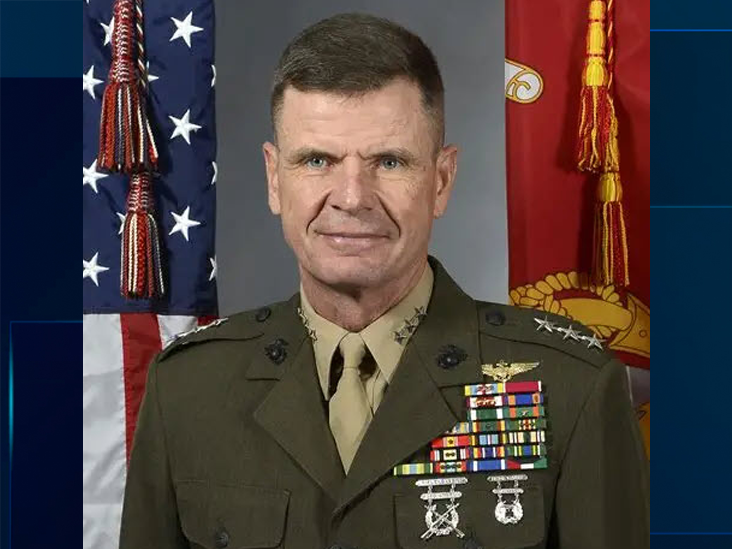
Speaker
Lt. Gen. (Ret.) William “Dave” Beydler
Former Director of Strategy, Plans and Policy, U.S. Central Command
Former Commander of U.S. Marine Corps Forces, U.S. Central Command
(SPEECH)
[MUSIC PLAYING]
(DESCRIPTION)
SLIDE. Wednesdays with Woodward (registered trademark) Webinar Series. Joan Woodward, President, Travelers Institute; Executive Vice President, Public Policy, Travelers.
(SPEECH)
JOAN WOODWARD: Thank you so much for joining us. We really appreciate your engagement throughout all these years. My name is Joan Woodward, and I have the pleasure of leading the Travelers Institute, which is our public policy and educational platform. Welcome to Wednesdays with Woodward.
(DESCRIPTION)
About Travelers Institute (registered trademark) Webinar. The Wednesdays with Woodward (registered trademark) educational webinar series is presented by the Travelers Institute, the public policy division of Travelers. This program is offered for informational and educational purposes only. You should consult with your financial, legal, insurance or other advisors about any practices suggested by this program. Please note that this session is being recorded and may be used as Travelers deems appropriate.
(SPEECH)
Before we dive in, I wanted to start with a quick disclaimer about today's program. And
(DESCRIPTION)
Wednesdays with Woodward (registered trademark) Webinar Series. Geopolitics and the Global Risk Landscape. Travelers Institute (registered trademark), Travelers. MetroHartford Alliance. University of South Carolina Darla Moore School of Business. Master's in Financial Technology (FinTech) Program at the University of Connecticut School of Business. American Property Casualty Insurance Association (APCIA).
(SPEECH)
I also want to thank our webinar partners for today's program, MetroHartford Alliance, the Risk and Uncertainty Management Center at the University of South Carolina, American Property and Casualty Insurance Association, and the Master’s in FinTech Program at UConn.
So tomorrow will mark three months since the United States and Israel launched coordinated joint airstrikes on Iran, setting off the Mideast conflict. Today, the region remains somewhat of a ceasefire, with the Strait of Hormuz blockaded by both Iran and the United States. We know that many of you in our audience are in the business of risk management.
So we're pleased today to look at this geopolitical risk. What are the ripple effects around the globe of what's going on in the Mideast? Where do U.S. alliances stand, and what are we learning about modern warfare? And what are the Chinese learning from observing all of this? And what about Russia and Ukraine? So joining us today to share his insights is Lieutenant General Dave Beydler.
General Beydler spent 37 years in the Marine Corps as a naval aviator, a commander at every level, from Fighter Attack squadron to Marine Expeditionary Force, and ultimately as Commander of Marine Corps Forces, U.S. Central Command, where he was Commander of all Marine Forces in the greater Mideast.
Today, he joins us as a Geopolitical Intelligence Group member, as well as advisory board member of Academy Securities. And Academy Securities is a service-- disabled veteran-owned investment bank, with a mission to hire, mentor and train military veterans that are looking to transition into the finance world. General Beydler, thank you so much for joining us today.
(DESCRIPTION)
Today’s Speaker: Lieutenant General (Retired) William “Dave” Beydler, Former Commander, U.S. Marine Corps Forces, U.S. Central Command
(SPEECH)
DAVE BEYDLER: Thank you.
JOAN WOODWARD: But first, everyone, this past Monday was Memorial Day. It's a day that means something different to most Americans than it does to those who have worn the uniform or lost someone who did. For many, it's the unofficial start of summer. For Gold Star Families, for veterans, for those who served alongside the fallen, it's something far more personal and far more profound.
General, you spent 37 years in the Marine Corps, led men and women in some of the most world's dangerous places. I know really firsthand the weight of that sacrifice. I want to simply start by saying thank you. Thank you for your service and for the service every man and woman that you led. General, what does this day mean to you?
DAVE BEYDLER: Well, first, thanks for that kind introduction, and thank you for having me today. And when I think about Memorial Day, I think about remembrance and just thanking those that have served and sacrificed, certainly those that have sacrificed with their lives in defense of our great nation, and perhaps more importantly, just remembrance and thankfulness for their families, for their families.
Sometimes Memorial Day is conflated with Veterans Day, Memorial Day at the beginning of the summer, Veterans Day in November. And Memorial Day is to remember those that have given their lives in service to our nation, whereas Veterans Day is to remember all those that have served, living and passed and all of that. But really-- all of that just begins with a commitment of those individuals to do something that may not be in their own best personal interest, a willingness to put others before self, to answer a higher calling and to accept risk.
And as a Marine, I'm just amazed at young men and women of America who are willing to show up at Marine Corps Recruit Depot Parris Island and go through the rigors of becoming a Marine. And that's true for all of the services. And I'm thankful for those who step out of their comfort zone and serve our great nation.
JOAN WOODWARD: Couldn't agree more. So it's really fitting that we're having this conversation just days after Memorial Day because, honestly, what we're about to discuss is exactly what's at stake when we ask young men and women to serve. So let's turn to the world as it stands today. We're going to go around the world with everyone, the Mideast.
So you led the Marine Forces CENTCOM from 2015 to 2018, overseeing operations across one of the world's most complex regions. And today, we're watching a very fragile ceasefire between the U.S. and Iran. From a strategic standpoint, how do you characterize the overall state of stability or instability, frankly, in the Mideast right now?
DAVE BEYDLER: Well, I think that the instability that we see today is somewhat narrowly focused, and it's really due in large part to the malign and nefarious activities of Iran throughout the region.
And so I would ask everyone here just to visualize the Middle East, looking from the west to the east, the Levant with Israel, all the way out to and through the Arabian Peninsula into the Stans, and the eastern limit being Pakistan, 21 countries, Israel to Pakistan.
And when most people look at that region, they see desert. As a Marine, as a Naval Officer, when I look at that region, I see water. And I see three critical water choke points, the Suez Canal on the eastern edge of the Mediterranean, moving into the Red Sea, the Bab-el-Mandeb on the southern extent of the Red Sea. And then I see the Strait of Hormuz between the Arabian Gulf and the Gulf of Oman.
I see a maritime-centric environment. And if you look at that, if you look at that environment, the Iranians control, to some degree or another, those three strategic navigation choke points in the maritime environment, with Hezbollah and Hamas up in the Levant, with the Houthis supported by the IRGC in the Bab-el-Mandeb and certainly now, increasingly so, the Strait of Hormuz.
We have made tremendous strides in the way we look at this region. The first thing that is significant in terms of change in the Central Command area of responsibility is the introduction of Israel as the 21st nation in that responsible area.
Prior to 2021, we kept Israel in the European Command area of responsibility because it was very difficult to have the kind of discussions we needed to have largely with Arab and Muslim states in the Central Command region with Israel present.
With the movement towards the Abraham Accords and further alignment of interests between Israel and primarily the Gulf states and the Gulf Cooperation Council, we were able to bring Israel in.
What I found later in my time at U.S. Central Command in charge of Strategy, Plans and Policy is a number of the nations in the CENTCOM AOR had more in common with Israel in terms of defense than they did with some of the other Arab nations in the area and certainly with Iran.
And so I think the Abraham Accords and the fact that we brought Israel into the CENTCOM area of responsibility really changed things. There's increased regional integration. There's increased security and cooperation, especially with the Gulf partners in Bahrain and the United Arab Emirates at the top of the list.
But throughout the region, Iran as a Shia state, an Islamic state, continues their routine, nefarious malign activities that are a prime source of the instability across the region. There continues to be a huge split between the Sunnis and the Shia in the region. The Sunnis, they believe that they're the righteous minority that have been persecuted by the tyranny and corruption of Sunni states.
And that's what we are experiencing right now in negotiations with Iran based on the ongoing conflict. They see things fundamentally differently in terms of their posture in the region and globally. They see that they need to resist and continue to resist what they see as a corrupt environment that holds them down. And I think that that's the position from which they're negotiating with the U.S. and Israel right now.
JOAN WOODWARD: Let's just stay on the Strait of Hormuz for a moment. You commanded in this theater. What is the significant risk to freedom of navigation there. And what does it mean for the global economy if that waterway remains contested over years?
DAVE BEYDLER: I think that this is one of the greatest emerging challenges from the current conflict. The strait had not been terribly challenged prior to recent events. And I think the first thing I'd like to point out to the audience is we are a maritime nation. The United States is a maritime nation. We sometimes overlook that and take it for granted. But we're isolated with the Pacific Ocean to our west and the Atlantic Ocean to our east.
Now, that is good for defense. And we've benefited being an isolated nation and an isolated continent from conflict in the past. But it's challenging for commerce and challenging for the communication that supports commerce. We as a nation are the champions of freedom of navigation on the high seas.
And the U.S. Navy is—champions that in every deployment that sailors and Marines make across the globe. We call it FONOPs, Freedom of Navigation Operations. And anytime that Marines and sailors deploy on ships, they make it a point to demonstrate the freedom of navigation outside territorial waters.
We always make it a point to sail close to nations that border the oceans right up to but not crossing their territorial limits to make a statement that we support freedom of navigation across the globe.
I think that right now that is being challenged, and if it's being challenged in the Strait of Hormuz, it could be challenged more globally. And that is something that should concern us all. I would say that the Strait of Hormuz is challenging to navigate when there is no tension and there are no weapons brought to bear. It's 21 miles between Oman and Iran.
Each of those countries claim 12 miles of territorial waters, which overlap. The actual channel is 2 miles wide going into the strait and 2 miles wide going out of the strait with 2 miles separation. It is very tight. And it takes some navigation skills to manage that when there is no conflict.
A lot can go wrong in all of this. And coastal defenses are not terribly expensive. They're easy to hide. They don't need to cover any more than 20 miles of the surface. And I think that right now safe passage, transit passage and freedom of navigation is being severely challenged.
I think one of the things that we've got to be very cautious about here is allowing fees, levies or tolls to be charged on commerce going through a strait like the Strait of Hormuz because there are other straits across the globe that could be challenged using this as a precedent. And I think that freedom of navigation globally could be at risk if we don't do it right.
The one thing I would mention to the audience here is that of all the things that could be brought to bear in the strait, mines are the most fearsome. If there's anything that mariners fear at the top of the list, it's mines, more so than bad weather, hurricanes, typhoons and the like because mines absolutely destroy ships. They lift them up and they break them in half.
And if there's a threat of mines in the Strait of Hormuz, it's going to be a long time before the perception of safe passage is reestablished, independent of what's actually there and a threat.
JOAN WOODWARD: Wow. That is a lot to consider. It really is just unbelievable that this is happening right now to us. I want to turn to-- so thank you for your thoughts on that. I think a lot of folks on the line probably didn't know a lot of that going into this call today.
So, let's talk about Iran's nuclear program because it remains one of the core unresolved issues in the current negotiations. So what does a durable, verifiable framework actually need to look like to give our regional partners and the international community clarity and confidence that Iran is not actively engaged in this?
DAVE BEYDLER: It may sound flippant, but in all seriousness, I think what we need is something like the JCPOA, the Joint Comprehensive Plan of Action, that was established in 2015, and we moved away from in 2018.
The fact is that that arrangement, though not perfect, addressed the one thing that is most important to us in the events today. And that is the nuclear dimension and the nuclear proliferation that Iran was marching towards.
It had allied backing. P5+1, the European Union. Germany was a key part of that. German insights from an intel perspective on what goes on in Iran are many times unmatched.
We had good enough. It was a good enough arrangement, I think. It kept the dialogue open. It was understood by our adversary, and it did not get bogged down in the rhetoric. That JCPOA was arranged all the while they still chanted death to America, which was very off-putting, but it allowed us some visibility on what they were doing. And it controlled their development.
So I think a proper resolution of the nuclear dimension needs to, first and foremost, accomplish one of three things. We need to retrieve the enriched uranium, a thousand pounds worth and get it into our possession, or we need to make it unrecoverable, or we need to make it unreconstitutable.
I think absent one of those three things relative to the enriched uranium they currently hold, we will not have a satisfactory outcome. In addition to that, we need to set back their program. That has probably been achieved.
And we need some level of verification, not unlike the verification that is always challenged, but not unlike the verification that we had in the JCPOA. The bottom line is a lot has to happen here. Much of it comes with great risk. But absent this, I don't think we will have addressed the nuclear issue with Iran.
JOAN WOODWARD: OK. Just as an aside, I just had a visual in my mind. How many Navy warships would have to be needed to get that material out of Iran and elsewhere.
DAVE BEYDLER: I don't know the technical details. I do know a couple things. One, I think it will be hard to recover that. I think it will take people on the ground to do it, either Iranians or someone else, perhaps Americans.
If it is not done with their acceptance, if it's not done with their support, it is a very involved operation that's going to take a lot of people with a lot of risk. It is in many forms. There's a gaseous component to it.
Again, I'm not a nuclear expert, but I think achieving any of those three things, especially the retrieval, will be very challenging and not without substantial risk.
JOAN WOODWARD: Wow. OK, all right. Let's move on to a little more regional discussion. So the Gulf states, Saudi Arabia, UAE, Bahrain and others, really have absorbed a lot of the Iranian strikes and are navigating their own economic interests.
How do you assess the resilience of our U.S. partners in the Gulf nations right now? What do you think those partners need from Washington?
DAVE BEYDLER: Well, I'm not sure that they know precisely what our aims are at this point. I think that they need a better outcome than we may accept. They live in the region. They have been struck. And I think that that changes their views of what an acceptable outcome is as compared to our own.
They wanted to see a change in Iranian behavior, not just a change in the faces, but a change in the way Iran acted as a neighbor in the region. Again, they've been struck. We have not. If we had been struck at home, if we had lost a U.S. airliner, if we had lost a ship there, I think our views of what an acceptable outcome might be, would be different than that which we're hearing right now.
I think that their concern that the U.S. does not fully understand the region. It's far more complex, especially with the Iranians, than any of us can imagine day in and day out. And I think that they are beginning to sense that we so want out of this war that we may accept a deal that is not best for them.
In sum, when I look back on this, this was an unplanned war that was generated in a strike operation when a ally brought intel to us that said Iranian leadership was gathering at a certain place and time. Beyond that strike, I'm not sure complete and comprehensive war planning was done. It appeared haphazard.
I think that the nation was not prepared for a war. I don't think that the U.S. military was prepared for a war, placed on a wartime footing. I'm not sure-- In fact, I'm quite sure that allies and partners were not prepared for where we find ourselves today.
I mean, the 11-month deployment of the USS Ford that just returned to home port is not normal and wasn't planned for. I made a six-month deployment on the USS America in a Marine F-18 squadron in a Navy carrier air wing. You spend three months on that ship working up to deploy for six months.
This is a 14-month evolution for those sailors. And they did it. And they did it very, very well. And I'm proud of them and their performance. But that's hard. That is really hard when you're not prepared for it.
And I would leave you with a couple thoughts here on this. Military excellence does not guarantee strategic outcomes. And while the U.S. military is unmatched in its capability, its capacity is limited. And I'm not sure that we haven't seen some of the limits of that capacity.
And the other thing that we need to remember is there is nothing written that guarantees the U.S. will prevail when we take on war and enter the chance of realm. The realm of chance, I should say. There's nothing that guarantees that America is going to be victorious.
JOAN WOODWARD: OK, that's very sobering, honestly. Let's pick up our audience and take them on the other side of the globe. I want to talk about China with you. So earlier this month, President Trump met with President Xi.
And China really has been positioning itself as a mediator in the region, brokering that Saudi-Iran rapprochement in 2023, I think, and then more recently suggesting and co-sponsoring some peace proposals. How do you think about the Mideast conflict through the lens of great power competition like that?
DAVE BEYDLER: Well, I think the first thing is that China is content with the U.S. expending its energy, its resources in the Middle East, while they continue to build their own power.
I think that they see that we're expending political capital here at home. They continue to build a force with capability and capacity to challenge the U.S. in the Western Pacific and beyond.
We used to talk about near-peer competitors. I think China is a peer competitor. Their technologies are increasingly rivaling our own. They are flush with cash. And they're building a very, very powerful military force, both from a capability standpoint and a capacity standpoint.
I think if you look at what has transpired with China recently, if there was really good tangible news for the administration coming out of the U.S.-China summit, I think we would have seen it by now.
I'm not sure that there was anything that came out of that that fundamentally shifts where China is and where they view themselves relative to the U.S. I think that slow walking the Taiwan arms package was probably required not to fracture the summit itself and create additional turmoil.
In the near term, I sense that we are still going to consume power, prestige, military readiness while losing the support of some allies in the process. I think we need to be cautious about that. And clearly, for the Chinese, the Middle East is vital. It's vital from an energy resource standpoint, and it's vital from a commerce standpoint.
We can go back and look at the Belt and Road, the new Silk Road that China invested in beginning in 2013, where they were going to build infrastructure through Central Asia, the Middle East and into Europe to advance their commerce and economic agenda. At the same time, they were doing the same thing in the maritime environment.
We talk a lot about the first island chain and trying to contain China in the Western Pacific through the island chain that comes down from Japan, through Okinawa, the Philippines to Borneo. I would say that that first island chain actually goes all the way through the Indian Ocean to Djibouti because the Chinese have a base in Djibouti adjacent to our own there.
And I think that they sense that they need full and unfettered access from the Western Pacific through the Indian Ocean into the Red Sea that includes the Arabian Gulf. So the bottom line here is China needs that access for multiple reasons, and they're doing what they can to preserve their resources while we expend our own in that region.
JOAN WOODWARD: So it does sound like Beijing really stands to gain strategically from extended period of our military engagement in that region then. Any other thoughts in terms of what do they stand to gain? They clearly are watching this very closely.
DAVE BEYDLER: No, I think that they've been able to adapt, with what, 11% to 13% of their energy, their oil resources not flowing through the strait at this point. But they're still pumping into their strategic reserves. They are moving towards EVs more quickly than we are.
So they are reducing their demand. They are doing some things to adapt to the change. I don't think that this change will be forever, but they've been able to weather it. They've been able to weather it.
JOAN WOODWARD: All right, let's shift a little bit. One of the Indo-Pacific region’s expeditionary units, 2,500 Marines and three warships, normally are in Okinawa, Japan, is now in the Mideast. This is one of seven Marine Expeditionary Units and the only one permanently deployed in the Indo-Pacific. So you spent a number of years in Okinawa. If that unit is in the Mideast, do we have a security gap then in the Pacific?
DAVE BEYDLER: I think that we have a crisis response gap in the Pacific. And in the strategic balance, that is probably acceptable right now. The fact of the matter is, these Marine Expeditionary Units embarked on three large amphibious ships operated by the U.S. Navy are not invasion forces.
They contain a battalion of Marines and all that goes with a battalion of Marines and a reinforced aviation squadron. But they're not an invasion force. They can do a lot of things from a crisis response force standpoint.
They can do a lot of things, and some of those things were talked about in the current state of play in the Middle East, perhaps raids into Kharg Island or other ground operations of limited scope and duration in Iran. But they're not an invasion force.
I think it just goes to show that our capacity is limited. We are pulling from what many would say should be our focus, and that is the Pacific, the Pacific region, and pure competition to address another issue and another AOR, albeit the most important priority at this particular time.
JOAN WOODWARD: To my audience, please drop your questions for the general in the Q&A function. So we're going to get to some audience questions in a moment here. And I'm going to take my audience back around the world. And we're going to talk now about Ukraine and Russia and what's going on there.
I mean, the Ukrainian situation has really become a real-time laboratory for modern warfare, drones, loitering munitions, electronic warfare and really the role of commercial satellite intelligence. The stunning vulnerability of these large, armored formations to cheap, unmanned systems. So as a former naval aviator and theater commander, what are the most important lessons the U.S. military should be taking away from what's going on in Ukraine?
DAVE BEYDLER: Well, I'm a proud fighter pilot. I'm all for having robots take on some of the more risky missions that come in aviation or any other domain. And we're rapidly moving in that direction. So allow me for just a minute to talk about the changing nature of war in general. And it has changed markedly in the past several years in all that we've seen in Russia and Ukraine.
We are entering and we are in, I should probably better say, an era of massed autonomous robotic warfare enabled by AI. It began in the air domain with unmanned aerial systems that gave almost any country or any individual on this planet the ability to strike with precision targets at range, something that we used to have exclusive dominance over.
And I would tell you that my Marine Corps, for the first time in 70 years, is now-- now has to concern itself with attacks from the air. We have not been struck from air forces because we've had air superiority, if not air supremacy, in almost every conflict since the Second World War.
And I would tell you that Marines in the global war on terror in the 20-plus-- 25-plus years in the Middle East never had to look to the sky. Their threat was on the ground. It was IEDs. And everywhere they walked or drove or found themselves, they were looking at the ground, looking for traces of buried explosives, and wires, and trips and the like, 5-, 10-, 15-meter scans. Never had to look up.
You could take the very best Marine, Army forces that were the best platoons and companies in the global war on terror and place them in Ukraine right now, and I'm not sure they would know how to operate. They have not experienced that. It is completely and totally different.
Again, we-- with the advent of these airborne robots with explosives on board, you can target people over great distances. And you may have seen some of the very disturbing videos that are online of Russian soldiers in disabled vehicles being chased to their deaths by First Person View drones.
And the last image is a defenseless soldier swinging the butt of a rifle at a drone or swinging a shovel at a drone that's about to kill him. And I'll tell you, I think the American people have a really tough time seeing that of a U.S. Marine or a U.S. soldier or any other service member.
So we are moving towards robots, and we're moving pretty rapidly, though we're behind. Eighty percent of the airborne drones in the world today are made by China. And we're trying to catch up.
But our robots in all domains, whether it be air, land, sea, subsea or robots that move from one domain into another-- they go underwater, they come up out of the water, and they fly to their target-- our robots have got to be better than their robots, and we've got to move in that direction very rapidly.
JOAN WOODWARD: So when you talk about AI in the robots, obviously, these items are taking out something, planes or other things that are costing hundreds of millions of dollars. So how does it change the calculus for how we as a country think about defense investment, force structure, procurement? I mean, is the word industrial policy where the U.S. government is telling companies we need to shift and pivot quickly here? You said China has 80% of these items?
DAVE BEYDLER: Yeah. We do need to pivot, and we need to pivot very quickly. Again, as I just pointed out with regard to autonomy robots in all domains. Let me talk briefly about offsets.
Our strategic view in terms of U.S. defense has been summed up in, I would say, three offset strategies. The first offset was in the 1950s, after World War II, where the Soviets had demonstrably superior ground conventional forces in Europe. And we decided that we were going to invest in strategic and tactical nuclear weapons to offset that advantage.
That held true until the 1970s. And at that point, the Soviet Union had advanced their own nuclear capabilities at the strategic and tactical level to reach parity. At that point, we decided we were going to move towards precision conventional weapons-- GPS, laser-guided weapons-- that would give us precision capability to attack targets that in the past, instead of striking with one bomb, you had to drop 100 and hope that one of them found its target. We did that and demonstrated that in Desert Storm. When the Soviets saw that, they were shocked at the precision that we could generate conventionally.
In about 2014, the world started catching up on laser-guided and GPS-enabled weapons, precision weapons at range. So the third offset is beginning now. And what we're doing now is moving towards systems that are robotic, that use AI, that use advanced joint all-domain command and control to create overwhelming capability through volume.
In the past, we had always developed exquisite weapons. We could match six Soviet MiG-23s with two F-15 Eagles. And now we're seeing that volume and capacity and numbers have their own exquisite value. And I think that we're moving towards lower cost attributable capabilities to match those that we're seeing with our adversaries.
JOAN WOODWARD: So moving on from Ukraine and Russia a bit, we want to talk about Europe. So President Trump is reducing the number of U.S. forces in Poland and has already pulled out some of our forces in Germany. What impact does this have on European and American security?
DAVE BEYDLER: The first thing I would say is sometimes my wife tells me it's not what I say, it's how I say it that gets me in trouble. And I think some of the language we've used relative to our European allies, especially within NATO, have not been helpful.
I think that we have tremendous capability, but our capacity is limited, and we must have allies. That is our strategic strength globally, whether it's in the Western Pacific with Australia, the Philippines, Korea and Japan, or it's in Europe with NATO and the European Union.
I think that clearly, the Europeans need to spend more on defense. We're moving that direction, but I think we need the transatlantic link as much, if not more, than the Europeans do. The fact of the matter is to get to the points of friction in the globe today, America has to get through Europe. And we need what we call ABO-- access, basing and overflight. And when we don't have access, we don't have overflight rights, and we do not have basing, we're in trouble as a global power.
I think if you think about it, where on a globe do most Americans most feel at home when they're not in the United States is probably Europe, and we've got to have access there, as I just stated. I worked for General Mattis twice. And he used to say, if we didn't have a NATO today, we'd be working really hard to create one. We'd be working hard to create one.
I went to the NATO Defense College right after 9/11. And the saying there is a bit flippant. NATO was created to keep the Russians out, the Germans down and the Americans in. And the fact is, it's served us exceedingly well. And we need to further leverage it.
JOAN WOODWARD: And with all this activity in Europe on our part, the Americans' part, what message does this send to Vladimir Putin?
DAVE BEYDLER: I think we've given him some openings that were unforced errors, to be quite honest. I think that our strength relative to Russia is our relationship with individual countries and with NATO and European Union as a whole. I think that that ought to be the basis from which we approach an expansive and troubled Russia.
They're in a bad spot right now. And when nations and authoritarian leaders are in bad spots, even worse things can happen. And I think we just need to be aware of that and further leverage unique, special relationships with our NATO partners.
JOAN WOODWARD: OK, thank you. I want to get your perspective on the private sector. So after retiring from the Marine Corps, you moved into the defense industry, including serving Vice President for Maritime Dominance at Raytheon Intelligence and Space. And now, of course, you advise through Academy Securities’ Geopolitical Intelligence Group. So how do you think the U.S. defense industrial base is keeping up with the speed of technological change and what we've been discussing here?
DAVE BEYDLER: Well, I would say that the industrial base has not kept up. We haven't invested properly in the industrial base, and some of that is our own making. I'll get to that here in a second.
As I mentioned earlier, during the Cold War, we invested purposely in quality over quantity. And there's something to be said for that. Companies like Raytheon Technologies and the other big, large defense corporations, they focused on the exquisite for the past 40 or 50 years, exquisite technologies that were unmatched and served us very, very well. Raytheon did not do 85% solutions. That's not something that they focused on. They focused on unmatched technology that was unbeatable.
So I think now some of the exquisite comes in far cheaper, far more capable drone, uncrewed AI-enabled systems, and we've got to change to that. But this has been brought on by our system. The fact is that our budget process has not served our defense industry or the defense of our nation very, very well.
Can anybody remember the last time we had a clean budget? The last time we operated without a continuing resolution was 1997. And when you have continuing resolutions, there's no predictability for industry. None. And you lose.
You pick the number. You lose somewhere between 5% and 10% of your buying power when you cannot predict what you have to work with, and we've been that way for some time. What we need is predictable budgets, where our defense industry can plan for their own internal investments and keep the defense infrastructure and the workforce employed.
You and I both live in Virginia. Newport News is the heart of the nation's Navy shipbuilding industry. They hire great numbers of technical experts down there, build a ship, and then we go two years without building one. So multiple-year buys allow the workforce to remain intact, a very skilled workforce that we must keep employed to serve our nation's defense needs.
JOAN WOODWARD: Well, thank you for that. We're going to get to audience questions after this kind of last question here. This is on military recruitment and veterans’ employment. Truly, there's no better leadership training than our U.S. military, the best in the world. So after a few years of struggling to meet the recruiting targets, now the U.S. military branches are meeting or exceeding their recruiting targets. From your experience leading Marines at every level, what is the best way to recruit the next generation?
DAVE BEYDLER: Well, I think the first thing it takes is families that value service to the nation and talk about that with their children. You don't just turn 17 or 18 and decide that you're going to enter the service. It has to be something that's talked about.
I'm very fortunate. I have two children. They both decided to be Marines. I did not pressure them in the least bit there. They made that decision on their own. They saw value in service. And whether you serve for five years or 35 years, it's a good start in life. But until families recognize the value of that, and that's something that folks who don't have a military history within their family consider as a viable option to a start in life, I think we'll continue to struggle with recruiting.
The GI Bill helps immensely. If you enlist in the service, you can go to college. You can go to college, and the government will pay for that. Service Academy, ROTC scholarships all drive that value. But we have overcome a significant recruiting challenge. I think that in some cases, we've offered too much bonus money for enlistments and perhaps lowered our standards in order to meet those goals. And I'm not sure that serves us very well over the time.
I'm very proud of my Marine Corps, who made through this and met their goals. And I think they did that by they sent their very best Marines. The very best Marines go out and are recruiters, and they look the part, and they act the part. And they leveraged the brand.
And we make no promises, and we hold very high standards. And my experience has been that some people leave the services disappointed because the standards were not as high and the expectations were not as high as they thought, and they wanted to be challenged even more than they were.
JOAN WOODWARD: Wonderful. All right. We're going to take some audience questions. And this first one I'm going to ask you is kind of near and dear to my heart. I was the executive sponsor of the Veterans and Military Diversity Network here at-- here at Travelers.
So how we treat our veterans-- this is person's question. How we treat our veterans reflects our national character. For the business audience joining us today, insurers, risk managers, financial professional, what's your message about the value that veterans bring to the civilian workforce, and what should companies be doing better to recruit, retain and support them? Great question.
DAVE BEYDLER: Well, the first thing I would say is they've all been willing to take on some risk, some personal risk, the risk of perhaps not measuring up. As I said earlier, it takes some gumption to show up at a Marine Corps Recruit Depot, knowing that the service will find your weakness and make you better, make you a better person. There's a leadership. There's a discipline aspect that I think employers see with rank-and-file veterans that they interview and employ.
I would tell you that my own transition was very, very difficult. I retired in 2018. I had a two-year cooling off period where I could not-- retiring as a three-star in '09, I could not represent defense contractors back to the organization from which I came. So I could not go back into a logical transition, which is defense and security, for two years. I met with a lot of folks when I retired out of Tampa that would tell me how impressed they were with my resume and how they appreciated my service, but you don't know our business.
And I thought, after 24 moves and going from the Western Pacific for two years, being Strategy, Plans and Policy for General Mattis and General Austin in the Middle East, then becoming the Commander of Marine Corps Forces Africa Command, and then going back to the Middle East, being in NATO, I think I can figure out your business. I figured out the Pacific. I figured out the Middle East. I figured out Africa, to a degree. I think I can figure out your business.
So the thing I would say here is look at where they can go, not necessarily just where they have been. And if you help them understand what it is you need from them, they'll probably deliver in spades.
JOAN WOODWARD: I couldn't agree more. We have a huge military recruitment program here at Travelers. We also have a program around military spouses’ recruitment, and they're really some of our best employees-- the work ethic. They're organized. They're detail oriented. They always have a backup plan, and we love to hire veterans.
So if you have anyone out there in your world, and you're on the fence thinking about it, just do it. It's been a wonderful program for our Travelers community and our family. So, thank you.
DAVE BEYDLER: Joan, I'd like to mention-- can I mention two things?
JOAN WOODWARD: Sure.
DAVE BEYDLER: One, right now, SkillBridge is a way that people can transition last six months of their career and work as an intern with the intention of gaining employment, or internships in general give you the exposure to veterans and their family members that could be helpful in a transition.
JOAN WOODWARD: I'll do one commercial for an organization of which I sit on the board. American Corporate Partners is a military nonprofit that works with all Fortune 500, Fortune 2000 companies, and they have mentorship programs. And I'm currently mentoring someone in the SkillBridge program, and there are fantastic opportunities.
If you haven't done this before, look them up, acp.org, and they run a terrific, well-organized corporate program for you to mentor and have internships with those leaving the military. So a wonderful organization.
OK, back to our questions. So another question coming in. What geopolitical risk do you believe American businesses are currently underestimating? Good question.
DAVE BEYDLER: Underestimating-- I think the national debt is probably at the top of the list. It limits our freedom of action. Our discretionary spending is rapidly becoming almost nonexistent based on all the entitlements. I think the division within the country, increasingly leveraged by politicians to their advantage, is troubling.
The thing that General Mattis, in speaking with his senior general officers, was most concerning to him was the politicization of the U.S. military, especially senior military leadership, the generals and admirals that lead our military, labeling them as one party affiliation or the other is very, very concerning. And that lends itself to the civil military divide, calling into question the motivations of senior military leadership. Some of our senior military leadership has not done us any favors in that regard. And then we're continuing to consume military readiness in the current war.
In terms of things that I think we can take confidence in, the strength of our nation in crisis. When we get in a real bind, as we saw in 9/11, Americans will do whatever is required to defend and preserve the nation.
I like the ingenuity and the entrepreneurship that we're seeing in small startup companies led by some really capable young people who've got great ideas that challenge the ideas of the past. And I think the products of our higher education continue to be world class. Some of the young people I work with in the advising and consulting I do with young startup companies are unmatched. I could not compete with them at the same age.
JOAN WOODWARD: All right. Thank you for that. Next question. What role does Taiwan play in future global economic and security stability? And are you concerned at all about the Taiwan/China nexus?
DAVE BEYDLER: I'm very concerned about it because I think it's the bellwether for how democracies will be viewed when they stand up to authoritarian regimes that mean them harm. I think we need to think through what we would do if the People's Republic of China attempts to subsume the Republic of China and what our actions might be. I think it sets a concerning precedent if it goes unchallenged.
And will we continue, will we continue to defend democracies around the globe to varying levels, to varying degrees, from communist and authoritarian regimes? We see more and more of that. And I think not taking a stand there is risky for us as a nation.
JOAN WOODWARD: OK. Last question, and then we're going to let everyone go. What keeps you up at night? In the second half of this decade, what are you most concerned about? And maybe what gives you the most confidence that we're going to be OK?
DAVE BEYDLER: Well, I think I hit that just a minute ago a little bit. Again, I'm concerned about the national debt. I'm concerned about the division. I think all of us are, independent of what side of that division you might be on. I think that we're not as united and as coalesced as we could or should be in times of real challenge, peer competition, peer competition.
But I think that the young Americans that I interact with, my own children, the young Marines that I served with until I retired in 2018, and the Marines that I still see today inspire me and give me great confidence. Those that have bet against our nation tend to come up short.
JOAN WOODWARD: Well said. Well said on that closing remark. Listen, General, we're so grateful for your time today, your insights, your perspective, and just thank you so much for the last hour. But more importantly, thank you for your service to our country and your children's service to our country and everyone else out there who has served. We're all grateful and thankful for you. And come back. Come back and join us on the show.
DAVE BEYDLER: Thank you, Joan. Thank you, Joan. It's a pleasure to be with you today.
JOAN WOODWARD: It was wonderful. Thanks. And to my audience, please take our survey. I read every word. I really do. So write whatever you want to me.
(DESCRIPTION)
Take our survey. Link in chat.
(SPEECH)
I'd love to hear your thoughts, who else you might want to see on our shows.
So the next couple coming up on your screen are going to be good ones. So
(DESCRIPTION)
Upcoming Programs. June 10, Inside the National Hurricane Center: Advanced Forecasting, Better Preparedness. June 17, Take the Stage: Leadership Confidence that Builds Trust and Connection. Register: Travelers Institute.org.
(SPEECH)
June 10, we're going to welcome a senior leader from the National Hurricane Center, Deputy Director of that center, Jamie Rhome. He's going to take us through how they think about the Atlantic hurricane season and what's new in the National Hurricane Center in Miami.
And then on June 17, we're going to shift gears a bit to talk about leadership, especially developing your own brand, your own leadership presence, building trust with others. So my good friend, attorney, author, leadership consultant and actress Pam Sherman is going to join us.
(DESCRIPTION)
Watch. Travelers Institute.org. LinkedIn Connect. Joan Kois Woodward. Travelers Institute Risk and Resilience. Listen wherever you get your pods.
(SPEECH)
So really thrilled you're here with us. We also have lots of podcasts that take our webinars, turn them into podcasts. So join us there if you prefer that channel. Thanks again, my friends. Be safe out there, and we'll see you next week.
[MUSIC PLAYING]
(DESCRIPTION)
Travelers Institute (registered trademark). A red umbrella logo. Travelers. Travelers Institute.org.
Please note: Due to the nature of the replays, survey and chat features mentioned in webinar recordings are no longer active.
JOAN WOODWARD: Hi, folks, and welcome to the Travelers Institute Risk and Resilience podcast. I'm your host, Joan Woodward, President of the Travelers Institute. The conflict in the Middle East has raised questions about military strategy, regional stability and what it all means for the United States. I was recently joined by Lt. Gen. Dave Beydler, a career naval aviator who spent more than 37 years in the United States Marine Corps. He served in many roles that ultimately led to his position as commander of the Marine Corps Forces, U.S. Central Command. Today, he represents Academy Securities' Geopolitical Intelligence Group. General Beydler shared his perspective on military strategy in Iran and across the region. We covered a lot of ground: the current geopolitical landscape, the changing nature of global conflicts today and the national security challenges facing the United States and its allies. We also talked about topics close to his heart: military recruitment, veteran employment and the support our service members deserve when they come home. Take a listen to our conversation. General Beydler, thank you so much for joining us today.
LT. GEN. (RET.) WILLIAM “DAVE” BEYDLER: Thank you.
JOAN WOODWARD: But first, everyone, this past Monday was Memorial Day. It's a day that means something different to most Americans than it does to those who have worn the uniform or lost someone who did. For many, it's the unofficial start of summer. For Gold Star families, for veterans, for those who served alongside the fallen, it's something far more personal and far more profound. General, you spent 37 years in the Marine Corps, led men and women in some of the most world's dangerous places. I know really firsthand the weight of that sacrifice. I want to simply start by saying thank you. Thank you for your service and for the service of every man and woman that you led. General, what does this day mean to you?
LT. GEN. (RET.) WILLIAM “DAVE” BEYDLER: Well, first, thanks for that kind introduction and thank you for having me today. And when I think about Memorial Day, I think about remembrance and just thanking those that have served and sacrificed, certainly those that have sacrificed with their lives in defense of our great nation. And perhaps more importantly, just remembrance and thankfulness for their families. Sometimes Memorial Day is conflated with Veterans Day, Memorial Day at the beginning of the summer, Veterans Day in November. And Memorial Day is to remember those that have given their lives in service to our nation, whereas Veterans Day is to remember all those that have served, living in and past and all of that. But it really – all of that just begins with a commitment of those individuals to do something that may not be in their own best personal interest, a willingness to put others before self, to answer a higher calling and to accept risk. And as a Marine, I'm just amazed at the young men and women of America who are willing to show up at Marine Corps Recruit Depot, Parris Island, and go through the rigors of becoming a Marine. And that's true for all of the services. And I'm thankful for those who step out of their comfort zone and serve our great nation.
JOAN WOODWARD: So it's really fitting that we're having this conversation just days after Memorial Day, because honestly, what we're about to discuss is exactly what's at stake when we ask young men and women to serve. So let's turn to the world as it stands today. We're going to go around the world with everyone, the Mideast. So you led the Marine Forces, CENTCOM, from 2015 to 2018, overseeing operations across one of the world's most complex regions. And today, we're watching a very fragile ceasefire between the U.S. and Iran. From a strategic standpoint, how do you characterize the overall state of stability or instability, frankly, in the Mideast right now?
LT. GEN. (RET.) WILLIAM “DAVE” BEYDLER: Well, I think that the instability that we see today is somewhat narrowly focused, and it's really due in large part to the malign and nefarious activities of Iran throughout the region. And so I would ask everyone here just to kind of visualize the Middle East, looking from the west to the east, the Levant with Israel all the way out to and through the Arabian Peninsula into the Stans, and the eastern limit being Pakistan, 21 countries, Israel to Pakistan. And when most people look at that region, they see desert. As a Marine, as a naval officer, when I look at that region, I see water. And I see three critical water choke points: the Suez Canal on the eastern edge of the Mediterranean, moving into the Red Sea, the Bab el-Mandeb on the southern extent of the Red Sea. And then I see the Strait of Hormuz between the Arabian Gulf and the Gulf of Oman. I see a maritime-centric environment. And if you look at that, if you look at that environment, the Iranians control, to some degree or another, those three strategic navigation choke points in the maritime environment, with Hezbollah and Hamas up in the Levant, with the Houthis supported by the the IRGC in the Bab el-Mandeb and certainly now, increasingly so, the Strait of Hormuz.
We have made tremendous strides in the way we look at this region. The first thing that is significant in terms of change in the Central Command area of responsibility is the introduction of Israel as the 21st nation in that responsible area. Prior to 2021, we kept Israel in the European Command area of responsibility because it was very difficult to have the kind of discussions we needed to have, largely with Arab and Muslim states in the Central Command region, with Israel present. With the movement towards the Abraham Accords and further alignment of interests between Israel and primarily the Gulf states and the Gulf Cooperation Council, we were able to bring Israel in. What I found later in my time at U.S. Central Command in charge of Strategy, Plans and Policy is a number of the nations in the CENTCOM AOR had more in common with Israel in terms of defense than they did with some of the other Arab nations in the area and certainly with Iran.
And so I think the Abraham Accords and the fact that we brought Israel into the CENTCOM area of responsibility have really changed things. There's increased regional integration, there's increased security and cooperation, especially with the Gulf partners in Bahrain and the United Arab Emirates at the top of the list. But throughout the region, Iran as a Shia state, an Islamic state, continues their routine nefarious, malign activities that are a prime source of the instability across the region. There continues to be a huge split between the Sunnis and the Shia in the region. The Sunnis, they believe that they're the righteous minority that have been persecuted by the tyranny and corruption of Sunni states. And that's what we are experiencing right now in negotiations with Iran, based on the ongoing conflict. They see things fundamentally differently in terms of their posture in the region and globally. They see that they they need to resist and continue to resist what they see as a corrupt environment that holds them down. And I think that's the position from which they're negotiating with the U.S. and Israel right now.
JOAN WOODWARD: Let's just stay on the Strait of Hormuz for a moment. Youcommanded in this theater. What is the significant risk to freedom of navigation there? And what does it mean for the global economy if that waterway remains contested over years?
LT. GEN. (RET.) WILLIAM “DAVE” BEYDLER: I think that this is one of the greatest emerging challenges from the current conflict. The strait had not been terribly challenged prior to recent events. And I think the first thing I'd like to point out to the audience is we are a maritime nation. The United States is a maritime nation. We sometimes overlook that and take it for granted, but we're isolated with the Pacific Ocean to our west and the Atlantic Ocean to our east. Now, that is good for defense. And we've benefited being an isolated nation in an isolated continent from conflict in the past. But it's challenging for commerce and challenging for the communication that supports commerce. We as a nation are the champions of freedom of navigation on the high seas. And the U.S. Navy is – champions that in every deployment that sailors and Marines make across the globe. We call it FONOPs, freedom of navigation operations. And anytime that Marines and sailors deploy on ships, they make it a point to demonstrate the freedom of navigation outside territorial waters. We always make it a point to sail close to nations that border the oceans, right up to but not crossing their territorial limits to make a statement that we support freedom of navigation across the globe.
I think that right now that is being challenged. And if it's being challenged in the Strait of Hormuz, it could be challenged more globally. And that is something that should concern us all. I would say that the Strait of Hormuz is challenging to navigate when there is no tension and there are no weapons brought to bear. It's 21 miles between Oman and Iran. Each of those countries claim 12 miles of territorial waters, which overlap. The actual channel is 2 miles wide going into the strait and 2 miles wide going out of the strait with 2 miles separation. It is very tight, and it takes some navigation skills to manage that when there is no conflict. A lot can go wrong in all of this, and coastal defenses are not terribly expensive. They're easy to hide. They don't need to cover any more than 20 miles of the surface. And I think that right now safe passage, transit passage and freedom of navigation is being severely challenged. I think one of the things that we've got to be very cautious about here is allowing fees, levies or tolls to be charged on commerce going through a strait like the Strait of Hormuz, because there are other straits across the globe that could be challenged using this as a precedent. And I think that freedom of navigation globally could be at risk if we don't do it right. The one thing I would mention to the audience here is that of all the things that could be brought to bear in the straight mines are the most fearsome. If there's anything that mariners fear at the top of the list, it's mines, more so than bad weather, hurricanes, typhoons and the like, because mines absolutely destroy ships. They lift them up and they break them in half. And if there's a threat of mines in the Strait of Hormuz, it's going to be a long time before the perception of safe passage is reestablished, independent of what's actually there and a threat.
JOAN WOODWARD: Wow. That's a lot to consider. It really is just unbelievable that this is happening right now to us. I want to turn to – so thank you for your thoughts on that. I think a lot of folks on the line probably didn't know a lot of that going into this call today. So let's talk about Iran's nuclear program because it remains one of the core unresolved issues in the current negotiations. So what does a durable, verifiable framework actually need to look like to give our regional partners and the international community clarity and confidence that Iran is not actively engaged in this?
LT. GEN. (RET.) WILLIAM “DAVE” BEYDLER: You know, it may sound flippant, but in all seriousness, I think what we need is something like the JCPoA, the Joint Comprehensive Plan of Action, that was established in 2015t and that we moved away from in 2018. The fact is that that arrangement, though not perfect, addressed the one thing that is most important to us in the events today. And that is the nuclear dimension and the nuclear proliferation that Iran was marching towards. It had allied backing. P5+1, the European Union. Germany was a key part of that. German insights from an intel perspective on what goes on in Iran are many times unmatched. We had good enough – it was a good enough arrangement, I think. It kept the dialogue open. It was understood by our adversary. And it did not get bogged down in the rhetoric that JCPoA was arranged all the while. They still chanted Death to America, which was very off-putting, but it allowed us some visibility on what they were doing, and it controlled their development. So I think a proper resolution of the nuclear dimension needs to, first and foremost, accomplish one of three things. We need to retrieve the enriched uranium, a thousand pounds’ worth, and get it into our possession, or we need to make it unrecoverable, or we need to make it unreconstitutable. I think absent one of those three things relative to the enriched uranium they currently hold, we will not have a satisfactory outcome. In addition to that, we need to set back their program. That has probably been achieved, and we need some level of verification, not unlike the verification that is always challenged, but not unlike the verification that we had in the JCPoA. The bottom line is a lot has to happen here. Much of it comes with great risk. But absent this, I don't think we will have addressed the nuclear issue with Iran.
JOAN WOODWARD: OK. Just as an aside, I just had a visual in my mind. How many Navy warships would have to be needed to get that material out of Iran and elsewhere?
LT. GEN. (RET.) WILLIAM “DAVE” BEYDLER: I don't know the technical details. I do know a couple things. One, I think it will be hard to recover that. I think it will take people on the ground to do it, either Iranians or someone else, perhaps Americans. If it is not done with their acceptance, if it's not done with their support, it is a very involved operation that's going to take a lot of people with a lot of risk. It is in many forms. There's a gaseous component to it. Again, I'm not a nuclear expert, but I think achieving any of those three things, especially the retrieval, will be very challenging and not without substantial risk.
JOAN WOODWARD: Wow, OK. All right, let's move on to a little more regional discussion. So the Gulf states, Saudi Arabia, UAE, Bahrain and others really have absorbed a lot of the Iranian strikes and are navigating their own economic interests. How do you assess the resilience of our U.S. partners in the Gulf nations right now? What do you think those partners need from Washington?
LT. GEN. (RET.) WILLIAM “DAVE” BEYDLER: Well, I'm not sure that they know precisely what our aims are at this point. I think that they need a better outcome than we may accept. They live in the region. They have been struck. And I think that that changes their views of what an acceptable outcome is as compared to our own. They wanted to see a change in Iranian behavior, not just a change in the faces, but a change in the way Iran acted as a neighbor in the region. Again, they've been struck. We have not. If we had been struck at home, if we had lost a U.S. airliner, if we had lost a ship there, I think our views of what an acceptable outcome might be would be different than that which we're hearing right now. I think that they’re concerned that the U.S. does not fully understand the region. It's far more complex, especially with the Iranians, than any of us can imagine day in and day out. And I think that they are beginning to sense that we so want out of this war, that we may accept a deal that is not best for them. In sum, when I look back on this, this was an unplanned war that was generated in a strike operation when an ally brought intel to us that said Iranian leadership was gathering at a certain place in time.
Beyond that strike, I'm not sure complete and comprehensive war planning was done. It appeared haphazard. I think that the nation was not prepared for a war. I don't think that the U.S. military was prepared for a war, placed on a wartime footing. I'm not sure – in fact, I'm quite sure that allies and partners were not prepared for where we find ourselves today. I mean, the 11-month deployment of the USS Ford that just returned to home port is not normal and wasn't planned for. I made a six-month deployment on the USS America in a Marine F- 18 squadron in a Navy carrier air wing. You spend three months on that ship working up to deploy for six months. This is a 14-month evolution for those sailors. And they did it. And they did it very, very well. And I'm, I'm proud of them and their performance. But that's hard. That is really hard when you're not prepared for it. And I would leave you with a couple thoughts here on this. Military excellence does not guarantee strategic outcomes. And while the U.S. military is unmatched in its capability, its capacity is limited. And I'm not sure that we haven't seen some of the limits of that capacity. And the other thing that we need to remember is there's nothing written that guarantees the U.S. will prevail when we take on war and enter the chance of realm, the realm of chance, I should say. There's nothing that guarantees that America is going to be victorious.
JOAN WOODWARD: OK, that's very sobering, honestly. Let's pick up our audience and take them on the other side of the globe. I want to talk about China with you. So earlier this month, President Trump met with President Xi. And China really has been positioning itself as a mediator in the region, brokering that Saudi-Iran rapprochement in 2023, I think, and then more recently suggesting and co-sponsoring some peace proposals. How do you think about the Mideast conflict through the lens of great power competition like that?
LT. GEN. (RET.) WILLIAM “DAVE” BEYDLER: Well, I think the first thing is that China is content with the U.S. expending its energy, its resources in the Middle East while they continue to build their own power. I think that they see that we're expending political capital here at home. They continue to build a force with capability and capacity to challenge the U.S. in the Western Pacific and beyond. We used to talk about near-peer competitors. I think China is a peer competitor. Their technologies are increasingly rivaling our own. They are flush with cash. And they're building a very, very powerful military force, both from a capability standpoint and a capacity standpoint. I think if you look at what has transpired with China recently, if it was really good, tangible news for the administration coming out of the U.S.-China summit, I think we would have seen it by now. I'm not sure that there was anything that came out of that that fundamentally shifts where China is and where they view themselves relative to the U.S. I think that slow-walking the Taiwan arms package was probably required not to fracture the summit itself and create additional turmoil.
In the near term, I sense that we are still going to consume power, prestige, military readiness while losing the support of some allies in the process. I think we need to be cautious about that. And clearly for the Chinese, the Middle East is vital. It's vital from an energy resource standpoint, and it's vital from a commerce standpoint. We can go back and look at the Belt and Road, the new Silk Road, that China invested in beginning in 2013where they were going to build infrastructure through Central Asia, the Middle East and into Europe to advance their commerce and economic agenda. At the same time, they were doing the same thing in the maritime environment. We talk a lot about the first island chain and trying to contain China in the Western Pacific through the island chain that comes down from Japan, through Okinawa, the Philippines, to Borneo. I would say that that first island chain actually goes all the way through the Indian Ocean to Djibouti, because the Chinese have a base in Djibouti adjacent to our own there. And I think that they sense that they need full and unfettered access from the Western Pacific through the Indian Ocean into the Red Sea, that includes the Arabian Gulf. So the bottom line here is China needs that access for multiple reasons, and they're doing what they can to preserve their resources while we expend our own in that region.
JOAN WOODWARD: So it does sound like Beijing really stands to gain strategically from extended period of military – our military engagement in that region then. Any other thoughts in terms of what do they stand to gain? They clearly are watching this very closely.
LT. GEN. (RET.) WILLIAM “DAVE” BEYDLER: No, I think that they've been able to adapt, with what, 11% to 13% of their energy, their oil resources not flowing through the strait at this point. But they're still pumping into their strategic reserves. They are moving towards EVs more quickly than we are. So they are reducing their demand. They are doing some things to adapt to the change. I don't think that this change will be forever, but they've been able to weather it. They've been able to weather it.
JOAN WOODWARD: All right, let's shift a little bit. One of the Indo-Pacific region's expeditionary units, 2,500 Marines and three warships normally in Okinawa, Japan, is now in the Mideast. This is one of seven Marine expeditionary units and the only one permanently deployed in the Indo-Pacific. So you spent a number of years in Okinawa. If that unit is in the Mideast, do we have a security gap then in the Pacific?
LT. GEN. (RET.) WILLIAM “DAVE” BEYDLER: I think that we have a crisis response gap in the Pacific and in the strategic balance that is probably acceptable right now. The fact of the matter is these Marine expeditionary units embarked on three large amphibious ships operated by the U.S. Navy are not invasion forces. They contain a battalion of Marines, and all that goes with a battalion of Marines, and a reinforced aviation squadron. But they're not an invasion force. They can do a lot of things from a crisis response force standpoint. They can do a lot of things. And some of those things were talked about in the current state of play in the Middle East, perhaps raids into Kharg Island, or other ground operations of limited scope and duration in Iran. But they're not an invasion force. I think it just goes to show that our capacity is limited. We are pulling from what many would say should be our focus, and that is the Pacific, the Pacific region and pure competition to address another issue and another AOR, albeit the most important priority at this particular time.
JOAN WOODWARD: So we're going to get to some audience questions in a moment here. And I'm going to take my audience back around the world. And we're going to talk now about Ukraine and Russia and what's going on there. I mean, the Ukrainian situation has really become a real-time laboratory for modern warfare drones, loitering munitions, electronic warfare and really the role of commercial satellite intelligence. The stunning vulnerability of these large armored formations to cheap, unmanned systems. So as a former naval aviator and theater commander, what are the most important lessons the U.S. military should be taking away from what's going on in Ukraine?
LT. GEN. (RET.) WILLIAM “DAVE” BEYDLER: Well, I'm a proud fighter pilot. I'm all for having robots take on some of the more risky missions that come in aviation or any other domain. And we're rapidly moving in that direction. So allow me for just a minute to talk about the changing nature of war in general. And it has changed markedly in the past several years in all that we've seen in Russia and Ukraine. We are entering and we are in, I should probably better say, an era of massed, autonomous robotic warfare enabled by AI. It began in the air domain with unmanned aerial systems that gave almost any country or any individual on this planet the ability to strike with precision targets at range, something that we used to have exclusive dominance over. And I would tell you that my Marine Corps for the first time in 70 years is now – now has to concern itself with attacks from the air. We have not been struck from air forces because we've had air superiority, if not air supremacy, in almost every conflict since the Second World War. And I would tell you that Marines in the global war on terror in the 20-plus – 25-plus years in the Middle East never had to look to the sky. Their threat was on the ground. It was IEDs. And everywhere they walked or drove or found themselves, they were looking at the ground, looking for traces of buried explosives and wires and trips and the like, 5-, 10-, 15-meter scans. Never had to look up. You could take the very best Marine, Army forces that were the best platoons and companies in the global war on terror and place them in Ukraine right now, and I'm not sure they would know how to operate.
They have not experienced that. It is completely and totally different. Again, we, with the advent of these airborne robots with explosives on board, you can target people over great distances. And you may have seen some of the very disturbing videos that are online of Russian soldiers in disabled vehicles being chased to their deaths by first-person view drones. And the last image is a defenseless soldier swinging the butt of a rifle at a drone, or swinging a shovel at a drone that's about to kill him. And I'll tell you, I think the American people have a really tough time seeing that of a U.S. Marine or a U.S. soldier or any other service member. So we're moving towards robots, and we're moving pretty rapidly, though we're behind. Eighty percent of the airborne drones in the world today are made by China. And we're trying to catch up. But our robots, in all domains, whether it be air, land, sea, subsea or robots that move from one domain into another – they go underwater, they come up out of the water and they fly to their target – our robots have got to be better than their robots, and we've got to move in that direction very rapidly.
JOAN WOODWARD: So when you talk about AI in the robots, obviously these items are taking out something, planes or other things that are costing hundreds of millions of dollars. So how does it change the calculus for how we as a country think about defense investment, force structure, procurement? I mean, is the word industrial policy where the U.S. government is telling companiesn we need to shift and pivot quickly here? You said China has 80% of these items?
LT. GEN. (RET.) WILLIAM “DAVE” BEYDLER: Yeah. We do need to pivot, and we need to pivot very quickly. Again, as I just pointed out with regard to autonomy robots in all domains. Let me talk briefly about offsets. Our strategic view in terms of U.S. defense has been summed up in, and I would say, three offset strategies. The first offset was in the 1950s after World War II, where the Soviets had demonstrably superior ground conventional forces in Europe. And we decided that we were going to invest in strategic and tactical nuclear weapons to offset that advantage. That held true until the 1970s. And at that point, the Soviet Union had advanced their own nuclear capabilities at the strategic and tactical level to reach parity. At that point, we decided we were going to move towards precision conventional weapons – GPS, laser-guided weapons – that would give us precision capability to attack targets that in the past, instead of striking with one bomb, you had to drop 100 to hope that one of them found its target. We did that and demonstrated that in Desert Storm.
When the Soviets saw that, they were shocked at the precision that we could generate conventionally. In about 2014, the world started catching up on laser-guided and GPS-enabled weapons, precision weapons at range. So the third offset is beginning now. And what we're doing now is moving towards systems that are robotic, that use AI, that use advanced joint, all-domain command and control to create overwhelming capability through volume. In the past, we had always developed exquisite weapons. We could match six Soviet MiG-23s with two F-15 Eagles. And now we're seeing that volume and capacity and numbers have their own exquisite value. And I think that we're moving towards lower-cost tradable capabilities to match those that we're seeing with our adversaries.
JOAN WOODWARD: So moving on from Ukraine and Russia a bit, we want to talk about Europe. So President Trump is reducing the number of U.S. forces in Poland and has already pulled out some of our forces in Germany. What impact does this have on European and American security?
LT. GEN. (RET.) WILLIAM “DAVE” BEYDLER: The first thing I would say is sometimes my wife tells me it's not what I say, it's how I say it that gets me in trouble. And I think some of the language we've used relative to our European allies, especially within NATO, have not been helpful. I think that we have tremendous capability, but our capacity is limited, and we must have allies. That is our strategic strength globally, whether it's in the Western Pacific with Australia, the Philippines, Korea and Japan, or it's in Europe with NATO and the European Union. I think that clearly, the Europeans need to spend more on defense. We're moving in that direction, but I think we need the transatlantic link as much, if not more than the Europeans do. The fact of the matter is to get to the points of friction in the globe today, America has to get through Europe. And we need what we call ABO – access, basing and overflight. And when we don't have access, we don't have overflight rights, and we do not have a basing, we're in trouble as a global power. I think if you think about it, where on the globe do most Americans most feel at home when they're not in the United States? It's probably Europe. And we've got to have access there, as I just stated. I worked for General Mattis twice. He used to say, if we didn't have a NATO today, we'd be working really hard to create one. We'd be working hard to create one. I went to the NATO defense college right after 9/11. And the saying there is a bit flippant.: NATO was created to keep the Russians out, the Germans down and the Americans in. And the fact is it served us exceedingly well. And we need to further leverage it.
JOAN WOODWARD: And with all this activity in Europe on our part and the Americans’ part, what message does this really send to Vladimir Putin?
LT. GEN. (RET.) WILLIAM “DAVE” BEYDLER: I think we've given him some openings that were unforced errors, to be quite honest. I think that our strength relative to Russia is our relationship with individual countries and with NATO and European Union as a whole. I think that that ought to be the basis from which we approach an expansive and troubled Russia. They're in a bad spot right now. And when nations and authoritarian leaders are in bad spots, even worse things can happen. And I think we just need to be aware of that and further leverage unique, special relationships with our NATO partners.
JOAN WOODWARD: OK, thank you. I want to get your perspective on kind of the private sector. So after retiring from the Marine Corps, you moved into the defense industry, including serving [as] Vice President for maritime dominance at Raytheon Intelligence and Space. And now, of course, you advise through Academy Securities' Geopolitical Intelligence Group. So how do you think the U.S. defense industrial base is keeping up with the speed of technological change and what we've been discussing here?
LT. GEN. (RET.) WILLIAM “DAVE” BEYDLER: Well, I would say that the industrial base has not kept up. We haven't invested properly in the industrial base, and some of that is our own making. I'll get to that here in a second. As I mentioned earlier, during the Cold War, we invested purposely in quality over quantity. And there's something to be said for that. Companies like Raytheon Technologies and the other big, large defense corporations, they focused on the exquisite for the past 40 or 50 years, exquisite technologies that were unmatched and served us very, very well. Raytheon did not do 85% solutions. That's not something that they focused on. They focused on unmatched technology that was unbeatable. So I think now some of the exquisite comes in far cheaper, far more capable drone, uncrewed AI-enabled systems. And we've got to change to that. But this has been brought on by our system.
The fact is that our budget process has not served our defense industry or the defense of our nation very well. Can anybody remember the last time we had a clean budget? The last time we operated without a continuing resolution was 1997. And when you have continuing resolutions, there's no predictability for industry. None. And you lose. You pick the number. You lose somewhere between 5% and 10% of your buying power when you cannot predict what you have to work with. And we've been that way for some time. What we need is predictable budgets where our defense industry can plan for their own internal investments and keep the defense infrastructure and the workforce employed. You and I both live in Virginia. Newport News is the heart of the nation's Navy shipbuilding industry. They hire great numbers of technical experts down there, build a ship, and then we go two years without building one. So multiple-year buys allow the workforce to remain intact, a very skilled workforce that we must keep employed to serve our nation's defense needs.
JOAN WOODWARD: Well, thank you for that. We're going to get to audience questions after this kind of last question here. This is on military recruitment and veterans’ employment. Surely there's no better leadership training than our U.S. military, the best in the world. So after a few years of struggling to meet the recruiting targets, now the U.S. military branches are meeting or exceeding their recruiting targets. From your experience leading Marines at every level, what is the best way to recruit the next generation?
LT. GEN. (RET.) WILLIAM “DAVE” BEYDLER: Well, I think the first thing it takes is families that value service to the nation and talk about that with their children. You don't just turn 17 or 18 and decide that you're going to enter the service. It has to be something that's talked about. I'm very fortunate. I have two children. They both decided to be Marines. I did not pressure them in the least bit. They made that decision on their own. They saw value in service. And whether you serve for five years or 35 years, it's a good start in life. But until families recognize the value of that – and that's something that folks who don't have a military history within their family consider as a viable option to a start in life – I think we'll continue to struggle with recruiting. The GI Bill helps immensely. If you enlist in the service, you can go to college. You can go to college, and the government will pay for that. Service Academy, ROTC scholarships all drive that value.
But we have overcome a significant recruiting challenge. I think that in some cases, we've offered too much bonus money for enlistments and perhaps lowered our standards in order to meet those goals. And I'm not sure that serves us very well over the time. I'm very proud of my Marine Corps, who made through this and met their goals. And I think they did that by – they sent their very best Marines. The very best Marines go out and are recruiters, and they look the part, and they act the part. And they leveraged the brand. And we make no promises, and we hold very high standards. And my experience has been that some people leave the services disappointed because the standards were not as high and the expectations were not as high as they thought, and they wanted to be challenged even more than they were.
JOAN WOODWARD: Wonderful. All right, we're going to take some audience questions. And this first one I'm going to ask you is kind of near and dear to my heart. I was the executive sponsor of the Veterans and Military Diversity Network here at Travelers. So how we treat our veterans – this is this person's question. How we treat our veterans reflects our national character for the business audience. Joining us today, insurers, risk managers, financial professional. What's your message about the value that veterans bring to the civilian workforce? And what should companies be doing better to recruit, retain and support them? Great question.
LT. GEN. (RET.) WILLIAM “DAVE” BEYDLER: Well, the first thing I would say is they've all been willing to take on some risk, some personal risk, the risk of perhaps not measuring up. As I said earlier, it takes some gumption to show up at a Marine Corps Recruit Depot knowing that the service will find your weakness and make you better, make you a better person. There's a leadership. There's a discipline aspect that I think employers see with rank-and-file veterans that they interview and employ. I would tell you that my own transition was very, very difficult. I retired in 2018. I had a two-year cooling off period where I could not – retiring as a three-star in '09, I could not represent defense contractors back to the organization from which I came.
So I cannot go back into a logical transition, which is defense and security, for two years. I met with a lot of folks when I retired out of Tampa that would tell me how impressed they were with my résumé and how they appreciated my service, but you don't know our business. And I thought after 24 moves and going from the Western Pacific for two years being strategy, plans and policy for General Mattis and General Austin in the Middle East, then becoming the commander of Marine Corps Forces Africa Command, and then going back to the Middle East, being in NATO, I think I can figure out your business. I figured out the Pacific. I figured out the Middle East. I figured out Africa, to a degree. I think I can figure out your business. So the thing I would say here is, look at where they can go, not necessarily just where they have been. And if you help them understand what it is you need from them, they'll probably deliver in spades.
JOAN WOODWARD: I couldn't agree more. We have a huge military recruitment program here at Travelers. We also have a program around military spouses' recruitment, and they're really some of our best employees. The work ethic, they're organized, they're detail-oriented. They always have a backup plan, And we love to hire veterans. So if you have anyone out there in your world and you're on the fence thinking about it, just do it. It's been a wonderful program for our Travelers community and our family.
LT. GEN. (RET.) WILLIAM “DAVE” BEYDLER: So I'd like to mention, can I mention two things? One, right now, SkillBridge is a way that people can transition last six months of their career and work as an intern with the intention of gaining employment, or internships in general give you the exposure to veterans and their family members that could be helpful in a transition.
JOAN WOODWARD: I'll do one commercial for an organization of which I sit on the board. American Corporate Partners is a military nonprofit that works with all Fortune 500, Fortune 2000companies, and they have mentorship programs. And I'm currently mentoring someone in the SkillBridge program, and they're fantastic opportunities. If you haven't done this before, look them up, acp.org, and they run a terrific, well-organized corporate program for you to mentor and have internships with those leaving the military. So a wonderful organization. OK, back to our questions. So another question coming in: What geopolitical risk do you believe American businesses are currently underestimating? Good question.
LT. GEN. (RET.) WILLIAM “DAVE” BEYDLER: Underestimating – I think the national debt is probably at the top of the list. It limits our freedom of action. Our discretionary spending is rapidly becoming almost nonexistent based on all the entitlements. I think the division within the country, increasingly leveraged by politicians to their advantage, is troubling. The thing that General Mattis, and speaking with his senior general officers, was most concerning to him was the politicization of the U.S. military, especially senior military leadership, the generals and admirals that lead our military. Labeling them as one party affiliation or the other is very, very concerning. And that kind of lends itself to the civil military divide, calling into question the motivations of senior military leadership. Some of our senior military leadership has not done us any favors in that regard. And then we're continuing to consume military readiness in the current war. In terms of things that I think we can take confidence in, the strength of our nation in crisis. When we get in a real bind. As we saw in 9/11, Americans will do whatever is required to defend and preserve the nation. I like the ingenuity and the entrepreneurship that we're seeing in small startup companies led by some really capable young people who've got great ideas that challenge the ideas of the past. And I think the products of our higher education continue to be world-class. Some of the young people I work with in the advising and consulting I do with young startup companies are unmatched. I could not compete with them at the same age.
JOAN WOODWARD: All right. Thank you for that. Next question. What role does Taiwan play in future global economic and security stability? And are you concerned at all about the Taiwan/China nexus?
LT. GEN. (RET.) WILLIAM “DAVE” BEYDLER: I'm very concerned about it because I think it's the bellwether for how democracies will be viewed when they stand up to authoritarian regimes that mean them harm. I think we need to think through what we would do if the People's Republic of China attempts to subsume the Republic of China and what our actions might be. I think it sets a concerning precedent if it goes unchallenged. And will we continue to defend democracies around the globe to varying levels, to varying degrees, from communist and authoritarian regimes? We see more and more of that. And I think not taking a stand there is risky for us as a nation.
JOAN WOODWARD: OK. Last question. And then we're going to let everyone go. What keeps you up at night? In the second half of this decade, what are you most concerned about? And maybe what gives you the most confidence that we're going to be OK?
LT. GEN. (RET.) WILLIAM “DAVE” BEYDLER: Well, I think I hit that just a minute ago a little bit. Again, I'm concerned about the national debt. I'm concerned about the division. I think all of us are independent of what side of that division you might be on. I think that we're not as united and as coalesced as we could or should be in times of real challenge, peer competition. But I think that the young Americans that I interact with, my own children, the young Marines that I served with until I retired in 2018 and the Marines that I still see today inspire me and give me great confidence. Those that have bet against our nation tend to come up short.
JOAN WOODWARD: Well said, well said on that closing remark. Listen, General, we're so grateful for your time today, your insights, your perspective, and just thank you so much for the last hour. But more importantly, thank you for your service to our country and your children's service to our country and everyone else out there who has served. We're all grateful and thankful for you. And come back and join us on the show.
LT. GEN. (RET.) WILLIAM “DAVE” BEYDLER: Thank you, Joan. Thank you, Joan. It's a pleasure to be with you today.
JOAN WOODWARD: It was wonderful, thanks. Thank you for joining us for this insightful conversation. Check out our show notes for more information about the Travelers Institute and to sign up for our mailing list and LinkedIn newsletter. If you enjoy our content, please be sure to subscribe, rate and review on Apple Podcasts and Spotify. You can also contact me by following me on LinkedIn or emailing [email protected] to let me know what you really think and what else you'd like to see from us and hear from us at the Travelers Institute. Thanks again so much for listening.
This episode is also available on Apple Podcasts®. Learn more, explore the most recent episodes and subscribe to the Travelers Institute Risk and Resilience podcast.
Summary
What did we learn? Here are the top takeaways from Geopolitics and the Global Risk Landscape:
Challenges arising from the conflict in Iran include freedom of maritime navigation and nuclear proliferation, according to Beydler.
The current U.S. and Iranian blockades of the Strait of Hormuz are one of the biggest challenges emerging from the current conflict, he said, noting that allowing fees, levies or tolls to be charged on commerce going through the strait would set a negative precedent. “Freedom of navigation globally could be at risk,” he said. “That is something that should concern us all.” Iran’s nuclear weapons program also is a major concern, he added. Watch at 4:43
China stands to benefit from U.S. focus on the current Middle East conflict, Beydler explained.
The Middle East is vital for China from both commerce and energy resource standpoints, he said, pointing to China’s ongoing investments in infrastructure to facilitate access to the region by land and sea. “China is content with the U.S. expending its energy and its resources in the Middle East while they continue to build their own power,” he said, noting that the country is building a military force with capability and capacity to challenge the U.S. in the Western Pacific and beyond. Watch at 23:38
The Ukraine-Russia conflict showcases a new era of modern warfare.
The nature of war has changed markedly in the past several years, as can be seen now in Russia and Ukraine, Beydler said. “We’re in an era of massed autonomous robotic warfare enabled by AI,” he said, noting that China makes about 80% of the airborne drones in the world today, meaning the U.S. is behind and needs to pivot rapidly. “Our robots have got to be better than their robots, and we’ve got to move in that direction very rapidly,” he explained. Watch at 30:50
The U.S. has tremendous capability but limited capacity, making relationships with allies and NATO crucial for the United States around the globe, Beydler said.
The transatlantic link is crucial, he explained, noting that U.S. strength relative to Russia centers on our relationships with individual countries, NATO and the European Union as a whole. “That ought to be the basis from which we approach an expansive and troubled Russia,” he said. Watch at 38:45
Issues at home add to geopolitical risk faced by U.S. businesses and the country.
The national debt is at the top of the list of domestic issues that contribute to geopolitical risk, Beydler said. “It limits our freedom of action,” he said, noting that our ability to engage in discretionary spending is diminishing. The division within the country also is troubling, he noted: “We are not as coalesced as we should be in times of real challenge.” The upside is that the U.S. has always shown unity in crisis, he said, adding, “When we get in a real bind, as we saw with 9/11, Americans will do whatever is required to defend and preserve the nation.” Watch at 52:09
Veterans bring unique value to the civilian workforce.
Beydler described his own challenging transition out of the military, noting that many employers were impressed by his experience but questioned whether it translated to their business. His response: Someone who figured out the Pacific, the Middle East and Africa can figure out any business. His advice to employers: “Look at where they can go, not necessarily just where they have been. And if you help them understand what it is you need from them, they’ll probably deliver in spades.” Watch at 48:17
Webinar resources
- Organizations like American Corporate Partners and programs like the Department of Defense’s DoD SkillBridge Program are opening doors for veterans and military spouses by connecting them with career opportunities, mentors and hands-on training in the civilian workforce.
- Learn more about Academy Securities.

Wednesdays with Woodward® webinar series
Wednesdays with Woodward is a webinar series hosted by Joan Woodward featuring candid talks with industry and government thought leaders on today’s top challenges.
Webinar presented by






Related content
The Geopolitical Landscape: Key Challenges for the New Administration
Michael Mazarr joined us to discuss today’s geopolitical risks, global hot spots and takeaways for the business community.

Geopolitical Risks and Global Hot Spots: A Conversation with Dr. Richard Haass
Veteran diplomat and respected international relations scholar Dr. Richard Haass joined us to discuss the current global landscape, share insights on geopolitical risks and weigh in on the state of American democracy.

Global Hot Spots and Geopolitical Risks with Former U.S. Secretary of Defense Mark T. Esper
A host of foreign policy and national security challenges face the U.S. today. What do these global dynamics and tensions mean for your business and your industry?