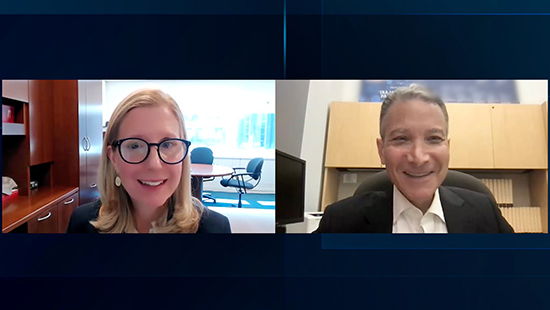
The Dignity Index: A Research-Based Guide to Better Conversations

The Dignity Index: A Research-Based Guide to Better Conversations
March 25, 2026
Wednesday 1:00 p.m.-2:00 p.m. ET
What does it take to build trust through conversation? Tami Pyfer, Chief Impact Officer at UNITE and co-creator of the Dignity Index – a research-based 8-point scale that scores language from contempt to dignity – has spent years studying why some conversations bring people together and some drive them apart. In this webinar, Janice Brunner, Group General Counsel and Head of Civic Engagement and Corporate Affairs at Travelers, and Pyfer dig into what the research shows and what we can do differently when the stakes feel high and the divides feel wide.
This discussion is part of our Civic Conversations series in which Citizen TravelersSM – Travelers’ industry-leading, nonpartisan civic engagement initiative – and the Travelers Institute® are teaming up to host conversations among leading thinkers in the areas of civic engagement and civic learning. Stay tuned for more discussions featuring thought leaders in this dynamic space, and thank you for supporting Citizen Travelers at the Travelers Institute.
Learn more about Citizen Travelers.
Please note: Due to the nature of the replays, survey and chat features mentioned in the webinar recordings below are no longer active.
Watch webinar replay
(SPEECH)
[MUSIC PLAYING]
(DESCRIPTION)
This content is brought to you by Travelers. Text: Citizen Travelers (service mark) at the Travelers Institute. A series on Civic Engagement. The Dignity Index: A Research Based Guide to Better Conversations. Logos: Citizen Travelers (service mark). The Dignity Index (registered trademark).
(DESCRIPTION)
Janice Brunner
(SPEECH)
JANICE BRUNNER: Good afternoon and thank you for joining us. I'm Janice Brunner, Group General Counsel and Head of Civic Engagement and Corporate Affairs for Travelers. And I'm happy to welcome you to our special Citizen Travelers at the Travelers Institute program this afternoon.
At Travelers, resilience is something we think about every day. It's core to our business, helping people and communities prepare for the unexpected, recover from loss and come back stronger. Yet resilience is about more than roofs and gutters. It's also built through connection, through neighbors who know each other, people who engage civically, and individuals with different perspectives who are willing to work towards common goals. That belief is at the heart of Citizen Travelers, our nonpartisan initiative focused on inspiring employees to engage in the civic life of their communities while building leadership and professional skills. It's with this in mind that we're pleased to host another program in our civic conversation series.
Before we begin, I'd like to share a disclaimer about today's program.
(DESCRIPTION)
Text: About Today’s Webinar. This webinar is supported by Citizen Travelers, the civic engagement initiative of The Travelers Indemnity Co., for informational and educational purposes only. The non-partisan views expressed by the speakers and slash or The Dignity Index, and its employees are their own and do not necessarily reflect the views of Travelers or any of its employees. Travelers disclaims responsibility for any publication or statement by any of the speakers and slash or The Dignity Index. Please note that this session is being recorded and may be used as Travelers deems appropriate.
(SPEECH)
I'd also like to invite you to submit questions now and throughout the program. Drop your questions in the Q&A feature at the bottom of your screen.
With that, I'm thrilled to be joined today by our amazing guest.
(DESCRIPTION)
Photos of the guests appear. Text: Speakers. Janice Brunner. Group General Counsel and Head of Civic Engagement and Corporate Affairs. Travelers. Tami Pyfer, Chief Impact Officer, Co-Founder, UNITE, The Dignity Index.
(SPEECH)
Tami Pyfer is the Chief Impact Officer of UNITE and Co-Founder of The Dignity Index. Before joining UNITE, Tami served as the Education Policy Advisor to former Utah Governor Gary Herbert, where she was involved in state-level policy development, coalition-building and stakeholder engagement. She held local and state elected offices for 12 years, including four years on the Utah State Board of Education.
Tami's professional training is in special education, and before her appointment to serve on the governor's executive team, she taught at Utah State University in the special education teacher preparation program. Tammy was a 2024 Emerson Collective Fellow, part of the Community Champions Cohort, and one of USA Today's 2025 Women of the Year, representing Utah. Tami and her husband, Aaron, are the parents of five children, grandparents of 16. They live in Salt Lake City. Thank you so much for being here with us today, Tami.
(DESCRIPTION)
Tami Pyfer.
(SPEECH)
TAMI PYFER: I am thrilled to be here. Thank you, thank you, thank you.
JANICE BRUNNER: To begin, can you tell us a little bit about The Dignity Index and how did it come about?
(DESCRIPTION)
Text: The Dignity Index (registered trademark). Dignity: A tool for transformative leadership for Citizen Travelers. At the Dignity Index. Facebook, TikTok, Instagram, X, LinkedIn.
(SPEECH)
TAMI PYFER: Yes, thank you. I, first of all, want to thank you for the work that you're doing. I know a little bit about your Citizen Travelers program, and I love it so much. As someone who is involved in my local community, I was on the neighborhood council, then I was on the city council, and then on the state board. The work that you're doing is invaluable, and I can't thank you enough for being leaders in that area. And the participants that are joining us today, thank you for what you're doing.
My journey with The Dignity Index started in 2020. This was the last year I was serving with Utah Governor Gary Herbert. And I had met Tim Shriver the year before, in the capacity he was a speaker that came to Salt Lake to speak at an event. And he was talking about this new idea that he had for changing the tone of our public discourse, our political and public discourse.
And as he was sharing the ideas that he had, one of them talked about using these skills that we teach students and applying it to politics, when we teach students to have critical thinking skills and how to take perspectives and things like that. And I thought, oh my gosh, this is what we were doing in education. And plus all of my political background, I thought this was a perfect match.
And so in late 2020, as I was finishing my time with the governor and he was finishing his term, I was approached by Tim and asked to join the team. And so I joined the team. The UNITE-- Project UNITE is the name of our nonprofit, but it was the Dignity team. And we began working on The Dignity Index.
I'd like to share a personal story, if I can, that kind of gives you a background about why I'm so passionate about this work. And this work is not-- we're not going to talk about politics today, but there's a background of my work in politics and my family dynamics that I think will help illustrate, again, why I'm so passionate about this work. And I think a lot of people can relate to this story.
I have five adult children, 16 grandchildren. I keep getting more every year. But my family is very diverse politically. In birth order, my children, I have a Republican, a Democratic Socialist, an independent, a Democrat, and a Libertarian. Those are the political parties that my five kids align with. And I align with-- I'm a moderate Republican. My husband is an unaffiliated conservative.
And as someone who's been involved in community government in particular, I thought this was a parenting win. I love that my kids grew up and had their own ideas about what they wanted to do and how they wanted to be engaged. I mean, these were kids that helped run my city council campaigns. We were talking politics all the time.
And when I got into the state level politics and with the governor, these were the conversations we had all the time. I loved hearing their ideas. I totally disagreed with some of their ideas, but I loved what they brought from their own unique personality and how they wanted to solve the same problems that I wanted to solve. They just had a different idea of how to do it. So again, I felt like this is-- was and still is a parenting win.
But during the last few years, I think everyone can agree that these differences haven't felt like a win for a lot of people. And this diversity in my family reflects the diversities in our workplaces, in our communities. The neighbors, the people that you interact with all have these different ideas, both culturally and politically, and it can make for some very difficult conversations. And so I brought this background, wanting to heal some of the rifts that had started to come into our own family. The labels that we carried politically, we started to see each other through those labels, and not in a good way. And so I wanted to solve those problems.
And when I joined the team, I was really excited about developing this tool called The Dignity index, which would give us a different way to look at others, but more importantly, to look at ourselves and look at the way we engage with people who we think differently from, not necessarily in politics, but in a variety of situations and in conversations.
JANICE BRUNNER: I love that. First of all, what a beautiful family. And thank you for sharing that personal perspective with us, because I think it really helps to set up the conversation so well and to make us understand where we started and how you have this personal connection to this work. Can you tell us a little bit more about what is The Dignity Index and how is it used?
(DESCRIPTION)
The Index focuses on language that is spoken in moments of conflict. It's not that we disagree; it's how we disagree. It can reveal how we treat each other when we disagree and how we respond when we're angry or hurt.
(SPEECH)
TAMI PYFER: The Dignity Index is a scale that goes from one to eight. I think you’ll have a-- you can go on our website, dignity.us, and grab this. I think it's in the chat as well. But
(DESCRIPTION)
A diagonal line labeled Contempt slash Dignity appears.
(SPEECH)
it's a scale that goes from one to eight. It's designed to measure the language that we use or the mindset behind the language that we use in moments of disagreement, in moments of conflict, when we're angry, when we're hurt, the times when we are just-- we're ready to maybe lash out at someone.
It's meant to measure that language, what we say and why we are using that language. So it goes from the bottom of the scale, which is a one, to the top of the scale, which is an eight. And I'll just walk you through these steps. This is the bottom side of the scale that you're seeing on the screen right now.
(DESCRIPTION)
1, They're not even human. It's our moral duty to destroy them before they destroy us. 2, Those people are evil and they're going to ruin everything if we let them. It's us or them. 3, We're the good people and they're the bad people. It's us versus them. 4, We're better than those people. They don't really belong. They're not one of us.
(SPEECH)
This is the contempt side of the scale. We start at a four and walk down, because a lot of people recognize that I'll never be a one. I would never do that. But maybe would I be a two? Would I be a three? And so we walk down so that you can see that progression from the first step into contempt, which is the four.
And the mindset behind a four is when you're saying, we're better than those people. They don't really belong. They're not one of us. This is the first classic us versus them. There's us and there's them. It's not we. And this feeling of not belonging or I'm better than you, so you don't belong, is very powerful, and it's a strong statement of contempt.
You drop down just one notch from that and you're at a three. So it's not just that I'm better than you. It's that I'm good and you're evil. My people are the good people. Your people are the evil people. You're bad and it's us versus them. So I'm good, you're bad. Now we've got really a competition or a conflict where it's not us or them, you're not one of us, but it's us versus you.
A two drops from bad, this is actually the evil. Those people are evil, and they're going to ruin everything if we let them. They're going to ruin my community. They're going to ruin my schools. They're going to ruin the country. They're going to ruin my team, my workplace. You can apply that broadly. This is not us versus them. This is us or them. There's not really room anymore for both of us.
And then just a notch below that, this is the lowest you can go on The Dignity Index, and this is a one. And this is the language of dehumanization. This is the language of violence, which gratefully we don't see in the workplace in particular, but it's more rare in our local communities. Unfortunately, we hear this language a lot of time in the national dialogue, whether it's a cultural issue or a political issue.
But this is when we say, those people aren't human. It's our moral duty to destroy them before they destroy us. This is, again, the language of genocide, and this is violence. It's an awful place to be. But when we hear words that trigger this in our minds, it's important to understand the scale, because you're going, oh, they just dehumanized someone. That's scary. I don't want to support that. I want to be able to speak my piece in a positive way if I start to hear that type of language.
So, the top side of the scale, let’s walk through the-- we'll go through the five, six, seven and eight. So this is the dignity side of the scale.
(DESCRIPTION)
5, The other side has a right to be here and a right to be heard. They belong here too. 6, We always talk to the other side, searching for the values and interests we share. 7, We fully engage with the other side, discussing even values and interests we don't share, open to admitting mistakes or changing our minds. 8, Each one of us is born with inherent worth, so we treat everyone with dignity—no matter what.
(SPEECH)
A five is your first step into dignity when you can say, the other side has a right to be here. They have a right to be heard. They belong here too. I may not agree with them. I may not want to engage that much, but I'll hear what they have to say, and I want them to hear what I have to say. And that's dignity. Sometimes that's the highest I can get because of the situation is just offering you that dignity to speak your piece. Please listen to mine. Maybe not a lot in common, but that's OK. That's dignity.
A six is when you start to actually interact more, and you always talk with the other side, because you're going to look for those values that you share, the interests that you share. Let's find these things that we agree on and work together on these things that we agree on, because we can be good working partners together. I can even work with someone across the aisle from a different team if it's a work situation. Or politically, if it's a different politics, you have a completely different policy idea, I can work with people across the aisle, because I'm going to look for those things that we share in common.
When you get to a seven, that's when you start looking for those things you don't agree on. What are those things that we don't have in common? We fully engage with the other side, and we're going to discuss even the values and interests we don't share, because I want to find out where you're coming from. Why do I disagree with you so strongly on this? Why are we at an impasse? Tell me your story. Give me some more examples so that I can understand you better. Because if I can understand you better, I can understand the issue better.
The beautiful thing about a seven is that when we get into these deep conversations, we find ourselves open to admitting that we maybe were wrong. We might have been wrong, or we made a mistake. And when you get involved in community politics, when you get involved in improving your school system, and when you're showing up to PTA meetings or whatever, I love having this frame of reference that you're at a seven. You're going to listen. You're going to be open to accepting other points of views and maybe shifting yours just a little bit.
A caution here. We tell people we don't want you to give up your principles. We don't want you to give up your passions. Sometimes a criticism we get is you just want everybody to be nice and so I'm going to go along to get along. That's not true. We want you to hold tight to those but be open to maybe seeing a different perspective.
And then the top of the scale, the eight. This is when you can say everyone is born with inherent worth. So we treat everyone with dignity no matter what. This is a beautiful place to be. We have data now that backs up the fact that the majority of Americans believe that everyone deserves to be treated with dignity. Dignity is just, again, this inherent worth that we have as human beings. I can't give it to you. I can't take it away from you. I cannot treat you with dignity. I cannot honor your dignity. But we believe everyone has that value.
And so, at an eight, everyone deserves to be treated with dignity, even in moments of disagreement, even in moments of conflict. Holding people accountable, people that have maybe had problems with the law or whatever it might be, they're still held accountable, but they are held accountable through the principles of dignity. And so that's the scale. We don't score people. We score speech. And by scoring that language, it gives us a peek into the mindset behind that language.
JANICE BRUNNER: It's super interesting. What I find so interesting about this scale is that it really is based in research, and it's really thoughtful and it's a very specific tool. And I love what you said about we don't score people, we score conversations. So that suggests to me that you could actually be-- maybe you're a five on one conversation, but a seven on another. And then all of a sudden, you're talking to someone you don't agree with and you slip down to-- So can you talk a little bit about that and also about the research?
TAMI PYFER: Yeah, well, you nailed it. That's exactly what this is. At any given point in time during the day, I try to stay on the five or above. We call it the five and up. But when something happens, I hear about something happening in the news or something happens at my work, almost human nature is for me to immediately find someone to blame for that thing. They used to call it scapegoating. It's like it couldn't possibly be me. Someone else is to blame. And I immediately go to a four.
And then I catch myself, because I know what that language looks like. I know what the mindset is, and I don't want to be there. Because I know if I'm at the bottom of the scale, that I'm not going to be able to solve problems. We've designed this as a problem-solving tool.
And so then I flip. I have that agency to flip. Usually it's momentarily. Sometimes I have a little pity party, and I give myself 30 seconds. And then I remind myself that I want to treat people with dignity, and I start to use some of the strategies that we talk about in our workshops to pull myself back up on the index.
And we've read a lot, done a lot of work at social science over the last couple of years. Some of the work that we read that informed our work here is the work of Dr. Donna Hicks, who is an international conflict resolution specialist. So, she worked in mediation, mediating intractable conflicts across the globe for a couple of decades. She worked with Bishop Desmond Tutu in Northern Ireland, and she worked in South Africa and in Asia.
And as she worked with factions-- warring factions or these conflicts that were very serious conflicts, she found that one of the best tools that she had, or one of the best strategies, was dignity. And that when one of the sides would show even a small gesture of dignity toward the other, that the conversation changed. And so she wrote a whole book about dignity, which we studied. The book's called Dignity. The other ones that she wrote is called Leading with Dignity, which is great for managers in the business world.
We also looked at the work of Dr. Arthur Brooks, who has written several books, and a lot of people follow Dr. Brooks. And he did a lot of work on studying contempt and the effects of contempt, more specifically in politics, but what that does to us in our conversations with each other. So we pulled from that research.
We also looked at the work of Drs. John and Julie Gottman, who do relationship work, five decades of work in relationships, in marriage counseling. And they also looked at some of the red flags in relationships, one of those top red flags being contempt. And they talk about contempt being the top predictor of divorce and what that looks like and some of the strategies that they use to work with their clients. And so they've written about this. They have a website with a lot of great information.
But we pulled from that, and then we did a pilot. We pilot tested this in Utah. And interestingly, we pilot tested it on politics, thinking that would be the main aim, that we would score political speech. And during our pilot test, we found a couple of things. One of them was that the instrument works. The Dignity Index was reliable. We could get people from all different political ideologies, different backgrounds, different demographics, they would score things very reliable. Whether they agreed with it or not, they stuck with the scale. It was reliable.
We also found that it wasn't really the application to politics that was interesting to people. It was the application to their school system, to their university campus, to their workplace. That's been a huge eye opener for us and a very-- a broad field in bringing this into company cultures.
And the third thing that we found during the pilot was that people really wanted to apply it to themselves. That is the most powerful application of The Dignity Index, because I can use this, Janice, to score you all day. And as my mom used to tell me, when I point a finger at you, I've got three fingers pointing back at me. And I can't change you, but I can change me.
And when I start to look at myself, we call it the mirror effect. When I start to look at myself, I realize what I'm bringing into a conversation. I realize the preconceived notions I have. I realize the language that maybe falls on the contempt side, which is making it hard for you and I to relate to each other.
And so that was the evolution of the research that we did, the pilot testing that we conducted, and where we're at now with the index, which is teaching people how to use this in their personal lives, in their community service, in their workplaces, and for people involved in maybe local government. We have a lot of mayors and city council and planning commission members that are all quite interested in how to use this in their conversations.
JANICE BRUNNER: That's so great. I think one of the reasons that we thought this would be so relevant for Citizen Travelers’ webinar is exactly that, this idea that in addition to these skills being very useful within the workplace, part of what we do at Citizen Travelers is hopefully inspire people to go out into their communities and be civically engaged, whether it's serving on the town council, the board of directors, or the board of education or other local groups. And that strikes me as so very relevant here, because that's really what you're doing. You're meeting people-- and part of the reason civic engagement is so worthwhile is that you meet people that you might not meet at the office or at your--
TAMI PYFER: Very much so.
JANICE BRUNNER: One thing I want to point out as we continue the conversation is you referenced the card. And I have this on my desk also, next to my phone, actually, Which-- and for anyone who's listening in, we'd be happy to send you a copy of this card. It's essentially the scale that's on your screen now, but it is very nice to have it in this handy card, because you can just put it on your desk. And as you said, throughout the day, you can scale yourself. And it really kind of keeps you on track. So anyone who would like one, please email us either in the chat or at Citizen Travelers, and we'll make sure we send you a card.
TAMI PYFER: Yeah, and it's on our website. Again, dignity.us. It's really handy. People will go onto the website and they'll order cards. Whatever the cost of printing, we just send them out. But I talk to a lot of people. I've got some friends that are women elected officials, mayors.
And one friend said she keeps this on her desk. And when she knows she's going to have a tough conversation that day, first of all, she's asked her staff to keep her accountable. But she puts it right there on her desk to remind her that when things get difficult in this conversation, that she wants to model dignity. And having these cues and the words there on the card help her remember what her intentions are.
JANICE BRUNNER: That's great. One question that just popped up in the chat, which I thought was really interesting on this line of discussion, and then we'll switch back to some of our other topics of conversation. It says based on The Dignity Index scale, there seems to be only a thin line between contempt and dignity. In your opinion, is there a neutral or indifferent rating? And if not, do you think that neutrality can be seen closer to tipping the scale towards dignity? Which is very interesting. It's so right. But I think I'll leave that to you.
TAMI PYFER: Yeah, well, it's very perceptive. It's an excellent question. In fact, when we were pilot testing and going through the rigors of making sure that the tool would be reliable, we started with a 7-point scale so that there was a midpoint. But then when we started to test it out, it didn't work.
And then I said, well, it should be-- let's go to a 10-point scale. And we tried different makeups of the scale, and we landed on this one mainly because it's reliable. It divided up these different steps and mindsets very, very clearly. But it also does not have a neutral point. And to me, the five is as close, in my mind, is as close as I have to a neutral point, but it's a neutral without ignoring someone.
Because when I go to a neutral, where I'm not going to engage with you because I really don't like what you're doing, and I'm going to lose my temper when I engage with you, it's just not worth it. It's not worth engaging with you. That's when you risk dropping down to a four. So, a lot of times in our workshops, the avoiding, depending on the reason you're avoiding, and let me just give you a caveat. Sometimes it is best to avoid a situation that you know is not going to end well. There's nothing wrong with that.
But when you're at a point where you're on the index and you're wanting to do better and you're wanting to engage with dignity, having a place that you can hang out midpoint where you really don't have to do anything, you just get to pull away, is not the best strategy. And so that's why we don't have a midpoint.
As close as I can come, I'm going to reiterate, as close as I get to a neutral spot is a five. But it's a five neutral with dignity. I'm going to listen to you. I want you to listen to me. I'm going to not judge you, but I may not engage with you beyond that, but I have not treated you with contempt in that moment.
JANICE BRUNNER: That makes sense. What's so interesting about this scale is what you just said makes perfect sense. But so often in our rushed lives, we don't think about that. And so what this is making you do is essentially stop and think about how you're approaching a conversation. And I love that, having that tool to bring the discipline to the conversation in that way.
TAMI PYFER: It does, Janice. It helps you be really intentional. And in addition to this, in addition to the card, on our website, we have-- it's a more detailed scoring guide. So we have these fun activities that we do where we'll have you score a video clip. And it takes the five and it builds out the language a little bit more. And it gives people more phrases. It gives you a little bit more in-depth look at what that five looks like.
And to what you were just saying, Janice, what we recommend people do when they really get involved in the dignity work, or if they are going to approach a very difficult conversation, looking beyond just what's on the phrase on the card, we have them pull up the scoring guide because it will give you other ideas of what you could say. It will give you other ideas of what to maybe examine in yourself before you get into that conversation.
And as my colleague Tom Rosshirt talks about, he said, once we start practicing this language, once we see what it looks like, we teach people to score so that they understand the language, so that then when they get in a bind, it's like your emergency training. You already have the go-to. I already know what I'm going to say. I already know what that looks like. And it helps you out in those conversations. And the scoring guide just expands on the card and helps prepare you to be very intentional in those conversations.
JANICE BRUNNER: That's great. With that in mind, I'm going to skip to one of the questions that we have, and then I want to give you time to go back to your slide. But for example, when a debate heats up and local temperatures rise, how would you handle? Especially since these are our friends and neighbors, so it can get personal. Just one example of how you would use this scorecard.
TAMI PYFER: So if it's a debate, let’s say you’re-- I'm going to say that maybe you're in a community meeting or that you're volunteering at-- let's take PTA, because those usually don't get too heated, but they can. I have been a PTA president. But let's say an argument breaks out about something, and maybe it's going-- you're talking about a curriculum or a program that the school wants to adopt. The debate is getting very heated, and these are your friends and colleagues. And it's like, I don't even know how it turned out this way.
So one thing that I would do is I would call to mind that if I drop down into contempt, my mindset is going to be saying, those people don't belong. I'm right and they're wrong. I already have the right answer. I don't need to listen to you. What's the problem here? So that's the mindset. So knowing that that's a four, I'm going to take a moment and say, wow, there's a lot of passionate people here. We all love the school.
Find what you have in common, which is part of a six. I know we all want what's best for the school, and I think I need to understand better what all of you are saying, because this is what I brought into the conversation, and I don't think I agree with that. Can you tell me more about why you think this program's a bad program. I just want to listen. I'm not even going to interject. I just need to listen for a minute. Is everyone OK with that? Let's take a minute to have so and so share.
And then listen. Listening is such a big part of what we do. And then listen and more listening. And if it's something you disagree with, still let it come. In fact, one of the phrases that we teach people to say are things like, wow, I think just the opposite, but I need to hear what you think, because I need to understand where you came to that view.
So trying to calm the situation by acknowledging that everyone's passionate about this, this is what you all have in common. Find that the goals and values that you share, which is at a level six. Acknowledging that. Acknowledging that there's an issue with the disagreement, which is you want to get to a seven where I want to hear what other people think. But then you want to make sure that you're not positioning yourself as the person who knows everything.
Or that even as a group, let's say as a group, you're all together on this, and you're pointing fingers at the principal or someone else. It's easy to get into a group and start to demonize someone else, because you all agree. It's like, man, we got to stop the principal. This is the worst thing ever. When you start doing that, you're, again, kind of approaching that four.
So to have someone, one of your Citizen Travelers, be able to say, they must have a reason for doing that. Let's give them the benefit of the doubt. That's a strategy we teach in some of our work. Let's give them the benefit of the doubt and find out what they think first. And meanwhile, let's get all of our talking points together and find out why we think this is such a good idea.
So calming down, slowing down, listening to the other side, lots of listening, not backing off of what you want to have happen, but just trying to find another way to negotiate the conversation so that you're hearing everyone out. And it might be that if it were me and my PTA, I'd say, you know what, let's meet again next week. In the meantime, I'm going to have a call with these three and my vice president. She's going to call some people. We're going to pull all of these ideas together and find out what we're missing, find out why this is so controversial. Off the top of my head, that's how I would run this maybe in a little PTA disagreement.
JANICE BRUNNER: That sounds perfect. I'm going to put that into practice right away.
TAMI PYFER: Well, and Janice, let me give you and your team something to help you with that. Again, the work of Dr. Donna Hicks that we rely on, she has what's called the 10 elements of dignity. And so those are on our website too. These are all free resources. And these are called out.
And one of them is questioning someone's motives. And this is hard for me. That's a sign of contempt, when I question your motive. You propose a new program, and I immediately go to the worst-case scenario. So that's something to watch out for. But giving people the benefit of the doubt is a way to combat that. And so that's at the top of my mind right now.
So on our website, we have those 10 elements of dignity that you can bring into these conversations with you. It also has our challenges or some of the, what do we call them, the pitfalls that are out there for us in falling into contempt and things that we should be watching out for. And just even reading through those, they're just one page, helps us manage and navigate those difficult conversations.
JANICE BRUNNER: That's great. I think there'll probably be a lot of people on this call who are looking at that website after this call, so thank you for that. I want to switch a little bit, because this is a really well-timed webinar, because you just released the first Dignity Index barometer tracking survey this week, I think yesterday.
TAMI PYFER: Yesterday, uh-huh.
JANICE BRUNNER: And I wanted you to talk a little bit about that research and the results you found and why it was undertaken and what you discovered.
TAMI PYFER: Yeah, I'm happy to do that. And I'm going to finish up this one slide I forgot I wanted to show with your team in particular.
(DESCRIPTION)
Text: Rise of dignity equals rise in other skills. An arrow points upward along the contempt slash dignity line. Ability to see good in others, authenticity, curiosity, humility.
(SPEECH)
We talk about trying to move up on the scale. What people are reporting to us, especially in corporate and business situations, is that when they try to rise in dignity, they see these other collateral benefits.
All of a sudden, they tell us that I have a better ability to see the good in others. Where I used to struggle with that, right now, I start to look for that first. They feel like they're able to be more authentic in their conversations. They feel like they're more curious, and they're able to bring more humility into the conversations. Because at a seven, you're saying, I could be wrong. Tell me what you think. Maybe I'll change my mind. So these benefits of practicing dignity and practicing some of the concepts we have on The Dignity Index.
But let's go to the next slide.
(DESCRIPTION)
Text: Near universal agreement. All people deserve to be treated with dignity. Based on this definition of dignity, do you agree or disagree that all people deserve to be treated with dignity? Treating someone with dignity means treating them in a way that honors their inherent worth as a human being. A graph shows that 76% strongly agree. 18% somewhat agree. 4% somewhat disagree. 94% agree, 95% democrat, 95% independent, and 93% republican.
(SPEECH)
So we did just release this research yesterday. The Dignity Barometer is what we're calling it. And the results were heartening. Not surprising, necessarily, but very, very heartening. We asked this question about dignity and the definition was the inherent worth that we all have. And we asked, do you think that all people deserve to be treated with dignity? Ninety-four percent. Ninety-four percent of the country believes that, yes, either strongly agree or somewhat agree that everyone deserves to be treated with dignity just because they have inherent dignity as a human being. This was very validating.
The flip side of this question was that we asked people, do they think that people in the country are being treated with dignity? If we all deserve to be treated with dignity, are we treating everyone with dignity? That number was 31%. We call that The Dignity Gap. So we all believe it should happen, but we all recognize that it's not happening the way that we think it should. People are not being treated with dignity the way they should.
Let's go to the next slide.
(DESCRIPTION)
Text: Americans agree: dignity and contempt have an impact on trust. Do you agree or disagree with each of the following statements? When people treat each other with contempt rather than dignity, trust falls. 69% strongly agree, 25% somewhat agree, 3% neither. 94% total agree, 3% total disagree. When people treat each other with dignity rather than contempt, trust rises. 61% strongly agree, 31% somewhat agree. 2% neither. 92% total agree. 5% total disagree. It is important to keep listening to people even when you disagree with what they are saying. 51% strongly agree. 39% somewhat agree. 4% neither. 5% somewhat disagree. Total agree 89%. total disagree 7%.
(SPEECH)
And this data point had to do with trust. And I wanted to bring this into your conversation because when you have employees that are representing in a way your organization just through their presence in the community, they know where they work. They know that on our local school board is this person that works at Travelers.
We want to build trust and we want people to trust us. We want us in our work settings to trust each other. We want to be able to trust our managers. And we feel like our premise was that dignity was a component of trust.
And so we asked that question. Do you agree or disagree with the statements that when people treat each other with contempt, trust fails? And yes, 94% of the people said, yeah. If you're treating someone with contempt, I don't really trust you. The trust fails. When you treat people with dignity, does trust rise? Yes, 92% of the company said yes. So now you flip it. You treat me with dignity, and my trust in you rises. It's almost a prerequisite.
And then this last question, it's important to keep listening to people even that you disagree with, when you disagree with what they're saying. And 89% of the country said, yes. These are all issues of trust. And so we believe that dignity plays a strong role in trust.
(DESCRIPTION)
Text: The public sees workplaces as more likely to involve people treating others they disagree with, with dignity rather than contempt. In workplace interactions, when two sides that disagree on a work-related issue engage with each other on that issue, which of the following do you think generally describes those interactions? Often contempt or always contempt, 19%. Even mix, 38%. often dignity or always dignity, 38%. For the time they spend treating each other with contempt, how strong do you think those feelings are? 48% very or fairly. 31% somewhat. 15% not much or not at all. For very or fairly strong, Democrats 47%, independents 47%, Republicans 49%.
(SPEECH)
The last data slide I have, and I have more data I could share, but this was back to the workplace. I wanted you to think about this in your workplace environment. And this was good. We asked people to look at the different environments or cultures in which they may experience dignity or contempt.
And it was the family, in the community culture, your family. We looked at in politics, we also looked at the workplace, and the workplace did well. The public, as this headline reads, sees workplaces as more likely to involve people treating others that they disagree with with dignity, rather contempt. So this was good. It was toward the top of our responses that we got back from folks.
The part that indicated to me that still could use some work was that when you find yourself maybe on that contempt side of the scale with someone at work, we asked, how strong do you think those feelings are? And the respondents said, those feelings are pretty strong. When you are in contempt, they're pretty strong, 48%.
Luckily, those are at moments of time, not continually, but to me it was an indicator of things that we could do better, with me personally in disagreements at work, that generally speaking, our workplaces are places of dignity, rather than contempt, but there's still work to do. That when we do have these very, very difficult conversations and conflicts that we can manage those in a way that we would say falls on the dignity side of the scale.
So it was encouraging data. I think those are the three slides I want to share. But if you go to our website, you can click on it. The headline is The Dignity Barometer. We have all of the data there on the website. And you can look at the slides. You can look at our interpretation of the slides.
One of the key takeaways that we thought was really interesting is when we asked people, why is it so important for us to start shifting from what has become really this pervasive culture of negativity and contempt, why is it so important to shift to one of dignity? And we gave them a couple of options to choose from. The top option that people chose was that our children are watching. The kids are watching. We are setting the example.
And so, interesting data. I would love to have people take a look at it. There's a way to get involved. If you feel moved by this, you can click, and we have things that you can share on social media. We have little graphics sharing the data that are downloadable and invite you to share them with your colleagues in your communities, in these organizations that you work with. We're happy to share whatever we have with you.
JANICE BRUNNER: I love that. And I think what's also striking to me about this slide and the prior slide is the numbers are almost exactly even between Democrats, independents and Republicans. So it really is, I think, so often we see things that say that people are so divided based on their political party or lack thereof. But this really shows when you ask these questions that even no matter how someone identifies on the political spectrum, there's real alignment on these issues.
TAMI PYFER: Yeah. And another thing, Janice, that the data will show you is that there's also broad agreement on another very hopeful finding. And that is when we ask people who's to blame, who do you think is to blame for-- what organizations or groups? And you would think it's going to be politics and this and that. So the top response was politicians and then it was candidates and then it was social media.
But then right there at the top was all of us. That was one of the responses you could select was all of us. And that beat out several other possible responses, that we're all part of the problem, which is hopeful because that means we're all part of the solution. There are things all of us can do. And so, to me, that's a very, very hopeful statistic.
And by the end of the survey, we asked people how much of a role do you think you have or how much impact can you have in turning around this culture? And we asked them at the beginning of the survey, and we asked them at the end of the survey. And just in the 20 minutes it took for them to complete the survey, their optimism shot up by 9 points. People said, I probably can't do very much, or I can do this much. By the end it was like 9 points higher. Yeah, I actually could be part of this. I have an impact. I can be part of the solution. So that was also very, very hopeful.
JANICE BRUNNER: That's very hopeful. It's very optimistic to me with respect to Citizen Travelers also, because it really shows that people do want to engage in a positive way.
TAMI PYFER: Yeah, very much so.
JANICE BRUNNER: Thank you for that. I think we could talk all afternoon. I want to try and get to a few other questions about-- because I think one of the things that we always focus on is beginning. And where do you begin? And I think you touched on that a bit when you explained The Dignity Index, how do you use it. But there seems to be a lot of questions that come in about where do you begin and how do you shift when things don't go the way you had expected?
TAMI PYFER: Yeah. So, where to begin? First of all, I'm going to say, generally speaking, where to begin is to just take a look at the index and score yourself. A lot of times when I'll do a big presentation and Tim will do the same thing, we'll just say, think about the last conversation you had with someone that you were talking to a friend about someone, a different team that you're disagreeing with, a political party that you disagree with, and then how did you score? Score your conversation right now. Score yourself.
And then we have people raise their hand. Did you score yourself a five? Not a lot of hands go up. Again, this is meant to be in moments of conflict. Did you score yourself a four? All of a sudden, the hands go up. Did you score yourself a three? The hands go up.
So first of all, to have that mirror moment where you recognize your own language and what your go-to phrase is and how that scores on The Dignity Index. That's where to start, to realize that we have a tendency, by human nature, to do this. And then you are able to say, that's where I scored. That's not where I want to be. I want to be one of those people that makes an impact in my community. So, my goal-- so, you've scored yourself, you've had the mirror moment, and now you set your intention. I'm going to have a goal to live on the dignity side of the scale and learn the language, etc.
Then when you get into disagreements and such, we have on the back of the card just some short tips, and you could spend a lot of time on each one of these, but these are helpful to remember when you get into that moment of disagreement. I'm just going to walk through a couple of them.
So Janice, you and I, we just got into a disagreement. So instead of saying, why would you do that? Which is more a condemnation. How could you? You're not smart enough to figure this out? But ask it in a curious way. Tell me more about that. If you put that phrase in your pocket, tell me more. Tell me more about why you thought that way. So on the card, it says be curious, not furious. So approach it with curiosity. Genuine curiosity. That helps. It signals your brain to open up this ability to find solutions.
And then the next thing they talk about is regulate then debate. By that we mean take a deep breath. And this has been proven scientifically. If you take in a very deep breath, maybe a couple of deep breaths, it helps reset you, and it resets the way you respond. So if you get upset, just take a breath. And then the next one is to listen to understand, not to respond.
Again, I'm very self-reflective and I know what I don't do well. I'm busy preparing my response instead of listening with no intention to respond but just listening to try and understand. And the questions that I ask you are going to be to tell me more so that I completely, fully understand. I might even say, I've got to think about that. Can we have this conversation again tomorrow?
Let me think about what you've said. Some of it I agree with, some of it I don't agree with, and I'm not sure what I think about it. Let's get back to this. And that's OK, especially if things get heated, to say-- not to shut down the conversation, but to say, I really have to think about this. You've given me a lot to think about. So you listen to understand, not respond.
And then we talk about challenging ideas, not attacking people. And this is where we don't want you to give away your passion or your principles. We want you to hold tight to those. But challenge ideas. This is what makes our democracy great, is that we challenge ideas. That's what the Founding Fathers were doing. They were challenging ideas. And if we can do it without attacking the person behind the idea. So speak your truth but do it with dignity.
And then acknowledging knowledge. Even if you're in a big disagreement with someone, they make a point that is a good point, acknowledge that. It's not like you're giving up something. It's not like all of a sudden you're acquiescing. Acknowledge that point. Acknowledge their knowledge on that issue.
And then build up rather than tear down. Bring in with those things-- this is important, especially in community work. Bring in with the things you want to have happen that you want to see improve, not everything that you want to tear down or the systems that you want to break. How can I improve rather than tear down? So those are some of the cues that we would give people and suggestions.
JANICE BRUNNER: I love that. I think really you keep going back to something is-- and I think I'm looking at some of the questions in the chat, and a lot of them relate to this question of how do you deal with-- and this is interesting. I'm regulating myself already. How do you respond to someone who is a one or a two if you're trying to be a seven or an eight?
TAMI PYFER: Yeah. And I'll respond. And I'm going to give you this little caveat too. Everything's not going to magically get better. There are going to be people you still don't get along with. There are people I still don't get along with. I see them differently, though, and it's improved a relationship.
And when people come at you with a one or a two, I think one thing to remember is that they may not realize how hurtful that language is. Something that I've learned to say or to practice is, did you mean that to be hurtful? What you just said is something that is hurtful to me or I don't want to take this the wrong way. Let me give you the benefit of the doubt. Did you mean that to come across that way? Or can you explain that to me again? Maybe ask me a different way, because the vibe I'm getting from you is making it hard for me to understand where you're coming from.
And a lot of times, when you ask people to repeat that or ask them if they meant it to come across that way, it gives them a chance to pause and say, well, actually, I'm really angry about this, but what I wanted to say was. And if they come back and say, yeah, you're an idiot. I can't believe you're doing this. That's exactly how I wanted it to come across.
Then you could say, wow, I would like to work this out with you. I don't think this is the type of conversation that's going to get us to the point that we want to be at. Do you mind if we set a time where we could actually sit down together? Can you bring me what the concerns really are? I know that I could be wrong. And this is a phrase, by the way, I use, because at a seven, you admit that you could be wrong. And even just saying that sometimes, I could be wrong on this, puts people-- they take their guard down. And maybe you're absolutely sure you're not wrong. But when you say, I could be wrong.
So now back to the conversation. Say I could be wrong on this. I want to hear everything you have to say. But let's do it in a setting where I can take notes. I can understand where you're coming from so that I can go back and look at where this maybe fell apart, where this conversation went off the rails, because I want to work with you. And there's lots of little things that you can do like that.
JANICE BRUNNER: Super helpful. And I think one of the other themes that's coming through in the questions is how helpful this scale and this tool will be is in the insurance context, because we often have people in customer service roles or claims roles or across the enterprise who are often responding to customers who may not be-- who may be facing a crisis or who may come to the conversation in a very tense moment. And so, I think this really is impactful in many ways, both inside and outside Travelers.
One question here kind of sums up a lot of the questions. It says, what are some practical strategies insurance agents can use to build trust quickly with clients, especially when discussing complex or sensitive subjects, such as premium increases or claim scenarios?
TAMI PYFER: Yeah. And I don't know your business that well, and I do know that customer service representatives, I'm sure, are trained in this, because I've talked with people on the phone that have just been so skillful at hearing me. We call it the understory. What is it that has really got me upset? It's not you, and it's maybe not anything you can solve, but it's what brought me to file an insurance claim or to get my insurance in the first place.
Sometimes people are in very difficult personal situations that bring them to that conversation. And being able to recognize that and be able to look through and see their humanity beyond what might be very hurtful or contentious words that they're saying and things that people have said to me before when I'm in these conversations with customers.
It sounds like you're going through a lot right now, and I am sorry for what you're going through, and this is really difficult. I can understand what an impact this is going to have on your family if it's a price increase. Or these are really difficult times we're navigating. I know how hard that is. And believe me, you and I share that value. I've got a family to take care of and you do too, and things seem to be so much more difficult. So finding these common interests, talking about them as their personal struggles, seeing their human dignity, I think, goes a long way. And listening, listening and more listening.
JANICE BRUNNER: Makes sense. Another theme that comes through in the questions is this idea of quick thinking, or conversations that take you by surprise.
TAMI PYFER: Yes.
JANICE BRUNNER: Any tips for that?
TAMI PYFER: Good luck. [LAUGHS] Actually, that's my challenge too. It's like, I didn't see that coming. Someone will say something or bring it up, and they catch you off guard. And especially in a moment where your first gut reaction, because it might be a contentious topic, your first gut reaction is like, you're just going to shoot right back.
Some of the things that I've tried to do is, wow, I've never thought about it that way, and I need to think about this. Can you tell me-- I don't want to say stall, but you might be stalling a little bit. Can you tell me more about that? Where you are now going to have to regulate. Tell me more about what happened.
So you're listening, which is a good skill. You're self-regulating. You're giving them a chance to maybe give them more background and then just say, I've said before, I'm not ready. I am not ready to have this conversation. I don't want to put you off, but I am not ready to have this conversation. I need to think about this. And so the quick thinking might actually be, I'm not ready to have this conversation.
The caveat or the challenge that we have is people say, I'm not ready to have this conversation, and they're not ready tomorrow or the next day. It's like, we're never having this conversation. But instead, make sure that you do follow up. I'm not ready to have this conversation, but tomorrow would be good. Or can we set a time when just you and I? And send me some information ahead of time, but I'm not ready.
And if it's just even a personal attack, just say, wow, I don't know how to respond to that, because I don't think that way about you. And I'm going to have to think about this. I don't want to offend you. And just give me a minute to think about this. So again, a lot of this is very intentional, stating your intentions, be listening and regulating.
JANICE BRUNNER: That's so valuable. And just having the card on your desk forces you to be intentional when you receive that call you weren't expecting to just go down the index.
TAMI PYFER: And a five is dignity. A five is listening. You have a right to be here. You have a right to be heard. I am going to listen to what you have to say. That's dignity.
JANICE BRUNNER: I think we have time for one more question, which I think is an interesting one, and I'd love to hear your perspective on it. It says, Mindy in New York asks, how do you move a conversation from surface-level small talk into something more meaningful without making it feel uncomfortable?
TAMI PYFER: I’m to answer this, I'll give you an answer, but I also want to give you another resource that I've started using for this very purpose. The author and journalist Amanda Ripley, who writes about conflict and high conflict. She wrote a beautiful book called High Conflict that we've also studied.
But she has a new organization as a journalist that she has started called Good Conflict. And she has a free resource guide that you can download from Good Conflict, and it gives you questions that you can ask to get into a deeper level of conversation. And she's divided them into starter-level questions, entree questions and dessert questions.
And some of those questions are things like, one of my favorite ones is, what's no one asking you about? What's no one talking about about this issue? I know this has been a problem for you. What's the questions you wish someone would ask you? What's the questions that no one's asking? Or if this problem were resolved in three years, what would it look like? What would this situation look like if this were no longer a problem? And get people to talk about what a resolution looks like. In the future, what would this look like?
There are better questions. Off the top of my head, I wish I had them. But if you go, you can download. Again, it's free. And it's these really very cool questions that lead you deeper and deeper into conversation with people in a way that helps you get to that level seven and level eight where you really understand people, and you understand where they're coming from, and you're able to see that humanity.
JANICE BRUNNER: That's amazing. I'm going to check that out.
TAMI PYFER: Google Good Conflict. I wish I had the website off the top of my head. But it's Amanda Ripley, and she's very accomplished and well known in this field.
JANICE BRUNNER: That's great. And I'll give you the last word to send us off.
TAMI PYFER: Well, thank you for having me. I wanted to visit my family again really quickly because, again, this is what drives my work originally and still does to this day. And this idea of these labels that we carry where we started to label each other even with our political labels. But when I talk about my family in some of the workshops, it's like, all you know about my family is what I just told you, and that's their politics.
But when you strip those labels out, there are so many other beautiful, wonderful things about my family. My Republican son, he is the most genuine person. He's a professional musician. He's so genuine. My Democratic Socialist, he's so creative. My independent is the most adventurous person I know. My Democrat, it's like, you strip away that, she is the most loyal friend anyone could have. And my libertarian is-- he's generous and kind. He sends me flowers. And my husband and I, we differ on politics, but we've been married 45 years and we're just happy. And those are the labels that we prefer to carry.
When I put it that way, when you start to see someone and you label them with that thing that you don't like, think about, OK, let's take off that label. What are those other things that I really-- that are so engaging and positive about that person? And start replacing those labels. If we have to label or judge someone, which we don't, but it's helpful for us to get out of conflict where we've labeled them negatively, to start thinking about positive ways to see them and other characteristics in our fellow friends and citizens and our community members.
So thanks for being with us. Go to our website. Read the survey. There's a little pledge you can take on our website to join the movement. We'd love to have you.
JANICE BRUNNER: Thanks so much, Tami. We really appreciate you being here with us today and sharing that wisdom.
TAMI PYFER: Thanks for having me.
JANICE BRUNNER: Have a great day, everyone.
[MUSIC PLAYING]
(DESCRIPTION)
Text: Citizen Travelers (service mark) at the Travelers Institute. A Series on Civic Engagement.
Summary
Here are the top takeaways from The Dignity Index: A Research-Based Guide to Better Conversations:
The Dignity Index is an 8-point scale that scores language – not people – from contempt to dignity.
Tami Pyfer explained that the scale runs from 1 (dehumanizing language) to 8 (treating everyone with inherent worth). At a 5 – the entry point into dignity – you acknowledge that someone you disagree with has the right to their opinion and the right to be heard. Moving up means finding shared values (6), openly engaging with disagreements (7) and ultimately treating all people with dignity regardless of conflict (8). Because the scale scores speech and mindset (and not people), anyone can score differently across different conversations throughout the day. The tool has found a particularly enthusiastic audience among people engaged in local civic life – mayors, city council members, civic leaders and school board representatives, many of whom have sought out UNITE’s workshops specifically to apply it in their community roles. Watch at 07:30
The Index is grounded in decades of social science and real-world conflict resolution research.
The work draws on Harvard professor Arthur Brooks’ research on contempt in public life; the work of relationship researchers John and Julie Gottman, who found contempt to be the top predictor of divorce; and international conflict mediator Dr. Donna Hicks, who facilitated dialogues in South Africa, Cambodia, South America and with Bishop Desmond Tutu in Northern Ireland. Hicks found that even one small gesture of dignity from one side can profoundly shift a conversation. Watch at 16:21
A Utah pilot revealed that the most powerful use of the Index is applying it to yourself.
When the team pilot-tested the Dignity Index, three things stood out: The tool proved reliable across people with very different backgrounds and political views; participants were more interested in applying it to workplaces, school systems and community organizations than to politics; and most powerfully, people wanted to turn the lens inward. Pyfer calls this the “mirror effect.” Once you score your own language, you recognize contempt patterns you may not have noticed – and that awareness creates the agency to change. This resonates especially for people in civic roles. Pyfer herself held local and state elected office, including a seat on the Utah State Board of Education, and drew directly on that experience in developing the tool. She noted that a mayor friend keeps the Dignity Index card on her desk and has asked her staff to hold her accountable to it – a practical example of how civic leaders are putting it to work. Watch at 18:21
The 2026 Dignity Barometer survey revealed a striking “dignity gap” yet also genuine reasons for hope.
The survey found that 94% of Americans believe everyone deserves to be treated with dignity, yet only 31% think people are actually being treated that way – a 63-point gap Pyfer calls the dignity gap. Other findings: 92% said treating someone with dignity builds trust; 89% said it’s important to keep listening even in disagreement; and respondents’ personal sense of their ability to improve the culture rose by 9 points just from completing the 20-minute survey. Crucially, responses were consistent across party lines, with Democrats, Republicans and Independents aligning on these core values. When asked who is responsible for societal divisions, “all of us” ranked among the top answers – which Pyfer called hopeful, because it means everyone can be part of the solution. Watch at 33:38
When conversations heat up, practical dignity strategies can de-escalate and rebuild connection.
Using a heated PTA meeting as an example, Pyfer walked through the following strategies:
- Find shared ground first. Name what everyone has in common before diving into disagreement (e.g., “We all love this school”).
- Be curious, not furious. Replace “Why would you do that?” with “Tell me more about that” – a phrase Pyfer recommends keeping “in your pocket.”
- Regulate, then debate. A few deep breaths scientifically resets your stress response and helps you respond rather than react.
- Listen to understand, not to respond. Resist the urge to prepare a rebuttal while the other person is still talking.
- Challenge ideas, not people. Hold your principles firmly while staying open to the perspective behind a different view.
- Give the benefit of the doubt. If a group starts demonizing someone not present, gently note that person may have valid reasons.
- It’s OK to pause. Saying “I’m not ready to have this conversation right now” is fine – as long as you commit to a specific follow-up time.
These strategies apply wherever civic conversations happen – a PTA meeting, a town council session, a planning commission hearing or a neighborhood association. The common thread, Pyfer said, is showing up with the intention to understand before you respond. She was also clear that none of this means backing down from what you believe: “We don’t want you to give up your principles. We don’t want you to give up your passions. Hold tight to those.” The goal is to challenge ideas, not people – because that, she said, is what makes democracy work. The Founding Fathers were challenging ideas. We can do the same, as long as we separate the idea from the person behind it. Watch at 27:08
Webinar resources
- Get more information about The Dignity Index, including videos, practice activities and resources.
- Review the full Dignity Barometer findings and explore ways to engage.
- Request a physical copy of the Dignity Index card by emailing [email protected] with your name and mailing address.
- Learn more about Citizen Travelers.
Speaker
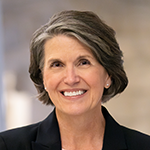
Tami Pyfer
Chief Impact Officer, UNITE, and Co-Founder of The Dignity Index
Host

Janice Brunner
Group General Counsel, Head of Civic Engagement and Corporate Affairs, Travelers
Presented by

Related content
The Importance of Balanced Information and Human Connections in a Pluralist Democracy
How can we avoid being fooled by information bias and misinformation? John Gable, CEO of AllSides Technologies Inc., and Joan Blades, co-founder of LivingRoomConversations.org, break down information barriers so we may better understand the world – and each other.
Habits of a Healthy Civic Culture: A Conversation with Eric Liu
Eric Liu, co-chair of the American Academy’s Commission on the Practice of Democratic Citizenship Commission, joined Travelers’ Janice Brunner to discuss the "Habits of Heart and Mind: How to Fortify Civic Culture" report.
How the Founders' View of the Pursuit of Happiness Defined America
In this webinar, we took a deep dive into Jeffrey Rosen’s groundbreaking book The Pursuit of Happiness: How Classical Writers on Virtue Inspired the Lives of the Founders and Defined America.