Podcast
Stewarding the Future of Insurance with Travelers EVP Michael Klein

In this special Travelers Institute Risk & Resilience episode, we’re sharing a conversation Travelers EVP and President of Personal Insurance Michael Klein had on the Risk & Resolve podcast with hosts Ben Conner and Todd Hufford about his remarkable journey in the insurance industry.
Michael offered candid insights about career setbacks that ultimately positioned him for greater success, the importance of professional advocates and the vast opportunities within the insurance industry. He discussed Travelers’ focus on digitization and modernization, the critical need for attracting young talent to the industry and his mission to leave the insurance world better than he found it.
HOST: You're listening to Risk and Resolve. And now for your hosts, Ben Conner and Todd Hufford.
BEN CONNER: Welcome back to another episode of Risk and Resolve. I'm your co-host, Ben Conner, along with Todd Hufford. And today our special guest is Michael Klein. Michael Klein is an Executive Vice President and the President of Personal Insurance for Travelers. He previously led the middle market business, served as President of commercial accounts and was Senior Vice President of Industry and Product Group.
Michael joined the company in 1990 and has held various positions from commercial insurance underwriting, knowledge management, corporate planning and development, global healthcare underwriting and financial professional services. Wow, Michael, you've really done it all. But also, Michael has served in a variety of industry-related and non-for-profit organizations for more than two decades. And this is notable for our conversation today. He currently serves as a trustee for the Malta House of Care in Hartford, Connecticut. He also serves as a member of the executive committee for Gamma Iota Sigma, a professional fraternity organized to encourage student interest in insurance as a profession. So very important. Michael holds a bachelor's degree in mathematics from Minnesota State University, Mankato, and is a fellow of the Casualty Actuarial Society. Michael, welcome to the show today.
MICHAEL KLEIN: Thanks, Ben. I thought you said they sent you the short bio. I don't know if that was the short one, but that's all right. It's all good. It's all good. Thank you very much.
BEN CONNER: Appropriate context to the vastness of insurance experience that you have. And also, we wanted to highlight because we're going to talk about today, the, encouraging student interest in the insurance industry, which is super important now. After going through that bio, I have to ask, when you were a young tyke with your parents, when they asked you what you wanted to be when you grow up, did you tell them, Mommy and Daddy, I want to be in insurance? Is that how that went? It kind of sounds like it may have because of your bio.
MICHAEL KLEIN: No, it's, it's actually a little bit of a funny story. I was a math major at Mankato. I went there originally because I thought I was going to be a math teacher and maybe a basketball coach. And then I found out I had to take all these education classes and it was going to take me another year to graduate college. And I said, no, I want to be done in four years. So I was majoring in math at Mankato. Wasn't quite sure what I was going to do, working at McDonald's to help pay my way through college.
So I'd go down to school during the week, go back home on the weekends. I was a manager at McDonald's, and when you're the manager and you get deliveries, you gotta watch the back door and make sure everything stays secure. And so the same guy delivered the buns every weekend. His name was Greg and I got to know him a little bit. And we were talking one day and he said, so you're going to college, right? I said, yep. He said, math major. I said, yep. He said, so you're good with numbers. I said, I don't know, I guess so. And he said, well, what are you going to do when you graduate? And I said, I have no idea. And he said, well, you should be an actuary.
TODD HUFFORD: Wow.
MICHAEL KLEIN: And I said, what's that? And he said, well, I don't really know, but my brother-in-law is one, and he lives in a nice house and he drives a nice car, so it must be pretty good.
BEN CONNER: Oh my gosh.
MICHAEL KLEIN: And so I'm like, OK, that sounds interesting. So the most ironic part of the entire story is my mom was an office manager at an insurance agency.
BEN CONNER: Oh, wow.
MICHAEL KLEIN: And so I went home and I said to my mom, do you know what an actuary is? And she said, well, of course I know what an actuary is. I work in insurance. And I'm like –
BEN CONNER: Oh, my God.
MICHAEL KLEIN: I've been struggling to decide what I'm going to do with my life. And you know about this career that relates to what I do. And you didn't mention it? And then, of course, she had some connections. and I did a couple informational interviews and got an internship with a life insurance company. And the rest is history.
BEN CONNER: So this history, it kind of makes me think, sometimes, especially as a parent now of three young kids, it seems like when other people tell my kids something that we tell them, they always think it's like something worth listening to. But then when we tell them, it's like over their head or they don't listen. Is it possible that your mom did mention actuary? But Greg is just the perfect delivery mechanism for that.
MICHAEL KLEIN: . Definitely not. I listened to everything my mom said every day of my life, for sure.
BEN CONNER: Oh my gosh.
MICHAEL KLEIN: Actually that may or may not be true, but in fairness, I have told her that story and she definitely agrees with it, so.
TODD HUFFORD: Oh my gosh. So he basically put your career in between two sandwich buns, and delivered it right to you at the back door.
MICHAEL KLEIN: Yeah, delivered it right there, ready to go.
BEN CONNER: So you mentioned – I'm going to double click into something that you mentioned. You talked about wanting to be a basketball coach. Have you taken interest in basketball along the way? And has that been a part of your journey too or what is basketball in your story?
MICHAEL KLEIN: So I played basketball in high school, played intramurals in college. But I started playing basketball, at my grade school in town, I think when I was in fourth grade. So I didn't go down the teacher-basketball coach path, but I did eventually go back and coach the sixth-grade team at the grade school that I played at, which was a ton of fun, with my youngest brother, which was a blast.
So I did that for a little while, and then as my kids got into sports, I coached most of them in, actually soccer, believe it or not, which I never played, but I did enjoy coaching. I coached baseball for a bit, coach soccer for a bit and really enjoyed being a coach. And interestingly, like a lot of the things, especially when they're younger,, coaching is mostly just sort of managing and encouraging. And you got to know enough about what it is they need to do to instruct and encourage them. But it's not – it doesn't get too technical until they get a little older. So I was actually able to leverage some of those learnings to do that. It was a lot of fun.
BEN CONNER: That's excellent. Well, obviously, coaching is in your DNA, not only for sports and doing that for your children and having fun along the way, but, obviously you're an important coach in the Travelers organization. Tell us a little bit about your journey of getting involved in Travelers. Obviously, you've been at travelers for quite a period of time now. So tell us what that professional journey has been like for you in the vastness of areas you've been able to experience, but also how that's prepared you for what you're doing today.
MICHAEL KLEIN: So to your point, like the vastness is probably more a function of just time spent than anything else. I've been here 35years, and I've just been super, super blessed and fortunate to have just tons of opportunity in our industry and with this organization. So I'll give you the Reader's Digest expansion of the bio you just did real quick.
So I did start in the business as an actuary, with St. Paul Companies prior to the St. Paul merger with Travelers in 2004, I spent time in home office actuarial roles. I was one of the group of actuaries who were the first regional actuaries at St. Paul. So I moved from Minnesota to Denver.
I was in the Denver field office for a few years working with agents and underwriters on commercial account deals and helping support the commercial account business. Then I did some special project work. I worked in corporate strategy and development, worked on business unit strategy consulting, and mergers and acquisitions. And then that stint in the healthcare business was St. Paul's medical malpractice business back in 2001, which was a very challenging time in that industry and was brought in as part of a team to try to turn that business around. Ultimately we weren't successful, and we ended up closing that business in 2002. So I have the dubious distinction of being the last chief underwriting officer of that business. And then from there, I moved into a number of business unit leadership roles. I ran a number of the specialty business units, at St. Paul and then Travelers. That senior vice president of the Industry and Product Group was overseeing a number of those specialty businesses. And then from there, I moved here to Hartford, Connecticut, in 2008t, ran commercial accounts, ran middle market, and then 10 years ago came over to run the personal insurance business here at Travelers.
TODD HUFFORD: Michael, I was checking the timeline a little bit, so 2004, is that roughly when St. Paul got picked up by Travelers?
MICHAEL KLEIN: Yep. April Fool's Day 2004.
TODD HUFFORD: Oh, well, it actually worked out.
MICHAEL KLEIN: It did work out.
TODD HUFFORD: I was thinking about your career progression. Boy grows up in Minnesota, major insurance player – obviously up there was of course the St. Paul – and then gets picked up at probably a really good time in your career. Had it been five or 10 years earlier or five or 10 years later, it wouldn't have been the same for you. Then it gets picked up and you get to ride to Travelers, obviously a single great name in the industry. I'm sure you've reflected on that a little bit, about it's better to be lucky than good. Seems like the timing worked out really well for you.
MICHAEL KLEIN: Yeah, it's better to be lucky than good. I use that one a lot. I also like, even a blind squirrel can find a nut once in a while.
TODD HUFFORD: That's right.
MICHAEL KLEIN: It's another one of my favorites. But I think you're right – I think the other one I love is, success occurs when preparation meets opportunity.
BEN CONNER: Yeah. Right.
MICHAEL KLEIN: And I think that a lot of times when we talk about life and career, there is certainly an element of that that is in your control, right? You're mastering your craft, you're understanding your discipline, your role and your performance. But then there is also a big element of being in the right place at the right time and being prepared for those opportunities when they present themselves.
TODD HUFFORD: When Ben and I came into the agency in the 2005, 2006 time frame, there were a lot of plaques that were coming off of our wall because of acquisitions. Of course, the Ohio Casualty and Indiana Insurance and some of those companies, but one of them was, of course, the St. Paul. And so we had that plaque and somebody had the idea to use it as an award. And so very early in our career, we passed around the St. Paul, and we would tear off little pieces of paper and like a little glue stick. If you won an account, you'd write the name of the account on it, you'd glue it on there. And whoever had the most wins of each year, they would get to keep that plaque, because we had a bunch of them, right? I mean, we were in the season of acquisitions. I'm pretty sure I got to keep that plaque, Ben, didn't I? Yeah, I did. I've got that one around here somewhere.
BEN CONNER: Hotly contested. The St. Paul was awarded to Todd.
MICHAEL KLEIN: I love that.
TODD HUFFORD: So your former predecessor company holds a high distinction around here. Let's talk a little bit about when you navigated all these different positions. Certainly timing was important, but you started as an actuary, and today, you're in the suite of executives right below the chief executive of one of the largest insurance companies in the country. With each of those moves, did you feel like it –sometimes there may have been a step backwards, or did it always feel like you were stepping forwards?
MICHAEL KLEIN: That's a great question. And there were, there was one, two steps potentially backward, sort of in that progression. One of them I mentioned, right? So I went to – so in the role that I was doing in corporate strategy and development, right? Working on mergers and acquisitions, working on business unit strategies, we were sort of like internal strategy consultants inside the company, right? Consulting with business leaders on their strategy.
And so the reason I got asked to go into the medical malpractice business was that strategic planning capability. And certainly, I took on that role as part of the senior leadership team in that business, with the task of helping turn it around. And I was excited about it and certainly fully expected we were going to be successful. And it wasn't probably minutes after the announcement was made that I was part of this team that I started getting emails from people like, are you sure this is a good idea?
TODD HUFFORD: Oh, wow.
MICHAEL KLEIN: And to your point about steps backward, like I had not had one in my career. I didn't expect I probably ever would. And you roll the clock forward nine months – now again, this is two thousand and one, right? – so St. Paul is having a very difficult time in the in the medical malpractice business. Our CEO who kicked off the project at the time, Doug Leatherdale, retired. Jay Fishman came from Travelers to run the company, so that was a big change.
And then tragically, of course, we experienced 9/11 in September. And so the financial performance of the company and the leadership of the company changed dramatically from the start of that project until December of 2001, when we ultimately decided we were not going to take the medical malpractice business forward.
And so in some respects, you look at that and say, OK, well, we didn't accomplish the mission, which was to turn the business around and position it for future success. And so that's why I describe it as a setback. And literally in December of 2001, I said to my boss, we're closing the business, do I need to look for another job? And he said, well, I don't think so, but if it'd make you feel better, go ahead. I was like, it doesn't.
BEN CONNER: What an interesting response.
MICHAEL KLEIN: Sounds like maybe from a risk and resolve standpoint, I should resolve to look for something.
TODD HUFFORD: You should.
MICHAEL KLEIN: And so I did, and literally, I had just landed back in Minnesota on a Friday after having left town to interview for a different role at another company. And he called and offered me the role running our public sector services business.
TODD HUFFORD: Nice.
MICHAEL KLEIN: Which is our business unit that focuses on city, county, public school and public entity exposure. So that was a setback that ultimately positioned me for the opportunity to begin to run businesses at St. Paul and then Travelers. And then interestingly, and I'll make this one quicker. I ran public sector at St. Paul. Then I was asked to run the technology business, so all of our technology, tech, life sciences business, about a year and a half later, but prior to the Travelers merger. And I got asked to run technology because somebody else, the person who ran technology got asked to run construction.
Fast-forward a year and we're merging with Travelers. And you all understand the dynamics of mergers and acquisitions, right? You're putting two organizations together. You're putting two leadership teams together. You try to decide sort of which pieces fit best, right? You're trying to put the best team on the field. And I got the call from my boss, who said we're going to put you back in public sector. Because they were putting the construction person back in technology, because the person in Travelers that was running construction was going to run construction for the combined organization.
And I remember being, honestly, pretty devastated by that. And I remember having a conversation with my HR partner at the time, and I said, this is the first time in my career that I've been asked to do a job that isn't bigger than the one I had before. And what does this mean for me? And again, I was still, what was I 12 years into my, or 14 years into my career? And she had the benefit of perspective and definitely shared with me that look, this isn't about you, this is about all the things that I just described that I've now learned, 20 years later, that there's a broad set of dynamics that go into those types of decisions that I could only partially understand.
TODD HUFFORD: So she kindly told you, Michael, it's not about you.
MICHAEL KLEIN: It's not about you, that's right. Get over yourself. Exactly.
BEN CONNER: Well, what a three-, four-year period of time where prior to that, it's all winning. And you have an experience where, OK, well, this didn't – boy, I didn't expect this. And then another experience is, wow, I didn't expect that either. How did you keep your mindset to continue to compete when things maybe didn't seem to be going your way?.
MICHAEL KLEIN: Yeah. No, it's a great question. I’d love to be able to tell you, you know what, I sucked it up and I stayed focused and I was 100% all-in all the time, all the way through. But that wouldn't be the truth. There were definitely times during that period, and I would say from 2004 to 2007, those first three years, post the merger there were more than a couple other times where I was like, what am I doing? Like, this isn't worth it, this isn't what I signed up for, this isn't actually the company that I signed up to work for, right? The merger happened sort of in spite of me.
And every time I sort of came to that point, either – well, most of the time, probably not because of my own volition, but because somebody smarter than me gave me good advice, I recognized that there was more opportunity for me here, really, than anywhere else, and also that there were, increasingly over time, a lot more people here that were counting on me to be a leader and be here for them. So I think those two things really were the ones that sort of kept me or brought me back around when I might have hesitated or been doubtful.
TODD HUFFORD: Who were those professional sounding boards that kind of gave you the star, the guiding star?
MICHAEL KLEIN: Well, so that first one was my HR partner at the time when I got put sort of back in public sector, and she was a really good sounding board for me for a period. Then she left the organization and I had another HR partner who was a big source of encouragement to me. But probably through the kind of whole period there, there were two folks, Jay Fishman, who was our CEO at the time who had come to run Travelers in 2001, who tragically passed away nine years ago this month, and he was a constant source of encouragement and support for me. And then, a guy named Brian MacLean, who became our president, through the course of that time was another supporter and advocate of mine. And then ultimately, a guy named John Albano, who ran business insurance here at Travelers for a period of time, and that's the organization that I was part of through this whole time, who, interestingly, was a supporter and an advocate of mine throughout that whole process. But you know how sometimes in your career, there's people that are in your corner that you don't even know?
TODD HUFFORD: Mmm, yeah.
MICHAEL KLEIN: Like I didn't sort of fully understand John's support and advocacy for me until after he retired, which was really humbling.
BEN CONNER: What a story of, you have these people that are saying, you got this, encouraging you to do the thing, and you have the personal tenacity to continue building brick by brick and to trust that these people have your best interests at heart. And look at the result. So that's fantastic. Congrats to you. And hopefully for our listeners, we're all that fortunate to have those folks in our life that are encouraging, and maybe also an encouragement to our listeners and to ourselves is to listen when people tell you that kind of things, and for TODD HUFFORD: sure, listen.
TODD HUFFORD: For sure, for sure.
MICHAEL KLEIN: Well, one of my other – got a few favorite sayings going on here– but one of my other favorites is it takes a village. I mean, none of this, a lot of this isn't even mostly because of me. A lot of this is because of the great people that I had to work with. It's the support of my family, my friends, my wife in particular. I would not be sitting here in Hartford talking to you about running personal insurance and the career I've had with Travelers if it wasn't for her.
TODD HUFFORD: I believe it. So let's talk about insurance for a little bit because I want to weave our way to the early career talent. But just briefly, I heard a rumor or a story that around that same time, so maybe 2006, 2007, 2008, 2009, Travelers considered selling their personal lines division. Can you solve the rumor? Did that really – was that a thing?
MICHAEL KLEIN: Yeah, I actually have no idea.
TODD HUFFORD: That's interesting.
MICHAEL KLEIN: I was in commercial in that time frame. I'm sure it's possible. I mean, you all know, again, how complicated mergers and acquisitions can be, and you're putting a bunch of businesses together, and, interestingly, St. Paul had a personal lines business when I was at St. Paul and St. Paul did sell its personal lines business to MetLife, back when I was there. But no, I don't know the answer to that.
TODD HUFFORD: So obviously Travelers has grown a bunch over the last number of decades, you've been there. You're now in the personal lines division, which I believe, correct me if I'm wrong, represents 30-some% of the Travelers revenue.
MICHAEL KLEIN: About 40%, yep.
TODD HUFFORD: Forty percent. Give us a little story of where you see this going. The first time I ever heard this was either from you or someone at Travelers, that there is as much premium in personal lines in the U.S. as there is in commercial.
MICHAEL KLEIN: Yep. It's true. It's actually – so it's interesting. It's been a little bit of ebb and flow over the past decade or so. But in sort of the personal lines, auto hard market of 2016, 2017, 2018, personal lines got as big or a little bit bigger than commercial. And again, as our commercial lines folks would understand, part of that was at the same time that was happening, workers comp loss experience was improving dramatically, workers comp revenues were declining as a percentage of the overall industry. Then you came into post-COVID, you get to social inflation driving up casualty prices, you get property values rising dramatically, and commercial lines sort of surpassed personal lines for a period. And now they're pretty much neck and neck, about 50-50 in terms of the overall premium in the industry.
TODD HUFFORD: Representing about a little over a trillion for the entire U.S. market.
MICHAEL KLEIN: Correct, so about a half a billion dollars, or sorry, half a trillion dollars each. Pretty significant.
TODD HUFFORD: Wow, pretty significant. Personal lines at Travelers is how much in total premium?
MICHAEL KLEIN: A little over $17 billion.
TODD HUFFORD: $17 billion. So you think no matter how – we all know Travelers, huge company, and it has $17 billion of the $500 billion.
MICHAEL KLEIN: Yep. We have about 3% market share.
TODD HUFFORD: It's unbelievable. So somewhere else I saw that personal lines has about a 30-some% penetration in the independent agent channel, whereas commercial lines is something north 85%. Is that right?
MICHAEL KLEIN: Yeah, personal lines, if you put auto and property together, it's close to 36% I think is the latest 2024 A.M Best data, and growing. So it was the independent agent channel and personal lines was more 33%, 34%, call it five or 10 years ago, and the independent agent portion of the personal lines market has been gaining share inside the personal lines industry. And then to your point, the majority of commercial lines distribution is independent agent.
TODD HUFFORD: So you lead the division at Travelers, personal lines, which is 40% of Travelers, but as I mentioned before is only $17 billion of the $500 billion total addressable market. And it represents – you guys represent a product that is distributed by advisors in the independent agency channel, which only has a sub-40% market share. So basically, you're sitting on top of a rocket ship fully loaded with fuel.
MICHAEL KLEIN: Sounds like opportunity to me.
TODD HUFFORD: That's right. That's right.
MICHAEL KLEIN: That is why our strategy here is focused on a couple of key priorities, one of which is optimizing risk and reward, right? And you only need to look at the industry results historically, and particularly the last couple, three years, to recognize why that's important when you look at rising catastrophe losses and everything else. But underneath that, our focus is digitization and modernization, right? To be easier for agents and brokers like you to do business with, and to enable both of us to connect with your customers digitally, which is increasingly the way they want us to engage.
TODD HUFFORD: So I asked Alan, your boss, right? At one of your agent conferences, I said, Alan – this is in a group of other agents –. I said, there's a lot of successful agencies in this room. If each of us committed to spend 3% to 5% of our top-line revenue on something that would not only help us, but Travelers and the industry, what would that be? And he said, No. 1 , digitize every aspect of your business, which is what you said. Number two –
MICHAEL KLEIN: That's good. That's always important. It's always helpful..
TODD HUFFORD: If your review is coming up, just submit this podcast, brief review. And No. 2 was find ways to communicate your business value proposition. I walked away and I wrote that down feverishly real quick to make sure I got it word for word. And I've gone back and looked over that and thought, everything I do, it needs to be in one of those two categories.
BEN CONNER: Yeah.
MICHAEL KLEIN: Yeah, I agree. I think you all, as independent agents, have a – and it's interesting because I think it's a shared opportunity for both of us and sort of all of us in the industry. I think oftentimes, our industry is misunderstood and misrepresented, unfortunately, and this ties to the conversation about talent as well, right? I think that when – we just had 500 interns here at Travelers this summer.
TODD HUFFORD: Wow.
MICHAEL KLEIN: And to your point about consistent themes from Alan – to a person, right? The reaction is, wow, I had no idea, fill in the blank, how interesting this business was, what a great service insurance companies provide to customers, how important insurance is to the economy, the value of the advice of an independent agent advising me on how to manage my risks. I mean, again, etc., etc., etc., etc. And it's a blessing and a curse that insurance as an industry and as a career is sort of one of the best-kept secrets out there.
TODD HUFFORD: You were caught early. Your first job in the real world was in this industry, and you've stayed in it. Five hundred interns, I'm assuming you don't hire all of them. Maybe another carrier will, maybe another agency will. Is there a pathway to kind of introduce them to the agencies all across the country?
MICHAEL KLEIN: There is. And so to your point –, so a little bit of quick math. So we had 20,000 applicants for our 500 internships.
TODD HUFFORD: Wow.
MICHAEL KLEIN: Right? So 20 applicants per spot. We won't hire all 500, we'll hire a good portion of them. But it's interesting, increasingly, and I think this is a little bit of the sort of post-COVID dynamic, right? Increasingly, we have more of those interns coming from more parts of the country, which means more of them are closer to your office than maybe would have been, right? It would have been St. Paul, Minnesota, and Hartford, Connecticut, and surrounding areas 10 years ago. And now we've got interns from, again, multiple places across the country.
And we do see those scenarios. I'll give you a real, real, quick example. And I won't say who this person is, but both of you will know who she is, interned with us I think between her sophomore and junior year in college, in Michigan, or I think again between her junior and senior year and was interested in a role with Travelers but ultimately concluded that she wanted a role in Michigan and went to work for an independent agent.
And so, there are those opportunities. and I think, taking sort of Travelers out of it and thinking about the industry, it's one of the reasons I'm so excited to be connected with Gamma Iota Sigma, right? Because we've got chapters at 110 now, I think, universities across the country, where students are studying risk management, insurance, actuarial science. And more and more, independent agent organizations are also on that board alongside the insurance companies, right?
TODD HUFFORD: Right, used to be heavy carrier.
MICHAEL KLEIN: Used to be heavy carrier, now the executive committee's got two members – there's only 10 industry folks on it – I think two or three of the members of the executive committee are from independent agent organizations now, independent agent or broker organizations. And that's great because it's actually more likely that there's going to be an agency opportunity near the school that a lot of these kids go to than there's going to be an insurance company opportunity, right? So I think it's a really great opportunity for both of us.
TODD HUFFORD: How long has Travelers been involved with Gamma Iota Sigma? For a number of years, I would think.
MICHAEL KLEIN: As long as I can remember, I succeeded a colleague of mine on the board who retired, but we've been involved\ back since I was at St. Paul, so, a long time. And again, the organization continues to grow the membership. the attendance continues to grow. The national conference is actually here in Hartford this year, so I'm pretty excited about that. It's going to be right across the street at the Convention Center. But I'll tell you what I mean. These – I call them kids, I probably shouldn't – these young professionals are pretty impressive. You talk about – I sort of say it all the time. I kind of got into the industry right out of college. I'm not sure I'd make it in today's day and age with the competition from some of these folks.
BEN CONNER: So we also talk about if a prioritization is digitizing for a consumer.
MICHAEL KLEIN: Yep.
BEN CONNER: Those interns and your young professionals, that's the generation that grew up using digital, whatever it is.
MICHAEL KLEIN: Digital natives, we call them, right?
BEN CONNER: Yep, exactly. So there could be an interesting feedback loop from those folks that, well, maybe they don't have the insurance expertise now, but they certainly understand a good experience digitally and what's not a good experience. And maybe that insurance knowledge isn't necessarily clouding their judgment of what's a usable tool and not. So that might be a good, and we found that to be an interesting feedback loop along the way.
MICHAEL KLEIN: Absolutely. They're not encumbered by this is the way we've always done it, right? They come in with a perspective of the way that their life works and the way that they do things. Again, there's more than a handful of examples from this past summer where, you know, even the interns manager, who is generally an early-in-career professional, that, gave the intern an assignment, and then the intern said, well, what if I think about it this way? And the manager is like, oh, that's a really good idea. That would be a better way to do it.
Again, it's a really a tremendous opportunity not just for the interns, but for us as an organization to bring in fresh talent with new ideas and put a fresh set of eyes on what we do. And oftentimes the suggestions relate exactly to that, right? There's a more digital way to do that. There's a more efficient way to do that. There's a way to leverage technology to solve this problem that you haven't thought about. It’s really, really tremendous.
TODD HUFFORD: Michael, how severe is the gap that we have between the retirements versus those coming into the industry?
MICHAEL KLEIN: It's not as severe, as it might be in some other areas, I think. But I think you only have to look at the unemployment rate in insurance, which is closer to 2% than it is to 4% ....
TODD HUFFORD: Super low.
MICHAEL KLEIN: … to know that we're kind of in a full employment and we need everybody we can get type of dynamic, which is why investments in organizations like Gamma and a lot of the other things, by the way, that you all do each and every day, like podcasts like this and the investments you make in your local communities or with your local educational institutions are just super important.
And if you think about it, I think independent agents are actually uniquely positioned to help with this because, if you go back to our industry as misunderstood and misrepresented …
TODD HUFFORD: Mm-hmm.
MICHAEL KLEIN: … and then you go to your role as a trusted advisor, and what you do is to explain risk management and insurance to your clients and help them understand how to better manage their risks, you're in a great position to be a spokesperson for this industry, to engage with students who don't know a lot about the industry and help them better understand it. You all are, I think, sort of built for that challenge.
BEN CONNER: When you say that the industry is misunderstood and misrepresented, double click into that. What are some of the things about our industry that would fall into that category?
MICHAEL KLEIN: Well, I think I would start with, sort of the headlines, right? The headlines you read are big bad insurance company cancels customer, there's a disaster and this homeowner didn't have enough insurance or didn't get their claim paid, right? Bad news gets headlines, right? But I think that those are the headlines that people think of when they think of insurance broadly. And the fact of the matter is, we're not in the business of looking for opportunities to deny claims. By the way, drive down the highway and look at plaintiff-attorney billboards. They would have you believe that insurance companies are in the business of trying to figure out how to not pay claims, when in reality we pay billions and billions of dollars in claims on an annual basis. We have – and again, that's an industry comment. We enable consumers to purchase homes, right? You can't get a mortgage if you don't have insurance.
TODD HUFFORD: Right.
MICHAEL KLEIN: We help customers buy cars. You can't drive a car off a lot without an insurance card. So there's enabling people to succeed and acquire the things that they want to and thrive that I don't think insurance gets enough credit for. And then we are there for people on their worst days, right? You all are there guiding your customer through how to recover after a fire, right? And working with the insurance company on how to settle that claim and helping them to put their life back together and replace the things that were damaged or lost. You go to the commercial line side of the house and look at a line of business like workers compensation, right? Helping injured workers recover and get back to work. I mean, there's just there's example after example after example of the value that our industry provides to businesses and individuals through the partnership of carriers like Travelers and agencies like yours. And I just don't think that that's a story that gets told enough.
BEN CONNER: No.
MICHAEL KLEIN: And then from a career standpoint, the misunderstood part is I think most people think the jobs in insurance are the ones you do, underwriters, claims and actuaries, right? We all hire digital marketing professionals, market researchers, data and analytics professionals, software engineers, the list goes on and on. I will have conversations with deans of business schools at colleges and universities who say, oh, like Travelers would be an opportunity for my computer science majors?
TODD HUFFORD: Wow.
MICHAEL KLEIN: It's like, yeah, of course it would, right? So that's maybe more than a double click, Ben, , but –
BEN CONNER: No, that’s great, and I totally agree with you about just being misinterpreted or misrepresented, I suppose. I had a moment, call it four years ago, I was actually sitting in church and the service – and this usually never happens, but there was an opportunity for people to come up and share personal testimony to where they seen God show up and bless their lives or whatever in relation to the sermon, that sort of thing. And I was sitting there and just listening and five people got up and shared personal testimony to where they saw God's goodness.
And it was, out of the five, two were health conditions, one was a car wreck and another was a house fire. So four out of the five scenarios that were shared were mile-marker moments in those folks' lives. And I sat in the back and was like, oh my goodness, we intersect with those four every day.
MICHAEL KLEIN: Yeah.
BEN CONNER: Car wreck, house fire. And then on the employee benefit side, it's diagnosis or whatever that may be. And to your point, that's where I was like, that's it. We’re not just writing policies, although doing that effectively is table stakes. You have to do that for sure. But our calling is that we have the honor and opportunity to show up and provide sound counsel and care during life's most significant moments. And moments that people remember Forever is our opportunity to show up and be a guide and to see what they need and help the insurance company and the policy that they purchased respond to fulfill that need, that direct need. So I totally agree with you.
MICHAEL KLEIN: Absolutely. It's our quick Traveler's plug, but our marketing and advertising campaign is centered on remarkable things happen when people care.
BEN CONNER: Yep.
MICHAEL KLEIN: And it leverages a lot of those examples of where our claim representatives – who are, by the way, I think extraordinary – went above and beyond to deliver for people in their biggest time of need. So it's an important, important service we provide.
BEN CONNER: So you mentioned –by the way, thank you for the vantage point, Michael and Todd, on personal lines of just how big of a market it is, as well as like, I think of Travelers being market leading. And then you mentioned we have 3% market share. That blows my mind. So when you guys look at, Michael, that big blue ocean of premium, what's exciting for Travelers as you guys look to grow and displace, if you will, even some of those direct writers and that kind of thing. What to you is like, all right, we're gonna have a lot of success here.
MICHAEL KLEIN: I will go back to the conversation we were having earlier about digitization and modernization. I'm just very excited about the opportunity that we have to work with you all and firms like yours to supercharge those capabilities and make them more accessible and more easily available to you and to your clients. I think that if we if we do that effectively, we're going to make your business more efficient and effective. We're going to make our business more efficient and effective, and we're going to do a better job of delivering value to customers the way they want to receive that value. And I think with 3% here at Travelers and roughly a third of the market in the hands of independent agents and brokers like yours, there's tons of opportunity. And I think that's super exciting.
TODD HUFFORD: Let's play a little game. Let's call it bullish and bearish. Four questions. And you can do neutral as well. And this is all themed around readiness to attract and retain this early career talent. OK, bullish or bearish? And you have to kind of divorce yourself from your role at Travelers. So your answer will be kind of agnostic to Travelers.
MICHAEL KLEIN: All right.
TODD HUFFORD: Carrier readiness to welcome, to attract and retain early career talent. Bullish or bearish or neutral?
MICHAEL KLEIN: Bullish.
TODD HUFFORD: Same question for agencies.
MICHAEL KLEIN: Bullish.
TODD HUFFORD: OK. You've seen some, the quality of students coming out of the schools doing some of your internships. Bullish or bearish or neutral?
MICHAEL KLEIN: Is there something more than bullish?
TODD HUFFORD: It's Uber bullish.
MICHAEL KLEIN: Uber bullish.
TODD HUFFORD: Uber bullish. Last one. The broad industry’s ability to communicate our value proposition to early career talent.
MICHAEL KLEIN: Ahh, neutral.
.
TODD HUFFORD: Yeah. OK, so let's camp there just for a second. You've got the material, which is the student body. That's the firewood.
MICHAEL KLEIN: Yep.
TODD HUFFORD You've got the carriers on one side. You've got the agencies on the other. One's the spark, one's the oxygen.
MICHAEL KLEIN: Mm-hmm.
TODD HUFFORD: But yet there's this lid of the broad industry, which, frankly, is all of us.. So I kind of backed into a corner there a little bit. You were bullish on certain aspects yet neutral on all of us together. So is there something where 1+1 is equaling zero in this scenario?
MICHAEL KLEIN: I think it comes down to our either – well, on one end of the spectrum, I think sometimes we are our own worst enemy as an industry.
TODD HUFFORD: Yep.
MICHAEL KLEIN: Because we actually have industry participants who either minimize or in some cases undermine the value proposition that we provide. There are industry participants who sort of point fingers within the industry to say, well, we're the only ones who really have your interest in mind and other people don't,. which doesn't help the overall industry image. And I think that's sort of one end of the spectrum.
I think there's a lot of participants in our industry who are just not vocal enough about the value that we provide and the opportunities that are available. And I think that those two elements, unfortunately today – and this is why I say I'm neutral – sort of neutralize those of us having conversations like this, those of us that are trying to tell the story about the commerce that we enable, about the progress and the success and the thriving that we support, above and beyond fulfilling the promise to pay, which is to your point, right?
We've got to have the right coverage, we've got to have the right policy. That's table stakes. That's what people expect from us. But we've got to shift that conversation into how remarkable things can be, and how much –, and I shouldn't say this quote because I can't remember who it is – but that insurance is sort of the grease that fuels the wheels of the economy.
TODD HUFFORD: Absolutely.
MICHAEL KLEIN: Because it is, and so I think to go from neutral to bullish more of us need to get on board with telling that story.
TODD HUFFORD: Well, no one ever celebrates the grease. They just get upset when it's not there.
MICHAEL KLEIN That's right. Fair point
BEN CONNER: No. I think it's right, though. I think as an industry in general, for me, it took a long time of like seeing it, seeing past the policy.
MICHAEL KLEIN: Yep.
BEN CONNER: It's all the other things that are enabled from that for the consumer, as well as from a job enrichment perspective, like what you have the opportunity to show up and do every day. In our industry is traditionally – and I agree with you about neutral – our industry has just really hard time seeing past the policy, probably simply because that's just what we do every day.
MICHAEL KLEIN: Yeah.
BEN CONNER: It's like, oh, this is what I do every day. Yeah. It doesn't sound terribly exciting, but you're not really speaking to the vastness of what you're actually doing. Or to your point, what you said earlier, the vastness of like participants in the journey. It's not just insurance professionals that are along for the ride.
MICHAEL KLEIN: Absolutely.
TODD HUFFORD: Michael. I recently had the pleasure, but the sadness of dropping our oldest off at college. So our first time of doing that. And I think you've done that at least once already, right?
MICHAEL KLEIN: Yeah, three times. My youngest is a senior in college, yep.
TODD HUFFORD: And the visual I kind of got was this idea of just sand falling between the cracks in your fingers, just sifting, just the time. Where did the time go?
MICHAEL KLEIN: Yep.
TODD HUFFORD: Which kind of feels like this podcast in some ways, but I also want to think about that in terms of our careers. I know where I'm at. I'm already kind of starting to feel like that, like, hey, I'm at that point where there's probably as much ahead of me as there is behind me. And as you kind of transition through those seasons, you start to feel that a little bit, where it's like the sand is sifting through and whatever you wanted to do for the industry, for the company, for your career, you're kind of like, I need to do it now because tomorrow is not guaranteed.
MICHAEL KLEIN: Yeah, look, there's a lot more sand in the bottom of my hourglass than yours. So, I am well past halfway, and that really, it's one of the reasons that I focus on talent development and career, not just for Travelers, but for the industry. I think it's really important – you've heard my story. I am, again, blessed and fortunate to have found Travelers, to have found an amazing career with a terrific company and a great industry where I work with wonderful people, to fulfill a valuable mission.
And I think it's incumbent upon all of us who have had those opportunities to ensure that they exist for those who follow me and who follow us, and that Travelers as a company, and the independent agent distribution channel, as an element of our industry, are thriving. And there, I sort of view myself as a steward as much as anything, right? The company isn’t mine, the industry isn’t mine. I’ve been a beneficiary of it. And I have an obligation – I think we all do – to steward it for that next generation and leave it better than we found it. And I think that’s just more and more front of mind for me each and every day, and something I really strive to be able to do.,.
TODD HUFFORD: Very well put. And I know, like you mentioned in the beginning, you had advocates that were obvious to you, apparent and in front of you, and you had advocates in your corner that you didn't realize were there. And I know you're doing that for others today. There are some that know you're very much advocating for them, and there are probably many, many others that don't even realize how much you're doing in the background to make sure they're in the exact position to succeed long after you decide to hang it up. So for that, I thank you.
MICHAEL KLEIN: Well, I can only I can only hope that's the case. I continue to do my best and, and hope that that's the case. But it's part of what we all do and aspire to, I think.
BEN CONNER: Michael, thanks for joining us today and sharing your background and your vision for our industry, but also what Travelers is up to. As we kind of close on the episode, we ask our guests two questions to end the episode. So, I'll ask the first one, but what is a risk that you have taken that has changed your life?
MICHAEL KLEIN: So that risk was making the decision to pick up and move to Hartford, Connecticut, almost 18 years ago, which I mentioned earlier, my wife having as much or more to do with my success and our success than anybody. When we had the conversation, the last conversation about making the decision to move, I said, let's not, we don't need to. We're doing fine. We've already moved twice because of my job. We don't need to put the family through that. We're going to be fine here. And she said, I think we should go. And I said, why is that? And she said, because if we don't, we'll always wonder whether or not we should have.
TODD HUFFORD: Good enough reason. Second question, Michael, what is left yet unfinished that you have the resolve to complete?
MICHAEL KLEIN: Yeah, that'd be the conversation we were just having, right? Leave this company, leave this industry in a better place than I found it. Create at least as much opportunity for others as others created for me, if not more. And it's a, it's a continued and important focus of mine each and every day.
BEN CONNER: That's excellent. Well, Michael, thanks for joining us today. And thank you to our listeners for joining another episode of Risk and Resolve. We'll catch you next time.
HOST: Thanks for tuning in to Risk and Resolve. See you next time.
This episode is also available on Apple Podcasts®.
Subscribe

Key takeaways
- Career paths can start in unexpected places, so stay curious and take informational conversations seriously.
- What feels like a step backward can become the experience that qualifies you to lead bigger roles later.
- Long-term success is rarely solo: Mentors, partners and behind-the-scenes advocates can be the difference-maker when your confidence dips.
- Preparation plus timing creates “luck,” so focus on mastering your craft so you’re ready when opportunities like mergers or leadership openings appear.
- Independent agents are uniquely positioned to address the insurance industry’s talent and reputation gap because they already act as trusted educators about risk and recovery in their communities.
Travelers Institute Risk & Resilience podcast
Subscribe on LinkedIn® (Opens in a new window)
The Travelers Institute Risk & Resilience podcast is available on Spotify and Apple Podcasts®. Subscribe today to be alerted when new episodes are released.
Explore more
What Do Today’s Students Want from Insurance Employers? Insights from Gamma Iota Sigma
Travelers Executive Vice President and President of Personal Insurance Michael Klein sat down with Gamma Iota Sigma Executive Director Grace Grant to discuss what today’s insurance students are looking for in their future employers.
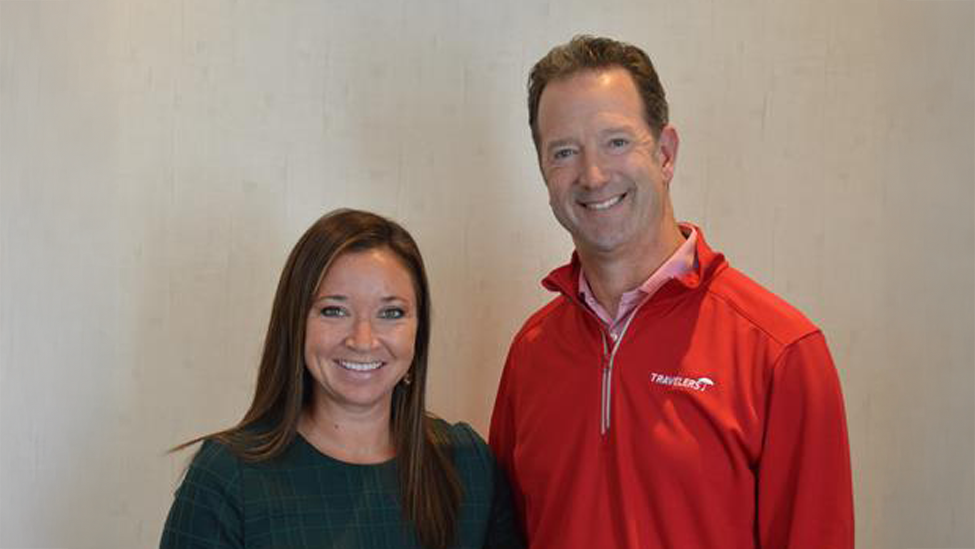
Recruiting Your Rising Stars: Engaging the Insurance Industry’s Emerging Talent
Who are the students and emerging professionals in insurance and risk management today, and what are they looking for in future employers? In this webinar, we discussed how the insurance industry can create meaningful career pathways and rewarding careers for tomorrow’s rising stars.

Future-Focused: Strategies for Engaging Emerging Talent
Why and how should organizations invest in emerging talent to recruit and retain tomorrow’s business leaders? In this webinar, we explored workforce demographic trends influencing the labor market and shared insights from existing talent programs.
In the news
PropertyCasualty360
Insurance Business Magazine
Utah Independent Agents
Join our mailing list
Invitations, event announcements, replays and more — delivered to you.
Sign up