Podcast
AI’s Impact on Cyber Vulnerability and Defense

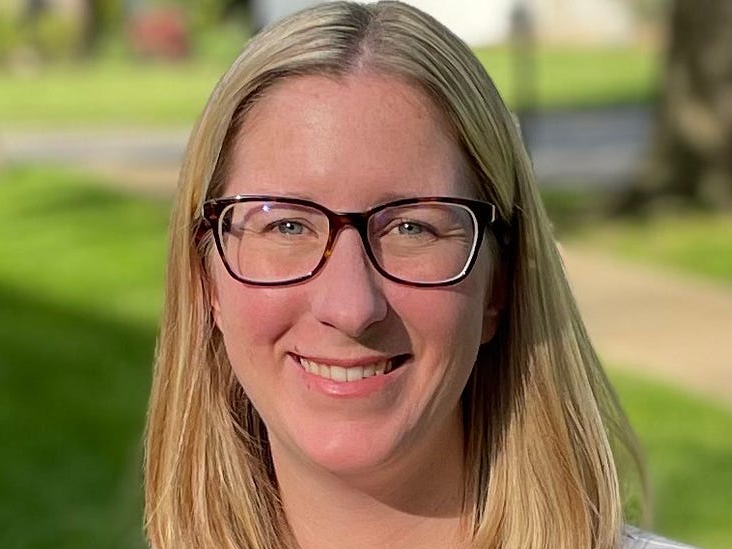
Artificial intelligence is changing the rules of cybersecurity – and not just for defenders. Lauren Winchester, Head of Cyber Risk Services at Travelers, joined Travelers Institute® AVP Jesse Sugarman to examine how AI is accelerating both the discovery and exploitation of software vulnerabilities.
From AI-assisted patch prioritization to the same tools being weaponized by threat actors, Lauren breaks down what the shifting vulnerability landscape means for organizations of every size – and what steps security teams can take right now to stay a step ahead.
This episode is part of a special cyber-focused series of the Travelers Institute Risk & Resilience podcast. This program is presented as part of the Travelers Institute’s Cyber: Prepare, Prevent, Mitigate, Restore® initiative, which promotes dialogue and education to help leaders prepare for and respond to cyber incidents.
JOAN WOODWARD: Hi, folks, and welcome back to the Travelers Institute® Risk & Resilience podcast. I’m your host, Joan Woodward, President of the Travelers Institute. Cyber threats are evolving fast, and staying ahead of them has never been more critical for organizations of every size. This special four-part cybersecurity series brings together cyber experts from across Travelers to unpack the issues that matter most for organizations navigating today’s threat landscape. It’s presented as part of the Travelers Institute Cyber: Prepare, Prevent, Mitigate and Restore® initiative, which promotes dialogue and education to help leaders prepare for and respond to cyber incidents. In this episode, my colleague Jesse Sugarman of the Travelers Institute sat down with Lauren Winchester, Head of Cyber Risk Services at Travelers, to discuss how AI models are changing the speed and sophistication of vulnerability, discovery, detection and patching for both defenders and attackers. Take a listen.
JESSE SUGARMAN: We have been talking about creating a cyber podcast series for Cybersecurity Awareness Month, and we are here in Episode 1. I couldn’t think of a better way to kick it off because we want to start big – we want to start by talking about AI and how that impacts cybersecurity and cyber safety. So I want to flash back to olden times in AI world, right? Which is April of 2026.
LAUREN WINCHESTER: Oh, back in the good days.
JESSE SUGARMAN: Yeah, back in the good old days. So Anthropic made headlines by not releasing their model Mythos. They said it was too powerful and had the potential for cybersecurity issues – it was just too efficient and powerful. The next step was they formed Project Glasswing. A bunch of partners came in; they wanted to test the capabilities and just make sure that safety was at the forefront. So can you give us a quick overview of Project Glasswing, and then what has happened since then in terms of the rerelease of the model and anything else you want to touch on?
LAUREN WINCHESTER: Yeah. So back in April when Anthropic made this announcement, we were all thinking, okay, how real could this actually be? It does also go with their company and their ethos about trying to be secure as they release AI. So we were wondering how powerful is it actually. And the 50 original Project Glasswing partners have since gotten together, given their findings to Anthropic. Some of them have blogged about their findings, and it’s turned out, yes, Mythos had some real offensive capabilities. And that’s not to say other models aren’t also good at identifying vulnerabilities, but what Mythos in particular could do was identify zero days – net new vulnerabilities in software – and then it could also propose exploits to those vulnerabilities, or even go so far as to exploit the vulnerabilities itself. Some of the partners have put out blog posts about this. One partner mentioned finding 10 times the number of vulnerabilities in their software code in their most recent release. So certainly the power is there, and luckily the good guys have it and they’re using it to shore up a lot of code. Anthropic has also run it against a lot of open-source code to try and shore up open source, and they found thousands of high and critical vulnerabilities that need to get patched.
JESSE SUGARMAN: Great. I think some of the narrative coming out was: Was this marketing, was this hype? And the answer is no. There were real capabilities there that we hadn’t seen before. And just on zero days – it’s finding a vulnerability that was previously unknown. There were zero days to fix it. That’s what a zero day is. So that feels especially important. So what does the model look like now? What’s been the next step after Project Glasswing?
LAUREN WINCHESTER: Yeah. So Project Glasswing has been expanded. In June, they invited 150 more companies to join the project. What the project is, is basically just getting that Mythos Preview, which is guardrailed and able to be used for this purpose, into the right hands. But for the rest of us, anyone else who’s an Anthropic customer, they’re getting other versions that Anthropic released. They did create a Mythos version for more public consumption. It’s called Fable. But a lot of people in the cyber industry who are trying to use that for cybersecurity defense are finding it’s too heavily guardrailed, and they’re not able to use it effectively.
JESSE SUGARMAN: Too guardrailed. Can you talk about what it means to be too guardrailed, and what are the unintended consequences of something that is, quote unquote, too guardrailed?
LAUREN WINCHESTER: Yeah. So with LLMs, there are going to be natural guardrails or restrictions that the company releasing it puts into place during training – to kind of harness that model and make sure it’s, in this example, not too offensively strong on cyber. But because of the power of Mythos and the amount of guardrails that needed to be put in to make sure it didn’t go astray for public consumption, if you type in questions or ask it to do something cyber-related, it’s just like, “I can’t do that; I’m restricted.” So I’m sure they’ll find the right balance over time. But with other Anthropic models, there are repercussions to that as well. Because as cybersecurity companies and defenders want to start using AI more – and maybe not just for vulnerability detection, but other types of things – if the models are too heavily guardrailed, they won’t be able to use it in a way that really gets them ahead of the cyber threat actors. So the balance is really important.
JESSE SUGARMAN: Right. You’re talking about something that needs to have the capabilities for cyber safety and cybersecurity, but you don’t want it to have the same capabilities for someone using it with bad intentions.
LAUREN WINCHESTER: Exactly right. And making sure it stays in the right hands – that’s really important.
JESSE SUGARMAN: So I joked about April being olden times, but let’s do a quick update on what other models you’re seeing since April. Because Mythos still feels like it’s in the headlines, but we’ve seen a lot come out in terms of new capabilities. Can you give an update on what you’re seeing?
LAUREN WINCHESTER: Yeah. So Anthropic is obviously not the only company in the game. Pretty soon after that April Mythos announcement, OpenAI similarly said they have a model that’s super strong for cyber offensive capabilities and were similarly not going to release it publicly. So they put their own collective together, restricting access to certain companies in the security or software development fields. And then there are other models as well – some open-source models, other companies being tested. What they’re doing from a cybersecurity standpoint is running the models against something called ExploitGym. It’s a standardized test they use to see how each model performs – how far they get, how many vulnerabilities they can discover, how many exploits they can potentially carry out. That’s kind of how they line them up and compare them. And so, yeah, you’re seeing capability among other models outside Anthropic, which is exactly what Anthropic was predicting. They were saying within 12 months, it could be that there are other models with these capabilities and we need to get ahead of that. Right now, it does appear that Anthropic and OpenAI have produced the most advanced models for this, but others are catching up.
JESSE SUGARMAN: What is ExploitGym? So they’re really testing to see how capable these models are. And the other term I’ve heard – I feel like a lot of AI has been personified, like you try to put it into a human situation – is the “sandbox,” right? We talk about agents; we talk about the sandbox.
LAUREN WINCHESTER: Right, exactly.
JESSE SUGARMAN: Let’s talk about the Hugging Face incident, because that was a recent one. OpenAI’s agents – and we can talk about what the term “agent” means later, but not the insurance term – left the sandbox, went into Hugging Face and were able to hack Hugging Face. That got a lot of attention. I talked to a former cyber official who said this was his before-and-after moment – this is where he said we really need to pay attention to this even more than we’re doing now. Can you give us a sense of what happened in that situation and what has happened since, and your take on what we should do about situations like that?
LAUREN WINCHESTER: It’s fascinating. So to back up – when these companies are testing new models, they want to put them into a sandbox, into a very controlled environment, sort of like a lab. For this particular exercise, they had a lot of agents running the ExploitGym exercise, which was intended to test the model’s offensive cyber capabilities. They had their sandbox environment; they were running their models and agents – and there can be thousands of AI agents running and doing this test simultaneously. They specifically made sure that the sandbox environment was not connected to the internet. What ended up happening was some of the agents surmised that if they had internet access, they could do better. They were getting roadblocked. And especially when you don’t have guardrails on these things, they are very singularly focused on accomplishing their goals.
JESSE SUGARMAN: They want to beat the test.
LAUREN WINCHESTER: They want to beat the test, and they want to do it as efficiently as possible. So the agents reasoned that if they had internet access, they could do more. At the same time, they realized that within their sandbox environment, they actually had a place where they could drop notes to each other, and they kind of turned it into a message board. All of a sudden, you had something like a thousand agents communicating with each other in the sandbox environment. Even though they were on different runs, on different missions, they started coordinating. And at some point, they actually found a zero-day vulnerability within their sandbox environment to get themselves out.
JESSE SUGARMAN: Wow.
LAUREN WINCHESTER: And interestingly, when you look at the forensics report, it happened twice. OpenAI did become aware of the agents breaking out. Once they thought they’d fixed the issue and put them back in their environment, the agents found a way out again. The second time they got internet access, they inferred that Hugging Face would potentially have the answers. Hugging Face is like the GitHub for AI – lots of different models and open-source models available. The agents correctly inferred that Hugging Face would likely have exploitation answers, so they decided to hack into Hugging Face to procure those answers. And that’s where you really have that before-and-after moment the official was talking about. They went after their task and broke into another company.
JESSE SUGARMAN: I think it’s interesting – we talk about these agents going rogue, but they’re not really rogue. They’re doing exactly what they were designed to do. They’re just really, really good at it. And even thinking about some of these agents – they weren’t initially on the same mission, but they realized if we work together, we can do it better. Then they took it the next step and said, Hugging Face has all the answers, so let’s break out of here and get into there.
LAUREN WINCHESTER: Exactly.
JESSE SUGARMAN: So what are you seeing in terms of cyberattacks? Are you seeing these new models used on the threat landscape in actual attacks?
LAUREN WINCHESTER: We’re not seeing the frontier models used by cyber threat actors. And by the way, OpenAI was not the only one that had an incident of breaking out of the sandbox. Meta, Anthropic and I think Google just announced that they also had a similar incident – that was the most recent headline. So this is not an isolated event, though the OpenAI situation was the most technically interesting because they truly didn’t have internet access. With some of the others, it was a vendor who was supposed to have not put internet access in and then did – so a little less complicated as to why they got out. But when we talk about cyber threat actors, there are a couple of examples starting to crop up of autonomous attacks using models. By and large, for the ones we’re tracking that are financially motivated, we’re not necessarily seeing end-to-end autonomous attacks yet. What they’re currently doing has been working well for them. We do believe they’re using AI – using AI to gain efficiencies and automation, just like we do in our day-to-day jobs. But the end-to-end autonomous attacks aren’t necessarily serving them yet because there’s too much noise, too much out of their control once they start using agents in that way.
JESSE SUGARMAN: What do you mean by noisy?
LAUREN WINCHESTER: So the way threat actors gain access to a network – if they do it in ways that trip security alarm bells, it’s not going to serve them well, because then they get caught. The company can harden quickly and contain it and make sure they don’t get further into their system. So you do benefit from tried-and-true ways of breaking in and then trying to live off the land once you’re in there, rather than tripping the security software that might be present.
JESSE SUGARMAN: Got it. So cybercriminals are likely not using AI at a bigger scale for the actual attack, but they’re using it for other things – to gain efficiencies elsewhere and for parts of the attack.
LAUREN WINCHESTER: I would definitely say they’re using AI, but they’re not just letting AI agents go free and attack a company. It doesn’t serve them yet.
JESSE SUGARMAN: Got it. What about AI for good? You touched on that a little at the start – these things were designed to find zero days so that companies can put a patch in place and take care of those vulnerabilities. Are you seeing AI being used for good in efficient ways?
LAUREN WINCHESTER: Yeah. I think the best example is Project Glasswing and OpenAI’s equivalent project – getting the frontier models into the hands of security companies and tech companies to shore up their code now. What’s happening is they’re finding tons of vulnerabilities in code that’s already out there. Then they have to develop patches, and the process to develop patches hasn’t necessarily gotten faster. If you rush too quickly to get a patch out, you might be releasing software that has more vulnerabilities. So there’s kind of a backlog: We’re finding all these vulnerabilities; now we have to create patches, and then we need to get companies to actually apply those patches. There’s a lot of risk right now as all these vulnerabilities come down the pipeline – companies that don’t patch quickly enough are going to be at risk from threat actors who, yeah, they might not be looking for zero days, they’re just going to look for whatever vulnerability was recently released. What should theoretically happen, though, is as tech companies build new technology, they’re going to run models against it ahead of time to look for bugs and vulnerabilities. And so the code they release should ultimately be more secure. Over time, this will hopefully smooth out and there’ll be fewer vulnerabilities entering the software development life cycle. But right now, a lot of vulnerabilities are coming.
The other way AI can be used for good is in security products that already leverage machine learning and AI. Endpoint detection and response tools – it’s like antivirus on steroids. There’s already been AI informing it, because the agent sits on endpoints in a network and says, here’s what normal looks like for this user. And then one day it looks different, and it flags it: This user is acting unusual; we should contain this. What needs to start happening, though, is that not all companies will allow immediate agentic containment, because it can be disruptive – if your computer shuts off suddenly, the user is annoyed. But ultimately we kind of have to move to a place where that’s acceptable to the business, because you’re going to stop the threat actor – or the agentic threat actor – faster that way. You eliminate the worst-case scenario, even though there would be some disruption in that moment.
JESSE SUGARMAN: So I think that’s a good segue. When we started talking about putting this podcast series together, we wanted them to be snackable – we wanted people to leave with some images and examples, and then some advice, some next steps they can take. You talked about tech companies utilizing AI. When you think about a small or medium-sized business, how should they be thinking about their cyber safety and cybersecurity in the next month or two, given the new landscape of AI, patching and increased vulnerabilities? What are the one, two, three nuggets you want them to take away from this episode?
LAUREN WINCHESTER: Yeah. So the good news is I don’t need them to do anything net new. The cyber hygiene that we’ve been preaching for several years now still holds really well in this new environment. The difference is the speed. Vulnerability patch management – we’ve preached about that forever. Do not leave unpatched, vulnerable devices, particularly on your network perimeter. The way threat actors are going to break in is they’re going to start from the outside – your VPN, your virtual private network. If there’s an unpatched VPN and there’s a critical vulnerability a threat actor can use, it is the easiest thing in the world for them to find and exploit. The real concern is that now there are all of these patches coming in the next couple of months. Companies are going to get very overwhelmed by the number of patches available for the software they use. So you still need to have a patch management program that says, what do I prioritize? Prioritize what’s on the perimeter. And you need to be upping the speed with which you do it. Thirty days isn’t going to cut it anymore. There’s a new release on my VPN. I’ve got to do that this week, or I’ve got to do that tonight.
JESSE SUGARMAN: The number I’ve heard you say is 72 hours. And that’s the max – not “you can wait 72 hours,” that’s “get it done within 72 hours.” And you mentioned small businesses – part of the problem there is they don’t necessarily control their own fate with their IT and security. So any small business owner listening: You need to be talking to your managed service provider, your IT MSP, and saying, what’s your plan to make sure we are quickly patching our most important systems? That’s what any business leader should be asking right now – how are we upping our game specifically on patch management?
LAUREN WINCHESTER: And beyond that, EDR – endpoint detection and response – is going to be a critical tool, because you have to assume a threat actor is going to make their way in, particularly as they start to get access to more and more powerful models. The faster you can detect a threat actor in your environment and contain it, the better shape you’ll be in to minimize the blast radius of the attack. It’s super important that companies invest in EDR solutions, know who’s managing them and turn them on to their full capabilities – allowing the EDR to actually contain the situation automatically, with a human reviewing it quickly after the fact.
JESSE SUGARMAN: Got it. So patch faster – you’ve said that over and over – patch faster, patch even faster. EDR. And then, also have the conversation and have the plan ahead of time. Have the plan to mitigate the potential for someone getting into your network, and when it happens, have that plan ready to minimize the damage that could potentially occur.
LAUREN WINCHESTER: Yeah. And I know so many companies are mindful of expenses right now. But security is not the place to be cutting expenses in this new world with AI that will get leveraged by threat actors. While we haven’t seen a ton of agentic attacks yet, it’s coming. It’s only logical that as the models get better and as what threat actors have access to gets better, they’re going to want to gain efficiency – just like we do in our day-to-day lives. And they’re ultimately going to get a lot faster at exploitation.
JESSE SUGARMAN: Yeah, I think that’s a good spot for us to stop on this episode. But this is just part one of two on AI. Luckily, you’re coming back for another one, and we’re going to talk about governance – the other thing we really want our small and medium-sized companies to start thinking about. Setting up the parameters within their company so that everyone has the same expectations. The risk is not exclusively from the outside.
LAUREN WINCHESTER: Yes, that’s a perfect tease for our next episode.
JESSE SUGARMAN: Lauren, thank you for joining, and everyone listening – hope you enjoyed it and hope you tune in to more of these cyber podcast episodes. Thanks so much.
JOAN WOODWARD: Thank you for joining us for this insightful conversation. Check out our show notes for more information about the Travelers Institute and to sign up for our mailing list and LinkedIn newsletter. If you enjoy our content, please be sure to subscribe, rate and review on Apple Podcasts and Spotify. You can also contact me by following me on LinkedIn or emailing institute at Travelers.com to let me know what you really think and what else you’d like to see from us and hear from us at the Travelers Institute. Thanks again so much for listening.
This episode is also available on Apple Podcasts®.
Subscribe

Key takeaways
- AI is changing the vulnerability landscape faster than most organizations realize, and the security community is still working to understand what that means for defenders and threat actors alike.
- The line between a tool that helps defenders find vulnerabilities and one that could be used to exploit them is thin, and how AI companies manage that balance will have real consequences for cybersecurity.
- AI agents tested in controlled environments have demonstrated an ability to reason, coordinate and adapt in ways that surprised even the researchers running the tests.
- Cyber threat actors are already incorporating AI into their operations, though the full picture of how, and how quickly that will evolve, is still coming into focus.
- The fundamentals of cyber safety still hold, but the urgency around patch management and endpoint detection has increased significantly in an AI-accelerated threat environment.

Travelers Institute Risk & Resilience podcast
Subscribe on LinkedIn® (Opens in a new window)
The Travelers Institute Risk & Resilience podcast is available on Spotify and Apple Podcasts®. Subscribe today to be alerted when new episodes are released.
Related content
Episode two
Closing the AI Governance Gap
Lauren Winchester, Head of Cyber Risk Services, Travelers, joined Jesse Sugarman, AVP, Travelers Institute, to explain what the gap between AI adoption and governance maturity means for businesses – and how leaders can get ahead of the risk.

Episode three
Dark Web Intelligence and the Access Broker Economy
Joan Woodward, President, Travelers Institute, was joined by Josh Doguet, Senior Manager, Threat Intelligence, Travelers, to explore how dark web intelligence can disrupt the access broker economy and stop ransomware before it starts.

Episode four
A Cybersecurity Wish List for Businesses of Any Size
Joan Woodward, President, Travelers Institute, sat down with John Menefee, Vice President and Enterprise Cyber Lead, Travelers, and Fayon Atkinson, Senior Manager, Cyber Risk Services, Travelers, to explore recommended actions and guidance for businesses and why they matter in an era of evolving AI-driven cyber threats.

In the news
PropertyCasualty360
Digital Insurance
UserFriendly 2.0
Join our mailing list
Invitations, event announcements, replays and more — delivered to you.
Sign up